
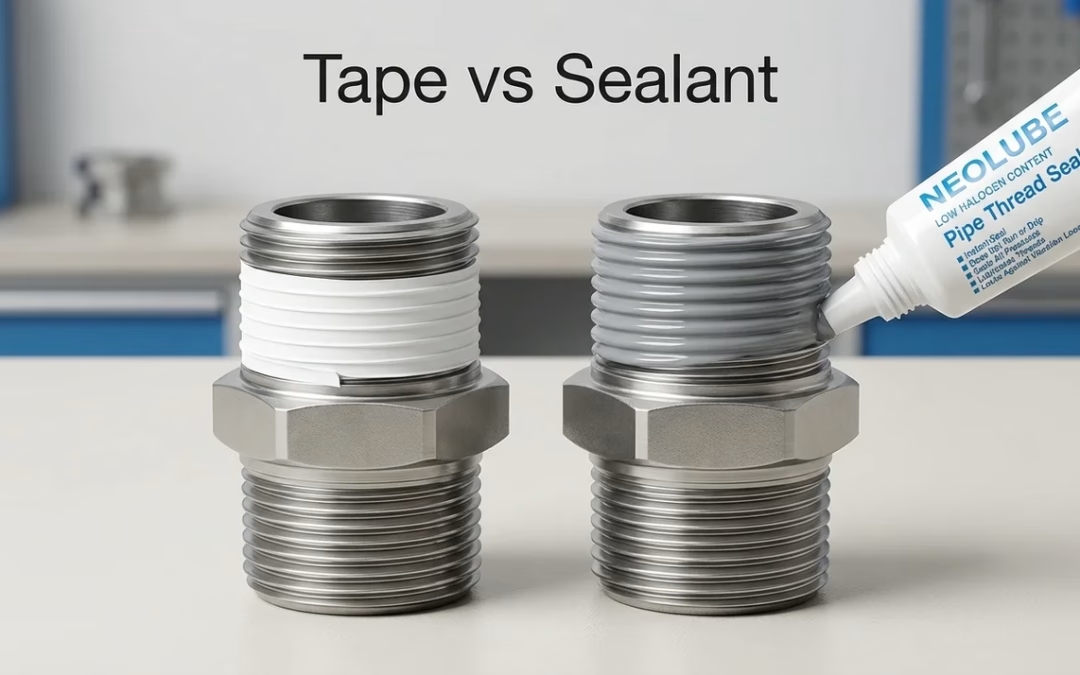
Threaded joints do not all seal the same way, which is why tape versus sealant is rarely a one-size-fits-all decision. Polytetrafluoroethylene (PTFE) tape and pipe thread sealant are both used to help seal threaded connections, but they behave differently during installation and in service. On metal-threaded assemblies, that difference can affect fit-up, coverage, and long-term performance.
This guide explains where each option fits, what to watch for, and when a paste-applied sealant may make more sense for metal pipes and fittings.
Quick answer
PTFE tape is often chosen for fast, clean application on threaded joints. Pipe thread sealant is often chosen when fuller thread coverage, lubricity during assembly, or more demanding metal-thread service conditions need to be considered. For metal threads, the right choice depends on material compatibility, operating conditions, and the product guidance for the specific application.
What is Polytetrafluoroethylene (PTFE) tape?
PTFE tape, often called plumber’s tape, is a thin sealing tape wrapped around male threads before assembly. It is widely used because it is simple to carry, simple to apply, and relatively clean to work with.
For straightforward threaded connections, that ease of use is one of its biggest advantages. But PTFE tape still depends on proper application. Wrap direction, amount of tape, and thread condition all affect the result. It can support a good seal, but it does not correct damaged threads or replace proper joint preparation.
What is pipe thread sealant?
Pipe thread sealant is a broader category that usually refers to a paste or compound applied directly to the threads. Some sealants remain more pliable, while others cure after assembly. That matters when the fitting is metal and the joint needs more complete thread filling or a more controlled assembly feel.
For Huron’s pipe/thread sealant range, **NEOLUBE® No. 100** is formulated for locking and sealing metal pipes and fittings. It is a creamy paste that adds lubricity during assembly, provides immediate low-pressure sealing, and cures to a solid to help seal and secure threaded pipe connections. It is also rated for continuous service temperatures up to 300°F (149°C).
PTFE Tape vs Pipe Thread Sealant for Metal Threads
| Factor | PTFE Tape | Pipe Thread Sealant |
|---|---|---|
| Application | Wrapped around male threads | Applied directly into the threads |
| Installation feel | Fast and clean | More controlled, with fuller surface contact |
| Thread coverage | Depends on wrap quality | Can fill thread voids more completely |
| Assembly lubricity | Limited and application-dependent | Often preferred when lubricity during assembly matters |
| Cure behavior | Does not cure | Depends on product type, some cure after installation |
| Rework | Often simple on light-duty installs | Depends on the product and service conditions |
| Best fit | Straightforward threaded work | Metal-threaded assemblies needing fuller coverage and fit-for-service selection |
| Main caution | Poor wrapping technique | Material compatibility and application limits must be checked |
When PTFE tape usually makes sense
PTFE tape often makes sense when the job is relatively simple, the fitting size is modest, and a clean, fast installation matters most. It is a practical choice for many straightforward threaded joints where the thread condition is good and the service is not especially demanding.
That convenience is why it remains common. But convenience alone should not drive selection where the joint, operating environment, or material calls for a more deliberate sealing approach.
When a paste-applied thread sealant makes more sense
For metal-threaded assemblies, pipe thread sealant often becomes the better choice when the joint needs more than a quick wrap-and-tighten installation.
This is usually the case when:
- The Joint Benefits From Lubricity During Assembly
- The Threads Need More Complete Wetting or Void Filling
- The Service Environment Is More Demanding Than a Simple Utility Connection
- The Buyer Wants a Product Designed Specifically for Metal Pipes and Fittings
That is where NEOLUBE® No. 100 fits naturally. Huron’s TDS positions it for locking and sealing metal pipes and fittings and lists typical application areas such as instrumentation, hydraulics, pumps and valves, fuel oil piping, water/coolant systems, compressors, gas lines, electrical conduit, and low-pressure steam lines. The same TDS states that properly tightened fittings seal instantly to moderate pressures, with maximum pressure and solvent resistance reached after a minimum 24-hour cure.
Material compatibility and where selection often goes wrong
One of the biggest mistakes in tape-versus-sealant comparisons is treating all threaded materials as if they can be evaluated the same way. They cannot.
Metal threads and plastic threads should not be approached in the same way. NEOLUBE® No. 100 is not normally recommended for plastics, particularly thermoplastics, where stress cracking may occur. Certain materials, including ABS, polycarbonate, vinyl, and methacrylates, may also soften or craze, which is why material compatibility needs to be checked before selection.
That matters because many comparison pages stay too general. In real applications, the correct choice starts with the fitting material, then moves to operating conditions, then to product suitability. A recommendation that makes sense for metal fittings may be inappropriate for plastics.
PTFE tape application mistakes to avoid
PTFE tape is simple to use, but it is also easy to apply poorly. Common problems include:
- Wrapping in the wrong direction: If the tape is wrapped against the direction of assembly, it can bunch or unravel as the fitting is tightened.
- Using too much tape: More tape does not automatically improve sealing. Excess material can interfere with fit-up and make the joint less predictable.
- Covering the first thread: Good installation practice usually leaves the leading thread free, so the fitting starts cleanly and seats more consistently.
- Trying to compensate for damaged threads: Tape can help seal a properly prepared joint, but it does not fix poor thread geometry, worn threads, or a bad fit.
These issues matter because field frustration is often blamed on the product category when the real cause is the application technique.
Can you use tape and sealant together?
Some installers do combine tape and sealant, but that should not be treated as a universal recommendation. The better standard is to follow the product instructions, the service requirements, and any code or testing expectations tied to the installation.
That is especially important in regulated or performance-sensitive applications. The correct sealing method depends on the fitting material, thread form, operating media, assembly practice, and any required verification after installation.
Where NEOLUBE® No. 100 fits
For metal-threaded assemblies, NEOLUBE® No. 100 is positioned as a paste-applied option for locking and sealing metal pipes and fittings. It has a smooth, creamy consistency, very high viscosity, and an anaerobic cure profile, which makes it relevant where assembly lubricity, thread coverage, and cure-to-solid performance are part of the selection criteria. It is also used across a range of piping systems involving air, water, gas, hydrocarbons, certain alcohols, and selected mild acids and bases, within the product’s stated application limits.
At the same time, its use is not universal. NEOLUBE® No. 100 is not normally recommended for plastics that may be prone to stress cracking, and it should not be selected for pure oxygen, oxygen-rich service, chlorine, or other strong oxidizing materials. Those limitations are important because they help define where the product fits well and where a different sealing solution should be considered.
Choosing the right sealing method for the application
If the installation is straightforward and the priority is speed and cleanliness, PTFE tape may be the better fit.
If the assembly is metal-threaded and the joint would benefit from fuller thread coverage, lubricity during assembly, and a sealant designed to lock and seal the fitting after installation, a paste-applied thread sealant may be the better choice.
In metal-threaded applications, selection should be based on material compatibility, service conditions, and operating requirements rather than the assumption that one sealing method is always better.
Common questions about PTFE tape and pipe thread sealant
What is the main difference between PTFE tape and pipe thread sealant?
PTFE tape is wrapped around male threads before assembly. Pipe thread sealant is applied directly to the threads as a paste or compound. Tape is often chosen for convenience, while sealant is often chosen when fuller thread coverage and application control matter more.
When should pipe thread sealant be used instead of tape?
Pipe thread sealant often makes more sense on metal-threaded assemblies where the joint benefits from better void filling, lubricity during assembly, or a curing product designed to secure the connection.
Can PTFE tape be used on metal threads?
Yes, PTFE tape is commonly used on metal threads. Whether it is the better choice depends on the fitting, the service conditions, and the sealing method best suited to the application.
Is pipe thread sealant suitable for plastic fittings?
Not automatically. Product compatibility has to be checked carefully. For example, Huron’s NEOLUBE® No. 100 is not normally recommended for plastics where stress cracking could result.
What makes NEOLUBE® No. 100 relevant in this comparison?
It is designed for locking and sealing metal pipes and fittings, provides lubricity during assembly, gives immediate low-pressure sealing, and cures to a solid after installation. Those characteristics make it relevant when the comparison is focused on metal-threaded assemblies rather than general-purpose tape use.
Can one product category prevent leaks on its own in every case?
No. Joint performance still depends on correct material selection, thread condition, installation practice, and suitability for the service involved.