
Understanding the Neolube Safety Data Sheet and Product Formulations
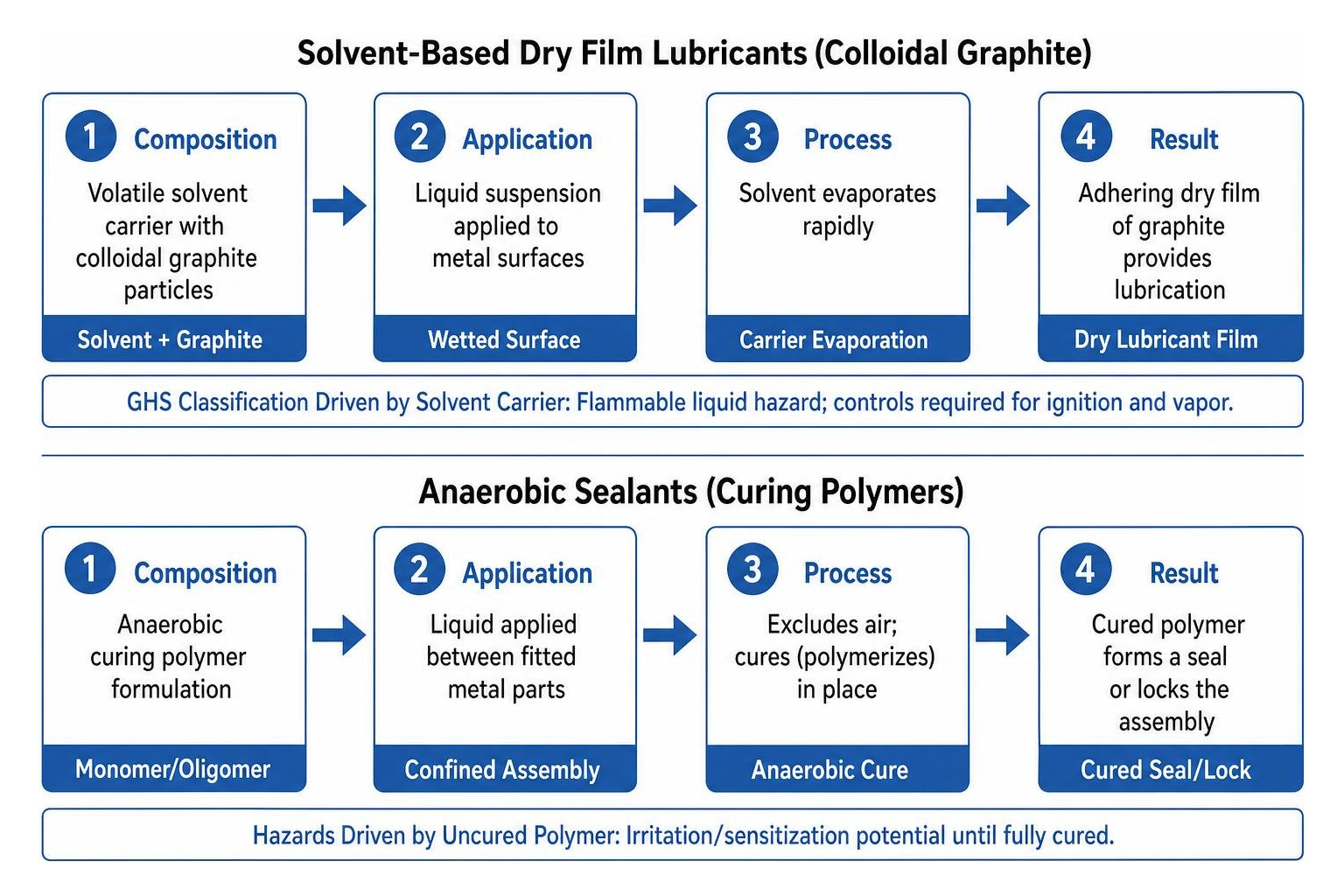
When you review a safety data sheet for any industrial chemical, understanding the foundational chemistry helps you immediately assess risks on the shop floor. Neolube formulations broadly fall into two distinct chemical families: solvent-borne colloidal graphite suspensions and anaerobic curing polymers. Each category behaves differently during handling, application, and curing.
Colloidal graphite lubricants rely on a volatile solvent carrier to distribute ultra-fine, high-purity graphite particles across metal surfaces. Once applied, the carrier evaporates rapidly, leaving behind an adhering dry film that provides continuous lubrication without attracting grit or outgassing in vacuum environments. Under the Globally Harmonized System of Classification and Labelling of Chemicals (GHS), the solvent carrier dictates the physical hazard classification, requiring stringent controls against ignition and vapor accumulation.
Interpreting the Neolube Safety Data Sheet for No. 1.1 Dry Film Lubricant
Neolube No. 1.1 represents the modern standard for nuclear-grade dry film lubrication. Looking closely at Section 3 of the Neolube No. 1-1 Lubricant Safety Datasheet, the formulation consists primarily of 60% to 100% 2-Propanol (isopropanol, CAS 67-63-0) carrying 1% to 5% high-purity graphite (CAS 7782-42-5). The formula is non-halogenated, making it safe for sensitive reactor components where stress corrosion cracking from halogens must be prevented.
Because isopropanol serves as the liquid carrier, Neolube No. 1.1 carries a GHS Flammable Liquid Category 1 classification with a low flash point of 11.1°C (51.98°F). The SDS also highlights critical health warnings:
- Eye Irritation (Category 2A): Contact causes serious eye irritation and stinging.
- Skin Sensitization (Category 1): May cause an allergic skin reaction with repeated exposure.
- Specific Target Organ Toxicity – Single Exposure (Category 3): Inhaling concentrated vapors can cause central nervous system depression, leading to drowsiness or dizziness.
- Aspiration Hazard (Category 1): Swallowing the liquid presents a severe risk because low-viscosity hydrocarbons can enter the respiratory tract, potentially causing chemical pneumonitis.
If you previously referenced documentation for the legacy version, you can review the archived Neolube No. 1 Lubricant Safety Datasheet to understand historical formulations. Always remember that application engineering requires exact testing data; as noted in safety guidelines, the coefficient of friction for Neolube No. 1.1 of 0.15 has not been tested or approved for this.
Colloidal Graphite and Resin: Neolube No. 2 Specifications
While Neolube No. 1.1 focuses on pure colloidal graphite, Neolube No. 2 incorporates a thermoplastic resin binder into its isopropanol carrier. This resin provides superior substrate adhesion, making it ideal for components subjected to mechanical vibration or where electrical properties must be managed.
According to the Neolube No. 2 Lubricant Safety Datasheet, the product exhibits:
- High Volatile Organic Content: A VOC level of 766 g/L (6.4 lbs/gal), necessitating active vapor management during large-scale brushing or dipping.
- Variable Conductivity: The cured film offers a sheet resistance under 2400 Ω/sq at 25 µm, allowing technicians to use it for static bleed on conveyor systems, low-noise communication cables, and bus bar anti-arcing coatings.
- Purity Verification: Strict trace-element limits including total halogens ≤ 200 ppm, fluorine ≤ 75 ppm, chlorine ≤ 200 ppm, and sulfur ≤ 900 ppm.
The thermoplastic binder begins to slowly decompose above 200°F (93°C), though the graphite itself withstands continuous service up to 400°F (204°C) and intermittent spikes up to 850°F (454°C).
Anaerobic Thread Sealants: Neolube No. 100 and No. 1260 Formulations
Transitioning away from solvent-based sprays and liquids, anaerobic thread sealants function through a completely different curing mechanism. These products remain liquid in the presence of atmospheric oxygen but polymerize into tough thermoset plastics when confined between close-fitting metal threads.
Reviewing the Neolube No. 100 Thread Sealant Safety Datasheet reveals key differences in handling:
- Low Volatility: Neolube No. 100 has a flash point greater than 93.3°C (199.94°F) and a VOC content of only 1.36 g/L, eliminating the severe flammability hazards of the No. 1.1 and No. 2 lines.
- Reactive Chemistry: It contains functional components including amorphous silica (1–5%), titanium dioxide (1–5%), cumene hydroperoxide (0.1–1%), and ethylene glycol (0.1–1%).
- Regulatory Reporting: Cumene hydroperoxide acts as an organic peroxide catalyst. Cumene (CAS 98-82-8) is present at approximately 0.1406%, making the mixture subject to SARA Section 313 reporting thresholds.
For high-pressure industrial plant lines and nuclear factory facilities requiring pumpable compounds, the Neolube No. 1260 Injectable Thread Sealant Safety Datasheet provides specialized instructions for heavy-viscosity injection guns and mechanical packing maintenance.
Chemical and Physical Property Comparison Across Neolube Variants
To help your environmental health and safety (EHS) team quickly compare physical hazards and environmental parameters, I have summarized key SDS metrics across core Neolube products below:
| Property / Parameter | Neolube No. 1.1 | Neolube No. 2 | Neolube No. 100 | Neolube No. 1260 |
|---|---|---|---|---|
| Physical State | Liquid suspension | Liquid suspension | High-viscosity paste | Injectable sealant paste |
| Primary Base Carrier | Isopropanol (60–100%) | Isopropanol (60–100%) | Dimethacrylate ester blend | Synthetic polymer carrier |
| Flash Point | 11.1°C (51.98°F) | 11.1°C (51.98°F) | > 93.3°C (199.94°F) | > 100°C (212°F) |
| Specific Gravity | 0.77 – 0.81 | 0.80 | ~1.10 | ~1.20 |
| VOC Content | ~766 g/L | 766 g/L | 1.36 g/L (0.14%) | Negligible (<5 g/L) |
| Vapor Pressure | 32.1 mm Hg (@ 20°C) | 32.1 mm Hg (@ 20°C) | < 5 mm Hg (@ 20°C) | < 1 mm Hg (@ 20°C) |
| Transport Hazard | UN1219 (Flammable Liq.) | UN1219 (Flammable Liq.) | Not Regulated (DOT/IATA) | Not Regulated (DOT/IATA) |
| Primary GHS Hazards | Flammable Liq. 1, Eye 2A, Aspiration 1 | Flammable Liq. 1, Eye 2A, Skin Sens. 1 | Skin Irrit. 2, Eye Irrit. 2A | Skin Irrit. 2, Eye Irrit. 2B |
Workplace Exposure Controls, PPE, and Emergency Response
Managing occupational health during maintenance shifts requires a combination of robust engineering controls and appropriate personal protective equipment (PPE). Whenever you work with chemical compounds, consulting the relevant Neolube Data Sheets - NEOLUBE® Industrial Dry Lubricants ensures your workspace meets established Threshold Limit Values (TLVs) and Permissible Exposure Limits (PELs).
For isopropanol-based formulations, OSHA enforces an exposure limit of 400 ppm (980 mg/m³) Time-Weighted Average (TWA), with an ACGIH STEL (Short-Term Exposure Limit) of 400 ppm and TWA of 200 ppm. Graphite dust exposure limits sit at 2.5 mg/m³ for respirable fractions.
Recommended Personal Protective Equipment and Engineering Controls
Engineering controls always take priority over PPE. When dispensing or applying Neolube No. 1.1 or No. 2, follow these workplace practices:
- Local Exhaust Ventilation: Maintain mechanical dilution or local exhaust ventilation designed for Class I, Group D hazardous locations to keep airborne solvent vapor concentrations below 200 ppm.
- Electrical Grounding: Use intrinsically safe, explosion-proof electrical fixtures. Always bond and ground bulk containers during fluid transfer to eliminate static electricity buildup.
- Hand Protection: Wear chemical-resistant gloves made of nitrile rubber, neoprene, or butyl rubber. Standard thin latex gloves provide poor resistance against isopropanol and organic peroxides.
- Eye & Face Protection: Utilize splash-proof chemical goggles compliant with ANSI Z87.1. Add a full-face shield when pouring large quantities or working overhead.
- Respiratory Protection: If engineering controls cannot maintain vapors below occupational thresholds, equip personnel with NIOSH-approved half-mask respirators fitted with organic vapor (OV) cartridges and P100 particulate filters.
First-Aid Protocols for Accidental Chemical Exposure
When accidental chemical exposure occurs, quick action minimizes tissue damage and systemic absorption:
- Eye Exposure: Immediately flush eyes with clean, lukewarm water at an eyewash station for at least 15 minutes while holding eyelids wide open. Remove contact lenses if present and easy to do. Seek immediate medical attention from an ophthalmologist.
- Skin Contact: Promptly strip contaminated clothing and wash the affected skin with mild soap and plenty of running water for 15 minutes. If irritation, rash, or redness persists, consult a physician. Wash contaminated work clothing before reuse.
- Inhalation: Escort the individual to fresh air immediately. If breathing is difficult, trained personnel should administer supplemental oxygen. If breathing stops, deliver artificial respiration and seek emergency medical assistance.
- Ingestion: Do NOT induce vomiting due to the aspiration hazard posed by the solvent carrier. Never give anything by mouth to an unconscious person. Rinse the mouth thoroughly with water and contact emergency medical services or a local poison control center right away.
Storage, Handling, and Waste Disposal Guidelines
Proper storage and waste handling preserve chemical integrity while keeping facilities safe from structural fires, environmental contamination, and regulatory fines.
Safe Storage Practices and Material Incompatibilities
Storing chemical containers in accordance with NFPA 30 codes is essential across industrial facilities. For solvent-based lines like Neolube dry film products:
- Temperature Parameters: Store sealed containers in a cool, dry, well-ventilated fire-cabinet maintained at temperatures below 90°F (32.2°C). Never expose inventory to direct sunlight, radiators, or open heat pipes.
- Container Integrity: Keep containers tightly capped when not in active use. The isopropanol carrier evaporates quickly when exposed to air, altering lubricant viscosity and colloidal suspension balance.
- Chemical Incompatibilities: Keep Neolube No. 1.1 and No. 2 separated from strong oxidizing agents (such as chlorine, perchlorates, and nitric acid), strong acids, acetaldehyde, and isocyanates.
- Anaerobic Incompatibilities: For Neolube No. 100 and No. 1260, avoid contact with strong reducing agents, rust, active metals (such as mild steel, copper, brass, aluminum, and zinc), and oxygen scavengers. Contact with active metals can trigger rapid unintended polymerization inside the packaging.
Spill Containment, Clean-Up, and RCRA Waste Disposal
In the event of an accidental release, swift containment prevents solvents and polymers from entering storm drains, municipal sewer systems, or surrounding soil.
For flammable dry film formulations:
- Eliminate all potential ignition sources immediately (turn off nearby machinery, ban open flames, extinguish smoking materials, and deactivate unrated electronic devices).
- Ventilate the spill zone thoroughly.
- Use non-sparking, intrinsically safe tools to contain and recover the liquid.
- Absorb remaining pooling liquid using non-combustible materials such as universal absorbent pillows, vermiculite, or dry earth. Place spent absorbents into vapor-tight, grounded steel or high-density polyethylene drums.
From an environmental compliance perspective under the Resource Conservation and Recovery Act (RCRA), unused or spilled Neolube No. 1.1 and No. 2 liquid constitutes an ignitable hazardous waste (EPA Hazardous Waste Code D001) due to its 11.1°C flash point. Discarded materials, solvent rags, and rinsate must be routed through licensed hazardous waste treatment, storage, and disposal facilities (TSDF).
For the broader product collection detailed under Category: Neolube, none of the standard dry film graphite suspensions contain chemical substances listed under California Proposition 65 as known carcinogens or reproductive toxins. However, thread sealant variants containing trace cumene or titanium dioxide pigments carry specific regulatory reporting requirements. Always check federal, state, and local environmental ordinances before final disposal.
Frequently Asked Questions About Neolube Safety Data Sheets
How to Access and Download a Neolube Safety Data Sheet?
Official, current Safety Data Sheets are published in PDF format directly by Huron Industries Inc. You can view, search, and download the full technical library by visiting the Neolube Data Sheets - NEOLUBE® Industrial Dry Lubricants page. Keeping offline digital copies and laminated binders at every maintenance workstation ensures audit readiness during OSHA or nuclear regulatory inspections.
What Distinguishes Neolube No. 1.1 from the Discontinued Neolube No. 1?
Neolube No. 1 was a staple on military and nuclear Qualified Products Lists (QPL) for over fifty years before being officially discontinued on July 11, 2024. In February 2025, Huron Industries launched Neolube No. 1.1 as its direct modern replacement.
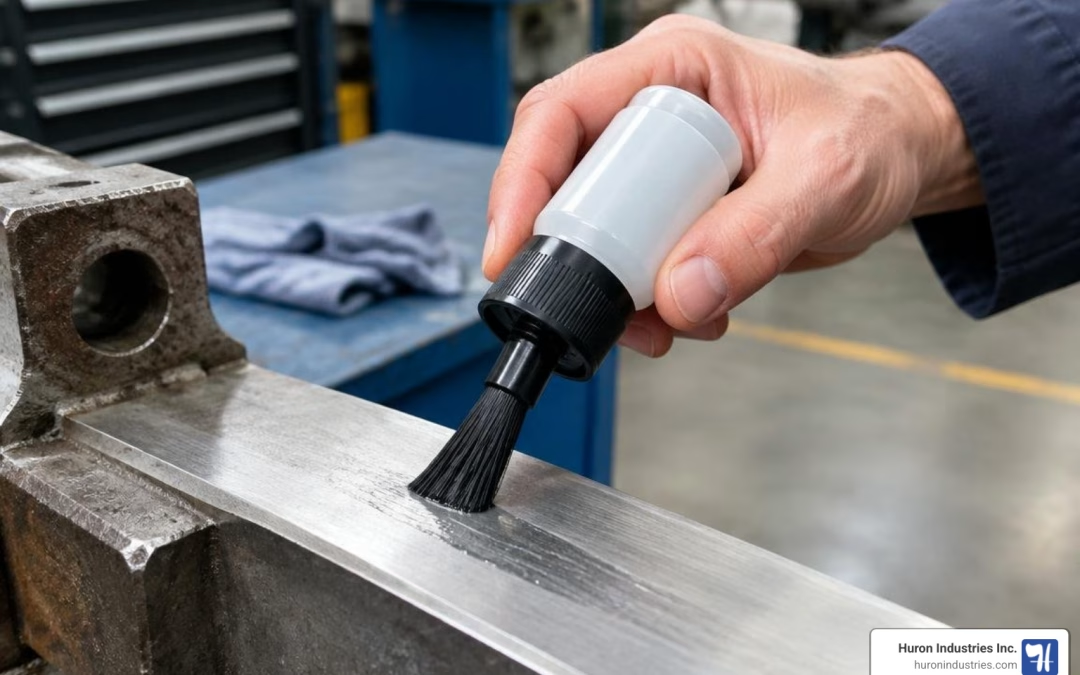
Neolube No. 1.1 maintains full compliance with the rigorous military standard MIL-L-24131C. It features a non-halogenated formulation manufactured and tested entirely in the United States, packaged in convenient 2-ounce and 8-ounce non-halogenated plastic bottles with integrated applicator brushes.
What Fire-Fighting Measures Are Required for Isopropanol-Based Neolube?
Isopropanol fires spread rapidly and can release heavy vapors that travel along floor surfaces to distant ignition points. If a fire breaks out:
- Extinguishing Media: Use alcohol-resistant foam, carbon dioxide (CO₂), dry chemical powder, or fine water spray fog. Do not use direct, high-pressure solid water streams, which can scatter the burning flammable solvent.
- Protective Fire Gear: Emergency responders must wear full structural firefighting turnouts along with a positive-pressure, National Institute for Occupational Safety and Health (NIOSH) approved self-contained breathing apparatus (SCBA).
- Thermal Decomposition Hazards: Combustion releases toxic and irritating gases, including carbon monoxide, carbon dioxide, and dense particulate carbon smoke. Cool unopened containers exposed to intense heat with water spray to prevent pressure buildup and catastrophic vessel rupture.
Conclusion
Industrial safety programs depend on accurate technical documentation and disciplined workplace practices. Whether you are applying dry film lubricants to critical naval reactor coolant fasteners or sealing high-pressure pipe fittings, mastering your chemical safety protocols begins with reading the manufacturer's documentation.
Huron Industries Inc. continues to engineer certified, high-purity colloidal graphite lubricants and sealants designed to meet demanding military and nuclear plant standards. To download the latest official documentation, review product compatibility guides, or update your facility safety binders, visit the Huron Industries Safety Technical Datasheets library today.