
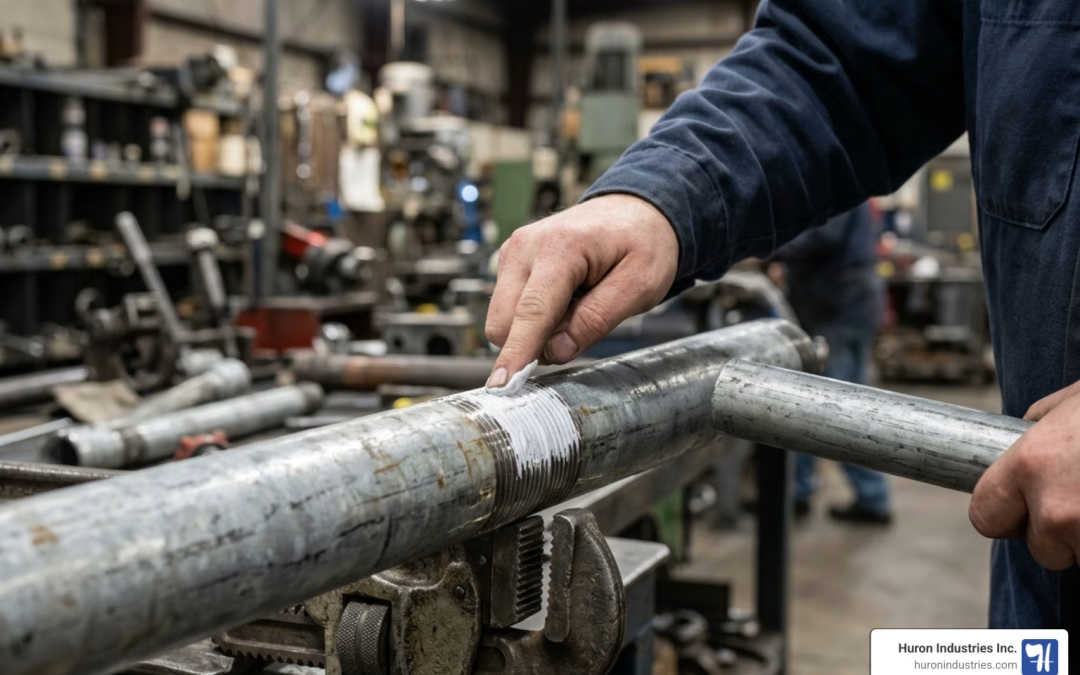
When You Can't Find Your Usual Thread Sealant: What to Use Instead
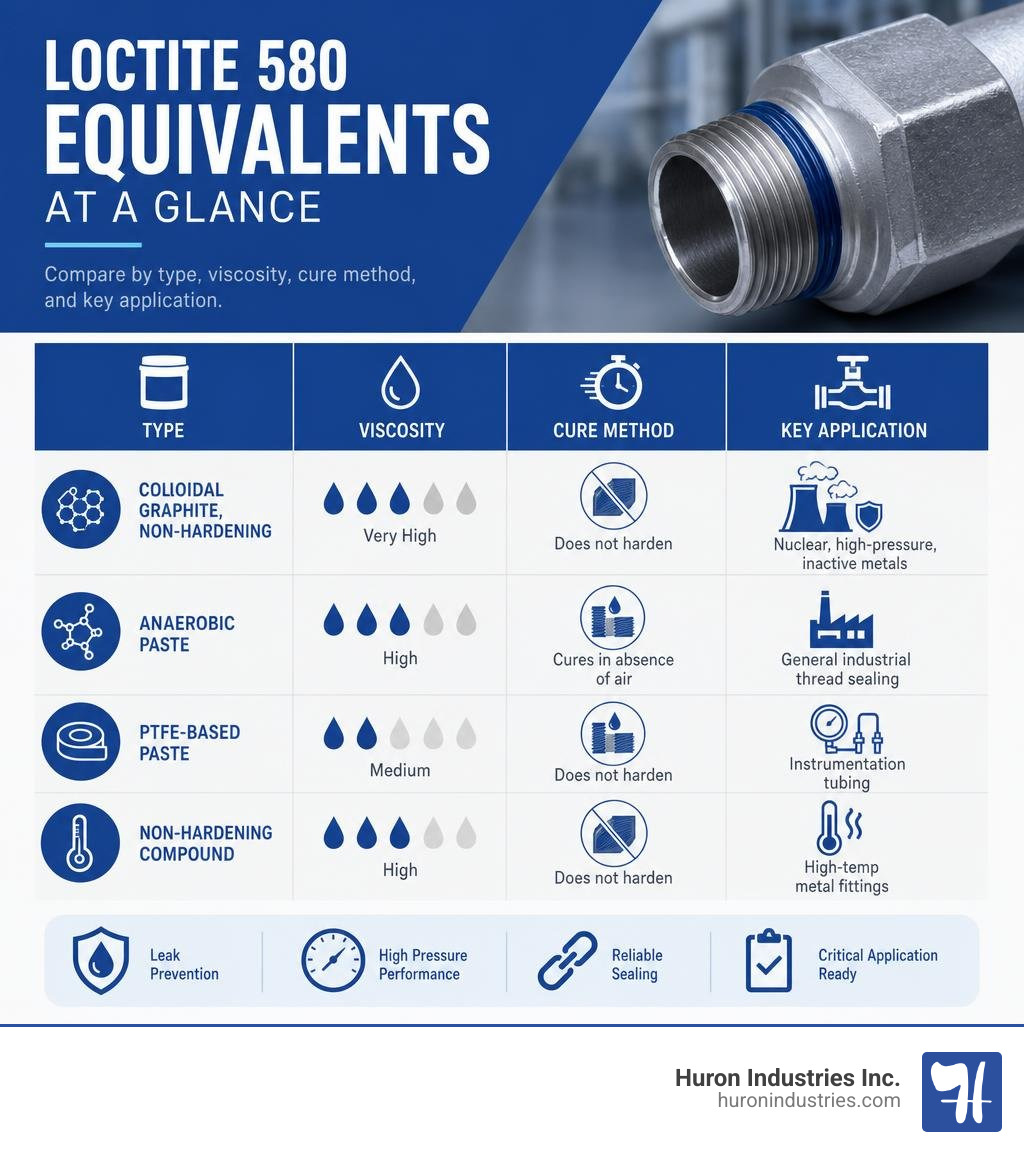
If you need a high-performance thread sealant alternative, here are the top options used in industrial, nuclear, and high-pressure piping applications:
| Equivalent | Type | Best For |
|---|---|---|
| Neolube No. 1260 | Colloidal graphite, non-hardening | Nuclear, high-pressure, inactive metals |
| Rectorseal T Plus 2 | Anaerobic paste | General industrial thread sealing |
| Swagelok Thread Sealant | PTFE-based paste | Instrumentation tubing |
| Jet-Lube KOPR-KOTE | Non-hardening compound | High-temp metal fittings |
Note: For nuclear-grade, low-halogen, low-sulfur applications, verify regulatory compliance before substituting any product.
High-viscosity anaerobic thread sealant pastes are widely used in power plants, hydraulic systems, and other critical piping applications. They cure in the absence of air between metal threads — locking and sealing without PTFE tape or separate mixing.
But these standard formulas aren't always available. And in regulated environments, a straight swap isn't always simple.
In 1984, the NRC's Information Notice 84-53 flagged serious problems with anaerobic sealants migrating when excess material was left uncured outside the joint. That notice is still referenced today in nuclear procurement discussions. It's a reminder that product selection and correct application both matter.
This guide breaks down the best alternatives, how they compare technically, and what to check before you make a substitution.
I'm Nicholas Cunha, founder of CreatiVertical and the content strategist behind Huron Industries Inc.'s digital program — where I've spent considerable time researching high-performance thread sealant options across nuclear, defense, and industrial markets to help procurement and engineering buyers make confident, compliance-aware sourcing decisions. That research is what this article is built on.
Understanding High-Viscosity Anaerobic Sealants: Technical Specifications and Applications
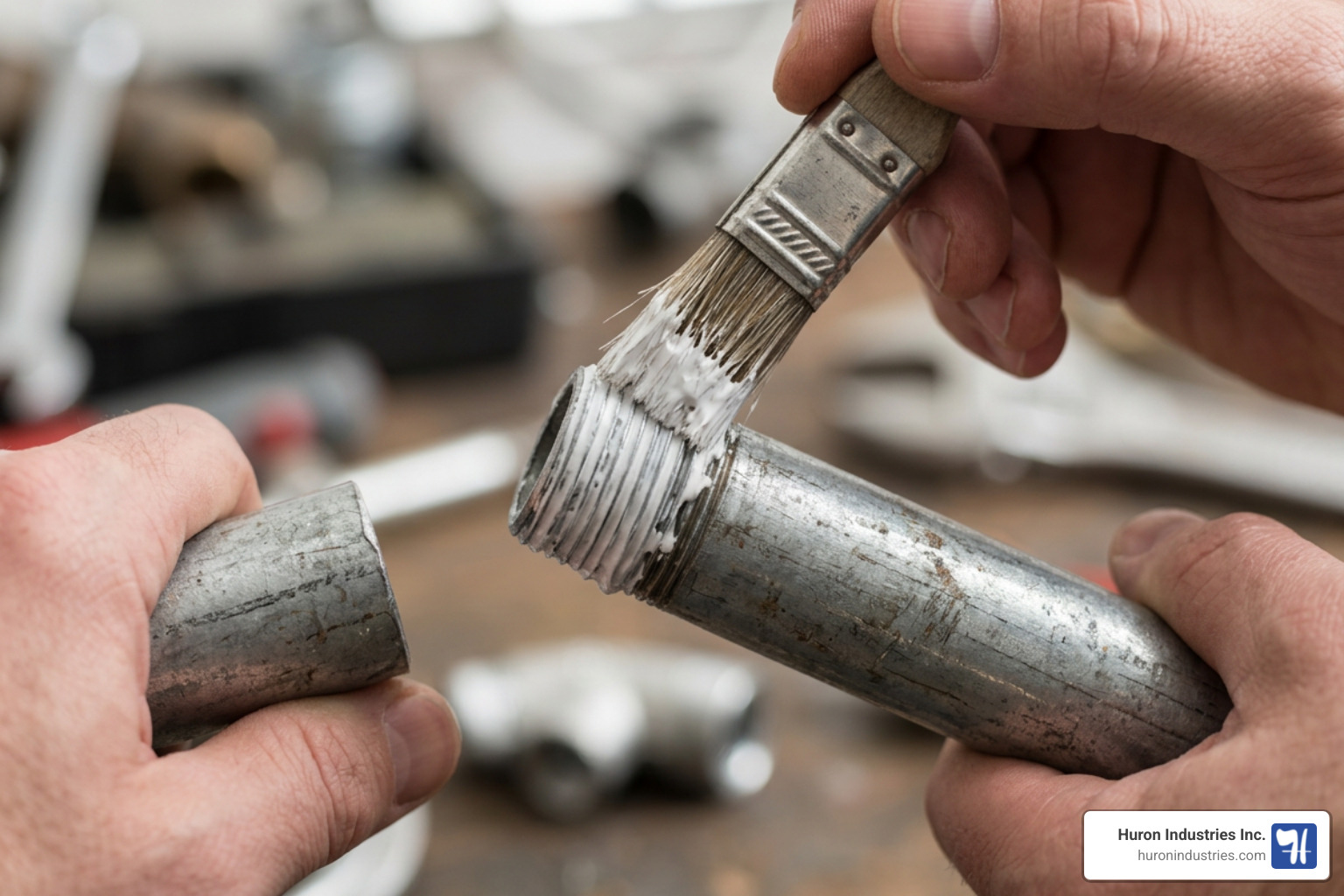
To find a true high-performance alternative, we first have to understand what makes standard anaerobic thread sealants tick. These medium-strength, very-high-viscosity anaerobic thread sealants are typically formulated with acrylic technology and a methacrylate ester chemical base.
One of their most notable design features is high viscosity, often ranging from 300,000 to 900,000 cPs at 25°C, giving them a smooth, creamy, paste-like consistency. This high viscosity is critical because it prevents the sealant from running off the threads before assembly and allows it to provide an immediate low-pressure seal. When you thread the joint together, the paste acts as a lubricant, allowing for precise torque. Once confined between the metal threads and deprived of oxygen, it cures into a tough, solid plastic.
For a deep dive into the official properties of standard formulas, you can review the LOCTITE ®580™ Datasheet. These products typically have a specific gravity of around 1.08, a thermal conductivity of 0.10 W/m°K, and are engineered for a service temperature range of -65°F to +300°F (-54°C to +150°C).
Crucially, nuclear-grade sealants are formulated to have ultra-low levels of impurities to prevent stress corrosion cracking in sensitive alloys. Specifically, chemical purity limits should meet:
- Halogen Content: ≤ 200 ppm
- Chlorine Content: ≤ 200 ppm
- Sulfur Content: ≤ 1,500 ppm
Because of these low-impurity thresholds, they are heavily used in fossil fuel, solar, hydro, and nuclear power plant piping systems. They are also found in instrumentation lines, water/coolant systems, fuel oil piping, low-pressure steam lines, pumps, valves, and rad-waste systems. Additionally, they are designed to cure on inactive metals (like stainless steel, aluminum, and plated parts) without requiring a chemical activator.
How do they compare to other common formulations? While high-viscosity thread sealants are designed for pipes, other products in the adhesive family serve completely different roles. For instance, standard medium-strength threadlockers have a much lower viscosity and are designed for locking fasteners, not sealing large pipe threads. High-strength threadlockers are meant for permanent assemblies.
Meanwhile, medium-strength anaerobic gasketing compounds are designed for close-fitting rigid metal flanges (with gaps up to 0.25 mm), rather than threaded pipes. You can check the Henkel Loctite 5800 Sealant, Gasketing: Form-in-place gasket Dimethacrylate ester 1-Part Liquid datasheet for more details on distinct gasketing properties.
| Product Type | Primary Purpose | Viscosity (cPs) | Strength | Typical Application |
|---|---|---|---|---|
| High-Viscosity Thread Sealant | Thread Sealing | 300,000 - 900,000 | Medium | Metal pipes, power plant systems |
| Medium-Strength Threadlocker | Threadlocking | 1,200 (Thixotropic) | Medium | Solenoid housing nuts, fasteners |
| High-Strength Threadlocker | Threadlocking | 7,000 | High | Permanent heavy-duty studs |
| Flange Gasketing Compound | Flange Gasketing | 11,000 - 81,300 | Medium | Gearbox and engine casing flanges |
The Danger of Sealant Migration: The Peach Bottom Unit 3 Incident
While anaerobic sealants are excellent tools, they have a major physical limitation: they only cure in the absence of air and in the presence of metal ions. Any excess sealant that squeezes out of the thread joint remains exposed to oxygen in the air. This means it stays in a liquid, uncured state indefinitely.
This characteristic was the root cause of a famous safety issue in the power industry: the Peach Bottom Unit 3 incident, which led to the publication of NRC Information Notice No. 84-53.
At the Peach Bottom nuclear facility, technicians used anaerobic threadlockers during maintenance on scram pilot solenoid valves. Because excess sealant was applied, a small amount of liquid compound migrated beyond the threads. Since it remained exposed to the air inside the valve housing, it did not cure. Over time, this liquid migrated into the internal moving parts of the solenoid. When exposed to heat and system dynamics, the migrated liquid eventually caused the solenoid plungers to stick, resulting in unacceptably long control rod scram times.
Similar failures occurred with safety injection pump impeller locknuts and feedwater isolation valves across other plants under construction. The lesson was clear: liquid migration of uncured anaerobic sealants poses a severe risk to sensitive mechanical and instrumentation components.
To prevent this, technicians must meticulously wipe away any excess anaerobic material. Alternatively, engineers can opt for non-hardening, non-migrating thread sealants that do not rely on anaerobic curing to maintain their physical state. If you are comparing these sealant mechanisms, read our detailed breakdown on Pipe Thread Sealant vs PTFE Tape to see how different physical forms behave under pressure.
Finding a High-Performance Thread Sealant Alternative
When sourcing a high-performance thread sealant alternative, you must match the technical requirements of your specific application. In general industrial settings, standard anaerobic pastes or PTFE-based thread dopes might suffice. However, in high-purity, high-pressure, or highly regulated environments, the search is much narrower.

Many commercial alternatives lack the low-halogen and low-sulfur purity required for nuclear and power generation systems. If you use a standard industrial sealant containing high levels of sulfur or halogens on stainless steel piping, you risk inducing stress corrosion cracking (SCC), which can lead to catastrophic pipe failures under high thermal or physical stress.
To find suitable commercial alternatives, engineers often consult databases like Materials Similar To: Loctite 580 (Henkel) to compare physical properties. However, for critical applications, you must look beyond standard adhesives to dedicated high-purity options. You can explore our general guide on Pipe Thread Sealant to understand the core differences between various sealant technologies.
Neolube No. 1260: The Premier Thread Sealant for Nuclear and High-Pressure Systems
For demanding environments where liquid migration, high pressures, or chemical purity are major concerns, my top recommendation is Neolube No. 1260.
Manufactured by us at Huron Industries Inc. in Port Huron, Michigan, Neolube No. 1260 is a high-purity, non-hardening thread sealant formulated with colloidal graphite in a thermoplastic resin. Unlike anaerobic sealants, Neolube No. 1260 does not rely on the absence of oxygen to cure. Instead, it dries to a stable, non-hardening, flexible solid that provides outstanding sealing and vibration resistance without any risk of liquid migration.
It is specifically engineered for high-pressure systems, rated to withstand pressures up to 2300 PSI. This makes it an exceptional choice for critical piping, instrumentation, and hydraulic lines. To learn more about its pressure capabilities, check out the High Pressure Thread Sealant 2300 PSI Neolube 1260 product page.
Because it is non-hardening, Neolube No. 1260 provides excellent thread lubrication during assembly, preventing galling on stainless steel and other inactive metals. It also allows for easy non-destructive disassembly with standard hand tools, even after years of high-temperature service. For full technical details and safety profiles, you can download the Neolube No. 1260 Technical Datasheet and the Neolube No. 1260 Safety Datasheet.
How to Evaluate a Thread Sealant for Regulatory Compliance
When evaluating any thread sealant for use in nuclear or critical industrial applications, you must perform a thorough regulatory and technical review. Here is my recommended checklist for verifying a high-performance alternative:
- Chemical Purity: Ensure the sealant is certified to have low halogen (specifically chlorine) and low sulfur levels. For nuclear-grade applications, chlorine and total halogens should typically be under 200 ppm, and sulfur should be under 1,000 to 1,500 ppm.
- No Intentionally Added Heavy Metals: The sealant must not contain directly added lead, zinc, mercury, antimony, or copper, which can cause embrittlement in sensitive alloys.
- Substrate Compatibility: Verify that the sealant will perform on your specific piping material. If you are using stainless steel, titanium, or other inactive alloys, an anaerobic sealant may require a chemical activator to cure fully, whereas a non-hardening graphite-based sealant like Neolube No. 1260 works immediately without any surface pre-treatment.
- Temperature and Pressure Ratings: Ensure the operating temperature of your system falls within the sealant's rated limits. For extreme environments, you should consult our resource on High Temperature Thread Sealant for Critical Service Applications.
- Curing Mechanism: Decide whether your system can tolerate the risk of liquid migration. If you are sealing threads near delicate solenoids, actuators, or instrumentation lines, a non-hardening compound is often the safer, more reliable choice. You can read more about these mechanical differences in our article on Non-Hardening vs Hard Setting Thread Sealant Neolube.
Best Practices for Applying Thread Sealants in High-Risk Environments
Even the highest-quality thread sealant will fail if applied incorrectly. To ensure a leak-free seal and prevent system contamination, follow these industry best practices:
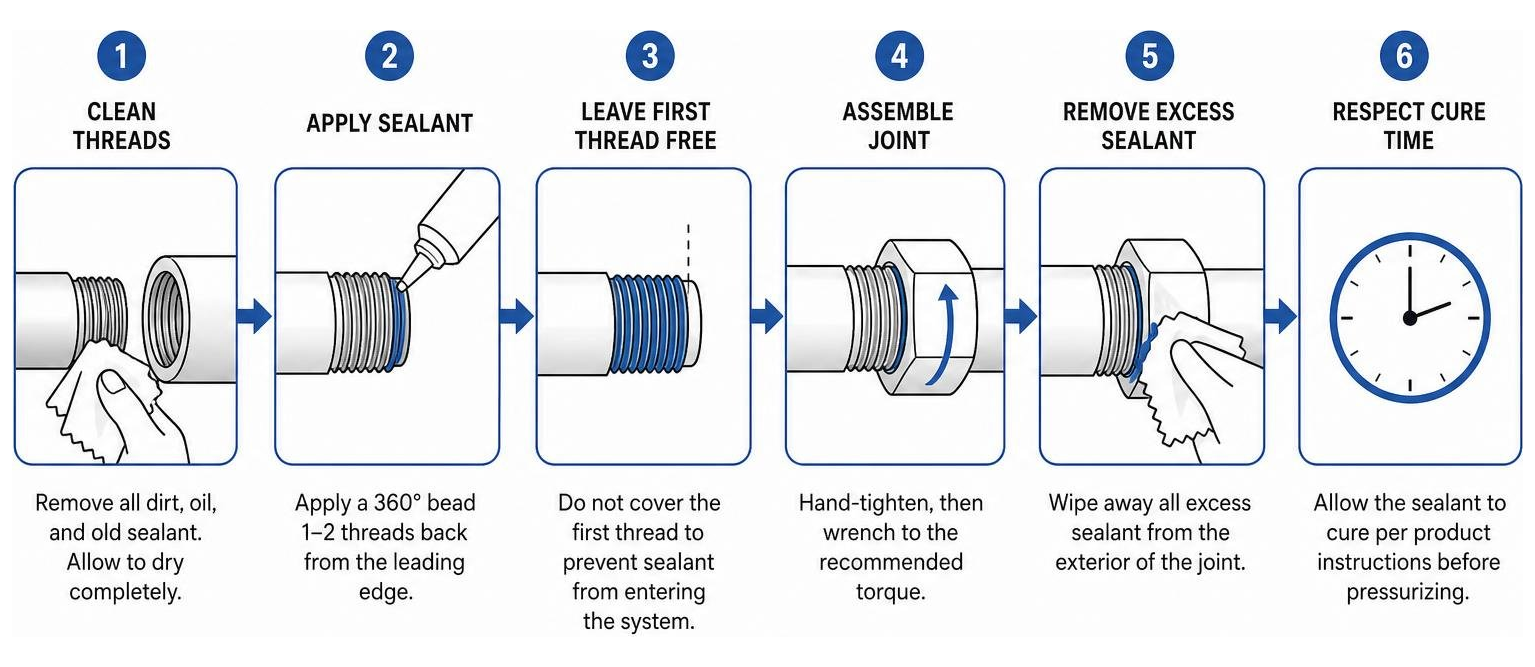
- Clean the Threads Thoroughly: Before applying any sealant, clean both male and female threads using a compatible solvent cleaner to remove all grease, oil, cutting fluids, and old sealant residue. Allow the surfaces to dry completely.
- Apply a 360-Degree Bead: Apply a continuous bead of sealant around the male thread, starting one to two threads back from the leading edge. Leaving the first thread free prevents the sealant from being sheared off and pushed inside the pipe during assembly, where it could clog downstream valves or filters.
- Do Not Over-Apply: Use only enough sealant to fill the thread roots. Excess sealant will squeeze out of the joint. If using an anaerobic sealant, you must meticulously wipe away any excess liquid on the exterior of the joint to prevent migration issues like those seen at Peach Bottom.
- Respect the Cure Time: If using an anaerobic sealant, allow the assembly to cure for a minimum of 24 hours at room temperature (22°C) to achieve full pressure and chemical resistance before pressurizing the system. If you are working on hydraulic systems or air compressor lines, you can find specialized guidance in our guide on Thread Sealant for Hydraulic Fittings and Compressor Lines.
Frequently Asked Questions About High-Purity Thread Sealant Alternatives
What is the best non-hardening alternative to standard anaerobic thread sealants?
The premier non-hardening alternative is Neolube No. 1260. Because it is formulated with high-purity colloidal graphite in a thermoplastic resin, it provides excellent thread lubrication, outstanding vibration resistance, and pressure sealing up to 2300 PSI without the risk of liquid migration associated with uncured anaerobic sealants.
Can anaerobic thread sealants be used on stainless steel without an activator?
Yes, many high-viscosity anaerobic sealants are formulated to cure on stainless steel and other inactive metal surfaces without the need for a separate chemical activator. However, because stainless steel is less chemically active than copper or mild steel, the cure speed will be slower, and full cure may take up to 24 hours at room temperature.
Where can I find the TDS and SDS for Neolube products and other alternatives?
You can find current Technical Data Sheets (TDS) and Safety Data Sheets (SDS) on the official manufacturer portals. For Neolube products, these are available directly on our website. Always ensure you are reviewing the most up-to-date documentation to maintain regulatory and safety compliance at your facility.
Conclusion
Finding a reliable high-performance thread sealant alternative doesn't have to be a headache. Whether you choose to stick with a traditional anaerobic paste or transition to a high-performance, non-hardening colloidal graphite compound like Neolube No. 1260, understanding your system's purity, pressure, and migration risks is the key to making the right choice.
At Huron Industries Inc., we have been manufacturing certified, high-purity specialty lubricants and sealants in Port Huron, Michigan since 1971. Our products are trusted in the most demanding commercial and naval nuclear reactor systems.
If you are looking for a reliable, nuclear-grade lubricant and sealant for your facility, Purchase Neolube No. 100 today, or reach out to our technical team to discuss the best sealing solution for your specific application.