
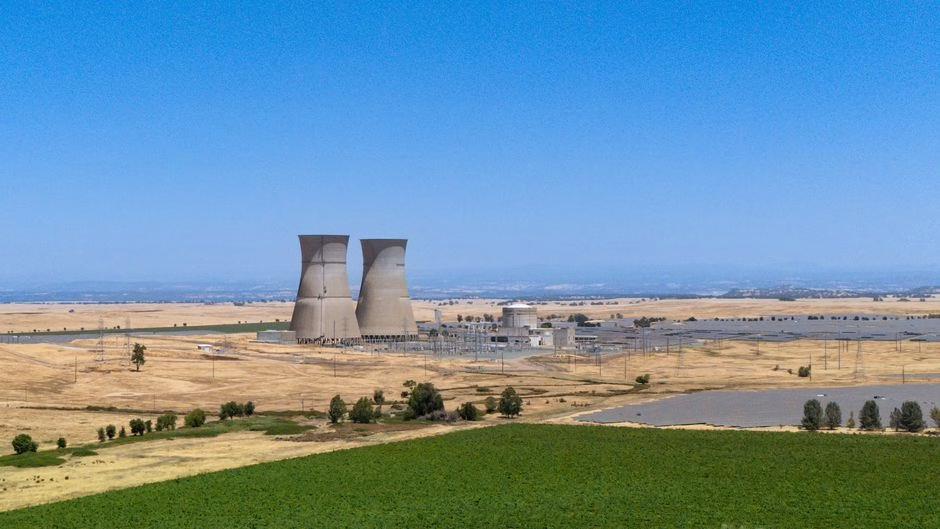
Why Engineering Nuclear Sorbent Matters for Nuclear Safety
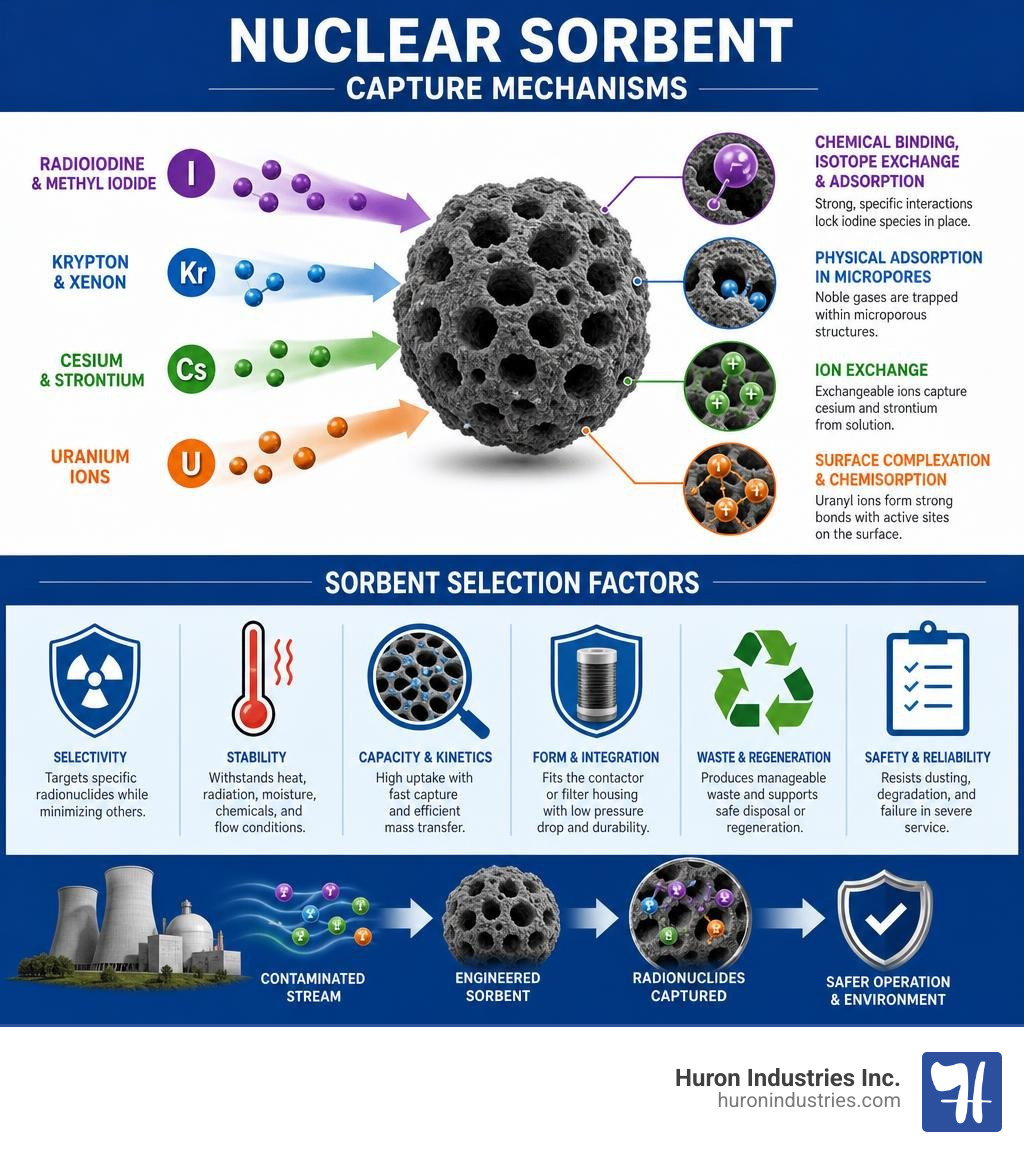
Engineering nuclear sorbent means designing a porous material to capture specific radioactive gases, liquids, or ions while withstanding the heat, radiation, moisture, chemicals, and flow conditions of a nuclear facility.
At a high level, the right sorbent depends on the radionuclide and waste stream:
| Target contaminant | Typical capture approach | Common engineering priority |
|---|---|---|
| Radioiodine and methyl iodide | Chemical binding, isotope exchange, and adsorption | High selectivity in humid air and steam |
| Krypton and xenon | Physical adsorption in micropores | Pore structure, cooling needs, and fire safety |
| Cesium and strontium | Ion exchange | Fast liquid-phase mass transfer and low secondary waste |
| Uranium ions | Surface complexation and chemisorption | High capacity, recovery, and chemical durability |
This is not simply a matter of choosing the material with the highest surface area. A nuclear sorbent must also resist breakdown, avoid dusting and pressure-drop problems, fit the contactor or filter housing, and leave behind a manageable waste form after use. In severe applications, it may need to retain volatile iodine at elevated temperatures, endure high radiation exposure, or operate in corrosive molten-salt systems.
For maintenance and procurement teams, those details affect containment reliability, worker exposure, downtime, waste volume, and the practical cost of operating a filtration or treatment system.
I am Nicholas Cunha, founder of CreatiVertical and a technical B2B content specialist working with Huron Industries Inc. on compliance-aware industrial materials. My experience translating demanding specifications for regulated buyers informs this guide to engineering nuclear sorbent materials, performance limits, and sourcing considerations.
Engineering nuclear sorbent basics:
Engineering Nuclear Sorbent Performance: Mechanics and Material Specifications
When I evaluate how nuclear materials interact with volatile radionuclides and dissolved contaminants, I look closely at the underlying binding mechanisms. The capture process isn't a one-size-fits-all phenomenon; it relies on distinct physical and chemical pathways tailored to specific fission products.
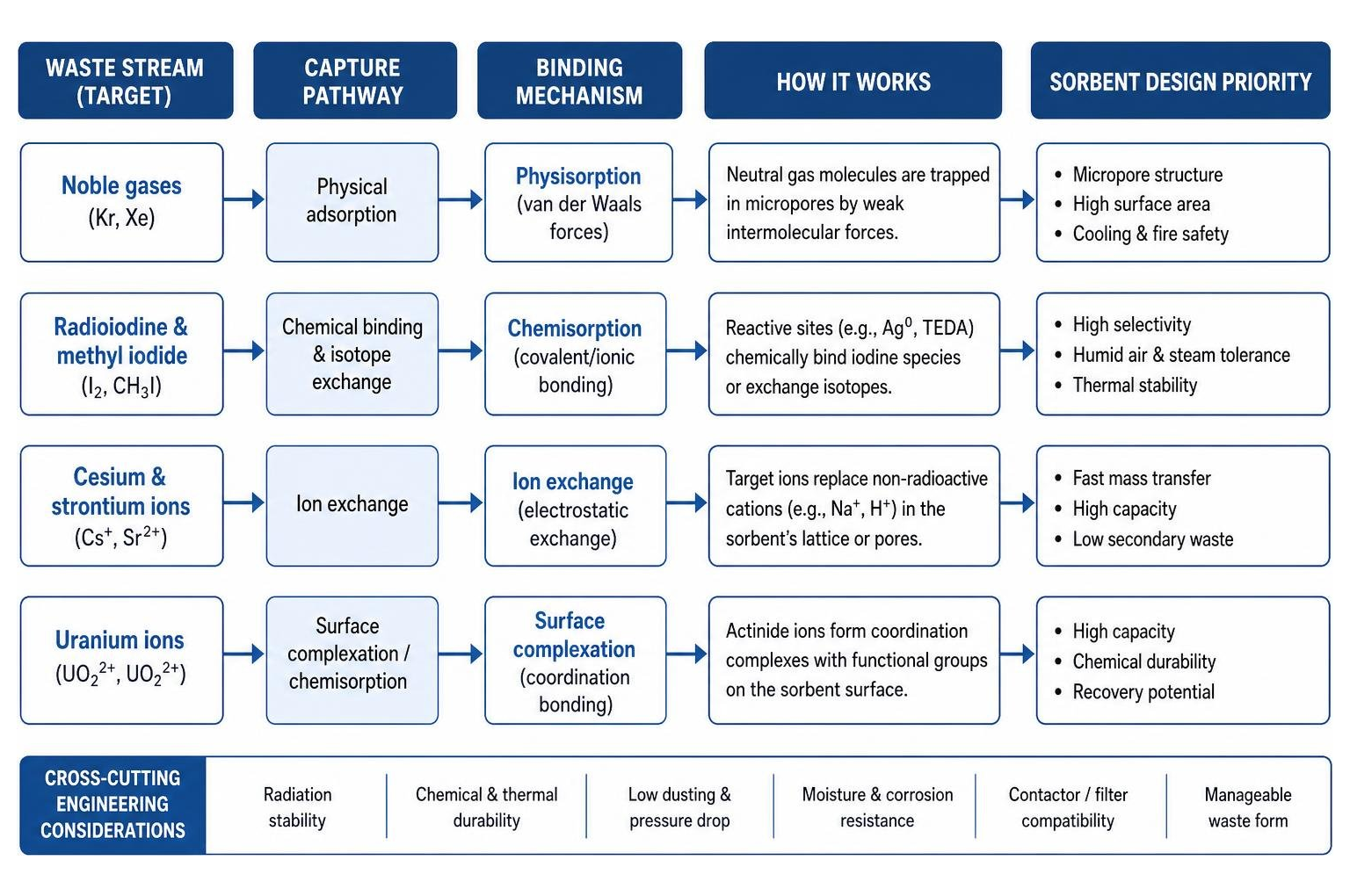
- Physisorption (Physical Adsorption): Weak van der Waals forces trap neutral, non-reactive gases like noble krypton-85 and xenon-133 within narrow pore structures. Because no chemical bonds are formed, physisorption works best at lower temperatures, though high micropore volume is required to hold onto the gas.
- Chemisorption (Chemical Adsorption): Strong covalent or ionic bonds form between the sorbent surface and volatile species such as molecular iodine (I₂) or organic methyl iodide (CH₃I). Impregnating sorbent substrates with reactive agents—such as silver (Ag) or triethylenediamine (TEDA)—enables chemisorption and isotopic exchange, keeping volatile halogens bound tightly even when temperatures fluctuate.
- Ion Exchange: Charged ionic contaminants like cesium (Cs⁺) and strontium (Sr²⁺) in aqueous waste streams replace non-radioactive cations (such as Na⁺ or H⁺) located within crystalline lattice framework sites.
- Surface Complexation: Actinides such as hexavalent uranium (U(VI)) form coordination complexes with targeted functional groups (like amine or carboxyl groups) anchored to solid matrices. Breakthrough Uranium extraction research demonstrates how functionalized frameworks achieve extraordinary extraction yields from nuclear effluents.
To ensure these mechanisms hold up in demanding operating environments, materials must satisfy strict Chemical radiation resistance parameters to prevent lattice breakdown under intense gamma and beta irradiation.
Core Material Selection in Engineering Nuclear Sorbent Frameworks
Building a high-performance sorbent requires striking a fine balance between molecular geometry and structural stability. Maximizing surface area is helpful, but if you collapse the micropore volume, the sorbent loses its ability to trap small gas molecules.
Key geometric and thermodynamic considerations include:
- Pore Size Optimization: Tailoring pore apertures to match the kinetic diameter of target molecules prevents non-target gases from competing for active sites.
- Micropore Volume Retention: Retaining deep micropores ensures high storage density under dynamic flow conditions.
- Gibbs Surface Excess: This empirically measured value defines the actual concentration of gas molecules adhering to the sorbent surface above baseline gas law expectations, providing an accurate measure of true uptake.
Furthermore, long-term operational success depends on thorough Thermal stability evaluation to confirm the sorbent substrate won't degrade, shrink, or desorb trapped contaminants under heat loads.
Radionuclide Selectivity and Capture Thermodynamics
Understanding sorbent capacity requires reviewing fundamental thermodynamic models. Equilibrium data for monolayer chemisorption is commonly modeled using the Langmuir Isotherm Model, which relates the equilibrium adsorbate loading on the sorbent to the maximum monolayer capacity, the Langmuir affinity constant, and the equilibrium concentration of contaminant in solution. In plain terms, the model predicts how much contaminant a given mass of sorbent can hold at a specific contaminant concentration, with the affinity constant indicating how strongly the contaminant binds to the surface.
While Henry's Law values describe differential enthalpy at zero surface coverage, real-world systems experience coverage-dependent changes. We rely on the isosteric enthalpy of adsorption, which measures binding energy across varying surface loadings to track how performance shifts as the sorbent fills up.
For volatile organic radioiodine species like methyl iodide, traditional physisorption falls short. Benchmark materials like silver-exchanged mordenite (Ag-MOR) capture methyl iodide by forming stable silver iodide (AgI) precipitates within zeolitic channels, preventing early desorption during temperature spikes.
High-Temperature and Radiation Resilience in Extreme Nuclear Environments
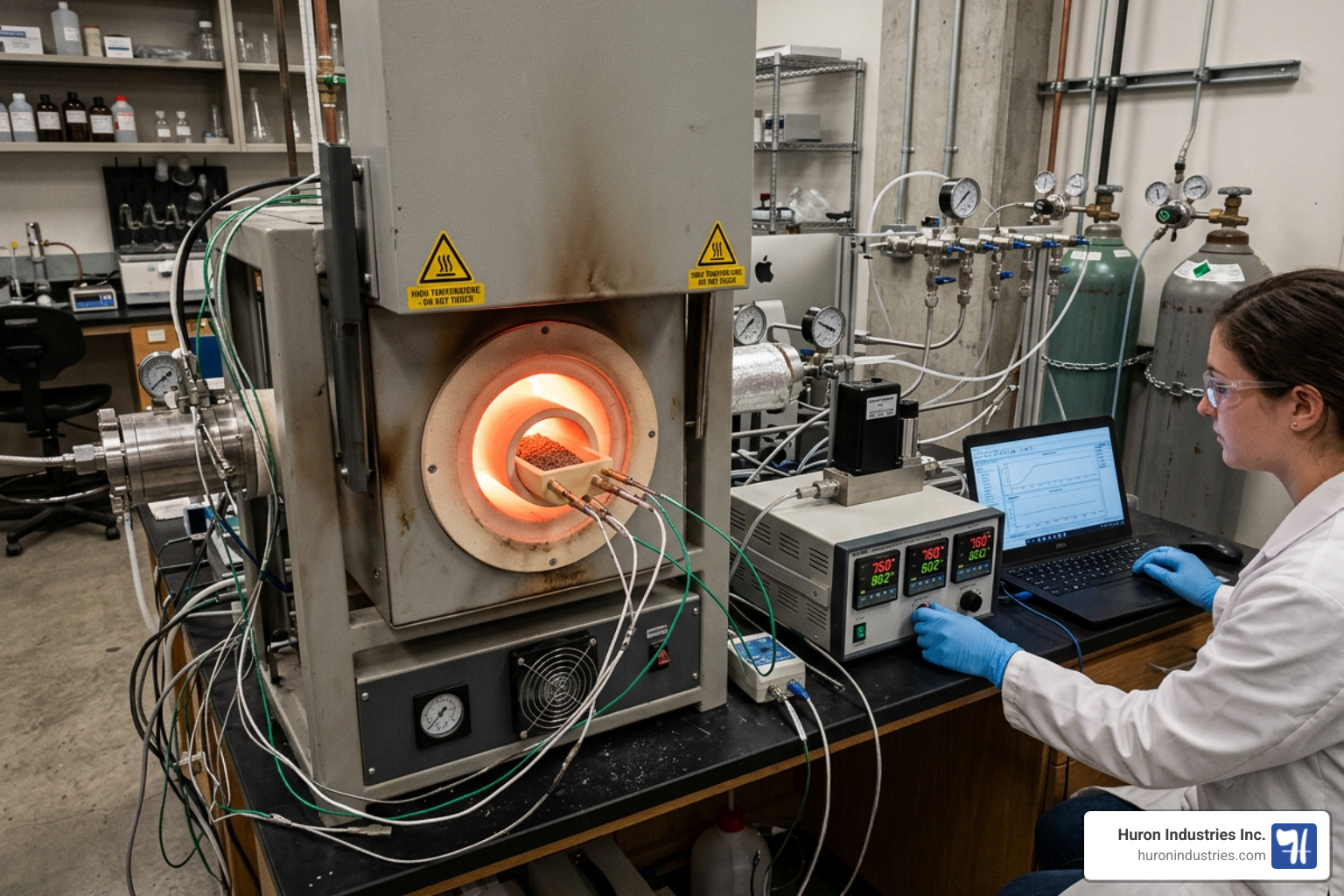
Operating sorbents in primary reactor loops or emergency containment exhaust systems demands extreme physical resilience. In advanced designs like molten salt reactors (MSRs), sorbents operate directly in liquid fluoride salt mixtures at temperatures between 600°C and 800°C. Meanwhile, emergency containment filters must survive high steam ratios, corrosive atmospheres, and radiation doses exceeding 500 MRad without releasing trapped radioisotopes or creating fire risks. Explore current Molten salt reactor adsorbent research for insight into high-temperature fission product capture.
Engineering Nuclear Sorbent Materials for Extreme Thermal and Radiation Stability
Metal-organic frameworks (MOFs) have transformed high-temperature gas and ion separation. The zirconium-based framework UiO-66 is a primary example of this progress:
- Thermal Solvolysis Synthesis: Synthesizing UiO-66 under precise autoclaving conditions creates a dense, defect-controlled crystal structure capable of withstanding operating environments up to 600°C.
- Chemical and Fluoride Resistance: UiO-66 resists acidic environments and fluoride attack, making it suitable for online fission product capture in molten salt loops.
- Functional Doping: Doping UiO-66 with 5 wt% to 25 wt% sulfur (using non-oxygen-bearing precursors like L-cysteine) or impregnating it with tungsten metal nanoparticles significantly increases its binding affinity for fission products like molybdenum-99 (Mo-99).
Fire-Resistant Carbon Composites and Passive Containment Filtering
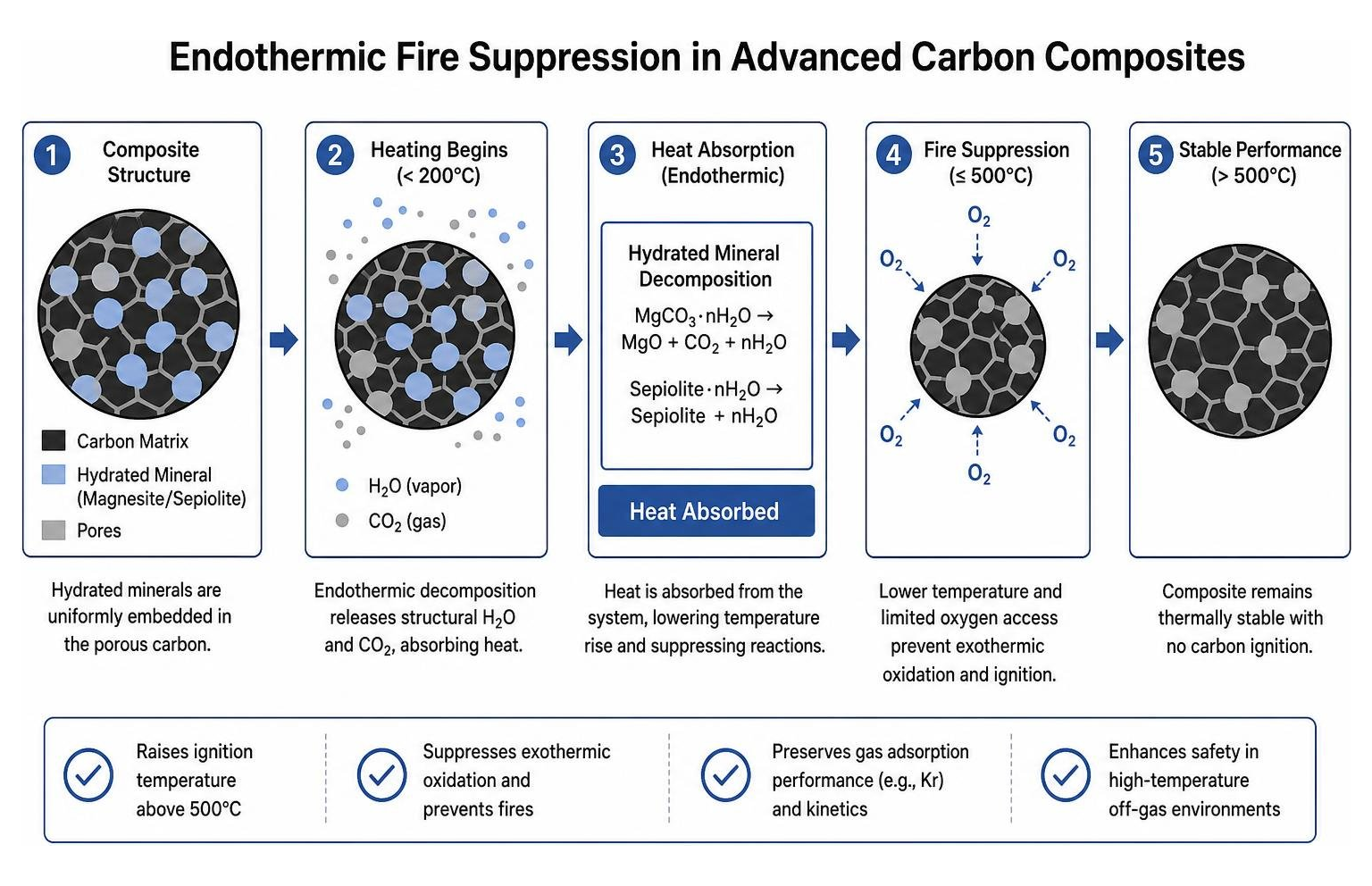
Standard activated carbon exhibits strong radioiodine capture, but it carries a major operational risk: an ignition threshold around 250°C. In an off-gas stream, exothermic oxidation can spark carbon fires that release concentrated radioactive waste.
To eliminate this hazard, material scientists developed advanced carbon composites. Incorporating 15 wt% to 40 wt% hydrated magnesite (or 30 wt% to 50 wt% sepiolite) into the carbon matrix raises the spontaneous ignition temperature above 500°C. When heated, the embedded hydrated minerals endothermically release structural water and CO₂ below 200°C, suppressing oxidative reactions while preserving noble gas capture kinetics. Specifically, the krypton uptake rate constant remains at or above 0.35 milligrams per gram per minute at 25°C. Details can be found in the Fire-resistant activated carbon patent.
For severe accident management during station blackout events, passive intercontainment filtration systems rely on robust inorganic sorbents. Large-pore silica gels impregnated with nanometric silver or silver-nickel compounds act as effective passive barriers. As highlighted in research on Passive containment granular sorbents, these granular materials retain methyl iodide and elemental iodine with decontamination factors exceeding 1,000 and 10,000 respectively across steam-gas temperatures up to 280°C, withholding trapped iodine until temperatures top 600°C.
Sorbent Architecture Optimization: Core-Shell, MOFs, and Composite Aerogels
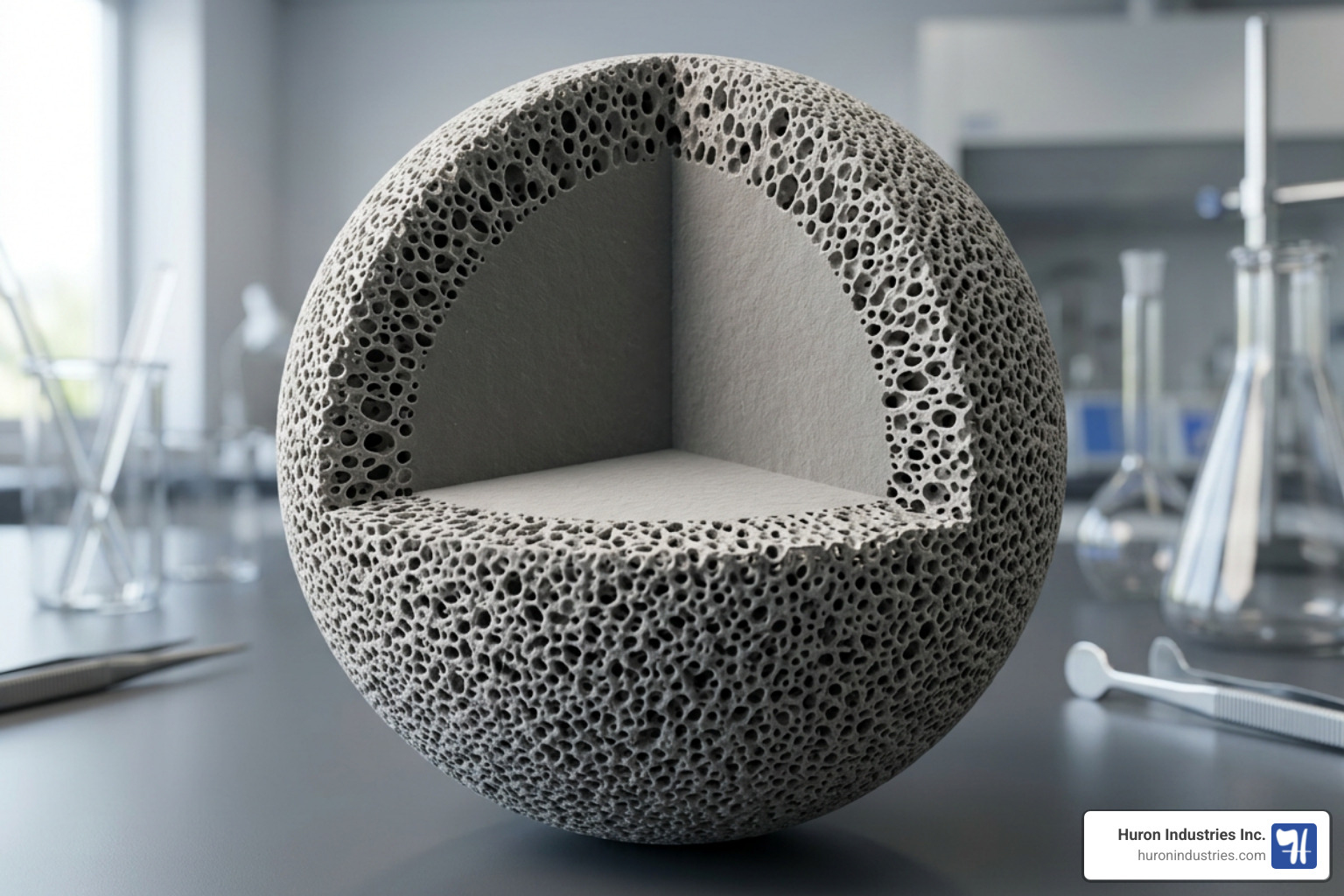
Modern sorbent engineering has moved past simple bulk granules. By structuring architecture at the micro- and nano-scales, material developers can decouple internal transport limits from surface chemical reactions.
Advancements include:
- Core-Shell Architecture: Standard porous beads often suffer from slow internal diffusion, leaving active material in the center unused. Core-shell designs place the active sorbent phase exclusively in a thin outer layer (10 wt% to 50 wt% of total mass; 20 to 100 µm thickness). This configuration keeps mass transfer paths short while reducing total active material consumption.
- Double-Network Aerogel Composite Microspheres: Immobilizing powdered MOFs like NH₂-MIL-125 within a biopolymer/synthetic polymer matrix (such as sodium alginate and poly(acrylic acid)) creates porous, easily recoverable microspheres. This setup achieves high uranium monolayer chemisorption without releasing fine powders into treated water.
Consult the landmark Core-shell ion exchange patent for structural specifications, and review tailored Nuclear application solutions to see how engineered media fit into facility maintenance.
Vitrification Compatibility and Waste Minimization
Capturing contaminants is only half the battle; spent sorbents must ultimately be conditioned into stable, permanent waste forms like borosilicate glass.
Core-shell architecture offers a clear edge here:
- Glass-Forming Cores: Engineering the core out of silica, silicates, or ceramic precursors means the core material acts as a fluxing agent during downstream thermal vitrification.
- Dual Ionic Targeting: A core made from granular chabazite zeolite wrapped in a monosodium titanate (MST) shell can capture radioactive cesium (in the core) and strontium (in the shell) simultaneously.
- Direct Glassification: Spent core-shell sorbents melt smoothly into standardized glass canisters without requiring chemical separation, minimizing overall secondary waste volume and reducing waste disposal surcharges.
Advanced Material Innovations vs Industry Benchmarks
Comparing novel sorbent formulations against traditional materials like silver mordenite (Ag-MOR) and standard activated carbon highlights clear performance advantages across capacity, operational limits, and safety metrics:
| Sorbent Material | Target Radionuclide | Decontamination Factor (DF) | Max Adsorption Capacity | Thermal & Operational Limits | Primary Structural Advantage |
|---|---|---|---|---|---|
| Silver Mordenite (Ag-MOR) | I₂, CH₃I, Kr-85 | 100 to 1,000 | Baseline benchmark (~100 mg/g I₂) | Up to 150°C; vulnerable to pore blocking | Crystalline zeolitic channels with embedded Ag⁺ |
| C/ETS-10 Composite | Kr-85, I₂ | Greater than 1,000 | 2x Kr capacity vs Ag-MOR | Ambient to 200°C | Carbon-supported titanosilicate with high micropore volume |
| UiO-66 (S-Doped MOF) | Mo-99, Fission Products | Greater than 1,000 | High selective binding | 600°C to 800°C; fluoride gas resistant | Zirconium framework synthesized via thermal solvolysis |
| Fizkhimin (Ag-Silica Gel) | CH₃I, I₂ | 10,000 or greater | Greater than 99.99% removal efficiency | Desorption threshold above 600°C; 500 MRad resistant | Nanometric Ag-Ni clusters on large-pore silica gel |
| NM@SA Aerogel | U(VI) Ions | N/A (Liquid phase) | 703.6 mg/g (Langmuir model) | Aqueous stability across broad pH range | NH₂-MIL-125 MOF immobilized in double-network aerogel |
| Fire-Resistant Carbon | Kr-85, Xe-133, VOCs | Greater than 100 | Krypton uptake rate constant at or above 0.35 mg/g per minute | Spontaneous ignition temperature at or above 500°C | Embedded hydromagnesite for endothermic fire suppression |
Industrial Scale-Up and Operational Implementation Challenges
Moving a synthetic sorbent from an academic lab to an industrial nuclear facility introduces severe mechanical and physical constraints. A material that performs well in a small test tube may crack, erode, or clog an industrial filter column when subjected to real-world gas velocities.
Key mechanical requirements include:
- Attrition Resistance: Granules must resist crushing under dynamic bed loads.
- Dust Formation Control: Fine particles generated by friction can clog downstream filter banks, cause pressure spikes, and spread localized contamination.
- Batch Reproducibility: Mass-produced sorbent batches must meet strict purity, density, and kinetic standards.
Maintaining Nuclear grade material traceability across every batch of raw inputs, chemical binders, and finished media ensures full regulatory compliance.
Hydrodynamic Flow Optimization and Matrix Carrier Systems
To eliminate high pressure drops in high-velocity air ventilation systems, process engineers often deposit powdered sorbents onto open-cell matrix carriers.
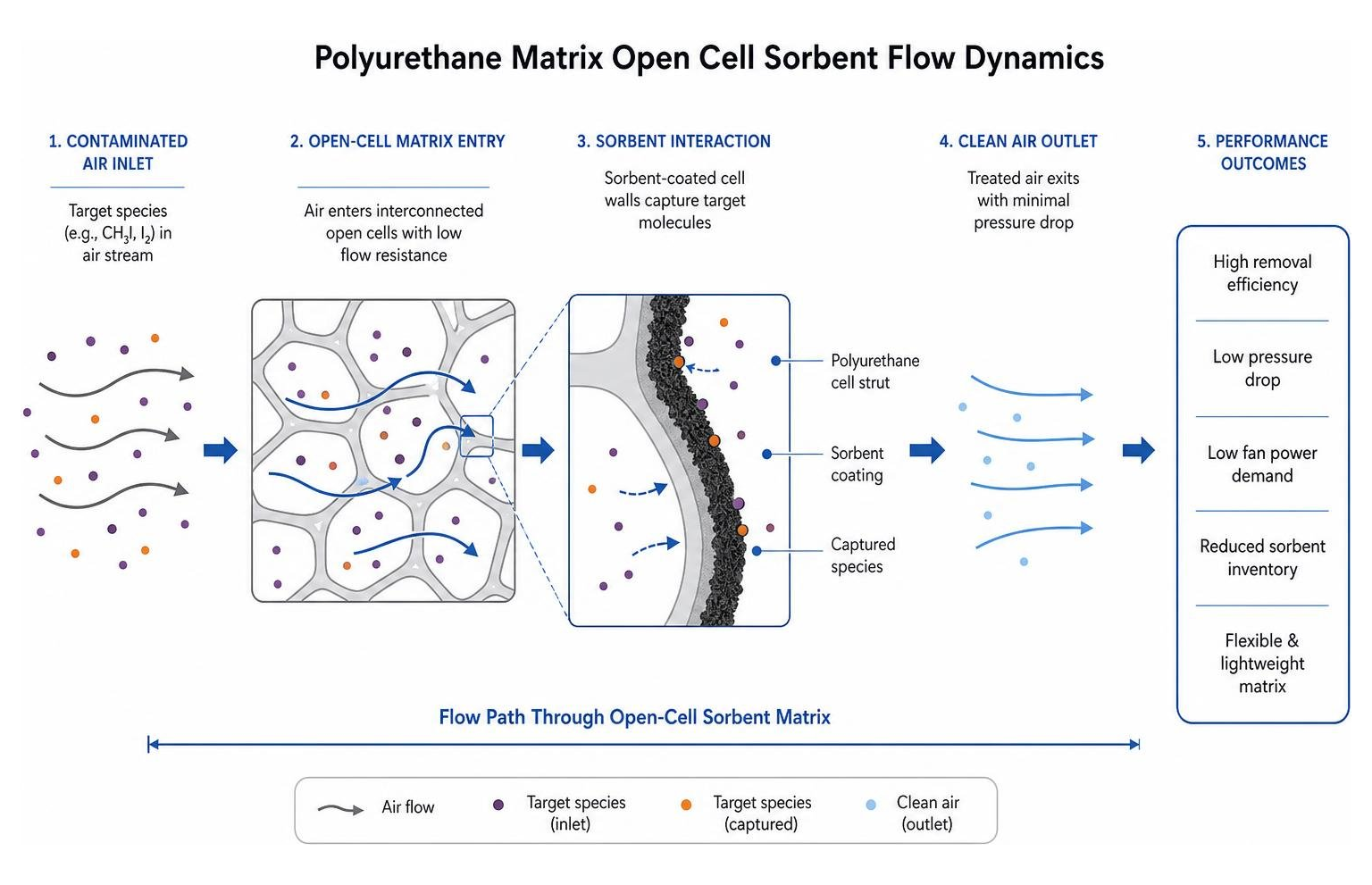
For example, applying fine coconut shell charcoal powder (impregnated with 4 wt% triethylenediamine) onto a flexible polyurethane foam matrix uses up to 10 times less active carbon than traditional packed beds. This open-cell design achieves 99.5% methyl iodide removal while maintaining a low pressure drop that cuts fan power demands by an order of magnitude.
When designing fixed-bed contactors, engineers rely on mass-transfer breakthrough models rather than simple kinetic approximations. Factoring internal pore diffusion and film transfer dynamics into transport equations makes it easier to predict breakthrough curves accurately across varying column scales.
Maintenance Sorbents in Reactor Containment and Spill Mitigation
Routine facility operations, maintenance outages, and emergency response calls demand fast, reliable spill control media. When liquid waste containing dissolved radionuclides leaks during pump overhauls or valve servicing, maintenance crews need specialized spill sorbents that can rapidly absorb aqueous contaminants without expanding into large volumes of secondary waste.
Deploying engineered containment products like NEOSafe spill protection sorbents allows response teams to clean up liquid spills safely, control airborne vapor release, and stay fully compliant with nuclear waste handling guidelines.
Frequently Asked Questions About Nuclear Sorbents
How do core-shell sorbent particles simplify downstream nuclear waste vitrification?
Core-shell sorbents place active ion-exchange materials exclusively in a thin outer shell (10 wt% to 50 wt% of total mass) around a solid core made from silica, silicates, or ceramic precursors. During spent sorbent processing, the inner core acts as a natural glass-forming flux. Spent particles can be mixed directly into vitrification melters without requiring chemical separation or adding extra glass formers, turning liquid radioactive waste directly into stable borosilicate glass blocks.
Why is radioactive methyl iodide more difficult to capture than elemental iodine?
Elemental iodine (I₂) is a non-polar molecule that binds easily to basic carbon surfaces via physical adsorption. Methyl iodide (CH₃I), however, is an organic compound that resists weak physisorption. Capturing methyl iodide requires active chemisorption or nucleophilic isotopic exchange. This is typically achieved by impregnating sorbent substrates with reactive compounds like triethylenediamine (TEDA) or nanometric silver (Ag), which break the covalent carbon-iodine bond to lock the radioiodine in place.
How do metal-organic frameworks withstand extreme molten salt reactor conditions?
Metal-organic frameworks like UiO-66 achieve high thermal and chemical durability through defect-controlled synthesis methods like thermal solvolysis in autoclaves. This produces strong coordination bonds between zirconium metal nodes and organic linkers. The resulting framework maintains structural integrity up to 600°C to 800°C, resists corrosive fluoride gas environments, and retains its porous structure without collapsing during online fission product extraction from liquid fuel salt loops.
Conclusion
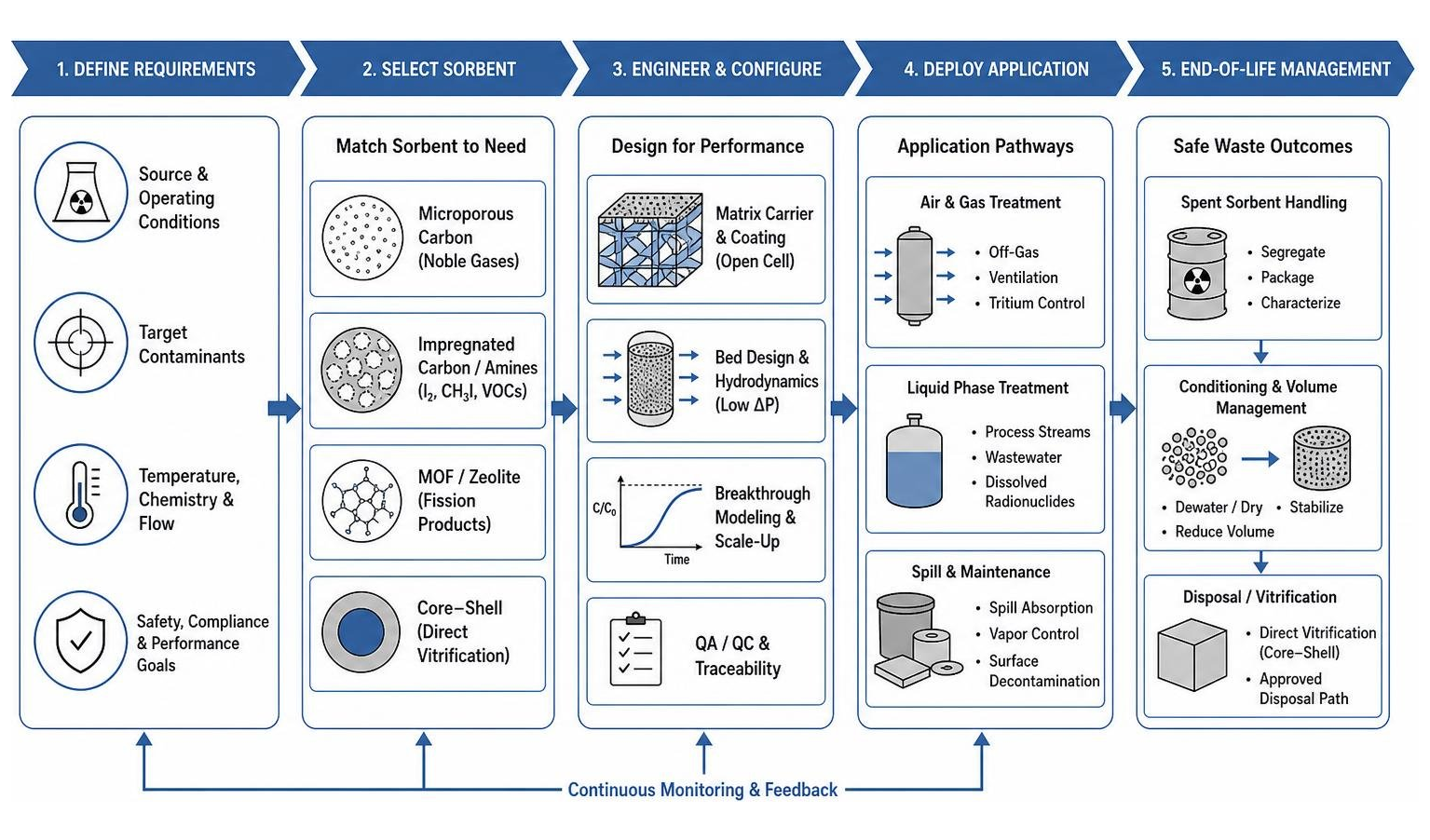
Engineering effective nuclear sorbents requires balancing multiple physical and chemical parameters. From selecting fine micropores for noble gas entrapment to building high-temperature MOF frameworks and fire-resistant carbon matrices, every material modification directly improves facility safety, operational uptime, and long-term environmental protection.
At Huron Industries Inc., we bring over five decades of certified material performance to the nuclear power industry. Whether you are maintaining main reactor cooling loops, specifying fire-resistant air filtration media, or managing routine spill containment, using high-purity, fully traceable materials ensures your facility stays safe and fully compliant with nuclear regulations.
Explore CaseLube and nuclear-grade specialty products to learn how our tested materials support your operational and maintenance requirements.