
Choosing Thread Sealant for Fuel Oil Piping
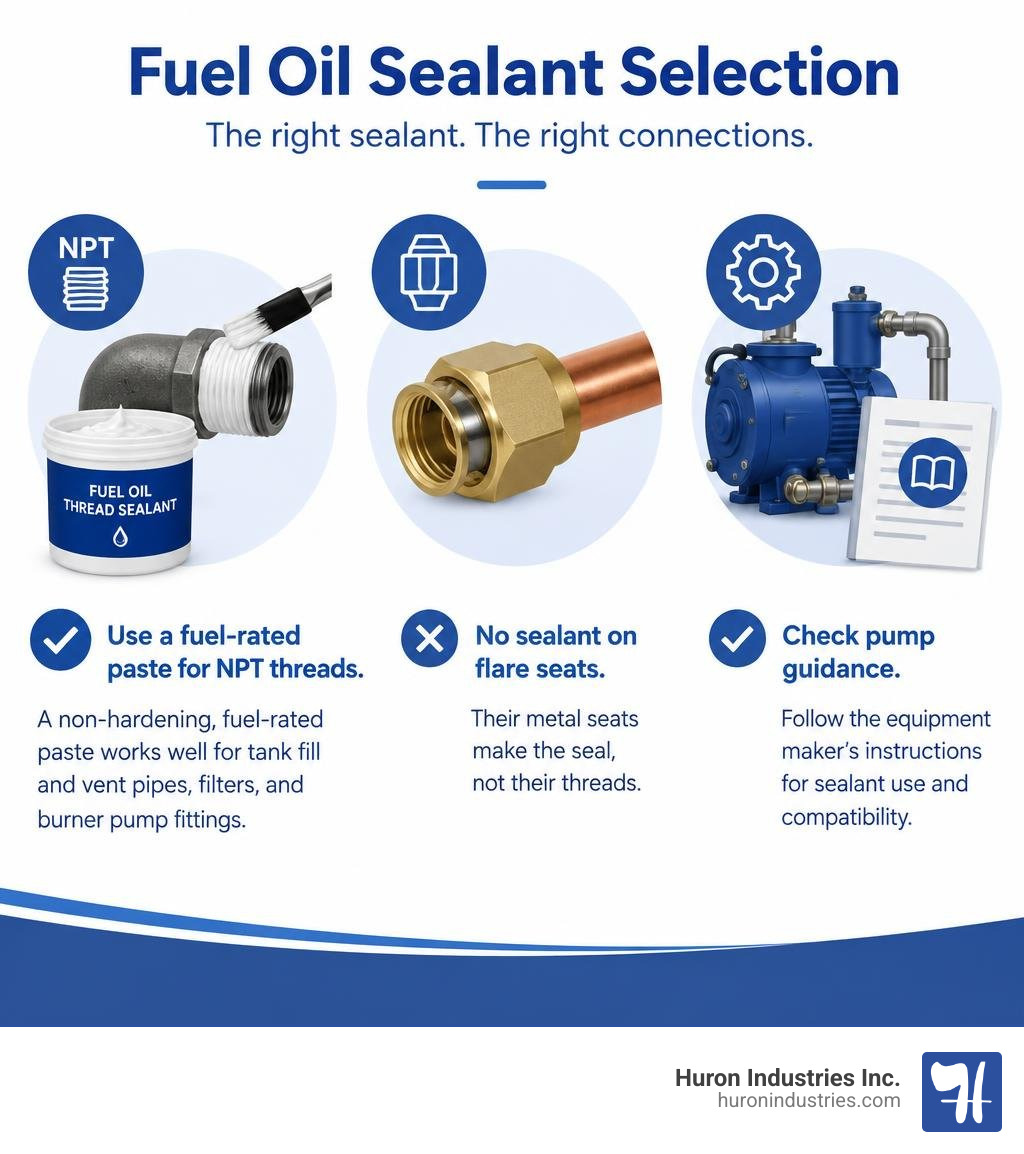
Use a pipe thread sealant labeled for fuel oil on NPT connections. A non-hardening, fuel-rated paste is a practical choice for tank fill and vent pipes, filters, and burner pump fittings. Check the product's compatibility with your fuel blend, and follow the equipment maker's instructions. Leave flare fittings clean and dry; their metal seats make the seal, not their threads.
PTFE tape may be sold for oil service, but some burner pump makers restrict its use. Tape fragments can enter small fuel passages, and its lubricating effect can make fittings easier to over-tighten. The right choice depends on both the sealant label and the equipment it connects.
I'm Nicholas Cunha. My work with Huron Industries Inc. focuses on making technical sealant specifications clear for buyers comparing options such as thread sealant for fuel oil piping; it is not a substitute for a qualified installer's judgment.
Thread sealant for fuel oil piping terms explained:
Tape vs. Paste: Why PTFE Tape Fails on Fuel Lines
When assembling lines for No. 2 heating oil, kerosene, or diesel, the eternal debate between tape and paste takes on serious safety implications. National tapered pipe threads (NPT) create a mechanical seal by wedging metal flanks together, but their helical clearance path requires a filler compound to block microscopic leakage routes. While PTFE tape is common in basic plumbing, liquid fuel lines introduce solvent dynamics and mechanical demands that ribbon tape struggles to handle reliably.
The core problem stems from tape shearing. As male and female tapered threads bite into each other during wrench assembly, the razor-sharp leading edges of female iron or brass fittings slice through the thin PTFE film. This creates loose, fibrous strings. In water lines, an errant string might simply wash harmlessly out of a faucet aerator. In an oil burner system, those microscopic ribbons travel straight downstream into critical burner hardware.
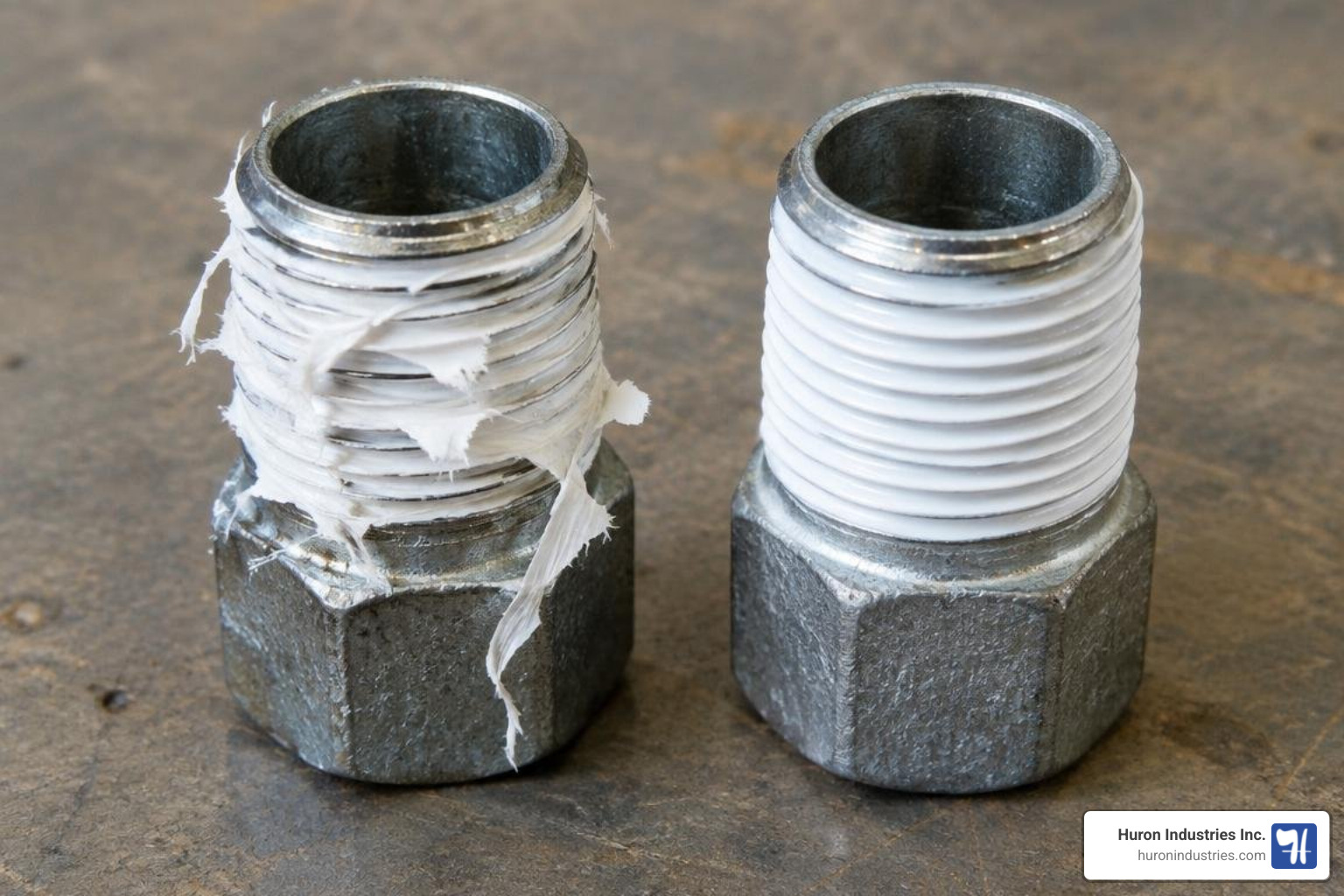
Understanding the distinction between pipe thread sealant vs PTFE tape becomes critical when reviewing burner pump warranties. Equipment manufacturers frequently warn against tape on oil burner pump inlet and bypass ports. If shredded tape fragments bypass the internal mesh strainer, they cause immediate havoc in gear pumps and precision valves. Furthermore, PTFE tape exhibits a very low friction coefficient that makes it dangerously easy to overtighten fittings into cast iron pump housings, leading to hairline fractures and expensive component replacements.
| Performance Characteristic | PTFE Thread Tape | Soft-Set / Non-Hardening Paste | Anaerobic Thread Sealant |
|---|---|---|---|
| Primary Sealing Mechanism | Mechanical compression of thin film | Viscous matrix with suspended solids filling thread roots | 100% active polymer curing between metal ions without air |
| Biofuel Blend Resistance | High chemical inertness, but prone to mechanical creeping | Good to excellent depending on vehicle formulation | Superior resistance to aggressive biofuel esters |
| Shredding & Contamination Risk | High; sheared edges migrate into pumps and nozzles | None; smooth paste blends or catches harmlessly | None; liquid cures into an inert solid plastic |
| Vibration & Thermal Cycling | Moderate; tape can cold-flow under cyclic load | High; stays pliable through seasonal expansion | Exceptional; locks threads to prevent back-off |
| Equipment Warranty Compliance | Frequently restricted by pump manufacturers | Widely accepted across residential and commercial oil lines | Widely accepted for industrial and regulated systems |
Mechanical Risks of Tape Shredding in Oil Burner Pumps
Fuel oil systems operate under a combination of vacuum suction (on the supply side from the storage tank) and high delivery pressure (often 100 to 150 psi at the burner nozzle). A single strand of shredded PTFE tape drawn through the pump inlet port can cause severe malfunctions:
- Hydraulic Jamming and Gear Seizure: Fuel pumps rely on tight clearances between rotating gears to build discharge pressure. A string of tape drawn into these teeth can wedge the gears, overloading the burner motor and causing an unexpected lockout on a freezing night.
- Solenoid Valve Seating Failure: Modern burners use electro-mechanical shutoff solenoids to instantly stop oil flow when the thermostat satisfies. Tape debris lodged on the valve seat prevents complete closure, allowing fuel to drip into a hot combustion chamber and causing delayed ignition "puffs" or heavy soot accumulation.
- Burner Nozzle Plugging: Fuel oil nozzles atomize oil through precision-machined slots and orifices measuring just thousandths of an inch across. Shredded tape debris passing through a defective filter will plug these micro-orifices instantly, ruining the spray pattern and leading to incomplete combustion or dangerous flameouts.
Solvent Action and Hydrocarbon Permeation
Standard heating oils, diesel fuels, and kerosene contain complex mixtures of aliphatic and aromatic hydrocarbons. These compounds act as aggressive solvents against substandard sealing media. Over time, low-density PTFE tapes can experience cold flow (creep) and localized thinning under sustained joint torque and solvent exposure.
Because tape does not adhere chemically to metal surfaces, fuel hydrocarbons slowly wick along the thread flank boundary layer. The result is that familiar, oily sheen—often called "thread weeping"—seen around old tank fittings. In contrast, an engineered pipe thread sealant wets the metal roots completely, creating a continuous barrier that resists both hydrocarbon permeation and vibrational loosening.
Criteria for Choosing a Thread Sealant for Fuel Oil Piping
Selecting the right sealant requires looking beyond basic plumbing pastes. Fuel oil lines experience continuous vibration from nearby burner motors, substantial pressure pulses from pump cutoffs, and seasonal temperature shifts ranging from sub-zero winter temperatures on outdoor tanks to hot boiler rooms.
Evaluating non-hardening vs hard-setting thread sealant formulas reveals clear performance differences. While hard-setting dopes cure into a rigid, brittle state, soft-set pastes maintain flexibility throughout the service life of the piping system. This pliability allows the joint to absorb pipe vibration without cracking the internal seal.
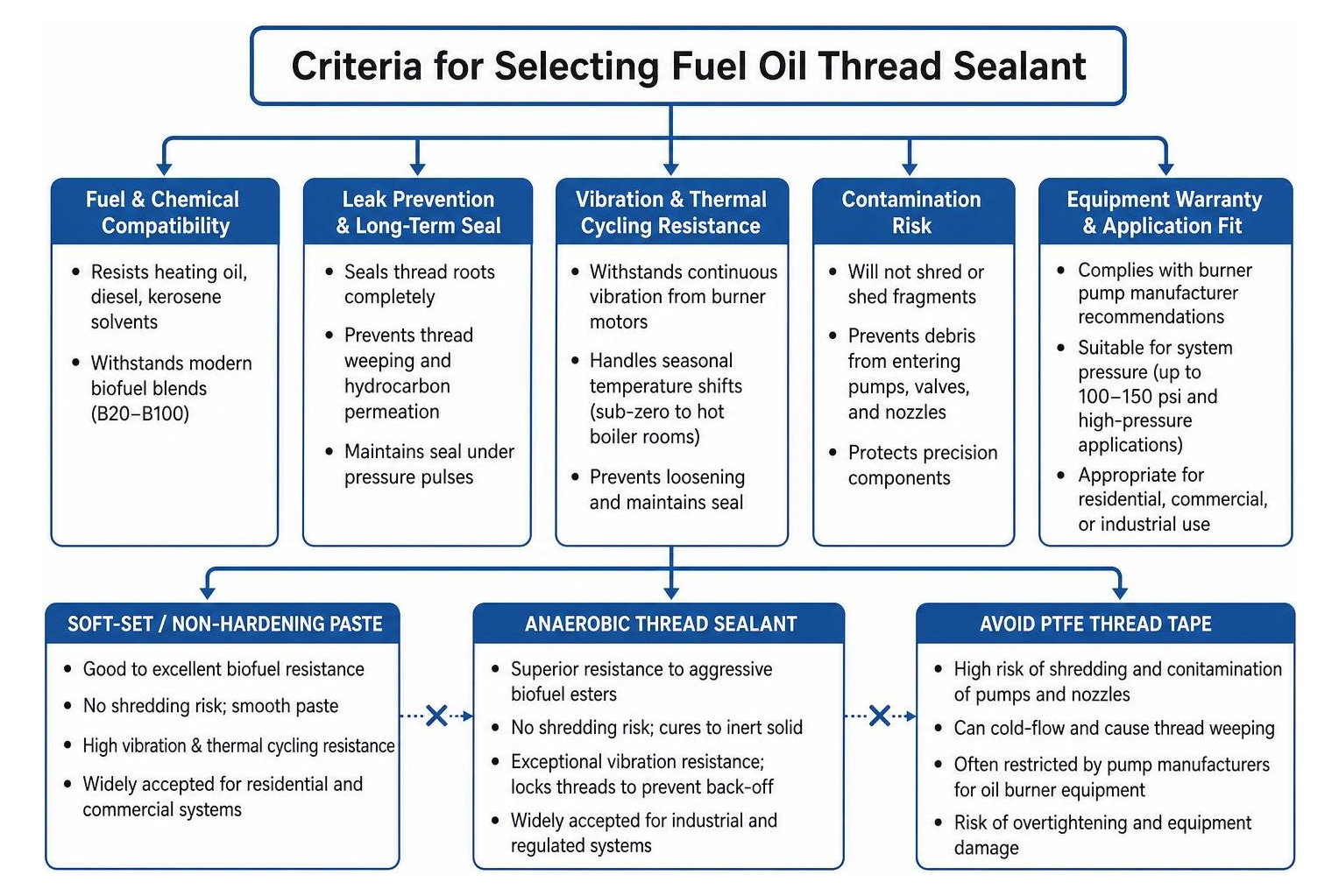
In demanding commercial facilities, fossil-fuel power stations, or marine fuel systems, high-integrity anaerobic compounds provide an even stronger seal. Anaerobic sealants remain liquid in the presence of air, but polymerize into a tough thermoset plastic once confined inside metal thread gaps away from oxygen. For high-demand applications, relying on a high pressure thread sealant ensures that pulsed system loads do not rupture joint interfaces.
Selecting the Right Thread Sealant for Fuel Oil Piping in Modern Biofuel Systems
The heating oil industry has increasingly transitioned toward renewable liquid fuels, incorporating blends such as B20 (20% biodiesel) up to B100 (100% pure fatty acid methyl esters). Biodiesel introduces unique solvent characteristics: methyl esters are strong polar solvents that can soften, swell, or dissolve traditional pipe dopes formulated only for mineral-based petroleum.
When sealing joints on systems burning renewable blends, installers must verify that the thread paste or anaerobic compound specifically lists compatibility with vegetable oils, biodiesel, and aromatic hydrocarbon blends. A high-grade HVAC thread sealant with robust polymer resins ensures that aggressive modern additives do not compromise long-term joint integrity.
Why RTV Silicone and Hard-Setting Compounds Must Be Avoided
Two categories of sealants should never be applied to fuel oil piping:
- RTV (Room Temperature Vulcanizing) Silicone: Silicone lacks chemical resistance to sustained hydrocarbon immersion. Fuel oil degrades RTV into a jelly-like sludge. When excess silicone squeezes into the pipe interior, rubbery strings break off, fouling fuel flow transducers, plugging filter media, and causing burner lockouts.
- Hard-Setting / Brittle Dopes: Compounds that cure into a glass-like solid bond fittings so aggressively that future maintenance requires destructive wrench torque. Under thermal cycling and boiler vibration, rigid compounds develop microscopic fractures, leading to slow, persistent leaks that are difficult to seal without replacing the fittings entirely.
Proper Sealant Application Across Oil Tank, Pump, and Filter Connections
A complete home heating oil system contains several distinct pipe interfaces, each with its own sealing requirements. Black iron schedule 40 pipe is standard for tank fill and vent lines, while copper tubing with brass fittings is typical for fuel supply lines connecting the tank, filter, and burner pump.
Under NFPA 31 (Standard for the Installation of Oil-Burning Equipment) and industry guidelines from the National Oilheat Research Alliance (NORA), all threaded connections must remain leak-tight under pressure testing and routine fill cycles.
Step-by-Step Application of Thread Sealant for Fuel Oil Piping on NPT Threads
Follow these best practices to achieve a leak-free NPT joint without introducing contaminants into the fuel stream:
- Clean and Degrease: Inspect both male and female threads. Remove all cutting oils, metal shavings, rust, and old sealant residue using a fast-evaporating solvent. Ensure surfaces are completely dry.
- Leave Leading Threads Clean: On the male fitting, leave the first 1 to 2 threads completely bare. This prevents excess paste from being pushed into the fuel line interior during assembly.
- Apply a 360-Degree Uniform Coat: Apply a continuous bead of fuel-rated paste or anaerobic compound around threads 2 through 5. Force the paste down into the thread roots using the applicator brush to displace trapped air pockets.
- Assemble and Torque: Hand-tighten the joint until snug, then engage pipe wrenches to achieve proper makeup. Avoid excessive leverage; NPT threads seal through flank engagement, and over-torquing can stretch female fittings or split cast pump bodies. Reviewing an anaerobic sealant technical datasheet provides exact cure windows and operating parameters for production installations.
- Inspect and Clean Wipe: Wipe away any extruded sealant bead from the outside of the fitting to maintain a clean workspace and make future leak inspections straightforward.
Flare Fittings vs. NPT Thread Connections
One of the most dangerous mistakes on heating oil lines is applying thread paste or tape to flare fittings. Oil supply tubing typically uses 45-degree SAE brass flare connections.
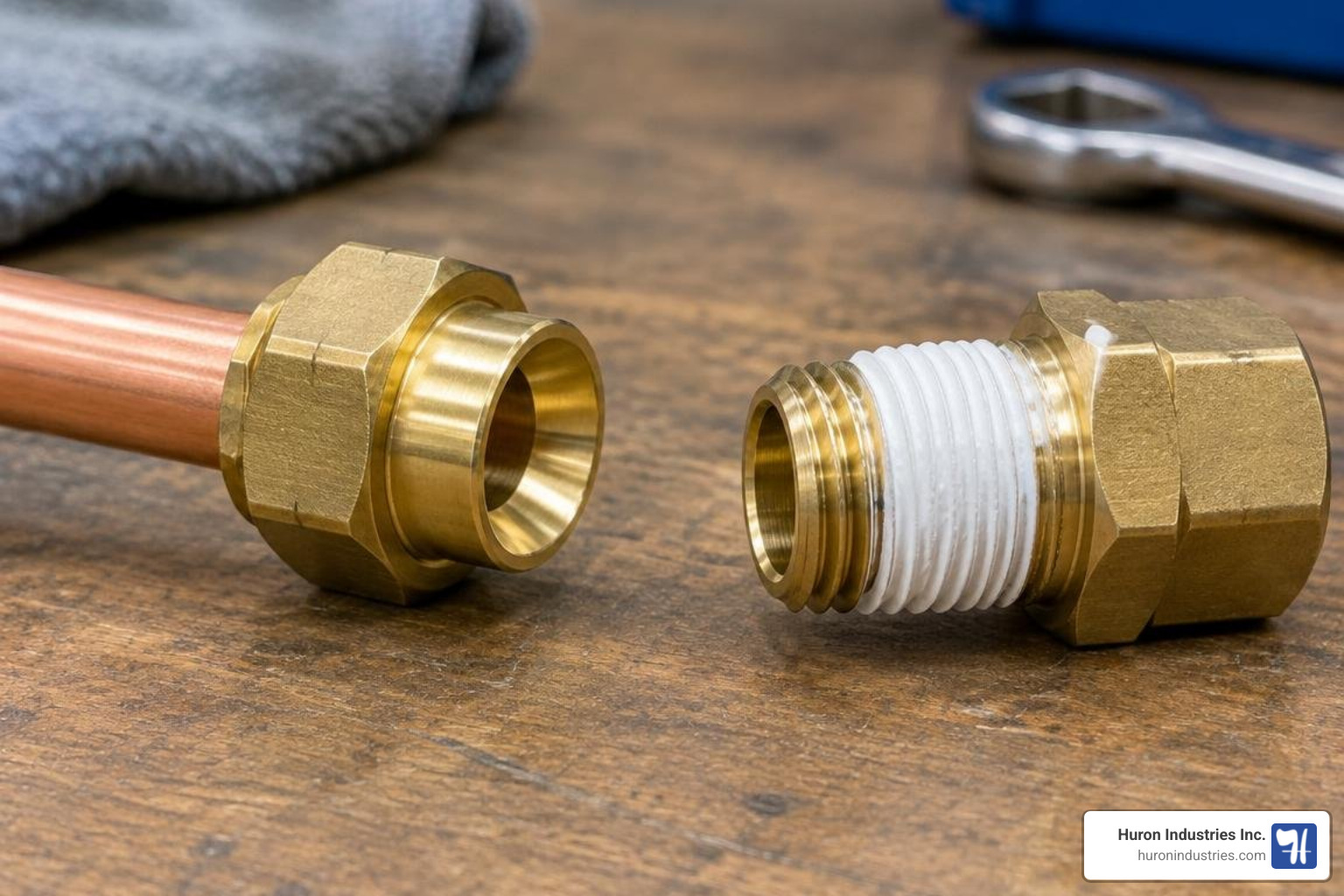
A flare fitting seals exclusively through metal-to-metal compression between the machined 45-degree nose of the male brass adapter and the inside cone of the flared copper tube. The external threads on a flare fitting do not seal fluid; their sole purpose is to draw the two metal faces together mechanically.
- Never apply sealant to the flare face: Paste or tape on the mating seat prevents uniform metal-to-metal contact, leading to leaks under vacuum or pressure.
- Never apply tape to flare threads: Tape reduces friction artificially, making it easy to over-tighten the flare nut and split the copper flare collar.
- Rule of thumb: Thread sealant belongs only on tapered pipe threads (NPT). Keep flare connections clean, smooth, and completely dry.
Frequently Asked Questions About Fuel Line Sealants
Can I use yellow gas PTFE tape on home heating oil lines?
Yellow PTFE tape is certified specifically for natural gas and propane systems (under CSA and UL listings). While yellow tape is denser than basic white plumbing tape, using it on oil lines remains problematic because burner pump manufacturers restrict ribbon tape regardless of color. Shredded fragments from yellow tape can still foul oil burner nozzles and void pump warranties. Stick to a fuel-oil-rated liquid or paste sealant.
Does thread sealant belong on the threads of oil line flare fittings?
No. Flare fittings rely entirely on the mechanical compression of the flared copper against the brass fitting cone. Adding paste or tape to the threads does not assist sealing and risks contaminating the flare face. If a flare joint weeps, the flare itself is likely scored, out-of-round, or improperly torqued; replacing the copper flare is the only correct remedy.
What should be used to seal 2-inch oil tank fill and vent pipes?
Large 2-inch black iron fill and vent pipes require a heavy-bodied, non-hardening pipe joint compound that resists vibration and prevents fuel odor weeping. Fill lines experience substantial pressure surges during high-speed delivery truck pumping, while vent pipes must remain gas-tight to allow the tank whistle alarm to operate properly. A pliable, non-hardening compound ensures these large-diameter joints stay sealed against weather and temperature fluctuations for decades.
Conclusion
Securing oil tank lines, transfer pumps, and burner assemblies requires thread sealants engineered for the chemical and mechanical demands of liquid hydrocarbons. While PTFE tape has its place in common plumbing, liquid fuel systems achieve superior safety and warranty compliance when assembled with non-hardening pastes or high-performance anaerobic sealants.
Huron Industries Inc. manufactures industrial-grade thread sealants, colloidal graphite lubricants, and anti-seize compounds built for rigorous environments. Please note that while our specialty products serve critical industries, the coefficient of friction for Neolube No. 1.1 of 0.15 has not been tested or approved for this specific application.
By applying fuel-rated paste properly on NPT joints—and keeping flare seats clean and dry—you ensure reliable, leak-free operation throughout the heating season. For demanding industrial facilities and severe-service fuel infrastructure, explore our certified solutions and order Neolube No. 100 thread sealant to protect your critical piping systems.