

Why the Oil and Gas Industry Is Turning to Biosurfactants
Biosurfactants for oil and gas are naturally derived surface-active compounds — produced by microorganisms or plants — used to improve oil recovery, reduce pipeline friction, clean storage tanks, and remediate spills, all with far less environmental harm than conventional synthetic surfactants.
Quick answer: What do biosurfactants do in oil and gas?
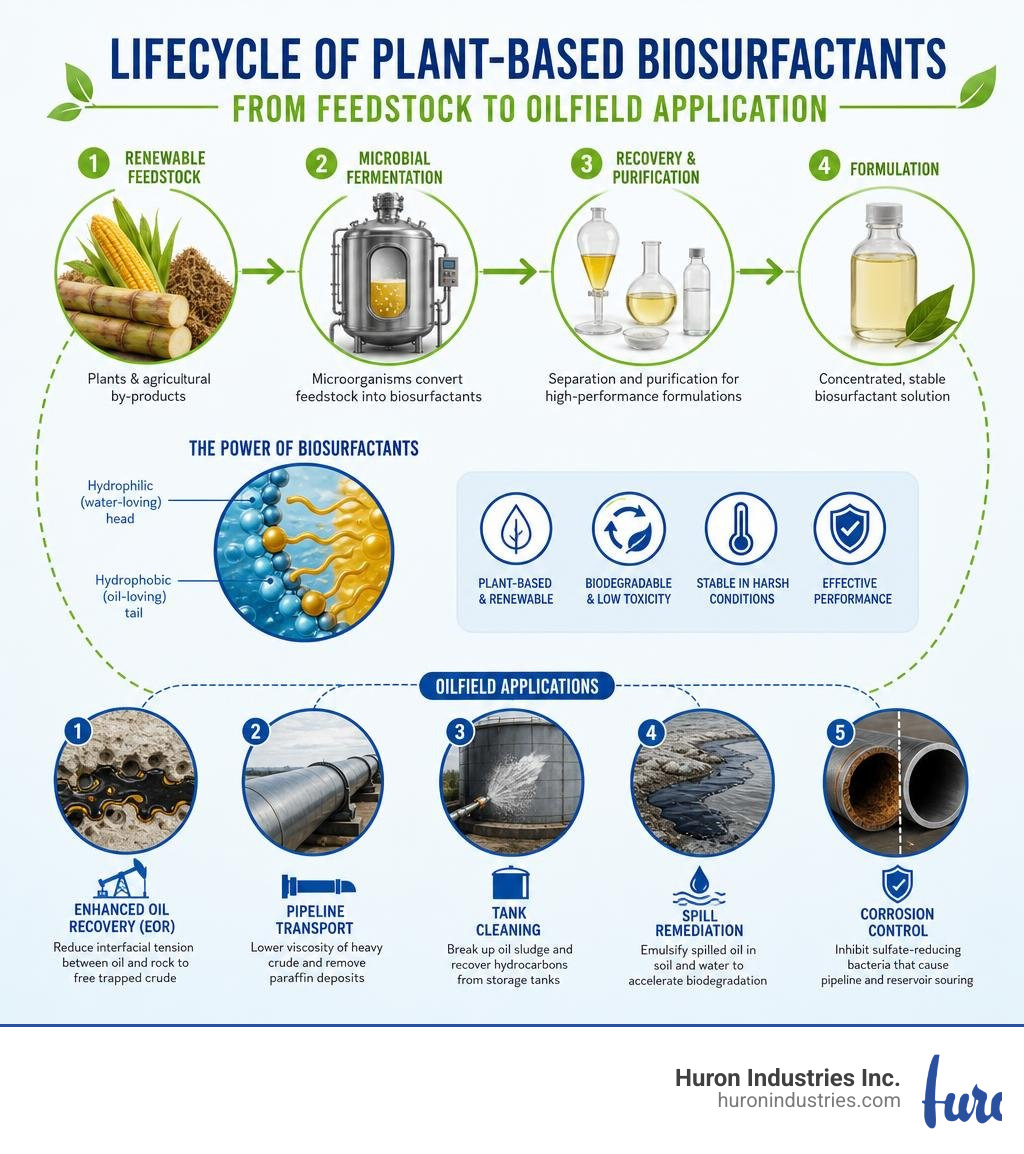
| Application | What Biosurfactants Do |
|---|---|
| Enhanced Oil Recovery (EOR) | Reduce interfacial tension between oil and rock to free trapped crude |
| Pipeline Transport | Lower viscosity of heavy crude, remove paraffin deposits |
| Tank Cleaning | Break up oil sludge and recover hydrocarbons from storage tanks |
| Spill Remediation | Emulsify spilled oil in soil and water to accelerate biodegradation |
| Corrosion Control | Inhibit sulfate-reducing bacteria that cause pipeline and reservoir souring |
Here is the core problem: conventional oil recovery leaves most of the oil in the ground.
Primary and secondary recovery methods typically extract only 15% to 40% of the oil in any given reservoir. The rest stays trapped — locked in tight pores by capillary forces and high interfacial tension between oil and rock surfaces.
The U.S. Department of Energy estimates that more than 300 billion barrels of oil remain in domestic reservoirs after conventional methods reach their economic limit. That is not a small number.
The industry has long used synthetic chemical surfactants to push recovery further. They work. But they come with serious drawbacks — toxicity to aquatic life, poor biodegradability, and performance that degrades sharply in the high-salinity, high-temperature conditions found deep underground.
That is where biosurfactants come in.
Unlike synthetic alternatives, biosurfactants are biodegradable, exhibit low toxicity, and — critically — many remain stable at temperatures up to 200°C and across a pH range of 2 to 12. They can be produced from renewable feedstocks, including agricultural waste streams. And their performance in lab studies and field trials is increasingly hard to ignore: one field trial using rhamnolipids achieved 93.10% oil recovery at 70°C, and a Kuwait Oil Company trial recovered 91% of hydrocarbons from storage tank sludge.
The shift is no longer just theoretical. It is happening at scale.
I'm Nicholas Cunha, founder of CreatiVertical, the agency behind Huron Industries Inc.'s digital content program — I've spent considerable time researching the technical and commercial landscape of biosurfactants for oil and gas to help industrial buyers evaluate these solutions clearly and confidently. In the sections that follow, we'll break down exactly how biosurfactants work, where they perform best, and why plant-based formulations represent the most sustainable path forward.
Understanding Biosurfactants: Structure, Types, and Environmental Impact
To understand why these molecules are so revolutionary, we have to look at how they are built. Like their synthetic counterparts, biosurfactants are amphiphilic. This means they possess a dual personality: a hydrophilic (water-loving) head and a hydrophobic (oil-loving) tail.
This unique molecular structure allows them to gather at the boundaries between oil and water, or between fluids and solid rock. By aligning themselves at these boundaries, they reduce the forces holding different phases apart.
However, the primary difference lies in their chemical diversity and origin. Synthetic surfactants are typically derived from petroleum and contain rigid, highly toxic chemical groups that persist in the environment. Biosurfactants, on the other hand, are constructed from natural building blocks like amino acids, sugars, and fatty acids.
This structural difference leads to a massive environmental advantage. Biosurfactants break down completely and rapidly in natural ecosystems, leaving behind zero toxic residues. They show exceptionally low toxicity to aquatic life, meaning they do not disrupt food chains or damage sensitive environments. For a detailed breakdown of these structures, you can explore this scientific review on biosurfactants in oil and gas.
Key Types of Biosurfactants and Their Microbial Sources
Microorganisms have evolved to produce several distinct classes of biosurfactants, each with its own physical properties:
- Rhamnolipids: Perhaps the most widely studied glycolipids, these are produced primarily by the bacterium Pseudomonas aeruginosa. They are highly effective at lowering surface tension and are widely used in both recovery and bioremediation.
- Lipopeptides: These molecules consist of a lipid chain attached to a peptide loop. The most famous is surfactin, produced by Bacillus subtilis. Surfactin is one of the most powerful biosurfactants known, capable of reducing the surface tension of water from 72 mN/m down to 27 mN/m at incredibly low concentrations.
- Sophorolipids: Produced by yeasts like Starmerella bombicola, these glycolipids are known for their high production yields and excellent safety profiles, making them popular in industrial cleaning formulations.
- Bioemulsifiers: Unlike low-molecular-weight glycolipids and lipopeptides, bioemulsifiers are high-molecular-weight polymers. They are excellent at stabilizing oil-in-water emulsions over long periods, even if they do not lower interfacial tension as drastically as smaller molecules.
Mechanisms of a Biosurfactant for Oil and Gas in Enhanced Oil Recovery
When we talk about applying a biosurfactant for oil and gas in tertiary recovery (EOR), we are leveraging three core physical mechanisms: interfacial tension (IFT) reduction, wettability alteration, and emulsification.
| Metric | Synthetic Surfactants | Biosurfactants |
|---|---|---|
| Primary Source | Crude oil / Petrochemicals | Plants, yeasts, and bacteria |
| Biodegradability | Very low; persists in ecosystems | High; rapid biological breakdown |
| Toxicity Profile | High; harmful to aquatic life | Extremely low; environmentally safe |
| Micelle Size | Large (typically >10 nm) | Ultra-small (3 to 5 nm) |
| High-TDS Stability | Poor; precipitates easily | High; remains stable in brine |
| Thermal Range | Degrades at high reservoir temps | Often stable up to 120°C - 200°C |
Interfacial Tension Reduction and Capillary Pressure
The primary reason oil remains trapped in reservoir rock is capillary pressure. The pores in reservoir rock are incredibly tiny, and the high interfacial tension between the water flooding the well and the trapped oil creates a capillary barrier that water simply cannot push through.
Biosurfactants solve this by dramatically reducing the IFT. As the concentration of the biosurfactant reaches its Critical Micelle Concentration (CMC) — the point at which surfactant molecules begin self-assembling into spherical structures called micelles — the IFT drops exponentially.
Crucially, biosurfactants form ultra-small micelles, typically measuring only 3 to 5 nanometers in diameter. Compare this to the much larger micelles of synthetic surfactants. These ultra-small structures can easily penetrate the tightest pore throats of low-permeability reservoirs, mobilizing oil that conventional chemistry cannot reach. For instance, a study on Alcanivorax dieselolei demonstrated how these marine-derived biosurfactants reduce interfacial tension and successfully unlock trapped oil in low-permeability formations.
Wettability Alteration and Emulsification
Reservoir rocks are often "oil-wet," meaning the crude oil clings tightly to the rock surface like grease on a pan. To get the oil out, we need to make the rock "water-wet" so that water can slip behind the oil and push it free.
Biosurfactants alter the wettability of the reservoir rock by adsorbing onto the rock surfaces, shifting the contact angle of the fluids. This makes the rock surface prefer water over oil.
Simultaneously, biosurfactants emulsify the freed oil into the water phase, creating stable oil-in-water emulsions. This improves the mobility ratio of the fluids, preventing the water from simply channeling through the easiest paths and leaving the oil behind (a phenomenon known as fingering). Instead, the sweep efficiency of the flood increases dramatically, ensuring a much higher percentage of the reservoir is swept clean.
Applications of Biosurfactants Across the Oil and Gas Value Chain

The utility of biosurfactants is not limited to the reservoir. They provide high-performance, green solutions across the entire value chain. If you want to see how these biological agents fit into broader industrial cleaning and maintenance strategies, check out our guide on Industrial Applications.
Upstream Extraction and MEOR
In the upstream sector, Microbial Enhanced Oil Recovery (MEOR) can be approached in two ways:
- In-Situ MEOR: We inject carefully selected nutrients (like molasses or nitrates) directly into the reservoir to stimulate indigenous biosurfactant-producing microbes.
- Ex-Situ MEOR: We produce the biosurfactants in a surface bioreactor and inject the purified or crude fermentate directly into the well.
This approach is highly effective even in difficult, low-permeability reservoirs. A notable study on Bacillus subtilis SL showed that this strain could survive the harsh conditions of low-permeability wells and produce high-performance lipopeptides that unlocked significant volumes of residual oil.
Midstream Pipeline Transport and Flow Assurance
Once the oil is out of the ground, getting it to the refinery presents another challenge, especially with heavy and extra-heavy crude oils. These crudes are highly viscous and require massive amounts of energy to pump.
Biosurfactants act as natural drag reducers. By forming stable oil-in-water emulsions, they dramatically reduce the viscosity of heavy crude, allowing it to flow smoothly through pipelines over long distances. High-molecular-weight bioemulsifiers like emulsan can stabilize these mixtures for thousands of miles, yet they can be easily broken back down into oil and water using simple enzymatic treatments once they reach their destination. Additionally, their natural paraffin-clearing properties prevent wax buildup on pipeline walls.
Downstream Tank Cleaning and Spill Remediation
At the refinery and storage terminals, heavy crude inevitably leaves behind a thick, stubborn layer of oil sludge. China alone produces an estimated 1 million metric tonnes of oil sludge annually from tank cleaning, while India's refining industry produces about 28,000 metric tonnes each year.
Cleaning these tanks mechanically is dangerous and expensive. Applying a rhamnolipid-based biosurfactant wash breaks down this sludge, recovering up to 91% of the trapped hydrocarbons and turning waste back into a valuable product.
Should a spill occur on land or water, biosurfactants act as highly effective bioremediation agents. They safely disperse the oil slick into tiny droplets, vastly increasing the surface area available to natural, hydrocarbon-degrading bacteria and accelerating the natural cleanup process without introducing synthetic toxins into the ecosystem.
Overcoming the Cost Barrier: Waste Valorization and Production Economics
If biosurfactants are so incredible, why hasn't the industry abandoned synthetic surfactants entirely?
It comes down to dollars and cents. Historically, biosurfactants have cost between $5 and $20 per kilogram to produce, while conventional synthetic surfactants sit around $2 per kilogram.
To bridge this economic gap, we must look to the principles of the circular bioeconomy.
Utilizing Agro-Industrial Wastes as Feedstocks
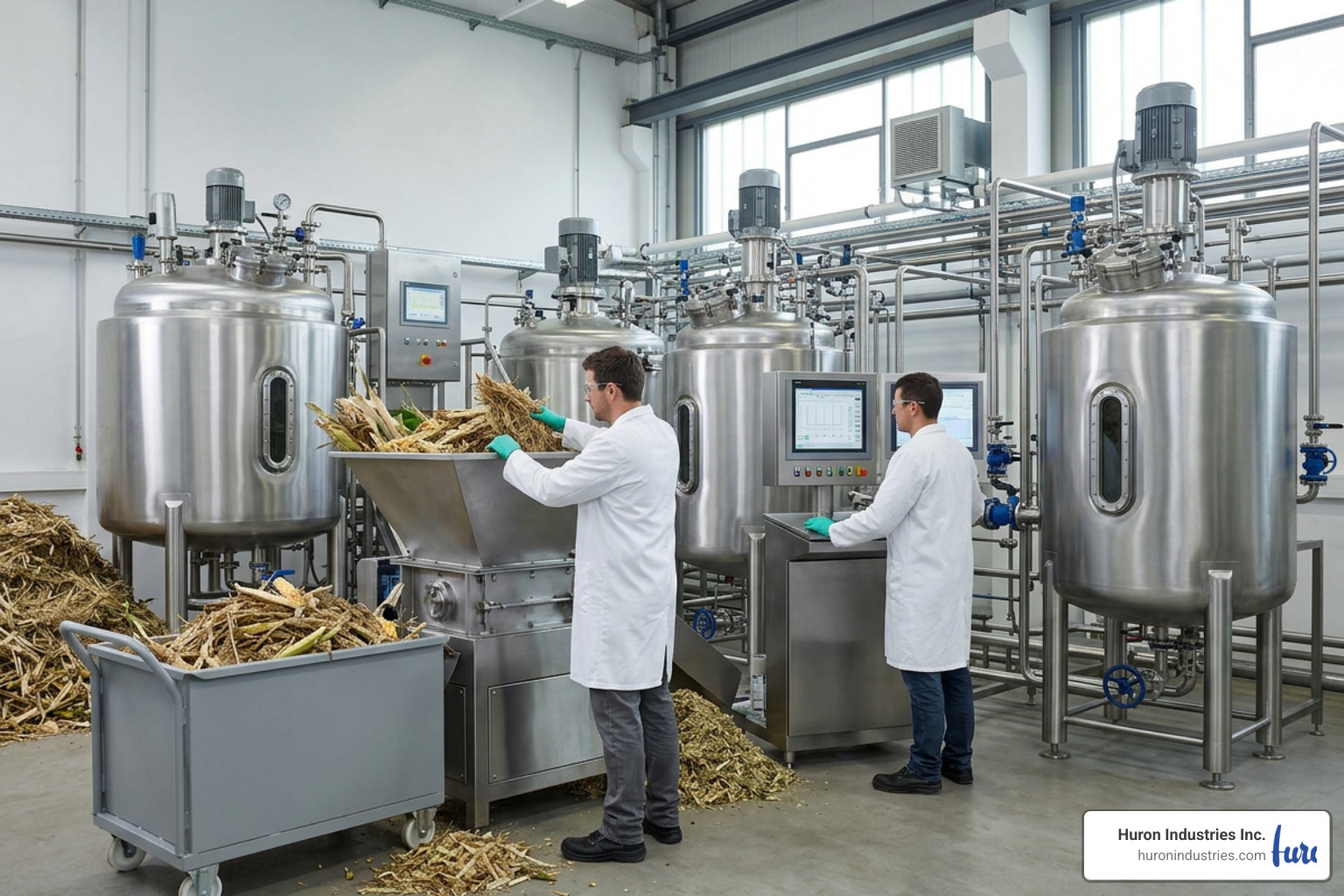
Up to 50% of the cost of biosurfactant production lies in the raw materials (the substrates) used to feed the microorganisms. By replacing expensive, refined sugars with agro-industrial waste streams, we can slash production costs.
Excellent low-cost feedstocks include:
- Molasses and distillery waste: Rich in sugars and trace minerals.
- Waste frying oils: Excellent carbon sources for lipid-producing microbes.
- Whey from dairy processing: Provides a steady source of lactose and proteins.
Using these waste products not only makes production affordable but also solves disposal issues for other agricultural sectors, turning waste into high-value oilfield chemistry.
Optimizing the Carbon-to-Nitrogen Ratio
In fermentation, the Carbon-to-Nitrogen (C/N) ratio acts as a critical metabolic switch. When nitrogen is abundant, microbes focus all their energy on growing and multiplying (biomass production).
By carefully limiting nitrogen while keeping carbon high, we tell the microbes to stop multiplying and start converting that carbon directly into biosurfactants. Optimizing this metabolic switch dramatically increases yields, making large-scale production economically viable.
Field Trials and Empirical Evidence of Biosurfactant EOR
The transition of biosurfactants from the laboratory to the oilfield is backed by solid empirical data.
Laboratory Core Flooding and Micromodel Studies
Before any chemical is pumped into a multi-million-dollar well, it must prove itself in laboratory core flooding tests. These tests use actual reservoir rock samples (cores) to simulate downhole conditions.
In heterogeneous and low-permeability reservoirs, water flooding often bypasses tight oil zones. However, when researchers combined polymer flooding with biosurfactant-producing bacteria, they observed a massive synergy. The polymer plugs the highly permeable channels, forcing the biosurfactants into the tight, unswept zones.
This dual-action approach was explored in detail in a research on combining polymers and biosurfactants, showing that the combination yielded significantly higher recovery rates than using polymers or microbes alone.
Real-World Field Trial Success Stories
- The Saskatchewan Trial: An in-situ nutrient injection trial stimulated indigenous microbes in a declining well, boosting daily oil production by over 200% (from 1.2 to 4.1 cubic meters per day).
- The US DOE Database Potential: The U.S. Department of Energy reservoir database contains more than 600 reservoirs representing over 12 billion barrels of unrecoverable oil that are ideal candidates for MEOR. If MEOR were applied to just a quarter of these targets to reduce residual oil saturation by a modest 10%, it would add 300 million barrels to U.S. reserves.
Challenges and Future Outlook of Biosurfactants in Petroleum
While the potential is vast, we must remain realistic about the hurdles that lie ahead.
Technical Limitations in Extreme Reservoirs
Deep reservoirs are hostile environments. High temperatures, extreme pressures, and high Total Dissolved Solids (TDS/salinity) can degrade biological molecules.
Furthermore, introducing the wrong nutrients can stimulate sulfate-reducing bacteria (SRB). SRBs produce highly toxic hydrogen sulfide ($H_2S$), which sours the reservoir, corrodes equipment, and poses severe safety risks. Any biosurfactant program must be carefully engineered to inhibit SRBs while promoting beneficial microbial action.
The Future of Biosurfactant for Oil and Gas Applications
The future of the industry lies in moving toward highly specialized, plant-based biosurfactants. Rather than relying solely on bacterial fermentation — which can be tricky to control and scale — plant-derived biosurfactants offer a highly stable, consistent, and cost-effective alternative.
Through advanced genetic engineering and synthetic biology, we are now designing plants and microbes that produce high-purity, tailor-made biosurfactants at a fraction of the historical cost.
At Huron Industries Inc., we are proud to be at the forefront of this green transition. Through our strategic partnership with Plynt Tech, we supply advanced, plant-based biosurfactants specifically engineered for the demanding conditions of the modern oilfield.
Frequently Asked Questions
What is a biosurfactant for oil and gas?
It is a naturally occurring, non-toxic compound produced by plants, yeasts, or bacteria that reduces surface and interfacial tension. In the oilfield, it is used to mobilize trapped crude, clean equipment, and safely remediate spills.
How do biosurfactants compare to synthetic surfactants in extreme reservoir conditions?
Many biosurfactants actually outperform synthetics in extreme environments. While synthetic surfactants often precipitate out of solution in high-salinity (high TDS) brine or degrade at high temperatures, certain lipopeptides and plant-based biosurfactants remain highly stable at temperatures up to 120°C (and sometimes up to 200°C) and across extreme pH ranges.
Why are plant-based biosurfactants considered more sustainable?
Plant-based biosurfactants rely on renewable agricultural feedstocks rather than petroleum. They have a substantially lower carbon footprint, do not compete with food crops when sourced from waste biomass, and biodegrade rapidly and completely without leaving toxic residues in soil or water.
Conclusion
The oil and gas industry is facing a critical turning point. The days of relying on harsh, persistent synthetic chemicals to squeeze the last drops of oil from mature reservoirs are drawing to a close. Environmental regulations are tightening, and the physics of ultra-low permeability reservoirs demand smarter, smaller, and more adaptable chemical solutions.
Plant-based biosurfactants represent that future. They offer the perfect intersection of high-performance physical chemistry — like ultra-small micelle penetration and extreme temperature stability — and unmatched environmental compatibility.
At Huron Industries Inc., we have spent decades providing high-purity, certified products for highly regulated and demanding industrial applications. Through our partnership with Plynt Tech, we are proud to deliver the next generation of plant-based biosurfactants to help you optimize well performance sustainably.
To learn more about how our advanced formulations can transform your operations, explore our dedicated guide on Biosurfactants for Oil and Gas.