
Teflon-Free Thread Sealant Options for High-Purity Lines
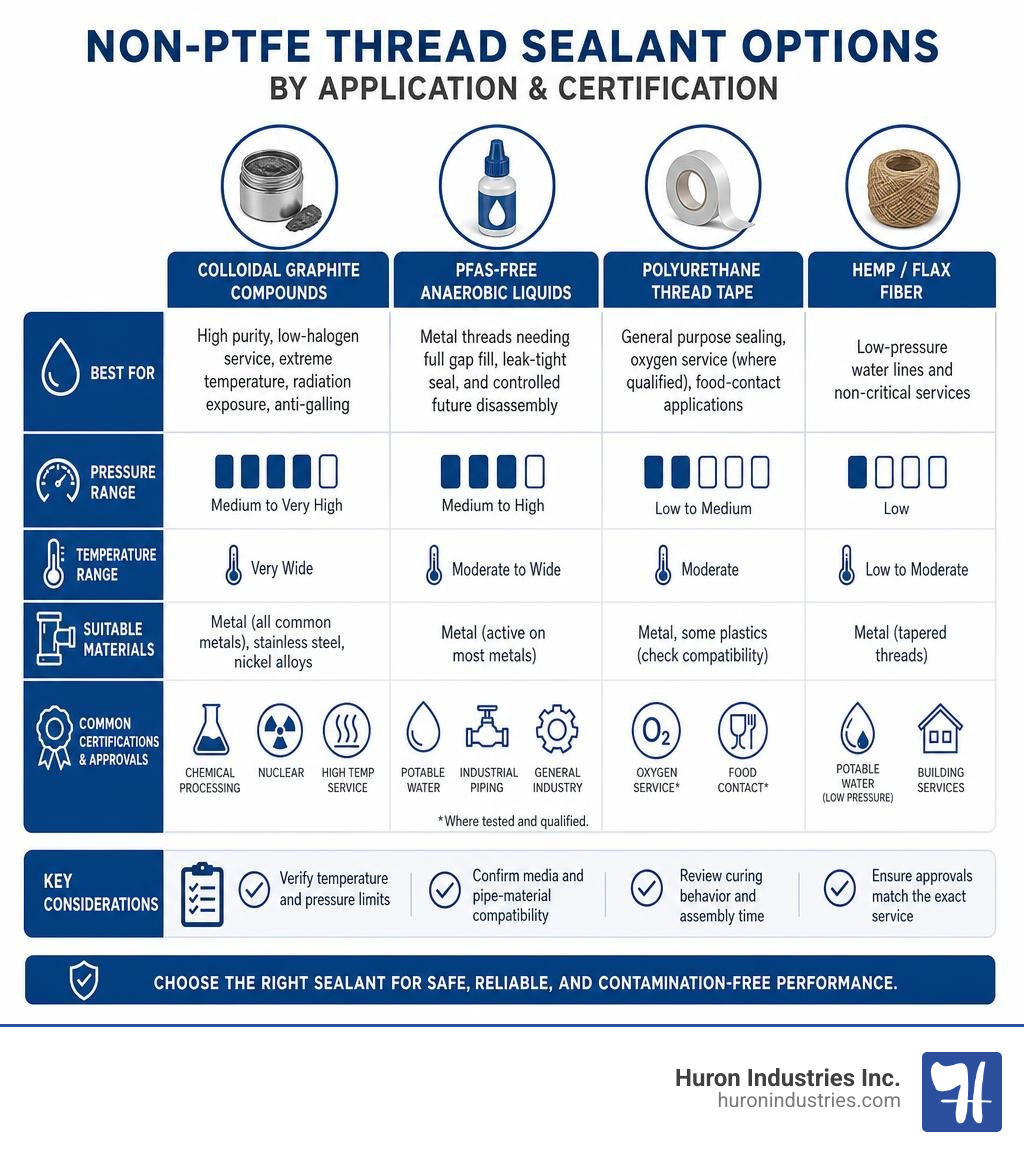
A teflon free thread sealant can replace PTFE tape or PTFE-filled pipe dope where PFAS, fluorine contamination, loose tape fragments, or material approvals are a concern. For critical piping, choose the chemistry to fit the service:
- High-purity colloidal graphite compounds for low-halogen critical service, anti-galling, and demanding heat or radiation environments.
- PFAS-free anaerobic liquid sealants for metal threads that need full gap filling and controlled future disassembly.
- Polyurethane thread tape for a non-fluorinated tape option, including products tested for certain oxygen and food-contact uses.
- Hemp or flax fiber for low-pressure water work where a traditional, natural mechanical seal is acceptable.
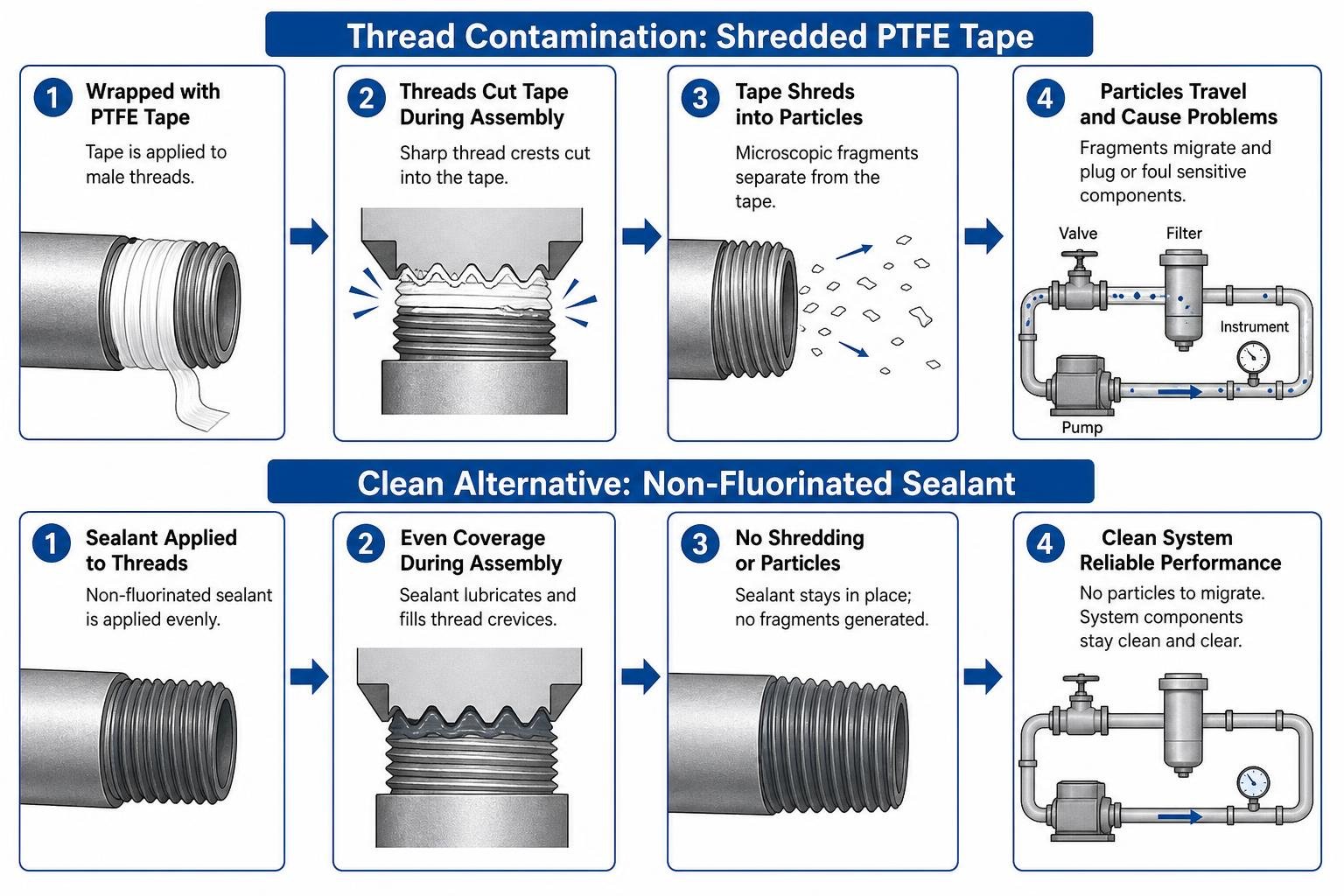
PTFE is widely grouped within the broader PFAS conversation because fluorinated materials persist for a long time in the environment. In high-purity systems, the practical concern is also operational: tape can shred during assembly, leaving particles that may travel to small valves, filters, instruments, or pumps.
The right alternative is not simply the one labeled "PFAS-free." Buyers should verify the sealant's temperature and pressure limits, media and pipe-material compatibility, curing behavior, and approvals for the exact service. Oxygen, potable water, nuclear, chemical-processing, and high-temperature steam lines each demand a different level of proof.
I am Nicholas Cunha, founder of CreatiVertical and a technical content partner for Huron Industries Inc., where I help industrial buyers compare high-purity products such as teflon free thread sealant compounds, colloidal graphite, and anti-seize materials. The sections ahead compare the leading non-PTFE sealing approaches and explain where each one fits.
Teflon free thread sealant word roundup:
Why Industry Is Moving Away from PTFE in High-Purity Lines
For decades, polytetrafluoroethylene (PTFE)—commonly referred to by the legacy brand name Teflon—has served as the default choice for general plumbing and pipe fitting. However, as of August 2026, severe regulatory scrutiny surrounding per- and polyfluoroalkyl substances (PFAS) and stringent operational requirements are forcing industrial facilities to rethink fluoropolymer usage. PTFE is a synthetic fluoropolymer built from recurring tetrafluoroethylene units. Because the carbon-fluorine bond is one of the strongest in organic chemistry, these materials resist natural degradation, earning them the moniker "forever chemicals."
Beyond environmental persistence and bioaccumulation concerns, technical failures frequently occur when traditional PTFE products are deployed in specialized fluid systems:
- Mechanical Shredding and System Contamination: When a technician wraps threaded joints with standard tape, sharp male thread crests cut into the thin film. During joint make-up, microscopic slivers of sheared fluoropolymer separate from the root. In clean rooms, medical gas lines, chromatography systems, and instrumentation manifolds, these loose fragments migrate downstream. They quickly plug fine orifice plates, wedge beneath valve seats, foul sensitive regulators, and contaminate inline sampling filters.
- Stress Corrosion Cracking (SCC) from Halogen Leaching: Under extreme thermal cycling or ionizing radiation, standard fluorinated tapes and pastes degrade, liberating free fluorine ions. When moisture enters the interface, these halogen ions form corrosive acidic compounds that attack grain boundaries in sensitive alloys, including austenitic stainless steels (304/316), Inconel, and titanium. This mechanism accelerates catastrophic stress corrosion cracking. Engineers dealing with high-stress metals must consult resources on why sensitive metal pipes need low halogen and low sulfur sealants to avoid early joint failure.
- Inadequate Void Filling and Creep: Solid tape sits on thread peaks without fully filling internal root clearances. Under variable hydraulic shock or cyclic thermal loading, PTFE undergoes cold flow and creep, opening microscopic spiral leak paths along the thread helix. Evaluating pipe thread sealant vs PTFE tape reveals why conforming liquid pastes and structured dry lubricants provide far more dependable hermetic seals.
Top Criteria for Selecting a Teflon Free Thread Sealant
Finding the best non-fluoropolymer sealing formulation requires balancing mechanical, chemical, and operational requirements. When evaluating candidate materials for industrial installations, I focus on five essential performance metrics:
1. Operating Temperature Window
High-purity systems vary from cryogenic liquid transport to superheated industrial steam. Standard PTFE compounds typically begin softening near 400°F (204°C) and degrade rapidly above 500°F (260°C). Depending on your operating envelope, you may need a specialized non-fluorinated paste or a dry-film lubricant capable of exceeding 1,000°F without outgassing or breaking down chemically.
2. Maximum Pressure and Hydraulic Shock Resistance
A reliable high pressure sealant must bridge manufacturing tolerances across standard NPT or ISO 7-1 tapered threads. While thin plumbing tapes can blowout above 2,000 psi on gas systems, heavy-duty industrial non-PTFE pastes and anaerobic compounds are tested to withstand hydraulic working pressures up to 10,000 psi (and up to 11,000 psi for specialized thermal reactive formulations) without weeping.
3. Breakaway Torque and Disassembly Characteristics
Joints should seal securely against vibration without permanently welding the fittings together. Galling is a massive threat when torquing stainless steel, nickel alloys, or aluminum. The chosen sealant must provide sufficient lubricity during make-up to prevent thread galling, yet maintain a predictable, low breakaway torque (such as 8 Nm / 70 in-lb on plated metal) so maintenance crews can disassemble piping using standard hand tools without applying open flame.
4. Setting Dynamics: Curing vs. Non-Hardening
Selecting between a non-hardening vs hard-setting thread sealant depends on your operational workflow. Non-hardening, soft-setting pastes never turn brittle, making them ideal for systems subject to continuous mechanical vibration, routine adjustments, or prefabrication where joints are made up days before pressurization. In contrast, anaerobic polymers cure exclusively in the absence of air between active metal surfaces, delivering robust structural sealing against high-velocity pulsation.
5. Media Compatibility and Halogen Purity
The compound must remain chemically inert when exposed to process fluids—whether dealing with dry nitrogen, aggressive acids, synthetic hydraulic oils, or pure oxygen. For nuclear containment, semiconductor fabrication, and aerospace assemblies, total halogen (fluorine, chlorine, bromine) and sulfur levels must be held below strict parts-per-million thresholds to safeguard piping metallurgy.

Comparing the Best Non-PTFE Thread Sealing Alternatives
To simplify your selection process, the table below outlines the primary chemistries used across industrial, municipal, and clean-service fluid lines:
| Sealant Chemistry / Base Type | Typical Temperature Service | Maximum Pressure Rating | Key Certifications & Compliance | Ideal Industrial Applications |
|---|---|---|---|---|
| High-Purity Colloidal Graphite | -300°F to 1000°F+ (-184°C to 538°C+) in non-oxidizing environments | Up to 10,000 PSI | MIL-L-24131C, Low Halogen / Nuclear Grade | Reactor systems, steam lines, sensitive metals, vacuum systems |
| Anaerobic Dimethacrylate Resins | -65°F to 300°F (-53°C to 148°C) | Up to 10,000 PSI (liquid) / 2,000 PSI (gas) | WRAS, KTW-BWGL, DVGW, BAM (up to 10 bar/60°C) | Potable water, industrial cooling, natural gas, maintenance lines |
| Polyether Polyurethane Tape | -22°F to +275°F (-30°C to +135°C) | Tested up to 6,000 PSI (ASTM G72) | ASTM G72, FDA 175.105/320, USP Class VI, ISO 10993 | High-pressure oxygen systems, food contact, medical gas lines |
| Natural Fibers (Hemp/Flax) + Mineral Paste | 32°F to 200°F (0°C to 93°C) | Low pressure (<150 PSI) | Non-toxic DIY / Organic standards | Low-demand potable water, homestead irrigation, drainage |
| Non-Fluorinated Thermal-Reactive Pastes | 150°F to 1800°F (65°C to 982°C) | Up to 11,000 PSI | High-Temperature Industrial Standards | Petrochemical cracking, exhaust manifolds, extreme steam |
High-Purity Colloidal Graphite as a Teflon Free Thread Sealant
For demanding, mission-critical environments, high-purity colloidal graphite suspended in an evaporating carrier represents the gold standard in non-fluoropolymer sealing. Unlike organic polymers, pure graphite does not melt, burn, or volatilize under standard industrial operating parameters.
Because it contains zero fluorocarbons, high-purity graphite eliminates the risk of halide-induced stress corrosion cracking. In commercial nuclear power generation and naval propulsion systems, products conforming to strict military standards are mandatory. Reviewing why nuclear and industrial pros trust Neolube 100 thread sealant highlights how colloidal graphite qualified under MIL-L-24131C provides non-destructive anti-seize performance alongside clean sealing in high-radiation zones.
When torqued into place, microscopic graphite platelets shear smoothly along crystalline planes, providing exceptional dry boundary lubrication that prevents galling on stainless steel, Inconel, and titanium threads. It remains stable across broad temperature extremes, serving as a trusted high temperature thread sealant for critical service where synthetic pastes bake out or polymerize into brittle slag.
Anaerobic Resins and Polyurethane Tape as Teflon Free Thread Sealant Options
For general manufacturing, water treatment, and gas utility distribution, modern polymer chemistry offers two clean alternatives to traditional PTFE tape:
- Polyether Polyurethane Tapes: Polyurethane-based thread sealing tape delivers the conformability and clean handling of traditional plumber's tape without containing any PTFE or PFAS compounds. Because it does not shed fibrous particulates, it eliminates downstream filter plugging. High-grade polyurethane tapes exhibit remarkable auto-ignition resistance, successfully passing ASTM G72 standard testing for liquid and gaseous oxygen service up to 6,000 psi while meeting FDA 175.105/175.320 requirements for indirect food contact.
- PFAS-Free Anaerobic Liquid Sealants: Anaerobic sealants are single-component liquids formulated from dimethacrylate resins that remain liquid while exposed to atmospheric oxygen. Once applied to male threads and threaded into a female mating port, the exclusion of air combined with active metal ions (like copper, brass, or iron) triggers rapid polymerization. This creates a solid thermoset plastic barrier that completely fills the spiral root geometry. Formulations engineered with a controlled breakaway torque (around 8 Nm / 70 in-lb on zinc-plated fittings) seal reliably against line pressure while permitting easy breakdown using basic hand wrenches.
Traditional Plant Fibers and Non-Fluorinated Mineral Pastes
Before synthetic polymers entered the plumbing industry, threaded cast iron and steel water lines were sealed using natural long-strand flax or hemp yarns, often lubricated with mineral- or linseed-oil-based joint pastes.
The sealing mechanism of natural fibers relies on mechanical bulk packing combined with hydro-expansion. When exposed to water in the piping stream, the cellulose fibers swell naturally within the thread root clearances, forming an effective mechanical dam against weeping.
While plant fibers remain a viable non-toxic option for low-pressure potable water and agricultural irrigation, they have clear boundaries:
- They degrade rapidly at temperatures above 200°F (93°C).
- They cannot withstand aggressive solvents, fuels, or industrial chemicals.
- If assembled dry onto brass fittings, natural fibers can bind tightly over time, risking fitting fracture upon disassembly.
Furthermore, engineers and facility operators must carefully review Safety Data Sheets (SDS) for commercial pastes used alongside fibers. Some modern plumbing compounds contain cyclic siloxanes, such as octamethylcyclotetrasiloxane (D4 siloxane), which carry environmental persistence flags. In high-purity and regulated manufacturing, choosing a certified low halogen thread sealant ensures baseline chemical purity without hidden bioaccumulative additives.
Performance and Chemical Compatibility Across Critical Piping Systems
Deploying a thread sealant in high-consequence industrial facilities requires matching product certifications directly to system operating media:
- High-Pressure Gaseous & Liquid Oxygen (LOX/GOX): Oxygen-enriched atmospheres present extreme fire and auto-ignition hazards. Hydrocarbon greases and unverified pastes can violently detonate under adiabatic compression. Thread compounds for oxygen service must hold verified certification under ASTM G72 or BAM (Federal Institute for Materials Research and Testing) standards to guarantee non-reactivity under pressure.
- Potable Water and Food Processing: Thread compounds in contact with drinking water must meet NSF/ANSI Standard 61 and NSF 14 or European equivalents (such as WRAS in the UK or KTW-BWGL in Germany). These certifications guarantee the compound does not leach heavy metals (zero lead, zero zinc), volatile organic compounds (zero VOC), or harmful synthetic monomers into the fluid stream.
- Cryogenic Fluid and Vacuum Service: Under deep cryogenic conditions (liquid nitrogen, liquid helium) and high-vacuum processing, standard oil-based pastes freeze, crack, or outgas volatile organic fractions. Inorganic dry-film graphite and specialized non-fluorinated solids maintain matrix stability without contaminating high-vacuum chambers.
- Dissimilar Metal Galvanic Isolation: When connecting bronze valves to stainless steel or carbon steel to aluminum, moisture ingress creates localized galvanic corrosion cells. A metal-free, non-conductive, or high-purity graphite barrier isolates thread shoulders, preventing galvanic oxidation and seizing.
Best Practices for Installing Non-PTFE Thread Compounds
Achieving an immediate, leak-free, hermetic seal with non-PTFE compounds depends heavily on surface preparation and precise application technique. Follow these steps for consistent results:
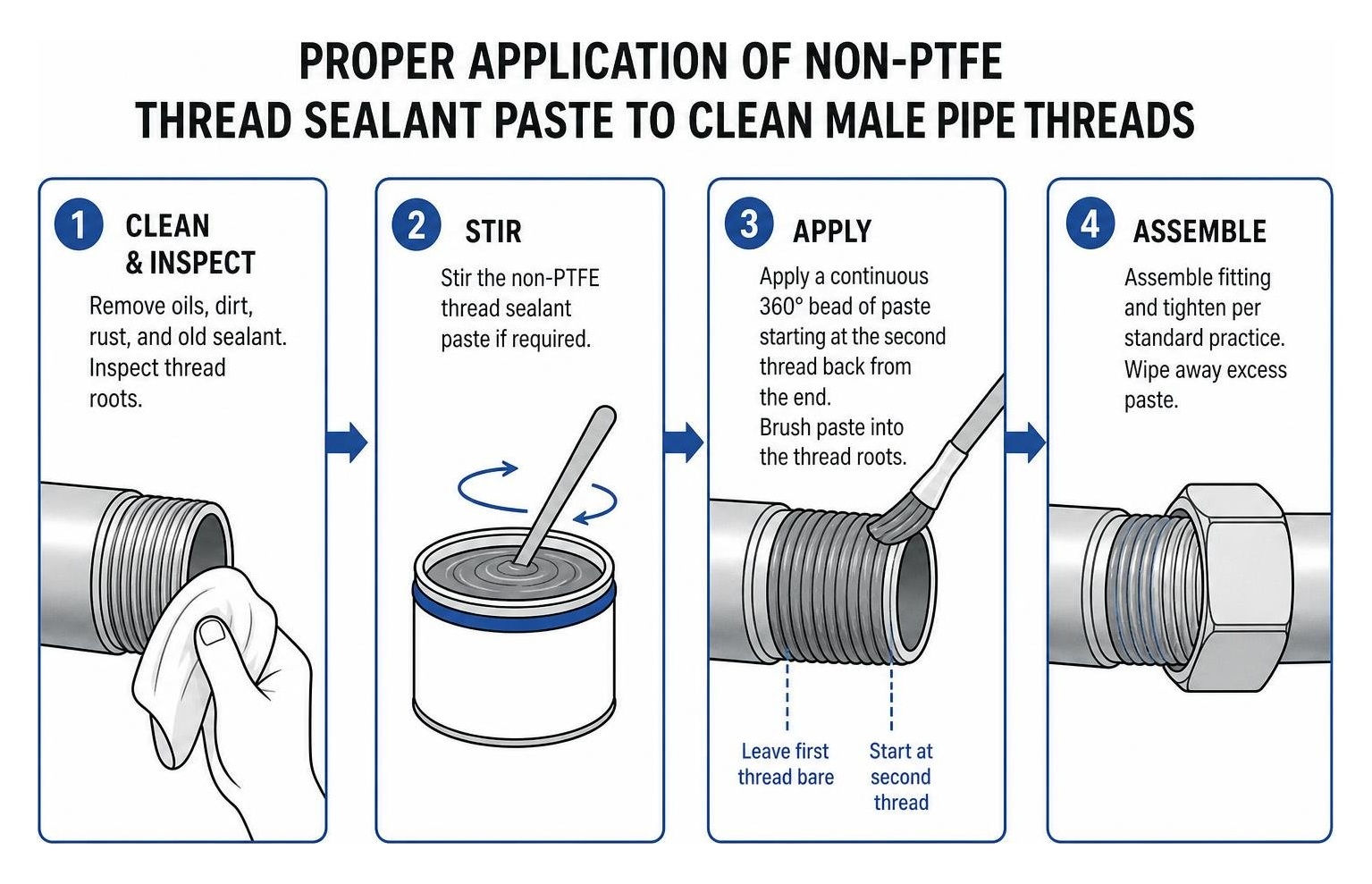
Step 1: Surface Degreasing and Inspection
Ensure both male and female threads are free of cutting oils, metal burrs, rust, and residual cured dope. Clean the mating surfaces using an approved quick-evaporating solvent degreaser and inspect the root profiles for deformities.
Step 2: Proper Compound Application
- For Non-PTFE Liquid/Paste Compounds: Stir the compound if required. Apply a continuous 360-degree bead of paste starting at the second male thread back from the end of the pipe, brushing it down into the roots of the threads. Leaving the first thread bare prevents compound extrusion into the internal pipe bore.
- For Non-PTFE Polyurethane Tapes: Wrap the tape in the direction of the thread spiral (clockwise when facing the open pipe end). Maintain slight tension so the tape conforms snugly into the root profile without bridging across the peaks. Apply two to three overlapping wraps, trimming the tail cleanly.
Step 3: Calibrated Torquing
Thread the joint together by hand until finger-tight, then wrench-tighten to the engineering make-up torque. Because liquid sealants and colloidal graphite reduce the thread friction coefficient (nut factor), avoid over-torquing, which can crack female cast iron or plastic fittings.
Installation Dos and Don'ts for Non-Fluoropolymer Compounds
- DO verify that the operating media, line pressure, and service temperatures are well within the sealant's published technical specifications.
- DO allow anaerobic compounds adequate room-temperature fixture time (typically 15 minutes to 2 hours depending on metal activity) before applying full hydrostatic test pressures.
- DO NOT use unverified PTFE-based pastes or tapes on high-pressure pure oxygen systems due to combustion and auto-ignition risks.
- DO NOT combine incompatible chemistries, such as applying anaerobic liquid directly over thick petroleum-based grease.
- DO NOT leave excess paste or loose tape tails hanging past the male pipe chamfer where they can enter the fluid stream.
Frequently Asked Questions about Non-PTFE Pipe Sealants
Can non-PTFE sealants handle high-pressure and high-temperature steam lines?
Yes. High-purity colloidal graphite compounds and specialized non-fluoropolymer thermal-reactive pastes handle severe steam conditions. While PTFE softens near 400°F and decomposes above 500°F, high-purity colloidal graphite remains thermally stable up to 1,000°F+ (538°C+) in non-oxidizing steam environments, while thermal-reactive pastes resist pressures up to 11,000 psi at temperatures up to 1,800°F (982°C).
Are PTFE-free thread sealants approved for potable water and oxygen systems?
Yes. Non-PTFE sealants are widely certified for both applications. For potable drinking water, look for NSF/ANSI 61, WRAS, or KTW-BWGL approvals that confirm zero VOC, zero lead, and no harmful extractables. For oxygen piping, select polyether polyurethane tapes or specialized anaerobic sealants independently tested and certified under ASTM G72 or BAM standards for safe operation in pressurized oxygen.
How do polyurethane tapes and anaerobic pastes prevent pipe galling without Teflon?
Polyurethane tapes and anaerobic pastes prevent galling by providing boundary lubrication and physical clearance separation between mating metal surfaces. Polyether polyurethane films deform plastically under compressive load to distribute localized stress, while liquid anaerobic sealants coat microscopic surface asperities. For severe galling environments like stainless steel, high-purity colloidal graphite provides exceptional anti-galling protection via low-shear planar slip.
Conclusion
Transitioning away from fluorinated materials is no longer just an environmental ideal; it is a critical operational standard for modern high-purity and regulated piping systems. Eliminating traditional PTFE prevents downstream valve fouling from shredded tape, avoids halogen-induced stress corrosion cracking on sensitive alloys, and ensures full compliance with evolving PFAS regulations.
Whether your application demands the extreme thermal stability of high-purity colloidal graphite, the clean gap-filling power of anaerobic resins, or the certified oxygen safety of polyether polyurethane tape, modern non-fluoropolymer sealing chemistries deliver robust, leak-free performance. For high-purity, nuclear-certified, and critical industrial lines requiring proven low-halogen reliability, explore Neolube No. 100 high-purity nuclear certified sealant to protect your connections under the most demanding operating conditions.