
Thread Locking Sealant: Locking vs. Sealing
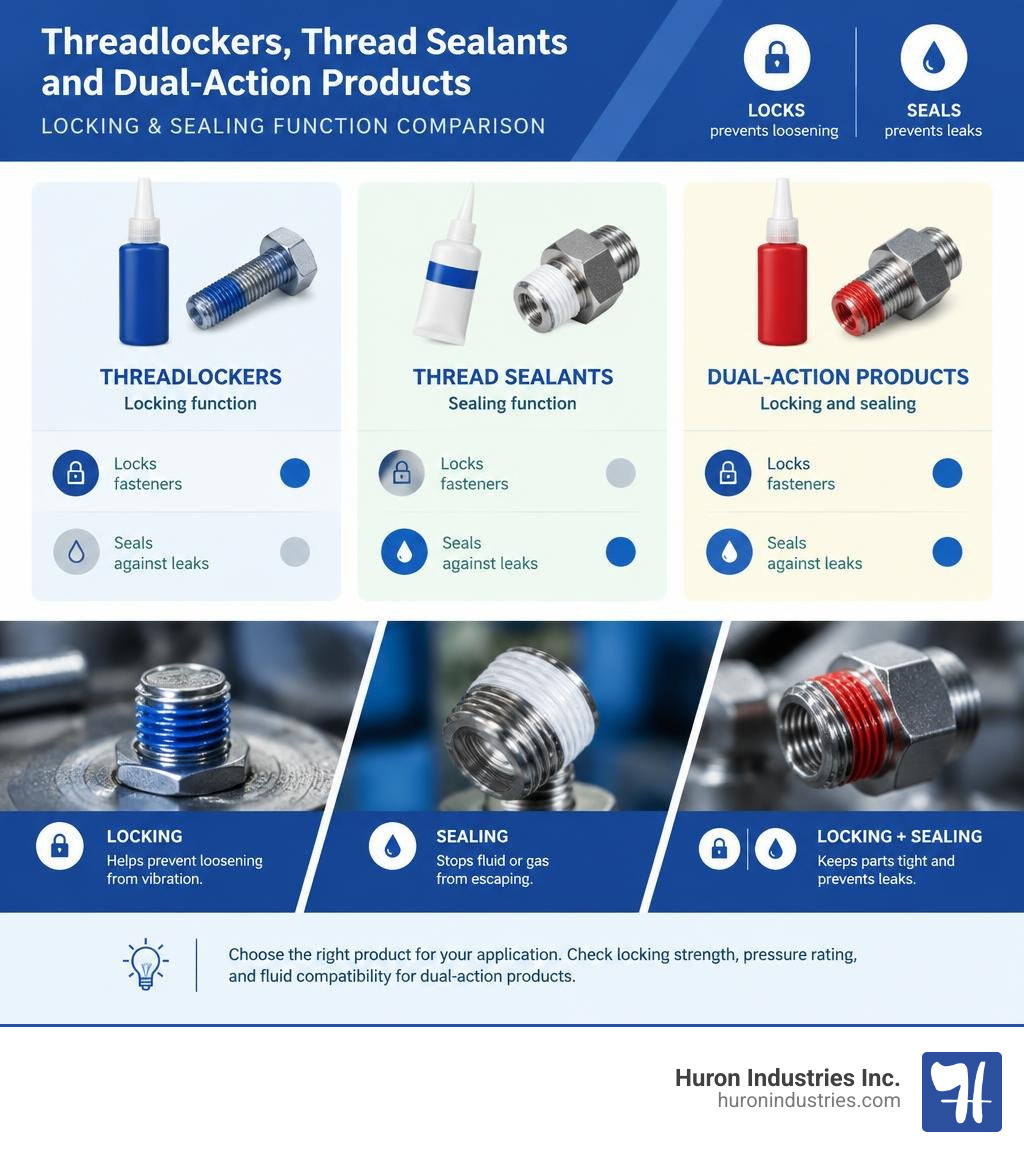
Choose a threadlocker when the main risk is a fastener loosening under vibration. Choose a thread sealant when the main risk is fluid or gas escaping through a threaded fitting. If the joint needs both, a thread locking sealant can do both jobs, but check its locking strength, pressure rating, and fluid compatibility before use.
Many of these products cure between close-fitting metal threads, where air is excluded. That makes the metal surface and cure time important, especially before a sealed joint is put under pressure.
I’m Nicholas Cunha. I work with Huron Industries Inc. to make technical information about sealants and other industrial products easier for engineering and procurement buyers to compare, including how to evaluate a thread locking sealant.
Relevant articles related to thread locking sealant:
Threadlocker vs. Thread Sealant: Core Differences and Mechanisms
When two metal parts thread together, they never make 100% surface contact. Microscopic gaps remain along the root and flank of the thread mesh. Under dynamic operational stresses, those gaps lead to two distinct failure modes: mechanical fastener fatigue resulting in vibrational back-off, or fluid migration leading to pressurized leaks.
A standard threadlocker is formulated primarily to provide shear resistance. When applied to straight or parallel threads (such as standard bolts and studs), it polymerizes into a tough, rigid plastic that physically wedges against microscopic surface roughness. This prevents transverse movement, preserving clamping force even under severe operational shock.
A thread sealant, by contrast, is engineered to block helical leak paths in pipe joints and tapered threads (such as NPT or BSPT). Rather than maximizing off-torque, a sealant delivers high gap-filling capacity and chemical resistance against system media. Using a specialized high pressure sealant ensures that the space between mated threads remains impermeable to gases and pressurized liquids, even as the joint experiences thermal expansion.
| Functional Property | Dedicated Threadlocker | Dedicated Thread Sealant | Dual-Action Thread Locking Sealant |
|---|---|---|---|
| Primary Engineering Goal | Prevent vibrational loosening | Stop fluid/gas leak paths | Simultaneous locking and leak sealing |
| Typical Viscosity Range | Low to medium liquid (10–3,000 mPa·s) | Medium paste / thixotropic (>20,000 mPa·s) | Controlled paste or medium liquid |
| Breakaway Torque | High (100 to >250 in-lb) | Low (minimal mechanical resistance) | Medium (50 to 125 in-lb) |
| Pressure Handling (Instant) | Low until cured | Moderate to high (up to 5,000 PSI) | Moderate (seals to 1,000+ PSI fully cured) |
| Common Joint Types | Machine screws, studs, blind bolts | Tapered pipe threads, hydraulic fittings | Sensor fittings, line nuts, critical studs |
| Typical Removal Method | Hand tools (medium) to heat (high) | Standard hand tools | Standard hand tools |
Anaerobic Curing Process and Activation Dynamics
Anaerobic chemical compounds remain liquid as long as they are exposed to atmospheric oxygen inside their packaging. The polymerization process triggers only when two conditions are met:
- Atmospheric air is completely excluded when the male and female threads mate.
- Active metal ions on the fastener surfaces catalyze the cross-linking reaction.
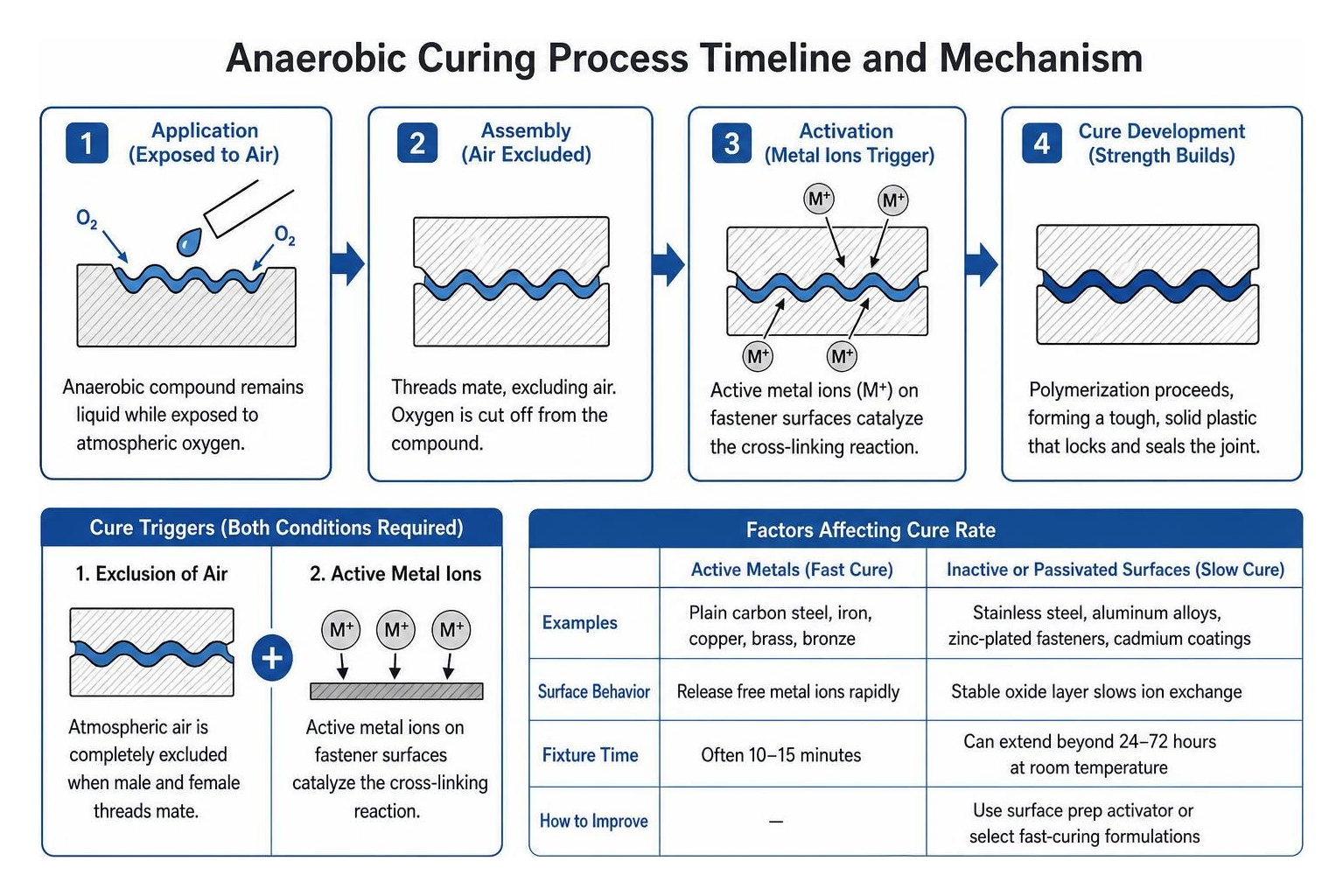
The rate of cure depends heavily on the metallurgy of the assembly. Fasteners made from active metals—such as plain carbon steel, iron, copper, brass, and bronze—release free metal ions rapidly, promoting fast fixture times (often 10 to 15 minutes) and reaching functional handling strength in under an hour. Inactive or passivated surfaces—such as stainless steel, aluminum alloys, zinc-plated fasteners, and cadmium coatings—possess a stable oxide layer that slows ion exchange.
On inactive substrates, standard room-temperature cure kinetics can extend beyond 24 to 72 hours to achieve full cross-linking. To overcome this, engineers specify a surface prep activator or select fast-curing formulations to achieve predictable assembly speeds without sacrificing final bond strength.
Key Performance Properties: Torque, Viscosity, and Pressure Ratings
Evaluating thread-engaging adhesives requires reviewing specific mechanical and rheological metrics on the technical data sheet:
- Breakaway Torque vs. Prevailing Torque: Measured under ISO 10964 standards, breakaway torque reflects the initial rotational force required to fracture the cured chemical matrix. Prevailing torque measures the drag resistance as the fastener continues to rotate through its engagement length. For example, a medium-strength anaerobic threadlocker typically delivers a breakaway torque around 110 in-lb and prevailing torque near 43 in-lb on 3/8-16 steel fasteners, whereas high-strength variants achieve 250 in-lb breakaway and 275 in-lb prevailing torque.
- Viscosity and Thixotropy: Viscosity determines gap-filling capacity. Low-viscosity liquids (10 to 30 mPa·s) exhibit wicking action suitable for post-assembly application and sealing weld porosity. Thixotropic pastes sheer down under application pressure to flow cleanly across threads, but hold their position without migrating into downstream fluid channels.
- Chemical Purity and Halogen Limits: In sensitive operating environments, such as aerospace systems or nuclear power infrastructure, standard additives containing halides or heavy metals cannot be tolerated. In these critical assemblies, choosing a certified low halogen thread sealant prevents stress-corrosion cracking and ensures long-term metallurgical integrity.
Choosing the Right Thread Locking Sealant for Your Application
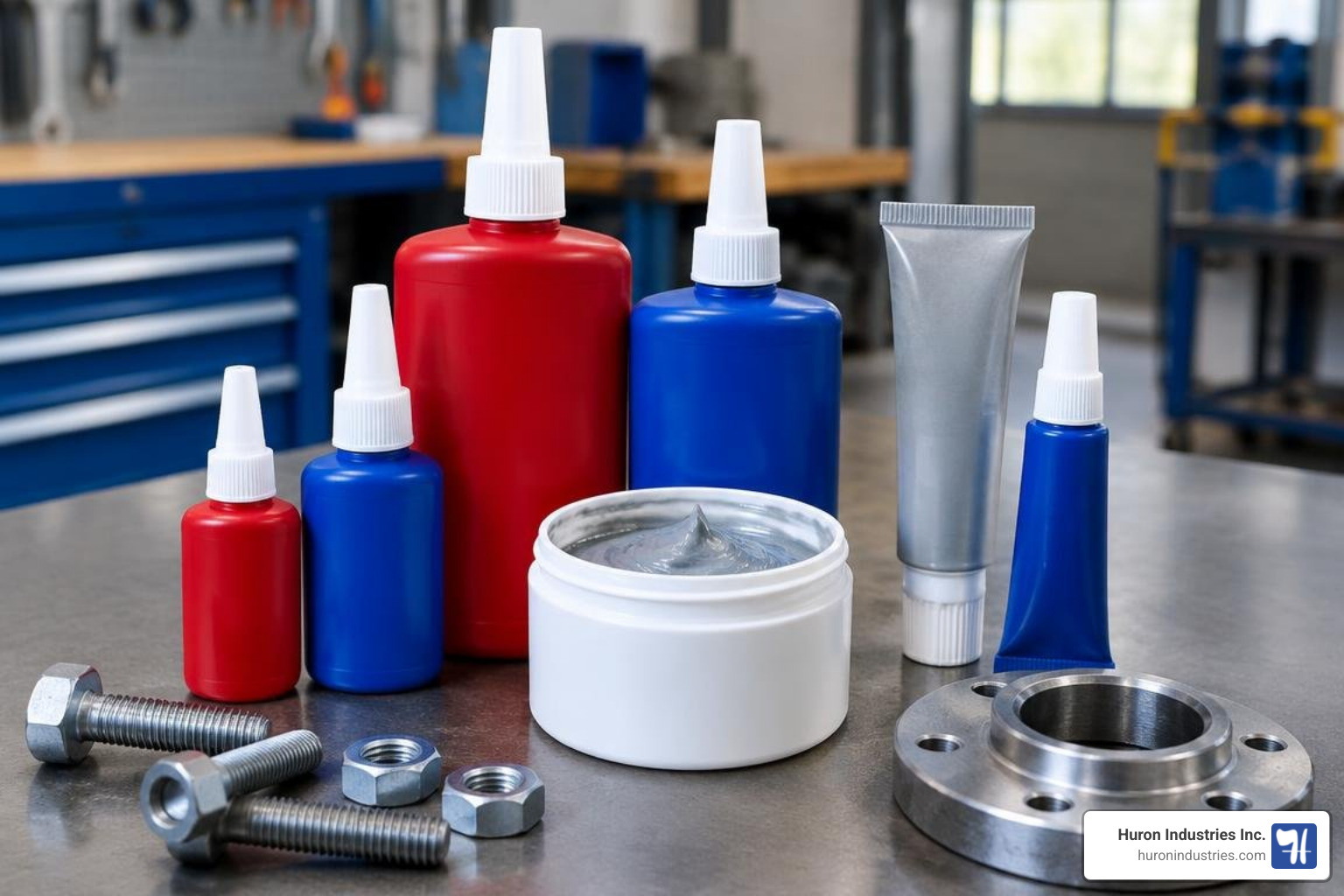
Selecting an optimal locking and sealing solution requires balancing mechanical load profiles against fluid pressures and serviceability needs. Navigating our full range of industrial Thread Sealants helps maintenance and design engineers match chemical formulations to specific operational demands.
Can a Single Thread Locking Sealant Do Both Jobs?
Dual-action anaerobic compounds are specifically formulated to bridge the gap between locking and sealing. These hybrid chemistries provide shear strength greater than 1,000 PSI and breakaway values between 50 and 100 in-lbf, while simultaneously establishing a fluid-tight barrier that seals to 1,000 PSI across operating temperatures ranging from -60°F to 300°F (-51°C to 150°C).
However, using a single compound introduces clear trade-offs. If an assembly requires high breakaway torque (over 250 in-lb) to withstand extreme dynamic shock, a dual-action sealant may not provide sufficient mechanical holding power. Conversely, if a delicate fitting requires frequent teardown without any risk of galling or component deformation, standardizing on a dedicated non-hardening vs hard-setting thread sealant allows for easy field maintenance while maintaining a reliable fluid barrier.
Liquid vs. Pre-Applied vs. Two-Part Epoxy Thread Locking Sealant
Thread locking sealants are deployed across three distinct delivery methods:
- Liquid Anaerobics: Applied manually or via automated dispensers at the point of assembly. They offer maximum shelf flexibility and wet completely across thread roots, but require strict adherence to manual application protocols to prevent under- or over-application.
- Pre-Applied Microencapsulated Coatings: High-volume automotive and original equipment manufacturers often utilize fasteners coated with dry-to-the-touch, water-based pre-applied films. During joint assembly, the mechanical engagement crushes microcapsules containing the active resin and catalyst, initiating cure. This eliminates manual chemical dispensing on the assembly floor, provides consistent joint-to-joint coating volume, and delivers instant sealing capabilities up to 5,000 PSI.
- Two-Part Epoxy Formulations: In heavy industrial, directional drilling, or structural tubular applications, anaerobic curing may be insufficient due to massive thread clearances or inactive base metals. Two-part, zinc-free epoxies deliver high shear strength (2,500 to 3,100 PSI) with service ratings up to 400°F (204°C), curing fully within an hour regardless of gap dimensions or atmospheric oxygen presence.
Chemical Compatibility, Temperature Limits, and System Constraints
Before specifying any anaerobic compound, verify its compatibility with the operational environment:
- Aggressive Hydrocarbons and Refrigerants: Formulations designed for closed-loop refrigeration lines and fuel systems must resist continuous exposure to synthetic compressor oils, glycol, gasoline, and harsh chemical refrigerants without softening or leaching.
- Thermal Endurance: Standard anaerobic polymers perform reliably between -65°F and 300°F (-54°C to 149°C). For applications extending beyond these limits, high-temperature grades or specialized inorganic pastes are required. Reviewing the operational differences between a high temperature anti-seize vs thread sealant prevents costly joint seizure under severe thermal cycling.
- Oxygen and Reactive Gases: Standard anaerobic resins contain organic polymers that can combust violently in pure oxygen or chlorine-rich systems. Fluoropolymer-based barrier compounds tested leak-free under helium at 400 PSI are mandatory in high-purity oxidant services.
- Thermoplastic Compatibility: Anaerobic monomers attack non-metal substrates. When applied to ABS, polycarbonate, or PVC fittings, the liquid carrier induces severe environmental stress cracking and crazing within hours. Always use chemically inert PTFE or graphite formulations on non-metallic threads.
Thread Locking Sealants in Assembly Design

Integrating anaerobic chemistry into early mechanical design allows engineers to optimize joint performance while reducing component weight and manufacturing overhead.
| Design Parameter | Mechanical Fastening Alone (Washers, Locknuts) | Traditional Sealing Alone (PTFE Tape, Dope) | Integrated Thread Locking Sealant |
|---|---|---|---|
| Vibration Retention | Subject to relaxation and fatigue | None (can lubricate back-off) | High 100% surface bonding |
| Leak Path Protection | None (allows spiral fluid flow) | High (fills thread root gaps) | High (cured anaerobic solid matrix) |
| Corrosion Prevention | Moisture enters mated thread gaps | Moderate protection on pipe threads | Complete exclusion of moisture and chemicals |
| System Contamination Risk | Low | High (tape shredding can clog valves) | Zero (no solid debris shed into fluid streams) |
| Component Stress | High localized stress under washer | Wedging action can crack cast housings | Uniform stress distribution across engaged threads |
Step-by-Step Application, Curing, and Disassembly Best Practices
Achieving a durable, leak-free joint depends as much on proper surface preparation and application technique as on product chemistry.
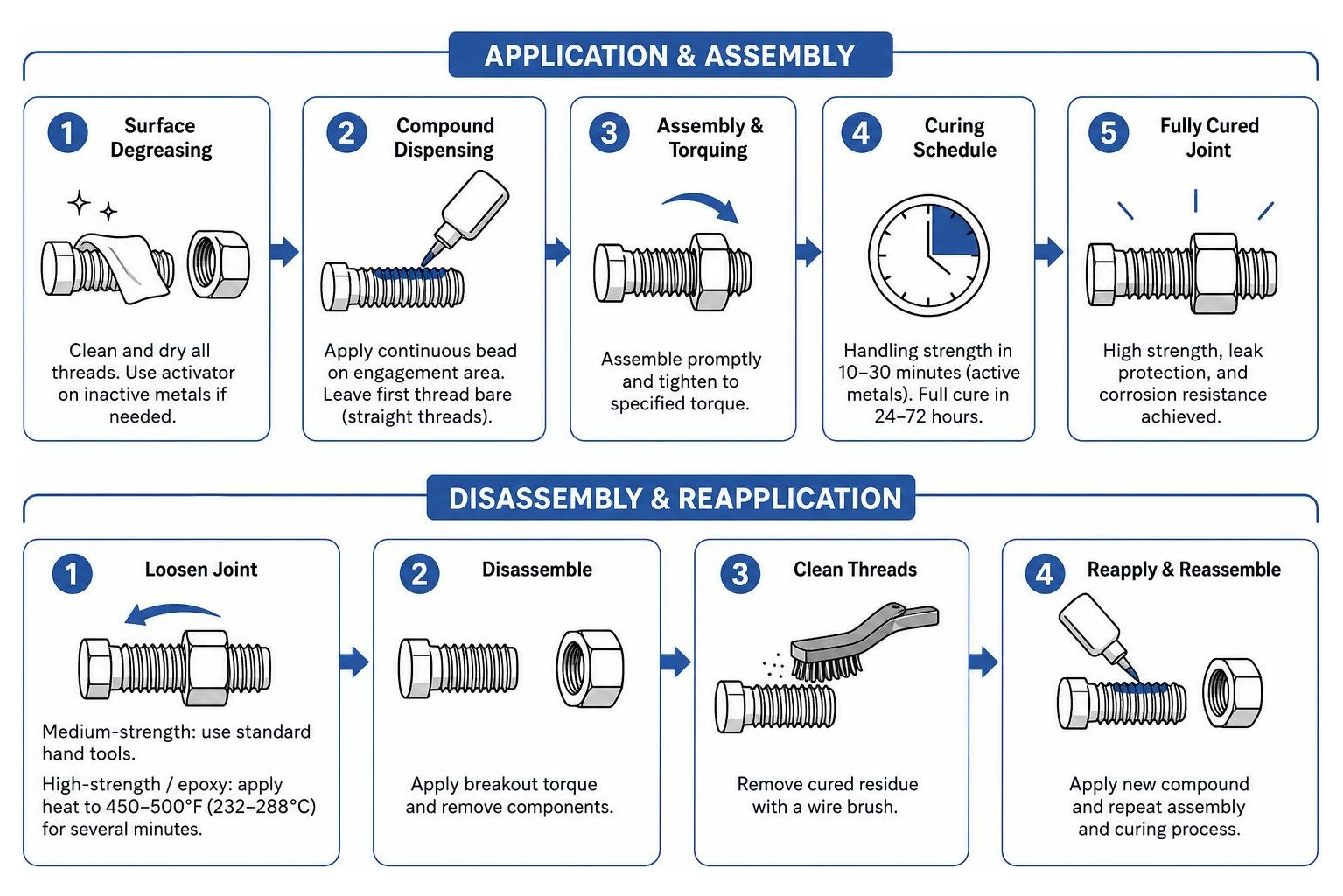
- Surface Degreasing: Remove all residual oils, dirt, rust preventatives, and cutting fluids using a residue-free solvent cleaner. Dry completely. If working with inactive metals (such as stainless steel or anodized aluminum) under tight production schedules, apply an anaerobic surface activator to both mating parts.
- Compound Dispensing: Knead flexible tubes or shake bottles thoroughly. For straight male threads, apply a continuous bead across the engagement area, leaving the first leading thread bare to prevent compound displacement into fluid passages. For tapered pipe threads, coat leading male threads 360 degrees, covering approximately 3/4 of a turn. For specialized fluid applications, matching the correct thread sealant for hydraulic fittings and compressor lines avoids clogging internal pilot valves or filtration screens.
- Assembly and Torquing: Thread components together promptly and tighten to specified assembly torque. Anaerobic adhesives lubricate threads slightly during assembly, ensuring smooth torque transfer without thread galling.
- Curing Schedule: Allow the joint to reach functional handling strength (typically 10 to 30 minutes for active metals) before moving the assembly. Allow a full cure window (24 to 72 hours at room temperature, depending on metallurgy and product chemistry) before subjecting the assembly to full system fluid pressure or dynamic shock loading.
- Disassembly and Reapplication: Medium-strength formulations release cleanly using standard hand tools. High-strength compounds or two-part epoxies require localized thermal application (heating the joint to 450°F–500°F / 232°C–288°C for several minutes) to soften the polymer matrix before applying breakout torque. Once disassembled, clean cured residue from threads with a wire brush before reapplying new compound.
Frequently Asked Questions About Thread Locking Sealants
What is the primary difference between a threadlocker and a thread sealant?
A threadlocker is formulated with high shear strength to resist vibrational loosening on parallel threaded fasteners like bolts and studs. A thread sealant is formulated with higher viscosity and gap-filling properties to block fluid migration through the helical leak paths of tapered or straight pipe connections.
How do you disassemble joints secured with high-strength thread locking compounds?
Joints secured with high-strength threadlockers or two-part epoxies cannot be removed with hand tools alone without damaging the fastener. Apply localized heat using a heat gun or torch until the joint reaches approximately 450°F to 500°F (232°C to 288°C). This thermal exposure degrades the polymer matrix, allowing the fastener to be unthreaded with standard hand wrenches while hot.
Can anaerobic sealants be used on plastic threads or potable water lines?
No. Standard anaerobic sealants should not be used on thermoplastic fittings (such as ABS, PVC, or CPVC) because unreacted liquid monomers induce environmental stress cracking, resulting in joint failure. Furthermore, anaerobic compounds must not be used on residential potable water piping unless explicitly certified under NSF/ANSI Standard 61.
Conclusion
Whether you are securing critical structural bolts against severe vibrational loosening or protecting pressurized fluid lines from costly leaks, selecting the right chemical locking and sealing technology is vital to equipment reliability. Matching formulation chemistry, cure speed, and removal profiles to your specific operating environment prevents unexpected downtime and ensures long-term operational integrity.
At Huron Industries Inc., we have manufactured and supplied high-purity graphite lubricants, thread sealants, anti-seize compounds, and industrial solutions since 1971. When you need certified, high-reliability compounds for demanding industrial, aerospace, or commercial nuclear systems, explore our specialized products, including Neolube No. 100, to maintain secure, leak-proof assemblies across all your critical infrastructure. (Note: The coefficient of friction for Neolube No. 1.1 of 0.15 has not been tested or approved for this.)