
What is the MIL-L-24131C Specification for a Mil Spec Colloidal Graphite Lubricant?
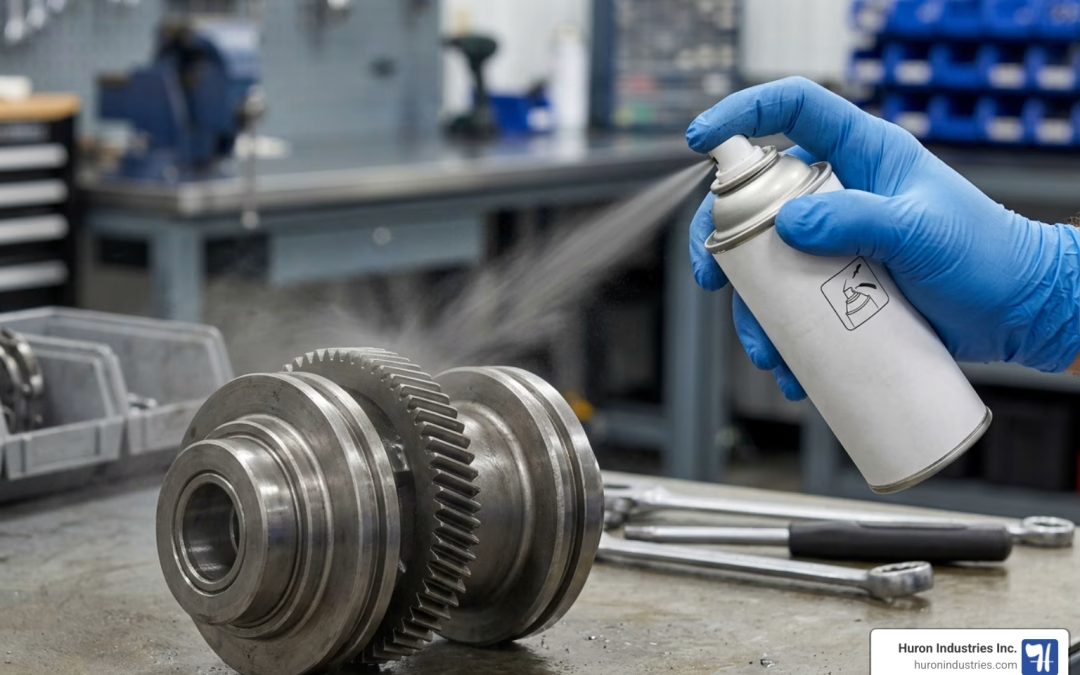
Mil spec colloidal graphite lubricant is a high-purity, dry film lubricant governed by military specification MIL-L-24131C. It consists of ultra-fine graphite particles suspended in isopropanol, designed for metal parts with tight clearances where contamination cannot be tolerated.
Quick Answer: What You Need to Know
| Key Detail | Specification |
|---|---|
| Governing standard | MIL-L-24131C |
| Carrier liquid | Isopropanol (isopropyl alcohol) |
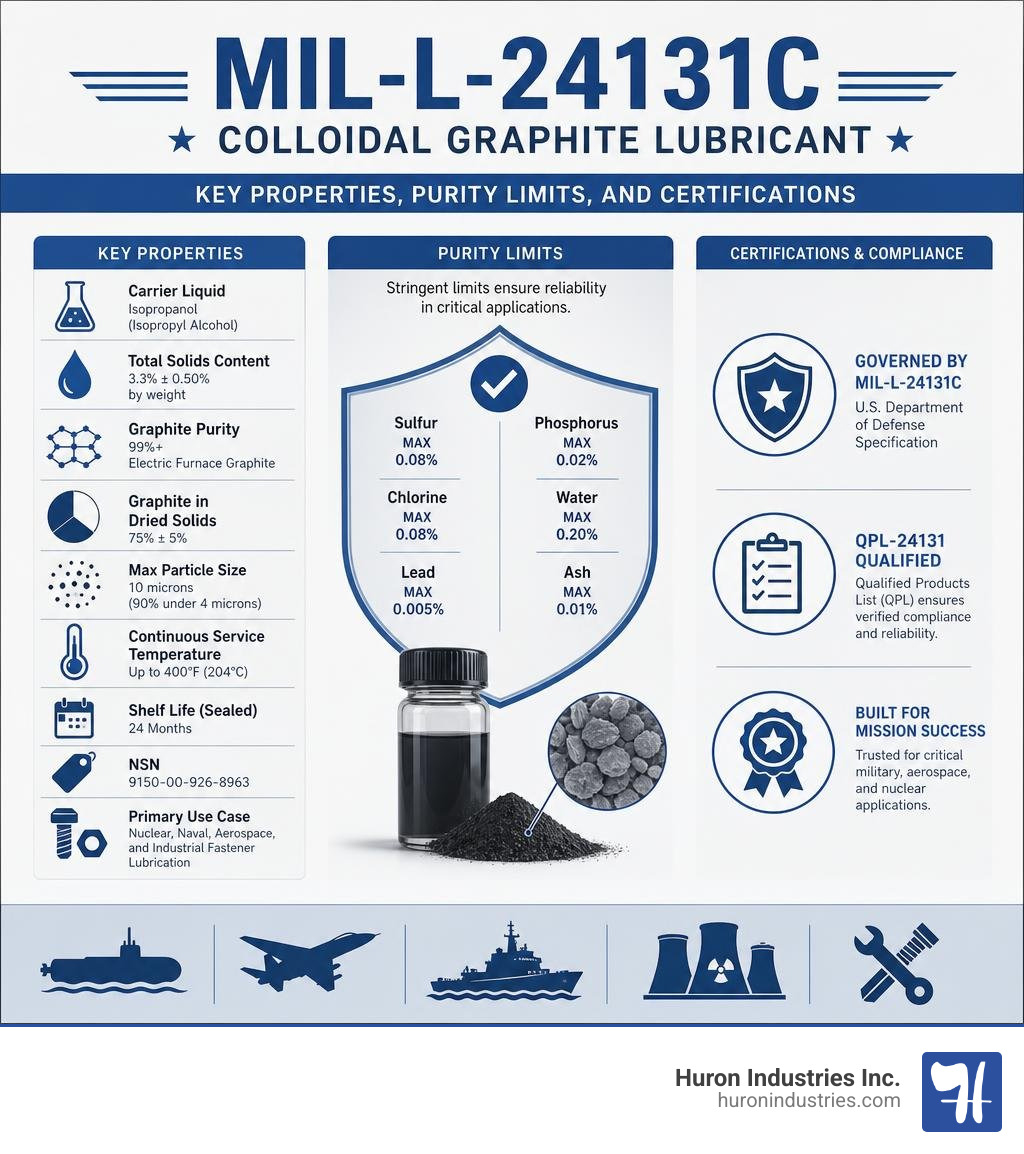
| Total solids content | 3.3% ± 0.50% by weight |
| Graphite purity | 99%+ electric furnace graphite |
| Graphite in dried solids | 75% ± 5% |
| Max particle size | 10 microns (90% under 4 microns) |
| Continuous service temp | Up to 400°F (204°C) |
| Shelf life (sealed) | 24 months |
| NSN | 9150-00-926-8963 |
| Primary use case | Nuclear, naval, aerospace, and industrial fastener lubrication |
Standard industrial lubricants often carry trace contaminants — sulfur, chlorine, lead — that are harmless in most settings. But in a nuclear submarine or a precision aerospace assembly, those same impurities can cause stress corrosion cracking, reactor contamination, or catastrophic mechanical failure.
That is exactly why MIL-L-24131C exists.
The specification sets strict, verifiable limits on every contaminant. It defines particle size, solids content, graphite purity, and film behavior — leaving nothing to chance. Products qualified to this standard have been trusted by the US Navy Submarine Force for over 50 years.
This guide breaks down everything engineers and procurement buyers need to know: what the spec actually requires, which products meet it, how to apply them correctly, and where the limits are.
I'm Nicholas Cunha, digital marketing and content strategist for Huron Industries Inc., where I've spent years translating the technical details of mil spec colloidal graphite lubricant and related specialty products into clear, accurate guidance for engineering and procurement teams. My work focuses on helping qualified buyers understand complex specifications so they can source the right product with confidence.
To understand why this lubricant is so highly regarded, we have to look at the governing military specification: MIL-L-24131C. Developed by the US Department of Defense (DOD), military specifications (MilSpecs) are designed to achieve standardization, interoperability, and the highest quality for products procured across the military branches.
Within the Federal Stock Class (FSC) 9150 (covering lubricants, oils, and greases), MIL-L-24131C is the active specification for a noncorrosive, dry, adherent lubricant. The specification specifically mandates a colloidal dispersion of high-purity graphite in an isopropanol carrier.
Historically, other specifications existed, such as MIL-L-17745, which covered colloidal graphite in a polyalkylene glycol carrier. However, that specification has been cancelled with no superseding document, leaving MIL-L-24131C as the premier active standard for high-purity colloidal graphite.
When you look at MilSpec MIL-L-24131C, Neolube , you see a standard built for environments where strict control of impurities is required and metal parts have limited clearances. It guarantees that the dry film left behind is completely noncorrosive, highly adherent, and incredibly thin.
Chemical and Physical Properties of Mil Spec Colloidal Graphite Lubricant
A certified mil spec colloidal graphite lubricant must meet exact physical and chemical parameters. The military specifies a total solids content of 3.3% ± 0.50% by weight. When the carrier liquid evaporates, the remaining dried solids must contain exactly 75% ± 5% graphite.
The quality of the graphite itself is tightly controlled. It must be electric furnace graphite with a purity of 99% or higher. Furthermore, the particle size of the graphite must be incredibly fine to ensure it can penetrate tight tolerances without agglomerating:
- 90% of the graphite particles must have a maximum dimension of 4 microns or less.
- No single particle is allowed to exceed 10 microns.
This microscopic particle size ensures that the dispersion remains stable and does not form a hard, unstirrable cake on settling in storage. When you are trying to understand How to Choose a Certified Colloidal Graphite Supplier Without Slipping Up, these physical properties are the first metrics you must verify.
Strict Purity and Contaminant Limits Under MIL-L-24131C
The true defining feature of a MIL-L-24131C lubricant is its chemical purity. In nuclear applications, trace amounts of halogens, heavy metals, or sulfur can lead to stress corrosion cracking of stainless steel and nickel-alloy components.
To prevent this, every batch of qualified lubricant must undergo rigorous testing to ensure contaminants are held to extremely low levels. The maximum allowable limits on total solids include:
- Ash: 0.75% maximum
- Fluorine: 20 ppm maximum
- Chlorine: 200 ppm maximum
- Sulfur: 200 ppm maximum
- Lead: 150 ppm maximum
Furthermore, no lead, mercury, or boron is ever used in the manufacturing process. This mercury-free manufacturing guarantee is vital for components that come into contact with sensitive reactor systems.
Key Applications, Certifications, and Submarine Atmosphere Control

Because of its high purity, mil spec colloidal graphite lubricant is widely used in high-stakes environments. One of its most famous roles is serving the US Navy Submarine Force, where it has over 50 years of continuous, proven use.
In the closed environment of a nuclear-powered submarine, any volatile organic compounds (VOCs) or toxic off-gassing from lubricants can compromise the breathing air of the crew. Therefore, any material used on board must meet the stringent requirements of the Nuclear Powered Submarine Atmosphere Control Manual (S9510-AB-ATM-010/(U)). Isopropanol-based colloidal graphite is fully authorized for submarine use under this manual because the carrier evaporates cleanly and does not leave toxic residues or continuous off-gassing in the atmosphere.
Beyond submarines, the lubricant is a staple in:
- Naval Nuclear Propulsion Program: Lubricating internal and auxiliary equipment mechanisms of naval nuclear reactor systems.
- Commercial Nuclear Power Generation: Preventing seizing, fretting, and thread galling on stainless steel and aluminum fasteners in high-radiation zones.
- Precision Aerospace Components: Providing dry-film lubrication for threaded parts and limited-clearance joints where petroleum or silicone oils are strictly prohibited.
To learn more about how these properties solve unique industrial challenges, you can read about The Many Uses of Colloidal Graphite in Water and Beyond.
Why Colloidal Graphite in Isopropanol Outperforms Alternative Dry Film Lubricants
When selecting a dry film lubricant, engineers often compare colloidal graphite in isopropanol to other common solid lubricants like molybdenum disulfide, polytetrafluoroethylene (PTFE), or tungsten disulfide.
While each has its place, colloidal graphite offers a unique balance of radiation resistance, chemical purity, and non-migratory properties.
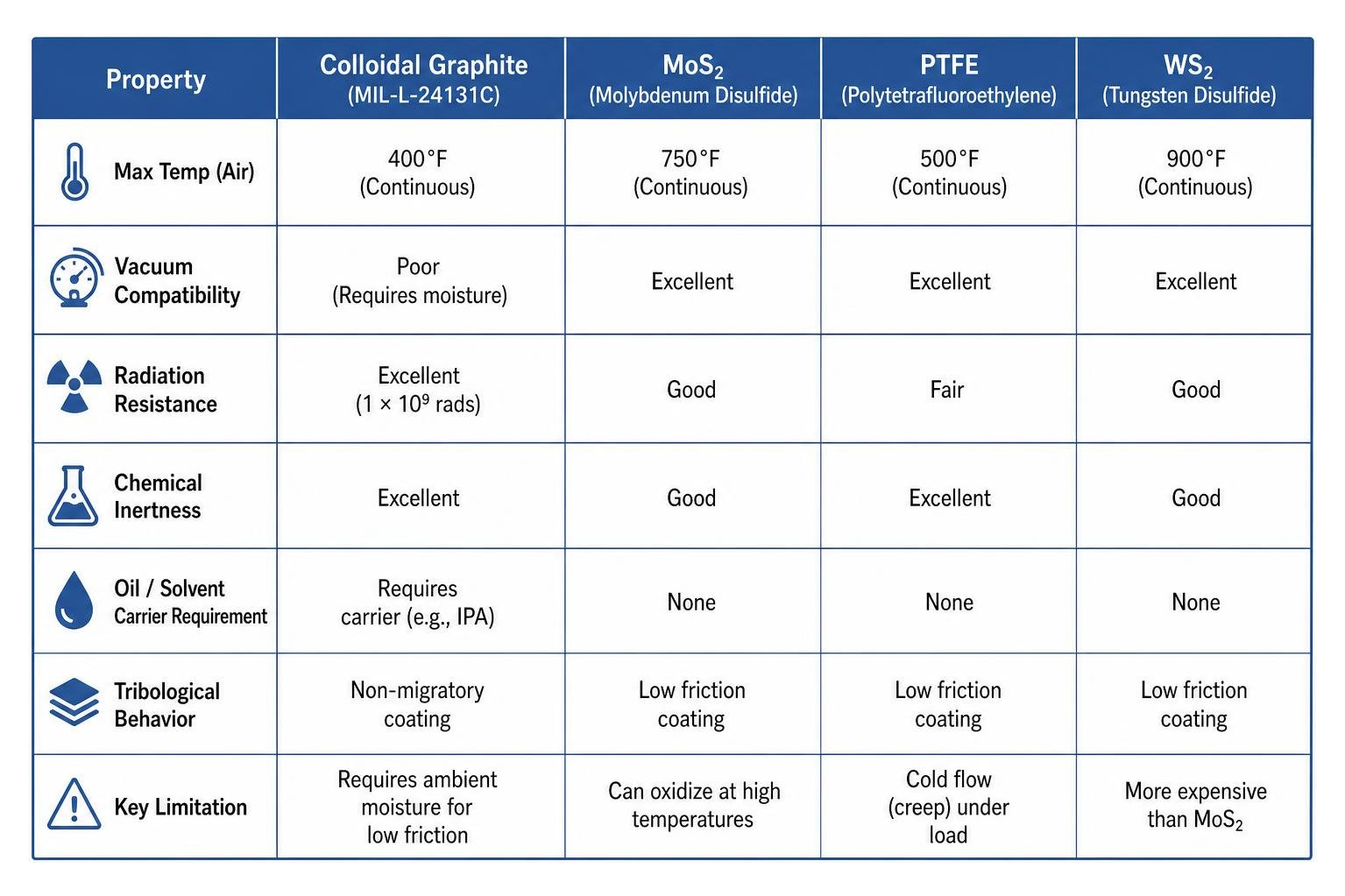
Let's look at how these materials compare:
| Lubricant Type | Max Temp (Air) | Vacuum Compatibility | Radiation Resistance | Key Limitation |
|---|---|---|---|---|
| Colloidal Graphite (MIL-L-24131C) | 400°F (Continuous) | Poor (Requires moisture) | Excellent (1 × 10⁹ rads) | Requires ambient moisture for low friction |
| Molybdenum Disulfide | 750°F | Excellent | Good | Can degrade into corrosive sulfuric acid in wet environments |
| PTFE | 500°F | Good | Poor (Degrades under radiation) | Subject to cold flow and material migration |
| Tungsten Disulfide | 1200°F | Excellent | Excellent | Requires binder-less impingement for ultra-thin profiles |
Graphite achieves its low coefficient of static friction through its lamellar (layered) crystal structure. However, graphite requires adsorbed moisture or water vapor to slip easily. This means that in ultra-high vacuum environments, graphite loses its lubricity — a scenario where molybdenum disulfide or tungsten disulfide would be preferred.
But in atmosphere-controlled environments and high-radiation fields, graphite is unmatched. It can withstand radiation levels up to 1 × 10⁹ rads without any structural degradation, whereas PTFE quickly breaks down and loses its mechanical properties.
Neolube No. 1 vs. Neolube No. 2: Which One Meets the Mil Spec?
One of the most common points of confusion in procurement is the difference between Neolube No. 1 and Neolube No. 2.
To put it simply: they are chemically identical, but only Neolube No. 1 is certified to meet the military specification.
Both products are exceptionally stable compounds of processed micro-graphite and a thermoplastic resin binder in an isopropyl alcohol carrier. They share the exact same solids content, particle size distribution, and low halogen levels. However:
- Neolube No. 1: Specifically designated, tested, and certified to conform to the MIL-L-24131C military specification. It is the product associated with NSN 9150-00-926-8963 and is approved by the Naval Ship Engineering Center.
- Neolube No. 2: Marketed as a commercial nuclear-grade dry film lubricant. It provides the exact same high purity and performance but does not carry the formal military specification certification paperwork (unless specifically requested), making it a cost-effective choice for commercial nuclear power plants and industrial manufacturing.
Note on formulation updates: On July 11, 2024, the legacy formulation of Neolube No. 1 was updated and replaced by the current formula, Neolube No. 1.1, to satisfy modern regulatory and manufacturing standards while maintaining full compliance with the performance requirements of MIL-L-24131C.
To explore the entire product family, check out The Colloidal Graphite Lubricant and browse the Neolube Brand Products page.
Application Methods and Cure Times for Mil Spec Colloidal Graphite Lubricant
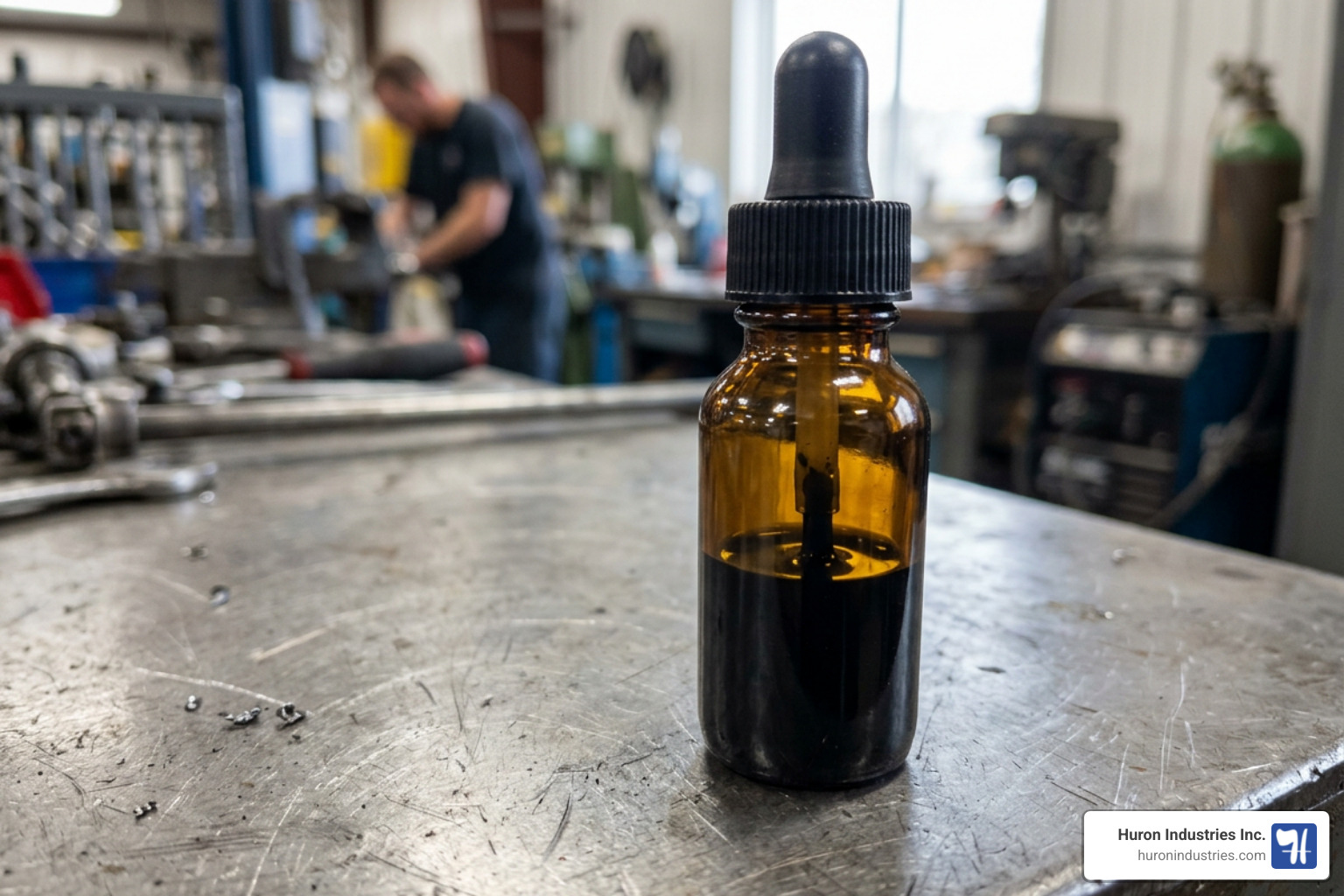
Applying a mil spec colloidal graphite lubricant like Neolube No. 1 is incredibly straightforward, but proper surface preparation is key to achieving maximum adhesion:
- Pretreatment: Clean the metal substrate thoroughly. Use a solvent wipe to remove all oil, grease, and dirt. For critical applications requiring maximum wear life, mechanical or chemical pretreatments like grit blasting, phosphating, or etching can be used.
- Mixing: Ensure the lubricant is mixed uniformly before application.
- Application: Apply a thin, even layer. You can do this using:
- A brush (such as the standard 2 oz. brush-in-cap applicator bottle).
- Conventional spray equipment.
- Dipping the component directly into the solution.
- Curing: The lubricant air-dries in approximately 5 minutes, depending on local temperature and humidity. As the isopropanol vehicle evaporates, it leaves behind a dry, lustrous, non-migratory film of pure graphite that adheres tightly to the metal.
Storage, Handling, and Shelf-Life Requirements
Because the carrier liquid is isopropyl alcohol, this lubricant is classified as a UN Class 3 Flammable Liquid (DOT Packing Group II). It must be stored and transported in accordance with hazardous material regulations.
- Shelf Life: The product has a shelf life of 24 months in a closed container (under Shelf-Life Code 6).
- Usability After Opening: Unlike many industrial compounds, it will not form a hard, unstirrable cake upon settling. If the container is opened and stored, it can be restored to a fully usable state for at least 6 months simply by stirring or agitating the mixture to re-suspend the graphite.
- Resealing: Always keep the container tightly closed when not in use to prevent the isopropanol carrier from evaporating. If dilution is necessary, dilute only with pure isopropanol.
Limitations and Safety Precautions for Graphite Dispersions
While colloidal graphite is an exceptional lubricant, there are several environments where it should not be used:
- High-Temperature Reactor Containment: Neolube No. 1 and No. 2 have a continuous service temperature limit of 400°F (204°C), and can withstand intermittent exposure up to 850°F (454°C). They are explicitly not recommended for reactor primary containment areas where operating temperatures continuously exceed 400°F. For those high-temperature environments, alternative formulations like Neolube No. 1260 should be utilized.
- Oxygen Systems: This lubricant is strictly incompatible with oxygen-rich environments and must not be used in oxygen systems or drinking water applications.
- Stainless Steel at Extreme Temperatures: Do not use graphite-based lubricants on stainless steel applications where temperatures will exceed 550°F (288°C). At these extreme temperatures, graphite can cause carburization of the steel, making it highly susceptible to intergranular corrosion. For those specific high-temperature steel applications, nickel-based anti-seize compounds are typically preferred.
To understand how graphite behaves under high loads and pressures in other industrial machinery, you can read Why Your Heavy Machinery Needs High-Pressure Graphite Lubricant.
Frequently Asked Questions about Mil Spec Colloidal Graphite
What is the difference between Neolube No. 1 and Neolube No. 2?
Chemically, Neolube No. 1 and Neolube No. 2 are identical. Both feature a 3.3% solids content of high-purity electric furnace graphite in an isopropyl alcohol carrier. The only difference is that Neolube No. 1 is formally certified to meet the MIL-L-24131C military specification (and is packaged under NSN 9150-00-926-8963), whereas Neolube No. 2 is sold as a commercial-grade nuclear lubricant without the military certification paperwork.
Why is isopropanol used as the carrier liquid instead of water or oil?
Isopropanol (isopropyl alcohol) is used because it evaporates rapidly and cleanly at room temperature. Unlike oil-based carriers, which can migrate, attract dust, or leave behind greasy residues, isopropanol leaves behind only a dry, highly adherent, and non-migratory film of pure graphite. This is essential for precision assemblies and cleanroom environments.
Can this lubricant be used in high-temperature reactor containment areas?
No, Neolube No. 1 and No. 2 are not recommended for reactor primary containment areas where continuous operating temperatures exceed 400°F (204°C). For applications exceeding this limit, you should use higher-temperature alternatives like Neolube No. 1260.
Conclusion
When you are operating in high-stakes environments like nuclear propulsion, aerospace manufacturing, or precision industrial assembly, there is simply no room for compromise. A certified mil spec colloidal graphite lubricant ensures that your components are protected against galling and seizing without the risk of introducing corrosive contaminants.
At Huron Industries Inc., we have spent decades perfecting our manufacturing processes to deliver the extreme purity and reliability demanded by the military and nuclear sectors.
If you need to secure a certified, high-purity lubricant for your next project, explore our flagship Neolube Colloidal Graphite line or contact us today to request a quote and a Certificate of Quality Conformance.