
What Is Colloidal Graphite — and Why Does It Matter for Industrial Applications?
What is colloidal graphite is one of those questions that sounds simple but opens up a surprisingly deep topic in materials science.
Here’s the short answer:
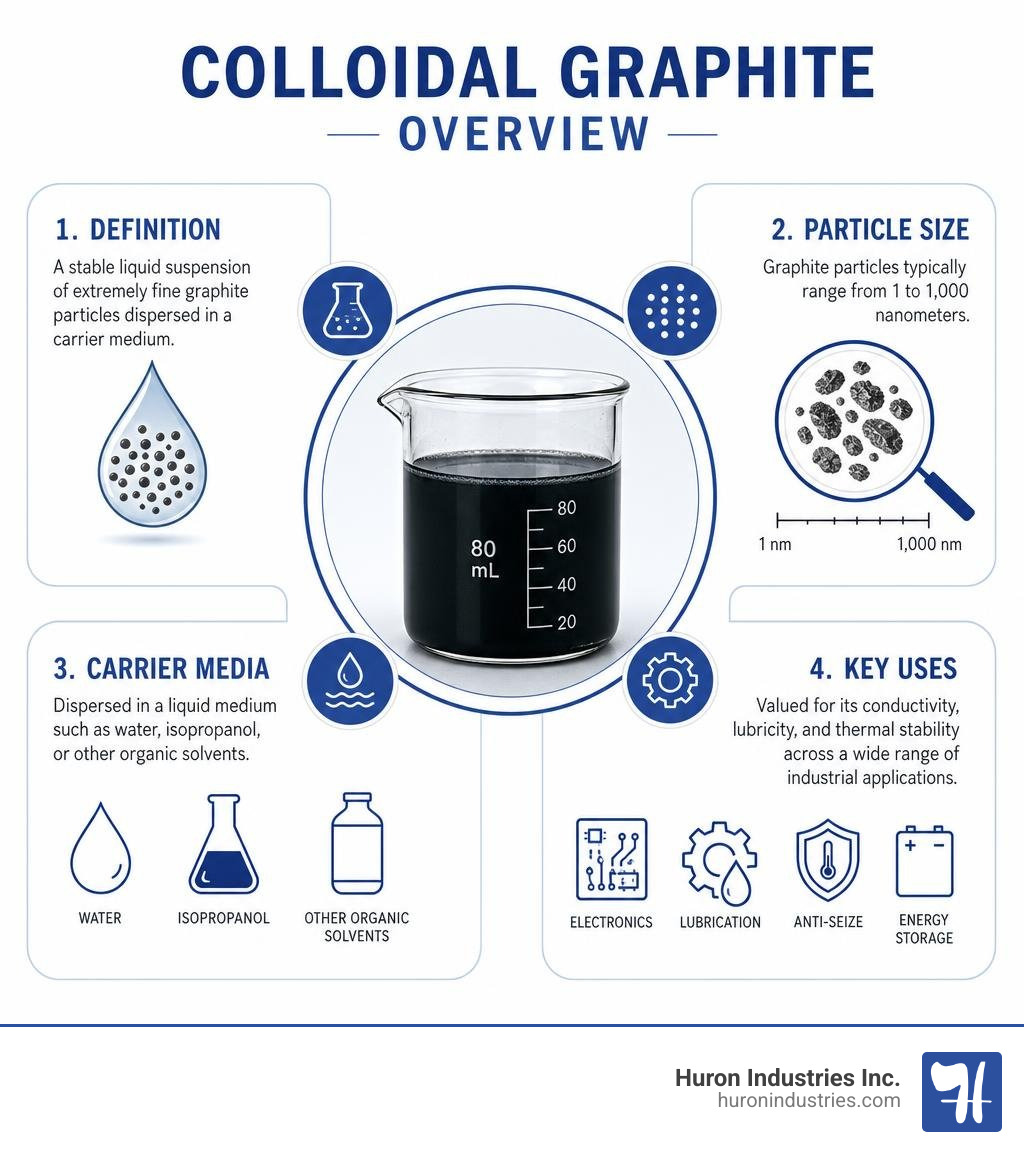
Colloidal graphite is a stable liquid suspension of extremely fine graphite particles — typically 1 to 1,000 nanometers in size — dispersed in a carrier medium such as water, isopropanol, or another organic solvent. It is used as an industrial lubricant, a conductive coating, and an electrode material, among many other applications.
The key difference from ordinary graphite powder is the particle size and suspension stability. Because the graphite flakes are so fine, they stay evenly distributed in the liquid instead of settling out — making the material far more versatile and easier to apply across complex surfaces.
At a glance, colloidal graphite is:
- A liquid dispersion, not a dry powder or solid
- Made from graphite particles small enough to remain suspended (1–1,000 nm)
- Available in water-based and solvent-based formulations
- Used across electronics, mechanical engineering, nuclear power, and energy storage
- Valued for its electrical conductivity, lubricity, and thermal stability
It shows up in places you might not expect — from conductive coatings inside printed circuit boards to anti-seize compounds rated for nuclear power plant environments.
I’m Nicholas Cunha, founder of CreatiVertical and the content strategist behind Huron Industries Inc.’s digital presence, where my work directly covers what is colloidal graphite and how it applies to high-purity lubricant and specialty chemical sourcing for industrial buyers. This guide draws on that hands-on experience translating complex material specifications into clear, practical information for procurement and engineering teams.
What is Colloidal Graphite?
To truly grasp what colloidal graphite is, we have to look at it as a complete system. In materials science, a colloid is a mixture where microscopic, insoluble particles of one substance are suspended throughout another substance.
In this case, the dispersed phase consists of highly purified, microscopic graphite flakes, and the dispersion medium (or carrier) is a liquid. Depending on the intended industrial application, this liquid medium can be water, isopropyl alcohol (isopropanol), petroleum oil, mineral spirits, or specialized synthetic fluids.
According to chemical and material profiles, such as those found on What Is Colloidal Graphite?, the primary magic of this material lies in its ability to behave like a liquid during application but perform like a high-grade solid once the carrier evaporates.
When you paint, spray, or dip a component into a colloidal graphite dispersion, the liquid carrier flows smoothly into every microscopic crevice. As the carrier evaporates, it leaves behind an incredibly thin, continuous, and highly adherent dry film of pure graphite.
Understanding What is Colloidal Graphite vs Traditional Graphite
Why not just use traditional dry graphite powder? The answer comes down to particle size and physical behavior.
Traditional graphite powders consist of relatively large, coarse particles (often larger than 20 to 40 microns). If you try to mix ordinary graphite powder into water or alcohol, the particles will rapidly settle to the bottom of the container.
Furthermore, coarse powder particles do not adhere well to surfaces without a heavy, sticky binder, which can degrade the graphite’s native electrical and thermal properties.
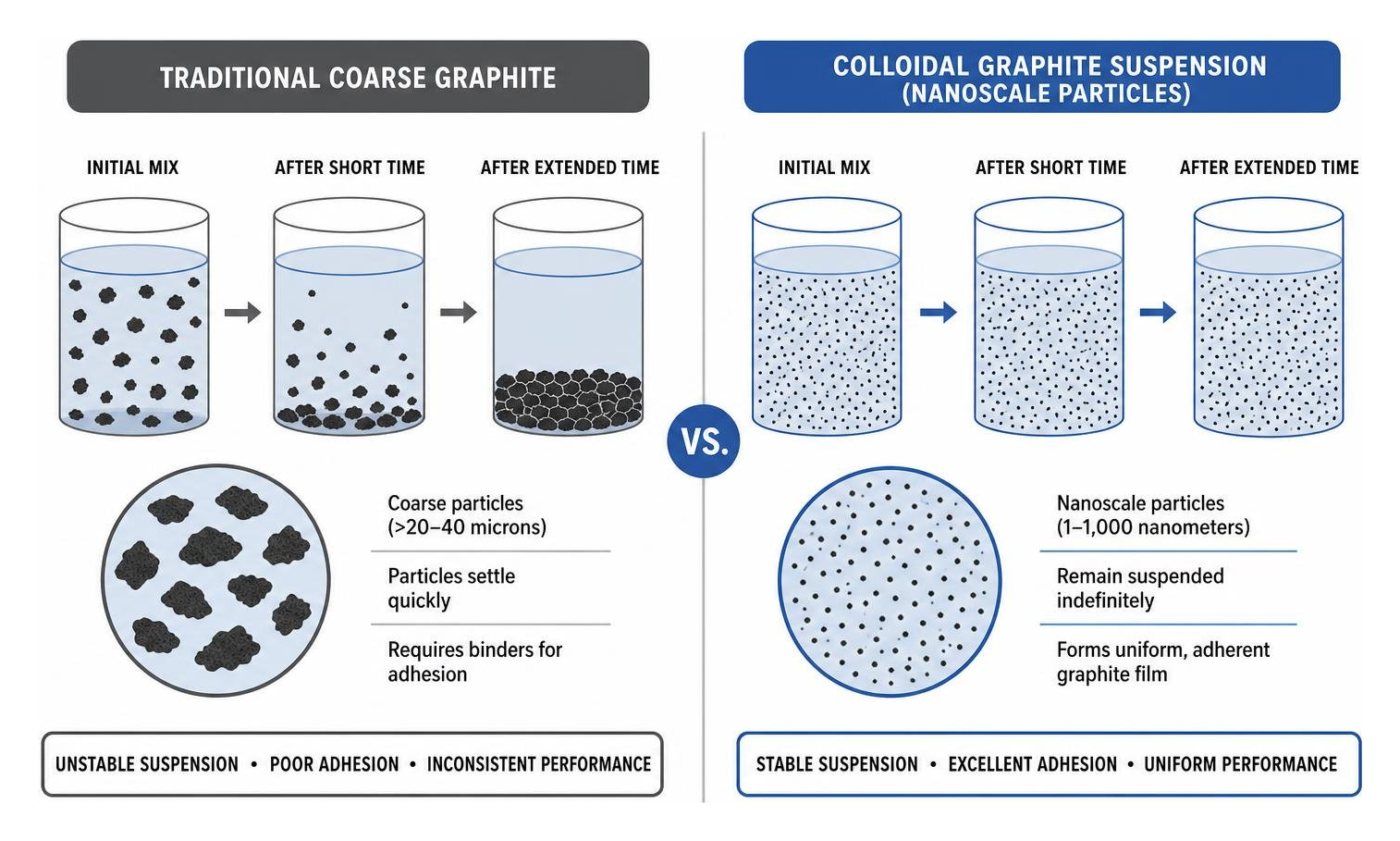
Colloidal graphite particles typically fall strictly within the nanoscale range of 1 to 1,000 nanometers (often averaging around 1 micron or less in commercial formulations). At this microscopic scale, gravity’s pull is countered by Brownian motion — the random drifting of particles suspended in a fluid.
Because of this, colloidal graphite forms a permanent suspension in an equilibrium state. The tiny flakes stay suspended indefinitely, especially when assisted by specialized stabilizing agents.
This ultra-fine particle size allows the graphite to form a incredibly flat surface texture and a highly uniform layer. For those seeking maximum performance, choosing formulations designed for high quality lubrication ensures that the micro-scale flakes slide over one another with minimal resistance, offering a level of protection that coarse powders simply cannot match.
Key Properties: What is Colloidal Graphite Capable Of?
Colloidal graphite is a multi-talented material because it inherits the best traits of the carbon allotrope family while gaining the fluid advantages of a colloid. Here are its core physical and chemical properties:
- Exceptional Lubricity: Graphite’s atomic structure consists of hexagonal planar networks of carbon atoms held together by strong covalent bonds. However, these parallel layers are held together by weak van der Waals forces. This allows the layers to slide past each other with extreme ease, providing a low coefficient of friction.
- Electrical Conductivity: Within each graphite layer, free electrons are highly mobile. When applied as a continuous dry film, colloidal graphite creates a reliable conductive path, making it perfect for antistatic coatings, electrode manufacturing, and electromagnetic shielding.
- Thermal Stability: While organic liquid lubricants break down, volatilize, or carbonize at high temperatures, graphite remains structurally stable at temperatures up to thousands of degrees Celsius in inert environments. In open air, water-based colloidal graphite can easily withstand service temperatures up to 306°C (583°F), while isopropanol-based dry films protect up to 204°C (400°F).
- Thixotropic Nature: Many colloidal graphite dispersions behave as a thixotropic paste or fluid. This means they exhibit high viscosity under static conditions but become much more fluid and free-flowing when shaken, stirred, or sheared during application.
- Dispersion Stability: High-quality colloidal systems resist aggregation. By maintaining a balance of steric and electrostatic repulsion between the suspended particles, manufacturers ensure the product does not clump or fail during long-term storage.
These properties make colloidal graphite invaluable for industrial applications focusing on lubrication wear reduction, preventing metal-on-metal contact under extreme loads and temperatures.
How Colloidal Graphite is Manufactured and Prepared
Creating a stable colloidal system out of a naturally hydrophobic (water-repelling) material like graphite is no simple task. It requires a combination of intense physical force and precise surface chemistry.
Mechanical Grinding and Ultrasonic Dispersion
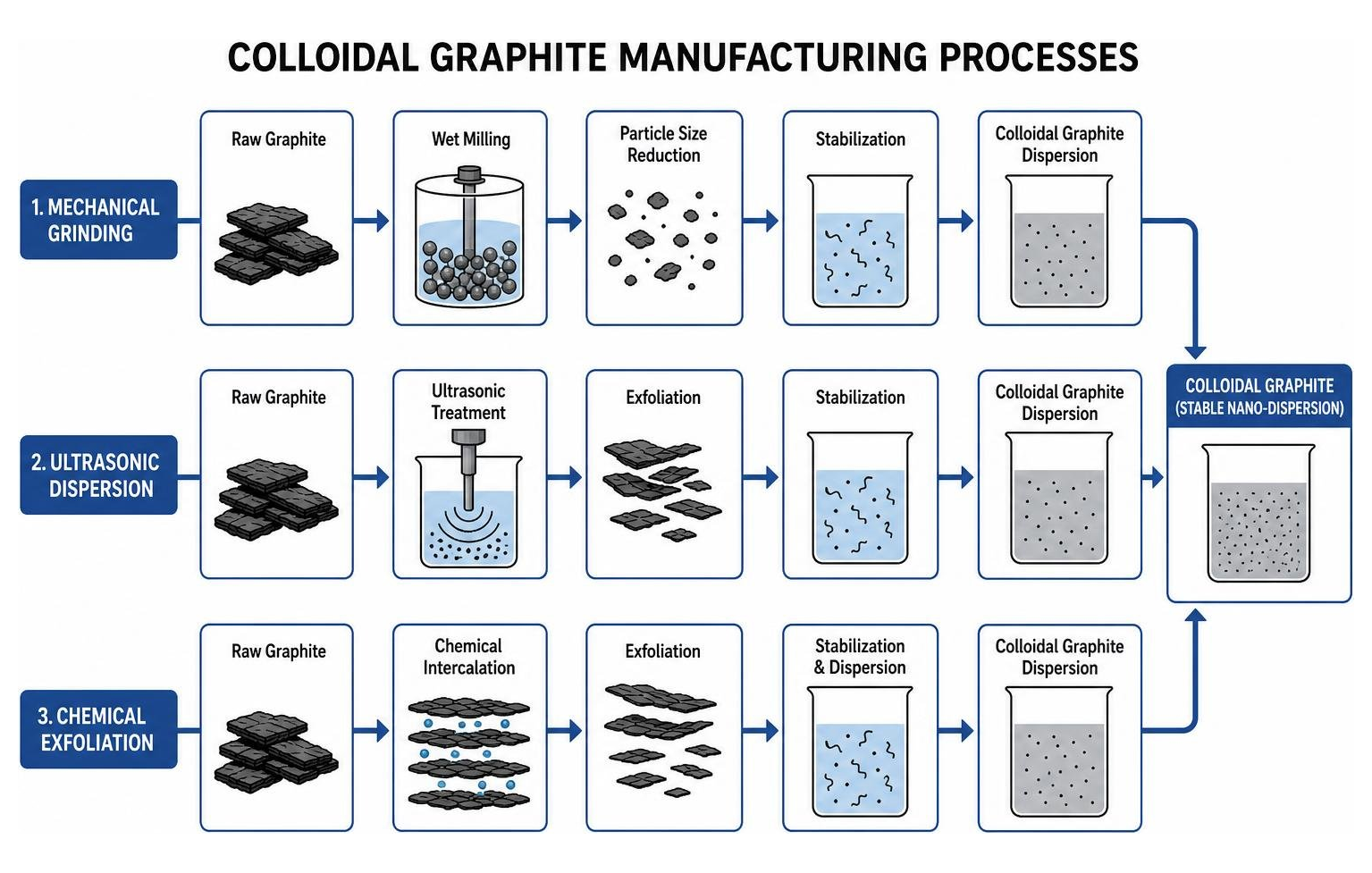
The most common industrial method for producing colloidal graphite is mechanical grinding. This process typically starts with high-purity natural or synthetic graphite.
The raw material is placed into specialized wet ball mills, vibration mills, or media mills along with the carrier liquid. The intense kinetic energy of the grinding media shears the graphite flakes, continuously reducing their size.
To prevent the newly sheared nanoparticles from sticking back together (agglomeration), manufacturers introduce specialized surfactant dispersants into the mill. These dispersants coat the tiny graphite particles, creating electrostatic or steric barriers that keep them separated.
For applications requiring an exceptionally narrow particle size distribution, ultrasonic dispersion is used. High-power ultrasonic waves are passed through the liquid mixture, creating localized zones of extreme high pressure and vacuum known as cavitation bubbles.
When these microscopic bubbles collapse, they release intense shockwaves that instantly break apart any remaining graphite agglomerates. This yields an incredibly uniform, highly stable colloidal suspension.
Chemical Exfoliation and Delamination
Another advanced method is chemical exfoliation, which shares many chemical steps with the production of graphene dispersions.
In this process, raw graphite is treated with strong oxidizing agents to create graphite oxide. This oxidation introduces polar oxygen-containing functional groups between the carbon layers, widening the interlayer spacing and weakening the van der Waals forces holding them together.
Once oxidized, the material can be easily delaminated (peeled apart) into individual nanometer-thick sheets using mild thermal or ultrasonic treatment. The resulting graphite oxide is then chemically reduced back to highly conductive graphitic carbon.
The structural order degree of the resulting material is typically evaluated using Raman spectroscopy. For high-purity colloidal graphite, the intensity ratio of the D-band to the G-band — represented as the $I(D)/I(G)$ ratio — is approximately 1.15. This ratio indicates a highly controlled, slightly disordered structures that is ideal for maintaining both mechanical flexibility and electrical conductivity in thin-film applications.
Key Applications Across Modern Industries
Because colloidal graphite can be sprayed, painted, or dipped to form a dry, conductive, heat-resistant film, it is used across a massive range of modern industries.
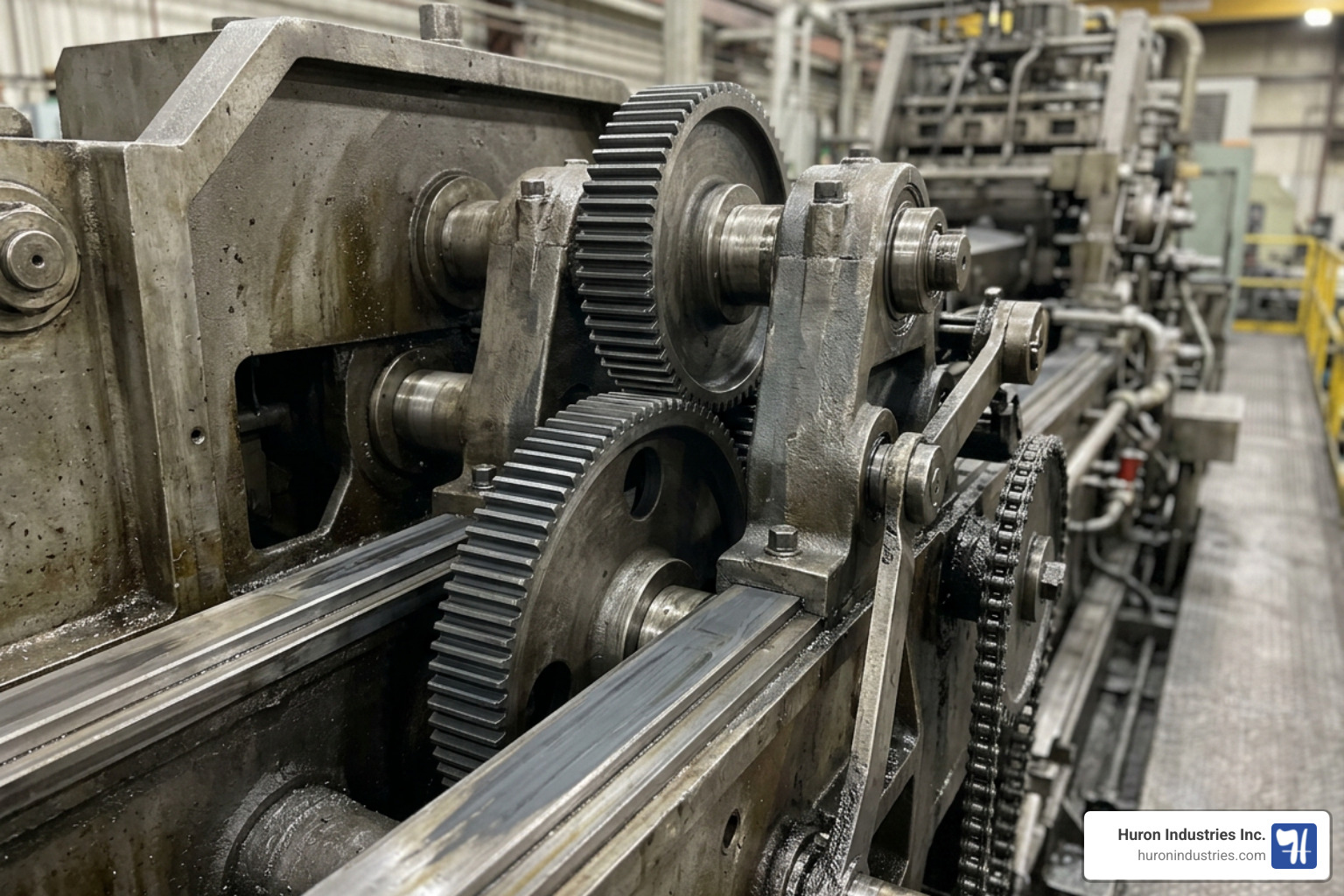
To keep industrial machinery running smoothly in demanding environments, engineers rely on precision lubrication solutions that utilize colloidal graphite to eliminate friction-induced wear.
Conductive Coatings and Electronics
In the electronics sector, colloidal graphite is widely used to print conductive paths and create protective shielding. Conductive inks formulated with colloidal graphite are essential for manufacturing flexible electronic devices, membrane switches, and transparent conductive electrodes in solar cells.
One of its most critical historical and modern uses is in the direct metallization of printed circuit boards (PCBs). In this process, colloidal graphite acts as a reliable, low-cost alternative to expensive electroless copper plating.
The colloidal graphite is applied to the non-conductive glass-epoxy walls of the board’s through-holes. This creates a thin, adherent conductive layer that allows copper to be electroplated directly onto the hole walls.
Maintaining this process requires careful chemistry. The stability of the colloid depends heavily on the electrical double layer (or Debye length) surrounding each particle.
If divalent ionic contaminants like copper or carbonate build up in the application bath, they compress this double layer, causing the graphite particles to aggregate and settle. To prevent this, operators must keep the bath’s pH below 9.25 to ensure dissolved carbon dioxide remains in the less harmful monovalent bicarbonate form rather than the highly destabilizing divalent carbonate form.
For more details on optimizing these coatings, you can read the research paper on [PDF] Improving colloidal graphite for electromagnetic interference … .
High-Temperature Lubrication and Mechanical Engineering
In heavy industrial manufacturing, traditional oils and greases fail because they smoke, burn off, or attract abrasive dust. Colloidal graphite solves this by providing a clean, dry film lubricant.
In the hot drawing of tungsten and molybdenum wire, the die and wire are coated with colloidal graphite to ensure smooth extrusion at extreme temperatures. Similarly, in gravity and pressure die casting of light alloys, it is sprayed onto the metal molds to act as a release agent, preventing the molten metal from sticking and ensuring a clean surface finish on the cast parts.
For heavy machinery operating under severe pressure, applying the ultimate solid lubricant ensures that components remain fully lubricated without the risk of attracting dirt or breaking down under extreme heat.
Nuclear Power and Specialized Anti-Seize Compounds
The nuclear power industry has some of the most stringent material safety standards in the world. Lubricants used on reactor components must have exceptional chemical purity to prevent stress corrosion cracking, and they must withstand intense radiation without breaking down.
Our flagship Neolube® colloidal graphite formulations are specifically engineered to meet these demanding requirements. Qualified to rigorous military specifications like MIL-L-24131C, Neolube® is trusted in both commercial and naval nuclear reactor systems.
These high-purity, water- and alcohol-based colloidal graphite dispersions provide excellent radiation resistance, withstanding exposure levels up to $1 times 10^9$ rads. They serve as essential anti-seize compounds and thread lubricants on reactor vessel studs, steam generator valves, and primary coolant pump components.
When searching for critical components, knowing how to choose the best anti-seize thread lubricant for highly regulated environments is vital for ensuring long-term system integrity.
Colloidal Graphite in Energy Storage and Supercapacitors
As the world transitions toward renewable energy, researchers are looking beyond traditional lubricants to find new uses for colloidal graphite in advanced energy storage devices, particularly supercapacitors.
| Carbon Material | Relative Cost | Specific Surface Area | Specific Capacitance | Scalability |
|---|---|---|---|---|
| Colloidal Graphite | Low | Low to Moderate | ~22 F g⁻¹ | Excellent |
| Activated Carbon | Moderate | Very High | 100 – 200 F g⁻¹ | Good |
| Graphene | High | Extremely High | 150 – 550 F g⁻¹ | Limited |
| Carbon Nanotubes | Extremely High | High | 50 – 100 F g⁻¹ | Poor |
Electrochemical Performance and Advantages
Supercapacitors bridge the gap between traditional batteries and standard capacitors, delivering rapid bursts of power and enduring millions of charge-discharge cycles.
Recent academic breakthroughs have shown that commercial colloidal graphite dispersions (such as the classic Aquadag formula) can serve as highly effective, low-cost electrode materials.
According to a peer-reviewed study published in Materials Research, titled Low-cost supercapacitor based on colloidal graphite, supercapacitors built with colloidal graphite electrodes and a PVA/H₃PO₄ gel electrolyte achieved a remarkably high specific capacitance of 22 F g⁻¹ at a discharge current of 2 mA (and 20.2 F g⁻¹ at a 1 mV s⁻¹ scan rate).
Even more impressive was the device’s durability: it retained approximately 85% of its initial capacitance after 500 cycles, even without protective encapsulation. The study recorded a maximum power density of 110 W kg⁻¹ and an energy density of 3 Wh kg⁻¹, proving that colloidal graphite is a highly viable candidate for affordable, large-scale energy storage.
Limitations and Comparison with Graphene and Carbon Nanotubes
While colloidal graphite performs admirably, it does have limitations when compared to premium carbon nanomaterials like graphene and carbon nanotubes (CNTs).
The primary limitation is its specific surface area. Because colloidal graphite consists of multi-layer flakes rather than single-atom-thick sheets, it has a lower surface area than graphene, which directly limits its maximum energy storage capacity.
However, colloidal graphite easily wins on cost-effectiveness and scalability. Graphene and CNTs remain incredibly expensive and difficult to manufacture in large quantities without defects.
Colloidal graphite, on the other hand, is already produced globally on an industrial scale. For grid-scale energy storage and consumer electronics where cost is a primary constraint, colloidal graphite offers an unmatched balance of performance and affordability.
To learn more about the growing industrial demand for these suspensions, check out the comprehensive report on the Water Based Colloidal Graphite Market Size, Share & Growth.
Environmental, Safety, and Handling Considerations
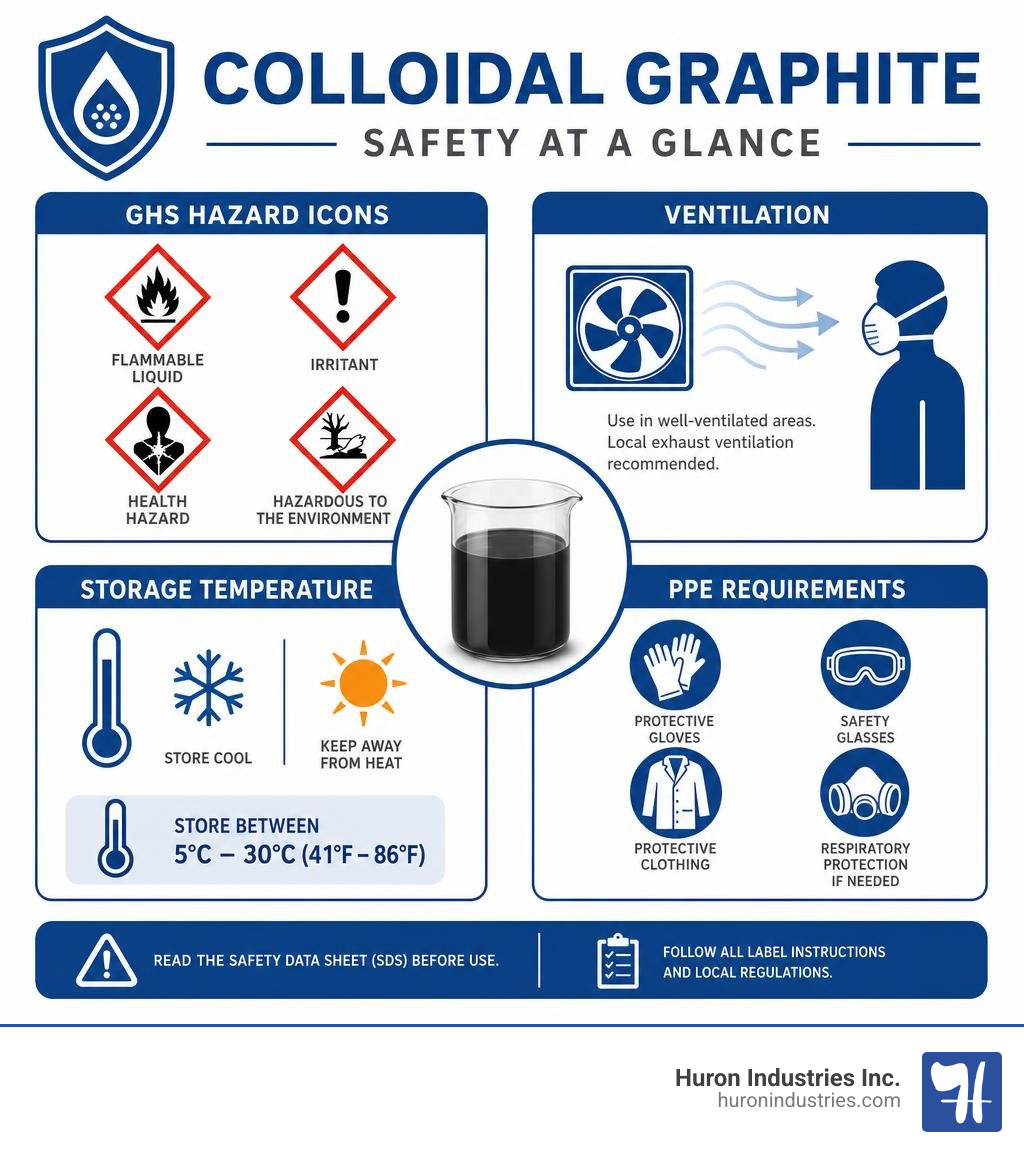
Like any industrial chemical, colloidal graphite must be handled with care. The safety profile depends heavily on whether the carrier medium is water-based or solvent-based.
Safe Handling and Storage Best Practices
Solvent-based colloidal graphite (such as those using isopropanol) is classified as a GHS Category 2 flammable liquid. These formulations typically have a low flash point (around 11.1°C or 52°F) and high VOC content (often around 80%, or 710 g/L).
When working with solvent-based colloidal graphite, always follow these best practices:
- Use only in well-ventilated areas or under local exhaust systems to prevent the buildup of flammable vapors.
- Ensure all transfer containers are properly grounded and bonded to prevent static sparks.
- Wear appropriate personal protective equipment (PPE), including chemical-resistant gloves and safety goggles.
- Store containers tightly sealed in a cool, dry area between 5°C and 32°C (41°F to 90°F), away from direct sunlight and ignition sources.
For water-based dispersions, the primary storage risk is freezing. If a water-based colloid freezes, the ice crystals will force the graphite particles out of suspension, permanently destroying the mixture.
Always consult the official safety technical datasheets for your specific formulation before use.
Additionally, knowing how to choose a certified colloidal graphite supplier guarantees that you receive consistent, high-purity materials with accurate regulatory documentation.
Environmental Impact and Eco-Friendly Formulations
As environmental regulations tighten, manufacturers are actively developing greener formulations. Traditional water-based colloidal graphite often used high levels of ammonia as a stabilizing pH buffer, which released harsh, irritating fumes during application.
Modern “ECO” formulations have significantly reduced or eliminated ammonia, making them far safer for both workers and the environment. For example, eco-friendly water-based concentrates can be easily diluted with standard distilled or demineralized water on-site, reducing shipping weight and carbon emissions.
Furthermore, colloidal graphite is finding innovative green applications in the construction industry. When added as an admixture in cement and concrete, it provides built-in electrical conductivity and antistatic properties.
This allows for the creation of smart concrete structures capable of self-monitoring stress and strain. For an in-depth look at this technology, read the paper on Colloidal graphite as an admixture in cement.
Frequently Asked Questions about Colloidal Graphite
Is colloidal graphite electrically conductive?
Yes, colloidal graphite is highly electrically conductive. Once the liquid carrier evaporates, the microscopic graphite flakes settle into a continuous, overlapping dry film.
Because carbon atoms in graphite have free, mobile delocalized electrons, electricity can easily flow across this thin layer. This makes it an exceptional choice for antistatic coatings, electrode fabrication, and PCB through-hole plating.
How does temperature affect colloidal graphite?
Colloidal graphite has outstanding thermal stability. Once applied and dried, the pure graphite film does not melt, burn, or volatilize at high temperatures.
Water-based formulations can operate continuously in air at temperatures up to 306°C (583°F). In inert or vacuum environments, graphite can withstand temperatures exceeding 2,000°C (3,632°F), making it a premier lubricant for high-vacuum and aerospace applications.
Can colloidal graphite be used on stainless steel?
While graphite is an excellent lubricant, you must exercise caution when using it on stainless steel at high temperatures. At temperatures exceeding 288°C (550°F), carbon from the graphite can diffuse into the stainless steel structure.
This process, known as carburization, depletes the steel’s chromium content and makes it highly susceptible to intergranular corrosion and premature cracking. For high-temperature stainless steel applications, nickel-based anti-seize compounds (such as Nikal®) are a much safer alternative.
Conclusion
Understanding what is colloidal graphite reveals a material that is far more than just “liquid pencil lead.” It is a highly engineered, incredibly versatile colloidal system that bridges the gap between traditional mechanical engineering and modern nanotechnology.
Whether it is reducing friction in extreme manufacturing environments, providing vital anti-seize protection in nuclear reactors, or paving the way for low-cost supercapacitors, colloidal graphite remains an essential pillar of modern industry.
At Huron Industries Inc., we have been manufacturing and supplying certified, high-purity colloidal graphite lubricants and anti-seize compounds from our Port Huron, Michigan facility since 1971. From our military-qualified Neolube® line to specialized industrial formulations, we deliver the precision and reliability that demanding regulated industries depend on.
Beyond heavy industry, we also support precision hobbies. Our specialized dry-film lubricants are highly trusted for ammunition reloading, ensuring smooth casing extraction and reduced wear on reloading dies.
To learn more about our reloading solutions, explore our dedicated CaseLube services today.