
When Your Equipment Can't Afford to Fail: The Case for High Pressure Graphite Lubricant
High pressure graphite lubricant is a solid or semi-solid lubricant made from graphite that is formulated to protect metal surfaces under extreme loads, temperatures, and pressures where conventional oils and greases break down.
Quick answer — what you need to know:
| Question | Answer |
|---|---|
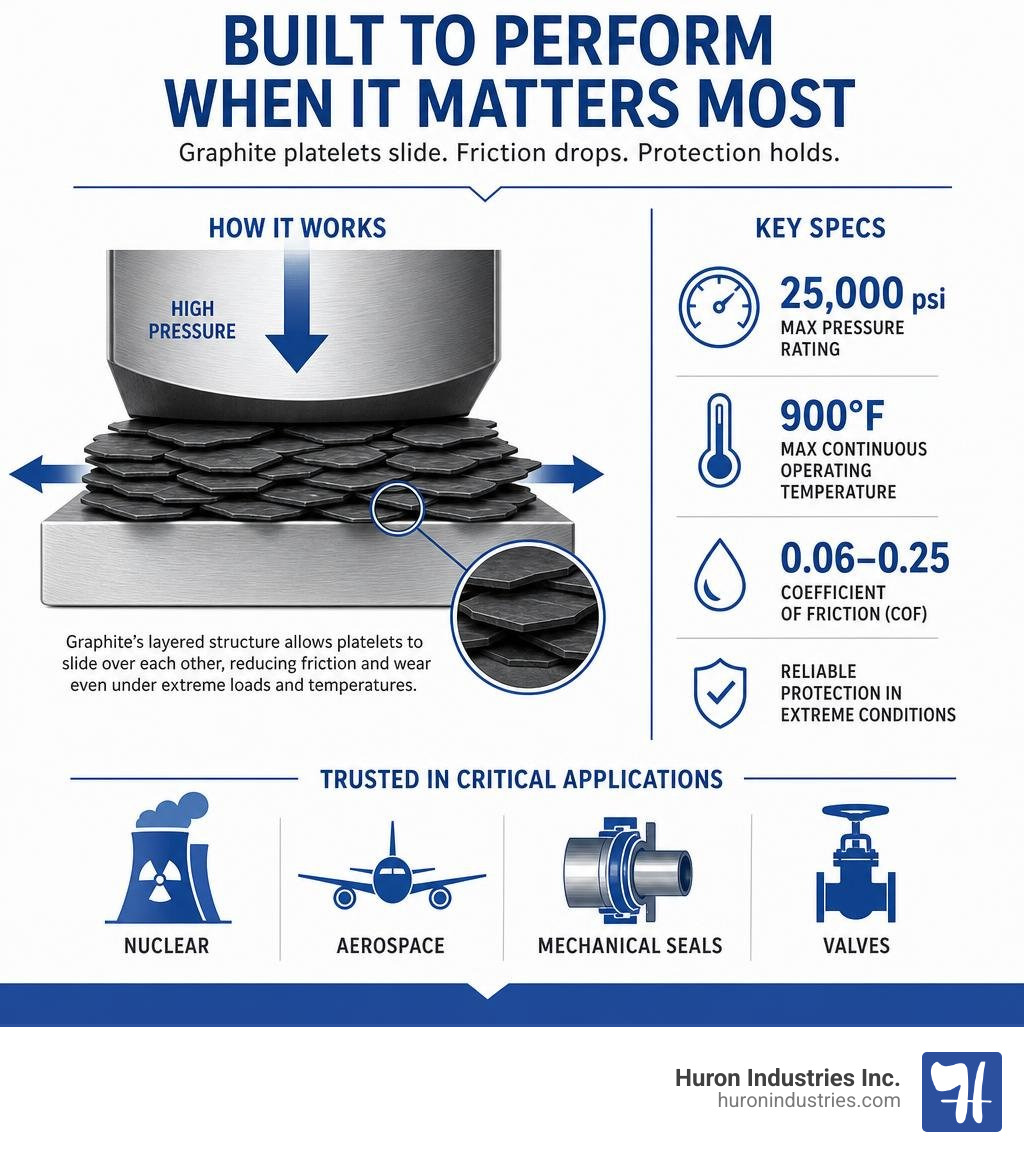
| Max pressure rating | Up to 25,000 psi |
| Temperature range | -100°F to 900°F continuous; up to 850°F intermittent |
| Primary form factors | Dry powder, aerosol spray, paste, injectable packing |
| Best for | Mechanical seals, bearings, valves, nuclear, aerospace, open gears |
| Key advantage over oil/grease | No breakdown at extreme heat; no dust or grit attraction; no petroleum required |
Heavy machinery operates in conditions that would destroy a standard lubricant in minutes. Temperatures that spike past 800°F. Contact pressures pushing into the hundreds of megapascals. Environments where a drop of oil would contaminate a process — or catch fire.
In those conditions, graphite is one of the few materials that keeps working.
Its layered crystal structure lets platelets slide over each other with very little resistance. That same structure is why graphite has been used to lubricate everything from steam engine piston rods to nuclear reactor components for over a century.
But not all graphite lubricants are built the same. A standard graphite powder performs very differently from a metal-impregnated graphite composite under 300 MPa of contact pressure. Knowing the difference matters — especially when equipment failure isn't an option.
This guide breaks down the science, the product types, the real-world applications, and how to choose the right formulation for your specific conditions.
I'm Nicholas Cunha, founder of CreatiVertical and the content strategist behind Huron Industries Inc.'s digital presence — a brand that specializes in colloidal graphite, high pressure graphite lubricant, and certified specialty lubricants for nuclear, defense, and industrial applications. My work sits at the intersection of technical manufacturing and content clarity, translating highly specified products into guidance that procurement and engineering teams can actually use.
What is a High Pressure Graphite Lubricant?
To understand what a high pressure graphite lubricant is, we first have to look at what happens when traditional liquid lubricants are pushed to their absolute limits. In a typical hydrodynamic lubrication setup, a thin film of oil or grease physically separates two moving metal surfaces. But as the load increases, that liquid film is squeezed thinner and thinner.
Once the contact pressure crosses a critical threshold, the liquid film ruptures entirely. This triggers metal-on-metal contact, leading to frictional heating, micro-welding, galling, and catastrophic equipment failure. This is where no sweat under pressure: how EP lubricants save your machinery becomes a vital concept for maintenance engineers to understand.
A high pressure graphite lubricant differs fundamentally from standard graphite lubricants. Standard graphite powders or light sprays are designed for low-load, everyday tasks like lubricating household locks or squeaky hinges. Under severe industrial loads, these basic formulations quickly shear off or crush into ineffective dust.
In contrast, high-pressure formulations are engineered to withstand extreme pressures up to 25,000 psi and maintain a stable, low-friction boundary layer. They leverage advanced dry film technology, specialized binders, and carrier solvents that evaporate to leave behind an incredibly tough, highly adherent solid lubricating matrix.
This dry film does not squeeze out, migrate, or attract airborne dust and abrasive grit. Furthermore, while conventional petroleum lubricants decompose, carbonize, or ignite at elevated temperatures, high-pressure dry graphite films remain highly stable, easily enduring a continuous thermal threshold of 900°F (and up to 1400°F in non-oxidizing or protective coating environments).
The Science Behind High Pressure Graphite Lubricant Performance
To truly appreciate how this material survives under extreme loads, we have to zoom in to the atomic level. Graphite is a naturally occurring crystalline form of carbon. Its carbon atoms are arranged in flat, hexagonal sheets (known as graphene layers) that are tightly bound together by strong covalent bonds.
However, the forces holding these parallel sheets to one another are incredibly weak van der Waals forces. You can learn more about this atomic architecture in my detailed breakdown of slip sliding away with the ultimate solid lubricant.
Because of this low inter-planar shear strength, even minimal lateral force causes these hexagonal crystal platelets to slide smoothly over one another. Under heavy loads, this sliding action provides excellent boundary lubrication.
As the machinery moves, the graphite platelets align parallel to the direction of motion, forming a continuous, self-healing tribofilm on the mating metal surfaces. This film effectively fills in the microscopic peaks and valleys (asperities) of the metal, transforming harsh sliding friction into low-resistance, sheet-on-sheet shear.
Microstructure, Porosity, and Load-Bearing Capacity
The load-bearing capacity of bulk graphite lubricants and structural graphite components is heavily dictated by their microstructure, bulk density, and open porosity. When manufacturing solid carbon-graphite materials for heavy-load applications like bearings or mechanical seals, managing these structural variables is paramount.
According to research published in MDPI's Optimizing the Tribological Performance of Graphite–Resin Composites, the crystallinity and morphology of the graphite source material determine its mechanical integrity.
Natural graphite boasts high crystallinity (often around 99% graphitization with a crystal stacking height of 400 Å), which provides a dense structure, high compressive strength (up to 18.4 MPa in resin composites), and highly stable friction properties through continuous platelet exfoliation.
Artificial graphite, on the other hand, is inherently more porous. While this higher porosity allows it to absorb and retain liquid lubricants more effectively (achieving up to 23 wt% oil impregnation), its lower compressive strength (typically around 12.7 MPa) makes it more prone to structural collapse and particle detachment under intense loads.
By strategically blending natural and artificial graphites in a 50:50 ratio, manufacturers can achieve the perfect equilibrium: a composite that possesses both the mechanical strength to resist crushing under high pressure and the porous microstructure required to hold supplemental lubricating oils.
Comparing Impregnation Technologies: Metal vs. Resin Composites
In high-pressure and high-velocity applications, such as canned pump bearings or heavy-duty mechanical seals, pure graphite is often modified to enhance its physical properties. This is achieved by impregnating the porous graphite matrix with either molten metals or synthetic resins.
Below is a direct comparison of how these two distinct impregnation technologies perform under demanding operational conditions:
| Performance Metric | Metal-Impregnated Graphite | Resin-Impregnated Graphite |
|---|---|---|
| Common Impregnants | Antimony, Copper, Bronze, Babbitt | Epoxy, Phenolic, Furan Resins |
| Typical Microhardness | High (~340.38 HV) | Moderate (~123.44 HV) |
| Thermal Conductivity | Excellent (dissipates heat rapidly) | Low (retains heat at the interface) |
| Wear Depth Reduction | ~60% reduction vs. non-impregnated | ~80% reduction vs. non-impregnated |
| Max Temperature Limit | Up to 1000°F+ (depending on metal) | ~450°F (limited by resin degradation) |
| Dry Run Survival | Exceptional (metal acts as a heat sink) | Moderate (susceptible to thermal blistering) |
| Dimensional Stability | Superior (no swelling or cold flow) | Excellent (but prone to thermal expansion) |
Metal-Impregnated Graphite under Extreme Pressure
Metal-impregnated graphite is manufactured by introducing molten metal into the open pores of a graphite substrate under intense heat and pressure. The resulting composite combines the self-lubricating properties of carbon-graphite with the mechanical strength, impact resistance, and thermal conductivity of metal.
Under extreme contact pressures (ranging from 190 MPa to over 360 MPa), localized friction can generate intense flash temperatures. Metal-impregnated graphite excels here because its metal networks act as thermal highways, rapidly conducting heat away from the rubbing interface.
This prevents localized thermal expansion, which could otherwise cause the bearing or seal to seize. Furthermore, the introduction of metal dramatically enhances the material's microhardness—often boosting it from a baseline of 93.68 HV up to 340.38 HV.
This structural reinforcement reduces wear depth by 60% compared to non-impregnated graphite under dry sliding conditions. During operation, a mechanically mixed layer consisting of sheared graphite and slightly oxidized metal particles forms on the counterpart surface, stabilizing the friction regime even at temperatures up to 350°C (662°F).
Resin-Impregnated Graphite for High-Load Applications
For applications where chemical inertness and maximum wear reduction are the primary goals, resin-impregnated graphite is the industry standard. Impregnating the graphite matrix with high-performance resins seals the material's internal pores, preventing the leakage of gases or liquids through the composite and significantly increasing its compressive strength.
Remarkably, resin-impregnated graphite can reduce wear depth by up to 80% compared to non-impregnated graphite under high-pressure conditions. To optimize this performance, modern manufacturers utilize hydrophobic silane coupling agents (such as PFOS) during the impregnation process.
This hydrophobic surface modification increases the water contact angle of the composite from 70° to 107°. By making the internal pore surfaces highly hydrophobic, the material's affinity for nonpolar lubricating oils is dramatically improved, boosting oil retention from 17 wt% to 23 wt%.
This dual-action lubrication system—where a micro-thin oil film works in tandem with the exfoliating graphite solid film—ensures exceptional friction stability and wear resistance under continuous, high-load sliding conditions.
Advanced Tribology: How Nanomaterials and Coatings Enhance Graphite
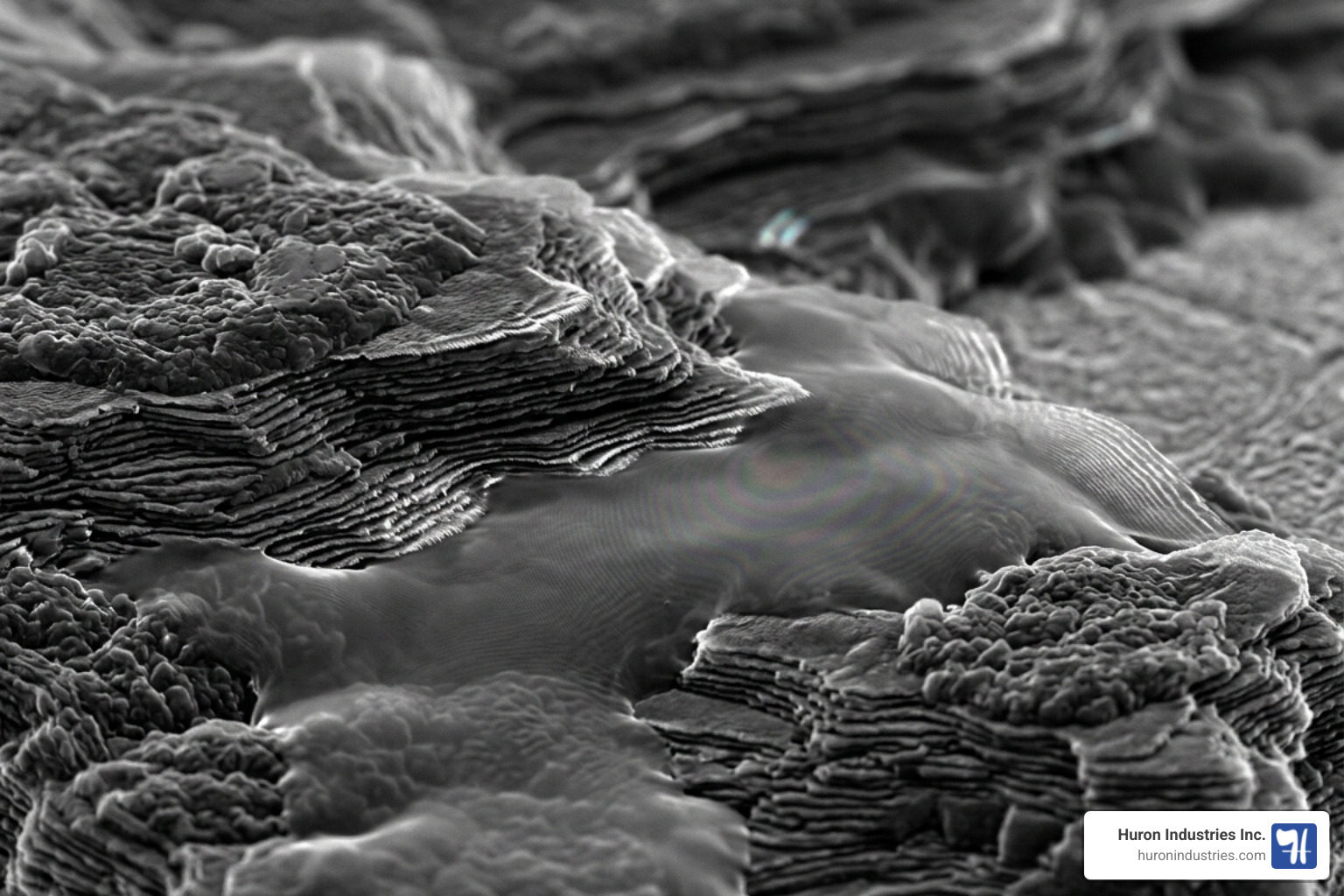
As industrial machinery is pushed to ever-higher limits, tribologists are turning to nanotechnology to further enhance the capabilities of high pressure graphite lubricant formulations. By modifying the interfacial nanostructures of bulk graphite, we can achieve levels of friction reduction that were once thought impossible.
Nanomaterial Additives in High Pressure Graphite Lubricant Formulations
One of the most exciting breakthroughs in modern solid lubrication is the integration of 2D nanomaterials into graphite carriers. Additives like graphene oxide (GO), graphene flakes (GF), and tungsten disulfide ($WS_2$) are being introduced to traditional formulations to create synergistic lubricating effects.
In testing conducted on ultrafine-grained graphite (such as HPG510), the baseline coefficient of friction (COF) in ambient air typically hovers around a constant 0.25, regardless of the applied load or sliding frequency. However, when the interface is treated with an alcohol-processed graphene oxide solution, the tribological behavior changes dramatically.
The alcohol carrier penetrates deep into the graphite's microscopic pores, carrying the 2D nanomaterials with it. As the alcohol evaporates, it leaves behind an ultra-thin, highly ordered nanostructured boundary layer. This advanced formulation achieves a massive COF reduction from 0.25 down to just 0.06.
For deeper insights into how these advanced interfacial nanostructures are tailored, you can read the full research paper on Achieving controllable friction of ultrafine-grained graphite HPG510 by tailoring the interfacial nanostructures.
Additionally, depositing Diamond-Like Carbon (DLC) films directly onto graphite substrates has emerged as a highly effective method for protecting the underlying material. A DLC coating provides an incredibly hard, low-friction cap (yielding a COF of approximately 0.10) that protects the softer bulk graphite from abrasive wear while maintaining its self-lubricating advantages.
Wear Mechanisms and Failure Modes under Extreme Conditions
Even the most robust high-pressure graphite lubricants are subject to wear and eventual failure if operated outside their design envelopes. Understanding these mechanisms is key to preventing unexpected machinery downtime:
- Adhesive Wear and Delamination: Under extreme normal loads, the shear stresses at the interface can exceed the bonding strength of the graphite layers to the metal substrate. This causes the lubricating tribofilm to tear away in large flakes (delamination), leading to localized adhesive wear (scuffing) as metal asperities make direct contact.
- Thermal Oxidation: While graphite is highly heat-resistant, it begins to react with oxygen in ambient air at temperatures exceeding 850°F to 900°F. Over time, this oxidation process converts the solid carbon structure into carbon dioxide gas, literally vaporizing the lubricant and leaving the metal unprotected.
- The Vacuum Limitation: A lesser-known but critical failure mode of graphite is its performance in vacuum environments. Graphite is not inherently slick; its low-shear properties actually depend on the adsorption of microscopic amounts of moisture or gaseous molecules (like water vapor or oxygen) from the surrounding atmosphere. In a deep vacuum, these adsorbed gases desorb from the graphite crystal edges. Without this moisture, the interlayer friction of graphite spikes dramatically, causing the COF to climb to 0.20 or higher, resulting in rapid adhesive wear. In vacuum applications, transition metal dichalcogenides like molybdenum disulfide ($MoS2$) or tungsten disulfide ($WS2$) must be used instead.
Industrial Applications and Selection Best Practices
Selecting the right high-pressure graphite lubricant requires a careful evaluation of your operating environment. Applying a dry powder where a highly adherent paste is needed—or using a resin-bonded composite in an environment that exceeds its thermal limit—will lead to premature failure. For critical systems, implementing precision lubrication for critical systems is the best way to ensure maximum equipment longevity.
Nuclear and Aerospace Environments
In the nuclear and aerospace sectors, the purity of the lubricant is just as important as its pressure rating. Standard commercial lubricants often contain halogenated compounds, sulfur, or heavy metals that can cause stress corrosion cracking in stainless steel or titanium alloys under high temperatures.
For these highly regulated environments, lubricants must meet strict military and nuclear specifications. Our flagship line at Huron Industries, Neolube® Colloidal Graphite, is qualified to MIL-L-24131C and is trusted in both commercial and naval nuclear reactor systems.
Because Neolube® is formulated with ultra-high-purity graphite suspended in a fast-evaporating carrier, it deposits a non-reactive, radiation-resistant, dry lubricating carbon film that will not restrict neutron flow or contaminate reactor chemistry.
Engineers can review the precise chemical and physical properties of these industry-standard formulations by downloading the Neolube No. 1 Lubricant Technical Datasheet.
High-Pressure Thread Sealing and Valve Packing
Valves and threaded connections in steam plants, chemical processing facilities, and oil refineries are constantly subjected to high pressures, thermal cycling, and corrosive media. Standard thread sealants easily wash out or degrade, leading to dangerous fugitive emissions.
Using a high-purity, high-pressure graphite sealant resolves this issue. For example, our High Pressure Thread Sealant 2300 PSI Neolube 1260 is specifically engineered to seal threaded joints under pressures up to 2,300 psi while resisting temperatures up to 1000°F.
For larger valve glands, injectable graphite packing compounds containing 100% graphite solids and zero VOCs provide an exceptional, non-curing seal. These compounds flow easily under low injection pressures to fill voids, yet they resist extrusion and maintain low-friction stem travel under extreme system pressures.
Frequently Asked Questions About High-Pressure Graphite Lubrication
How does high-pressure graphite compare to petroleum-based lubricants?
The primary difference lies in how they behave under environmental extremes. Petroleum-based lubricants (oils and greases) rely on liquid viscosity to maintain a protective barrier. When subjected to extreme heat, they thin out, oxidize, and eventually burn off, leaving behind sticky carbon residues that can jam moving parts.
Furthermore, wet greases act like magnets for dust, dirt, and coal fines, turning into an abrasive grinding paste over time.
A high-pressure dry graphite lubricant, on the other hand, operates as a solid boundary lubricant. It does not lose its structural integrity at high temperatures, does not migrate away from the contact zone, and remains completely dry to the touch—meaning it will not collect airborne contaminants.
Transitioning from petroleum to solid graphite coatings yields massive high quality lubrication benefits, including drastically reduced wear rates, longer service intervals, and cleaner operating environments.
What are the temperature limits of dry graphite lubricants?
Dry graphite lubricants exhibit outstanding thermal stability. In typical atmospheric conditions, a high-grade dry graphite film can operate continuously from -100°F (-73°C) up to 900°F (482°C).
In intermittent applications, or when formulated as a heavy-duty protective paste, it can withstand temperatures up to 1400°F (760°C). Beyond 900°F in open air, the graphite will slowly begin to oxidize, requiring more frequent reapplication unless it is used in an inert (oxygen-free) or reducing environment, where it can remain stable up to several thousand degrees.
Can graphite lubricants be used in vacuum environments?
Generally, no. As discussed in our wear mechanisms section, graphite requires a trace amount of moisture or gas molecules (typically water vapor) adsorbed to its crystal edges to maintain its low-shear, self-lubricating properties. In a vacuum, these molecules desorb, causing the graphite platelets to lock together, which spikes the coefficient of friction and accelerates wear.
For vacuum applications, such as space mechanisms or semiconductor manufacturing chambers, molybdenum disulfide ($MoS2$) or tungsten disulfide ($WS2$) are much better solid lubricant choices because they do not rely on moisture to slide.
Conclusion
When your heavy machinery is pushed to its absolute limits, standard lubricants simply cannot stand the heat or the pressure. Investing in a premium high pressure graphite lubricant is the single most effective way to eliminate metal-on-metal wear, prevent catastrophic galling, and keep your critical systems operating smoothly under the most punishing conditions.
At Huron Industries Inc., we have been manufacturing certified, high-purity solid lubricants, thread sealants, and anti-seize compounds right here in Port Huron, Michigan, since 1971. Whether you are managing a commercial nuclear facility, maintaining high-pressure steam valves, or looking for robust lubrication wear reduction solutions for heavy industrial equipment, our Neolube® line is engineered to deliver unmatched reliability.
Don't let extreme heat and pressure grind your operations to a halt. Explore our complete range of certified High Temperature Sealant Solutions today, or contact our engineering team to find the perfect high-purity formulation for your demanding application.