
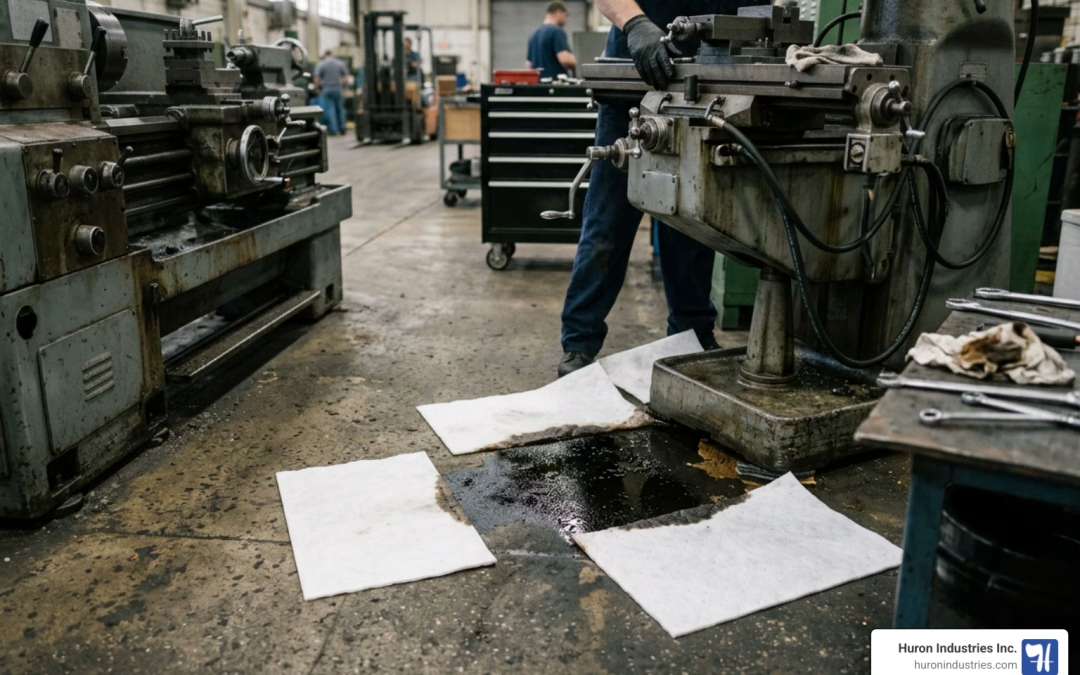
Why Sorbent Pads Matter for Workplace Spill Control
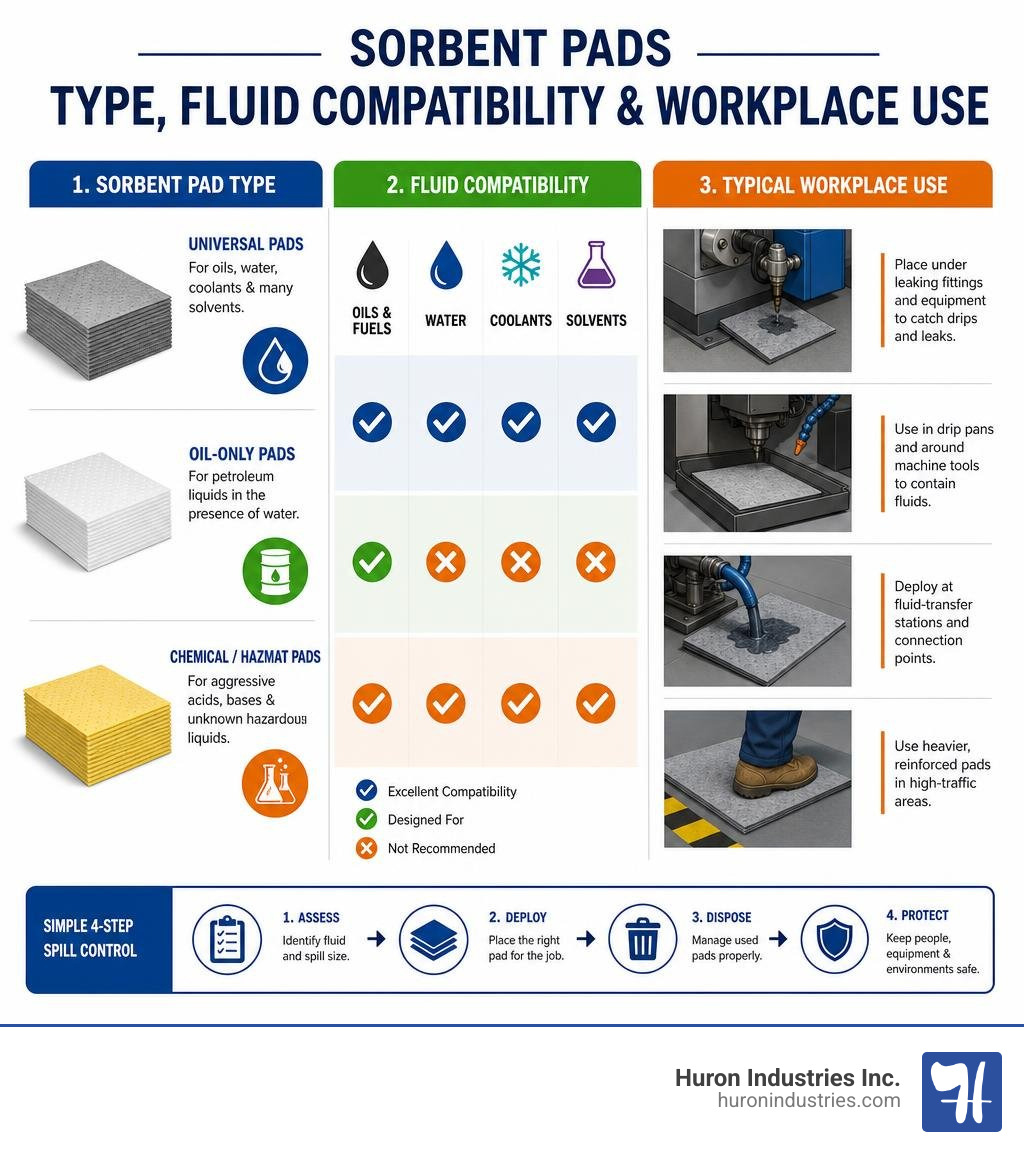
Sorbent pads are flat, fast-deploying materials used to capture leaks, drips, and small spills before they spread into walkways, drains, or equipment. Choose the pad type by fluid: universal pads for common oils, water, coolants, and many solvents; oil-only pads for petroleum liquids where water may be present; and chemical or hazmat pads for aggressive acids, bases, and unknown hazardous liquids.
For routine maintenance, place pads under leaking fittings, around machine tools, inside drip pans, and at fluid-transfer stations. Select a heavier, reinforced pad when workers will wipe with it or it may see foot traffic. Use a lighter pad for small drips and quick cleanup.
Most industrial pads use fine meltblown polypropylene fibers. Their large surface area pulls in liquid quickly, while bonded or layered designs add tear resistance and reduce lint. Common 15 in. x 18 in. pads are often sold in 100-count bundles, with total capacity varying widely by construction and weight - roughly 15 to 26.6 gallons per bundle is a useful planning range.
The right pad is not just a housekeeping supply. It helps control slip risks, protects drains and work areas, and supports a practical spill-response plan. Used pads must then be managed based on the fluid they absorbed, since a pad saturated with a regulated chemical or oil can become regulated waste.
I am Nicholas Cunha, founder of CreatiVertical and the technical content partner supporting Huron Industries Inc.'s industrial product program. My work focuses on making complex, compliance-aware buying decisions - including the selection and use of sorbent pads - clearer for engineering, procurement, and EHS teams.
Understanding Types and Materials of Sorbent Pads
To choose the right spill-response material, you first need to understand how these nonwoven fabrics work. Most industrial pads are manufactured from pure polypropylene fibers engineered to create a web of microscopic voids. The base resin is naturally inert, meaning it will not react with most commercial lubricants, fuels, or processing chemicals.
Polypropylene is naturally hydrophobic: it repels water while rapidly attracting hydrocarbons. To create universal and hazmat sorbents, manufacturers treat these raw fibers with a surfactant chemistry that lowers the liquid's surface tension, allowing the web to draw in aqueous solutions, coolants, and polar solvents.
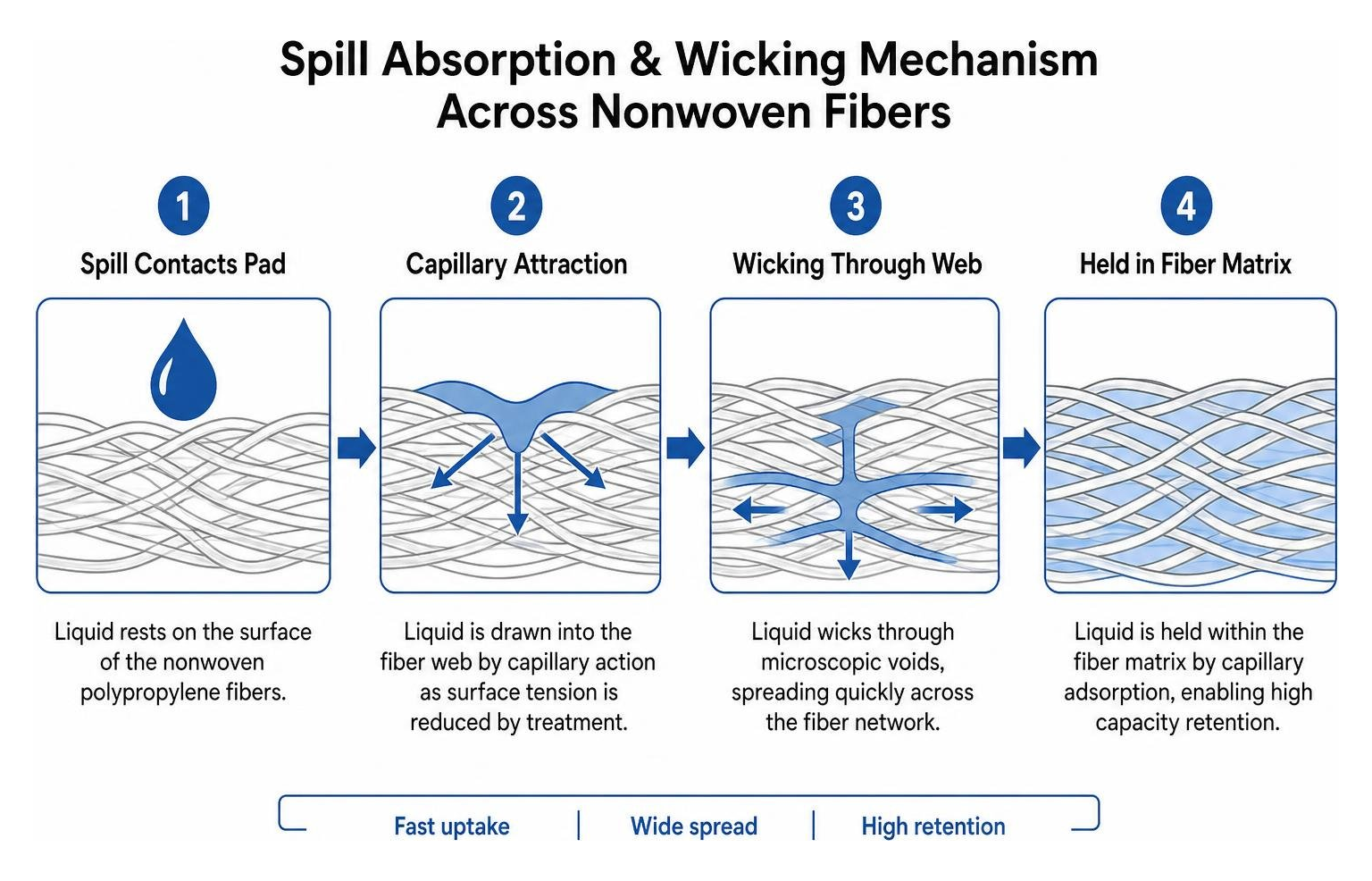
There is also a technical distinction between absorption and adsorption. Synthetic nonwoven pads capture fluids primarily through capillary adsorption—holding liquid within the matrix of fine fiber pores rather than absorbing it chemically inside the fiber strands. This mechanism allows high-grade polypropylene webs to hold substantial liquid volumes relative to their dry weight without falling apart.
Universal vs. Oil-Only vs. Hazmat Sorbent Pads
Industrial spill response relies on color-coded categories so workers can grab the correct material in an emergency:
- Universal Sorbents (Gray): These are multi-fluid pads designed for general maintenance. Because they are surfactant-treated, they absorb oils, coolants, water, and non-aggressive solvents equally well. They are standard in machine shops, assembly lines, and repair bays.
- Oil-Only Sorbents (White): These untreated, hydrophobic sorbent pads are designed specifically for petroleum products. When managing hydrocarbon leaks outdoors or on wet floors, hydrophobic sorbent pads repel water while selectively collecting fuels, hydraulic fluids, and motor oil.
- Hazmat/Chemical Sorbents (Yellow, Pink, or Green): These high-visibility pads are formulated to withstand aggressive acids, caustics, and unknown liquid spills in chemical storage rooms, plating lines, and testing laboratories.
| Sorbent Type | Standard Color | Target Fluids | Primary Facility Environments |
|---|---|---|---|
| Universal | Gray | Oils, coolants, solvents, water, glycol | Machine shops, maintenance bays, assembly floors |
| Oil-Only | White | Gasoline, diesel, motor oil, hydraulic fluid | Marine docks, outdoor storage, wash bays |
| Hazmat | Yellow / Pink / Green | Concentrated acids, caustics, unknown chemicals | Laboratories, chemical mixing rooms, battery storage |
Meltblown, Sonic-Bonded, and Spunbond Construction
The structural build of an absorbent sheet dictates its tear resistance, linting profile, and wiping performance:
- Single-Ply Meltblown: Composed of a continuous, lofty nonwoven web. These provide fast wicking and high absorbency, making them ideal for static drip pans. However, without reinforcement, single-ply material can shed fibers during active wiping.
- Sonic-Bonded (Dimpled): Layers of meltblown web are fused together using ultrasonic pin points without chemical adhesives. This dimple pattern locks fibers in place, improving tensile strength and lowering lint while maintaining open capillary paths for fluid intake.
- Spunbond-Laminated (Multi-Ply): High-durability pads feature a continuous-filament spunbond coverstock laminated over a meltblown core (often in 2-ply or 3-ply configurations). These provide exceptional abrasion resistance for rough machine wipe-downs and resist shredding under foot traffic.
Sorbent Weight Classes and Absorbency Ratings
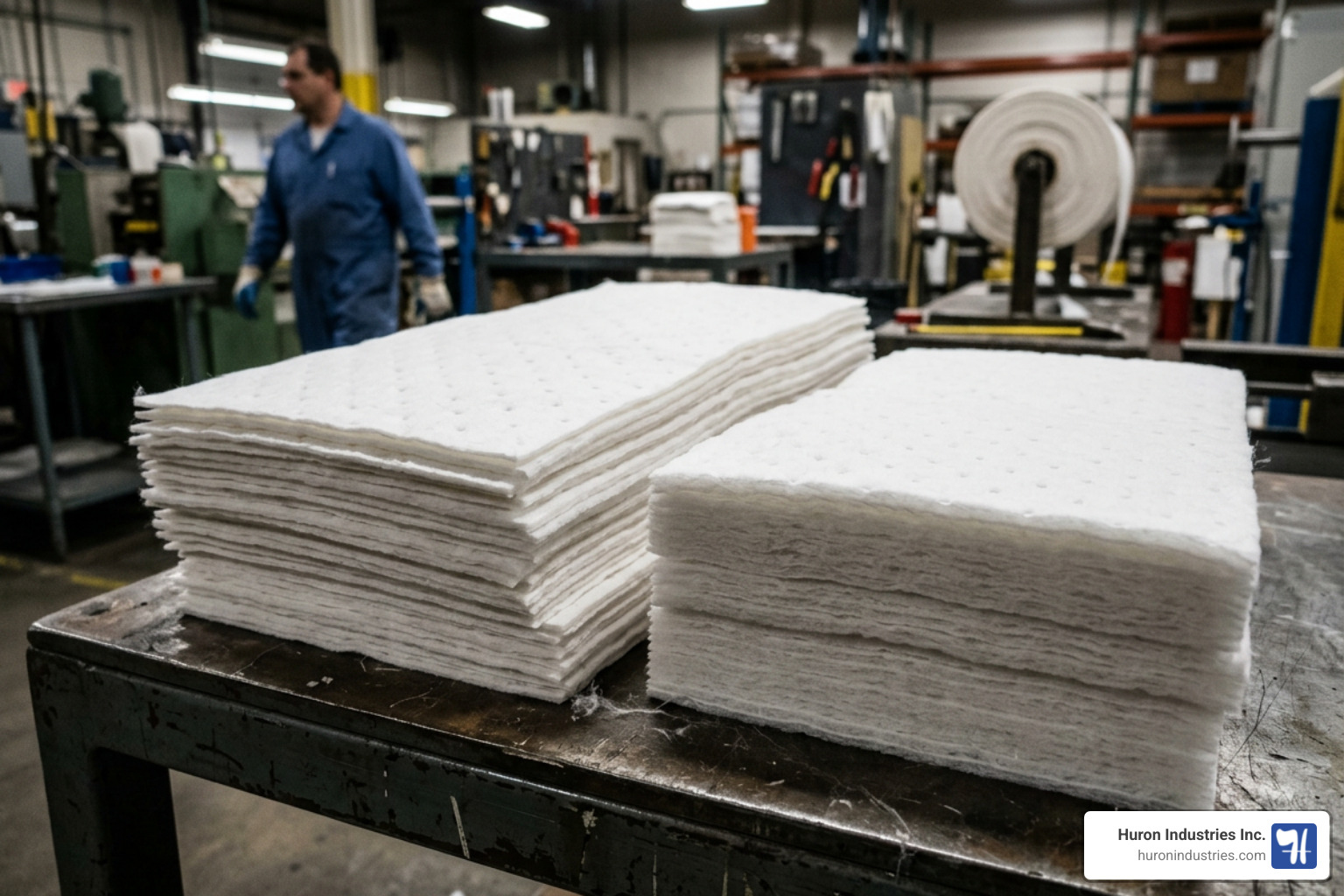
Absorbent pads are classified into three primary basis-weight categories. Selecting the proper weight keeps material costs in line while preventing waste during minor cleanup tasks.
Standard dimensions across the industry are typically 15" x 18" or 16" x 18", packaged in 100-count or 200-count boxes.
Light, Medium, and Heavy-Weight Durability
- Lightweight (Single-Weight): Best suited for high-frequency, small-volume drips, bench wiping, and janitorial carts. A 200-count case of light pads typically absorbs around 30 gallons across the whole package. In selective fuel applications, single-weight oil-only sorbents offer quick sheen pickup without excess material bulk.
- Medium-Weight: A versatile middle tier for day-to-day leak containment around pumps and gearboxes. A standard 100-pad bundle can hold up to 15 to 18 gallons of fluid (roughly 23 ounces per pad). For broad plant maintenance, incorporating all-purpose sorbent solutions alongside pads gives teams flexibility during varied fluid cleanups.
- Heavy-Weight: Built for demanding leak containment, high-flow drips, and heavy-wear walkways. Heavyweight universal pads can hold up to 26.6 gallons per 100-pad bundle.
Durability is often measured in tensile break strength:
- Moderate Durability (<15 lbs breaking strength): Light wiping and static drip trays.
- Durable (15–27 lbs): General mechanical maintenance and pipe-joint wrapping.
- Maximum Durability (28+ lbs): Walkway runners, production cell floors, and rough castings.
Sorbent Pads vs. Rolls, Socks, and Pillows
Pads are one part of a complete spill containment plan. Facilities pair them with other formats depending on the spill volume and layout:
- Continuous Sorbent Rolls: Continuous sheets supplied with length and width perforations. They line long assembly paths and can be torn to custom sizes.
- Sorbent Socks (e.g., 3" x 4'): Flexible, tubular barriers filled with polypropylene or granular fill. Socks are placed around machine bases or across drains to stop fluid from spreading.
- Sorbent Pillows (e.g., 18" x 18"): High-loft sorbents used in catch basins, tight sumps, or under persistent leaks where a flat pad lacks sufficient depth. When a spill exceeds flat pad capacity, deploying a high-capacity industrial sorbent format solidifies deeper liquid pools efficiently.
Industrial Applications and Waste Disposal Regulations
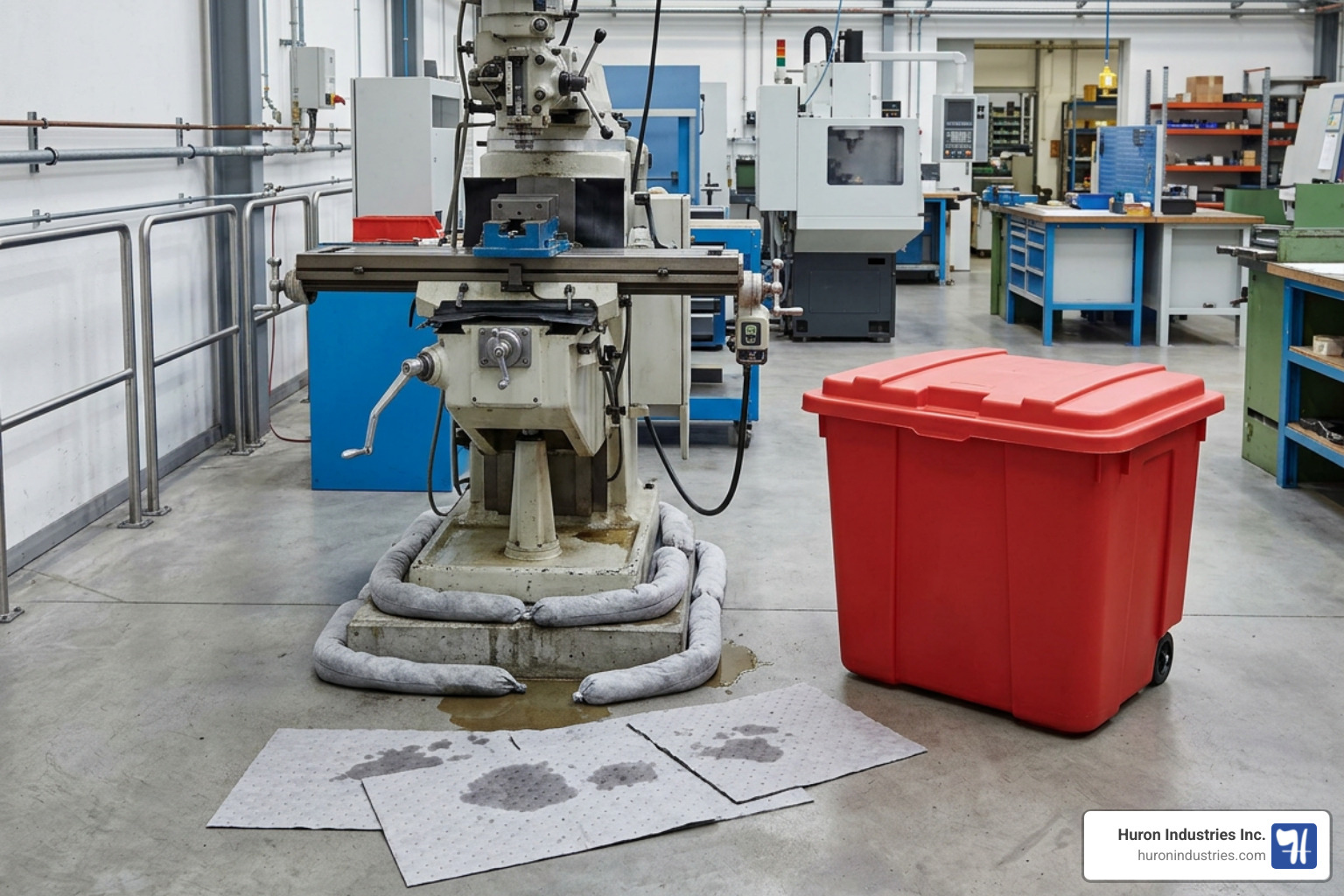
Proper spill management protects facility equipment and helps maintain compliance with environmental regulations. Sorbents should be deployed near chronic leak points: hydraulic presses, cutting-fluid sumps, chemical transfer racks, and battery charging stations. In regulated environments such as cold-chain facilities or commercial operations, selecting NSF-certified spill control materials ensures cleanup products meet strict safety guidelines.
Managing Leaks and High-Traffic Walkways
Uncontrolled machine leaks create slipping hazards. Under OSHA 29 CFR 1910.22 (Walking-Working Surfaces), employers must keep workroom floors clean and dry. Placing dimpled, heavy-weight universal pads or runners under hydraulic hoses and conveyor drives captures grease, coolants, and condensation before workers walk through them.
Many pads feature centered vertical perforations, allowing workers to tear off just enough material to line a small drip pan, extending the life of each bundle.
EPA and OSHA Compliance for Hazardous Spill Disposal
Managing saturated sorbents requires adherence to federal and local waste regulations:
- EPA 40 CFR 112.7: Requires facilities with oil storage to maintain adequate spill prevention and countermeasure materials.
- OSHA 29 CFR 1910.120: Outlines emergency response procedures and PPE requirements for employees handling hazardous releases.
- RCRA Waste Characterization: Polypropylene itself is chemically inert and non-biodegradable, but once saturated, the pad takes on the hazard characteristics of the absorbed liquid. Sorbents containing solvents, heavy metals, or toxic chemistries must be handled as hazardous waste.
Disposal facilities rely on standard test protocols to evaluate waste stability:
- EPA Method 9095 (Paint Filter Liquids Test): Confirms there are no free-draining liquids remaining in the sorbent mass prior to landfill disposal.
- EPA Method 9096 (Liquid Release Test): Assesses whether retained fluids will squeeze out under compressive landfill forces (e.g., 20 to 50 psi).
Polypropylene sorbents provide high BTU heating values with low residual ash, making thermal destruction and fuel-blending programs practical options for spent hydrocarbon pads.
Frequently Asked Questions About Workplace Spill Control
How much liquid can a standard sorbent pad absorb?
A standard 15" x 18" medium-weight pad absorbs roughly 19 to 23 fluid ounces, depending on the fluid's viscosity and surface tension. A full bundle of 100 medium-weight pads holds approximately 15 to 18 gallons, while heavy-weight bundles can absorb up to 26.6 gallons. Untreated oil-only polypropylene fibers can hold up to 25 times their dry weight in petroleum hydrocarbons.
What is the difference between absorption and adsorption in spill cleanup?
Absorption involves a chemical or physical assimilation where liquid enters into the internal structure of the absorbent material, causing it to swell. Adsorption is a surface phenomenon where fluid molecules adhere to the external surfaces and internal capillary pores of a fiber network without altering the solid matrix itself. Meltblown polypropylene pads function primarily through capillary adsorption.
How should saturated universal sorbent pads be disposed of?
Disposal depends entirely on the fluid collected. Pads used on non-hazardous water and mineral oil mixtures can often go to industrial solid waste streams after passing an EPA Method 9095 paint filter test. Pads saturated with chlorinated solvents, aggressive acids, or toxic chemicals must be collected in closed, labeled drums and handled by a licensed hazardous waste management contractor.
Conclusion
Maintaining a safe, productive workspace requires matching the right sorbent materials to your facility's specific chemical and mechanical demands. From durable, low-linting multi-ply pads for machinery wipe-downs to high-capacity sheets for persistent fluid leaks, having standardized spill supplies helps your team respond quickly to unplanned releases. Explore the Huron Industries industrial sorbent line to find proven, high-performance containment solutions tailored for demanding industrial facilities.