
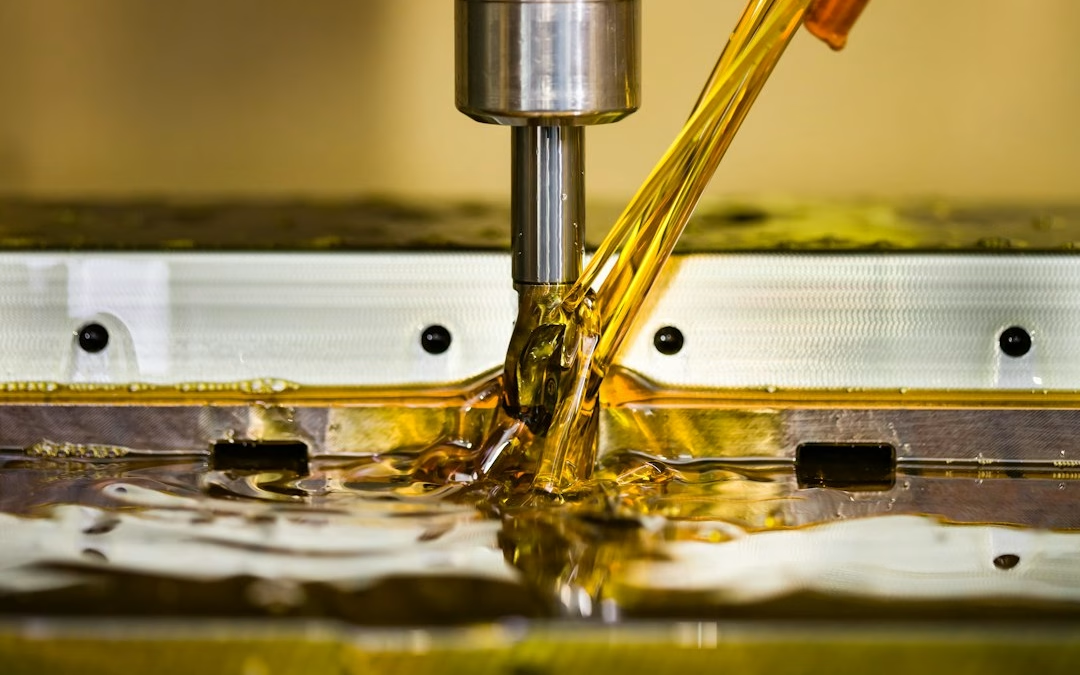
Why Thread Cutting Lubricant Matters
A thread cutting lubricant is a fluid or paste applied to a tap, die, drill, or workpiece while threads are being cut. It reduces friction and heat at the cutting edge, helps move chips away, limits galling and metal pickup, and supports cleaner threads with less tool wear.
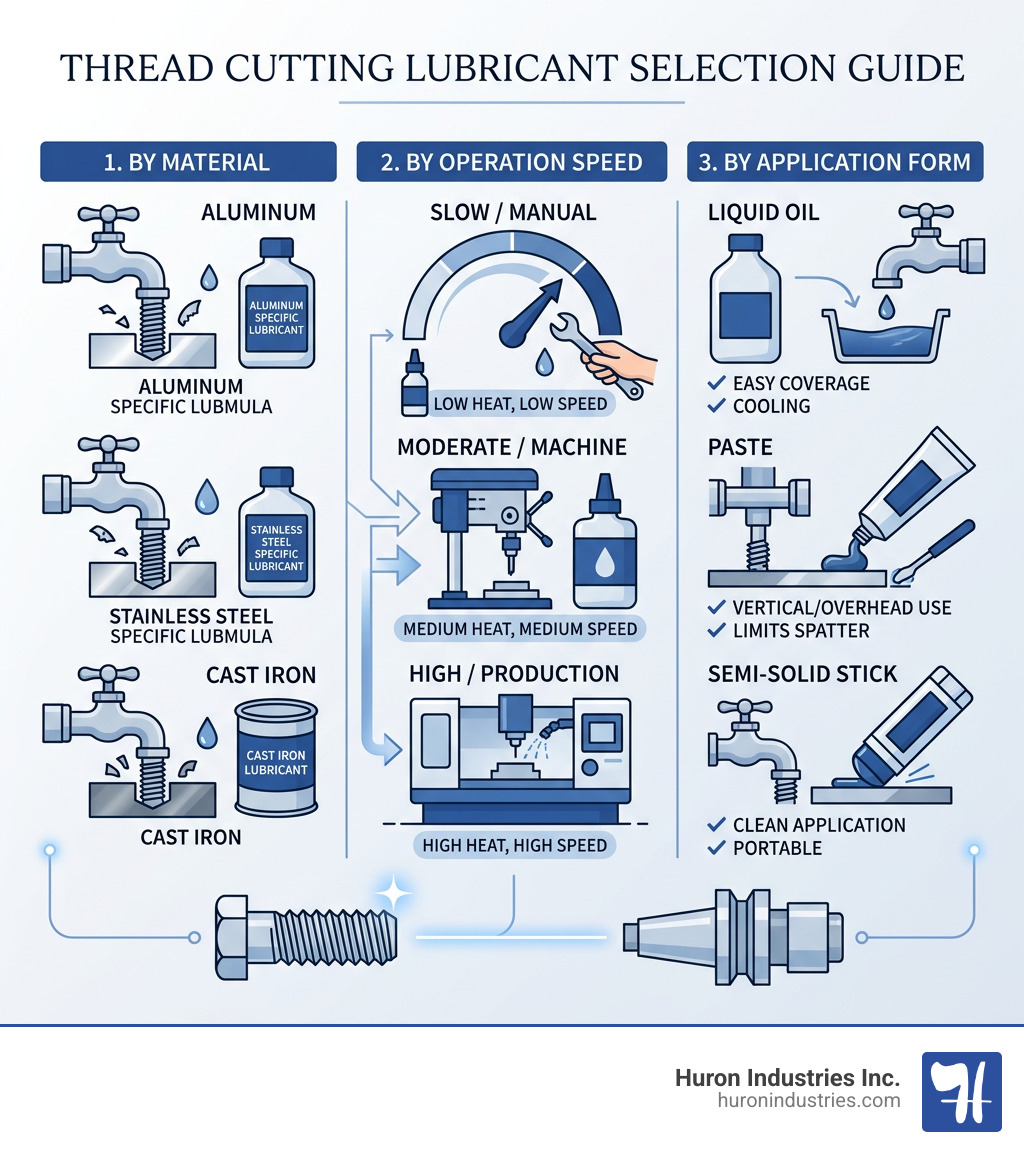
Choose the lubricant by matching its form and chemistry to the job:
- Use liquid cutting oil when you need easy coverage and cooling.
- Use a paste or semi-solid lubricant when the tool is vertical, overhead, or working in a blind hole.
- Use a material-compatible formula for stainless steel, aluminum, brass, and other alloys.
- For production work, use a lubricant made for the machine speed, delivery method, and heat load.
The right product does more than make cutting feel smoother. It can help protect expensive taps and dies, improve thread finish, and reduce rework caused by torn or rough threads. It also matters for facilities with strict safety, cleanup, and environmental requirements, where chlorine-free, sulfur-free, water-soluble, or other specialized formulations may be the better fit.
I am Nicholas Cunha, founder of CreatiVertical and a technical content specialist supporting Huron Industries Inc. I help industrial buyers understand products such as thread cutting lubricant, anti-seize compounds, and specialty lubricants so they can compare options with greater confidence.
Thread cutting lubricant helpful reading:
The Core Functions of Thread Cutting Lubricant in Metalworking
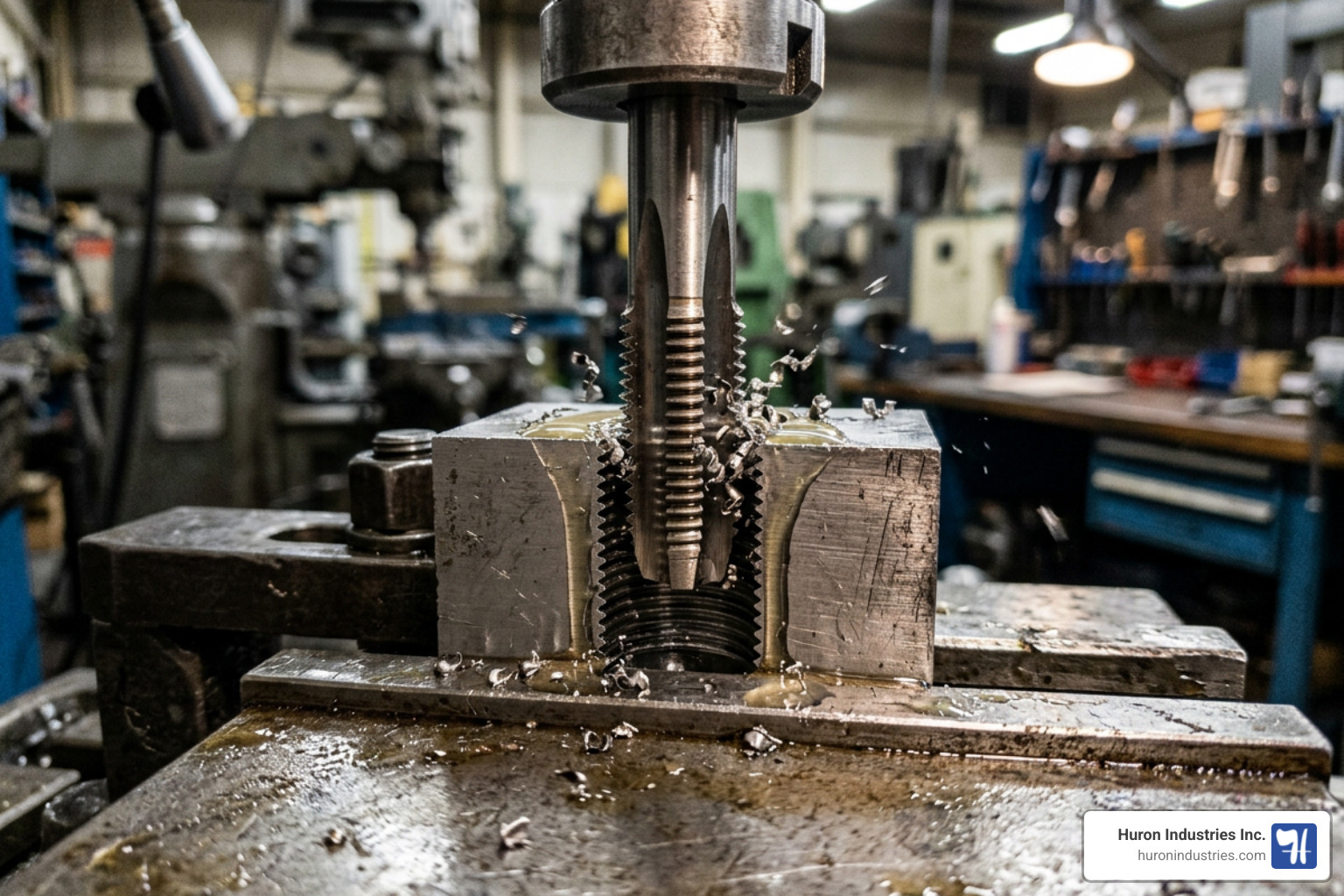
Thread cutting is one of the most demanding machining operations in manufacturing. Unlike standard turning or milling—where cutting edges periodically leave the cut or have wide-open spaces for chip evacuation—taps and dies operate in tightly confined channels. Without a dedicated fluid, severe mechanical friction quickly leads to extreme heat, premature tool destruction, and ruined parts.
Using high-performance extreme pressure lubricants changes the physics at the tool-workpiece interface. These fluids supply boundary lubrication under extreme contact loads, ensuring tool teeth slice cleanly rather than tear through metal grain structures.
Heat Dissipation and Friction Reduction
During thread forming and metal cutting, mechanical energy transforms directly into thermal energy. Temperatures at the shearing zone can rapidly exceed hundreds of degrees Fahrenheit. Unchecked thermal spikes cause tool teeth to soften, lose their temper, and dull rapidly. High heat also induces thermal cracking in tool steel and distorts the workpiece, ruining pitch diameters and thread tolerances.
A dedicated cutting lubricant establishes a boundary layer that dramatically reduces rubbing friction between the relief faces of the tool and the newly cut threads. By lowering the initial friction coefficient, the fluid curbs heat generation at the source while absorbing and carrying away ambient heat. This dedicated thermal management and lubrication and wear reduction preserves the hardness of cutting edges and maintains tight dimensional accuracy.
Chip Evacuation and Anti-Welding Properties
One of the greatest hazards in tapping or die-threading is chip packing. As teeth shear metal, tight curls of swarf must flow out through the tool flutes. If chips get caught, they re-cut, jam, and snap expensive taps inside blind holes.
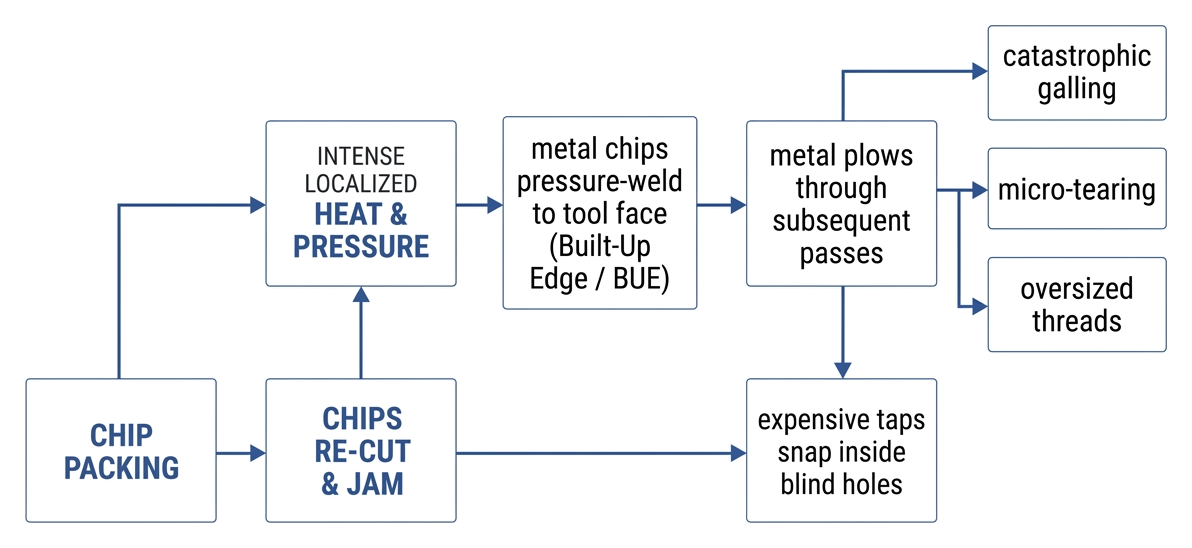
Under intense localized heat and pressure, metal chips can also pressure-weld to the tool face—a phenomenon known as built-up edge (BUE). Once metal begins welding to the cutting rake, it plows through subsequent passes, causing catastrophic galling, micro-tearing, and oversized threads. Thread cutting lubricants incorporate extreme-pressure (EP) additives that form microscopic chemical boundary films, preventing micro-welds and ensuring chips slide out smoothly.
Formulations Compared: Oils, Pastes, and Water-Soluble Fluids
Thread cutting lubricants are broadly grouped into three primary delivery classes: straight mineral/petroleum oils, semi-solid pastes, and water-soluble synthetic fluids.
| Characteristic | Straight Cutting Oils | Pastes & Semi-Solids | Water-Soluble & Synthetics |
|---|---|---|---|
| Primary Base | Petroleum / Mineral Oil | Synthetic or Wax Base | Soap / Polymer / Water |
| Film Strength | Very High | Maximum (Boundary Cling) | Moderate to High |
| Cooling Capacity | Moderate | Low | Maximum |
| Runoff Resistance | Low to Moderate | Highest (No Drip) | Low |
| Best Application | High-speed machine threading, pipe work | Vertical, inverted, blind holes | High-speed CNC, clean environments |
| Cleanup Effort | Solvent / Degreaser required | Solvent / Manual wipe | Water rinse or mild cleaner |
Mineral Oils and Heavy-Duty Thread Cutting Lubricant Formulations
Traditional mineral-based cutting fluids remain staples across machine shops and pipe fabrication yards. These fluids are generally divided into clear (light) and dark (heavy) oils:
- Dark Cutting Oils: Formulated with high concentrations of active sulfur and chlorinated compounds. They provide exceptional film strength and anti-weld capabilities, making them the standard choice for heavy-duty machine threading, pipe chasers, and tough ferrous steels.
- Clear Cutting Oils: Engineered with lighter viscosity and inactive sulfur compounds. They provide excellent visibility at the cut point, lower misting, and prevent chemical staining on non-ferrous metals such as copper and brass.
Formulations engineered with higher viscosity ratings—such as 300 SUS at 100°F—exhibit substantially slower runoff than lighter oils. This prolonged cling time ensures the cutting interface remains flooded throughout the entire pass.
Paste and Semi-Solid Thread Cutting Lubricant Options
Semi-solid pastes and stick lubricants solve the challenge of gravity-induced fluid drainage. When tapping blind holes on vertical milling machines, drilling overhead on structural frames, or threading large fittings on-site, liquid oils inevitably drip away from the cutting zone.
Pastes melt precisely at the cutting edge under machining heat. They coat the flutes, hold chips inside the channels for controlled extraction, and deliver deep extreme-pressure boundary protection without making a mess on shop floors or machine tables.
Water-Soluble Synthetics and Eco-Friendly Fluids
Modern regulatory standards and operator safety priorities have driven strong growth in soap-based, oil-free, and synthetic water-soluble fluids. High-performance water-based cutting fluids are completely free of mineral oils, chlorine, and sulfur, eliminating hazardous waste streams and harsh chemical fumes.
For facilities targeting sustainable operations, advanced biodegradable lubricants offer outstanding lubricity and environmental compliance without sacrificing tool life or surface quality.
Material Compatibility and Additive Chemistry
Choosing the wrong lubricant chemistry can result in ruined workpieces, stained alloys, or snapped tooling.
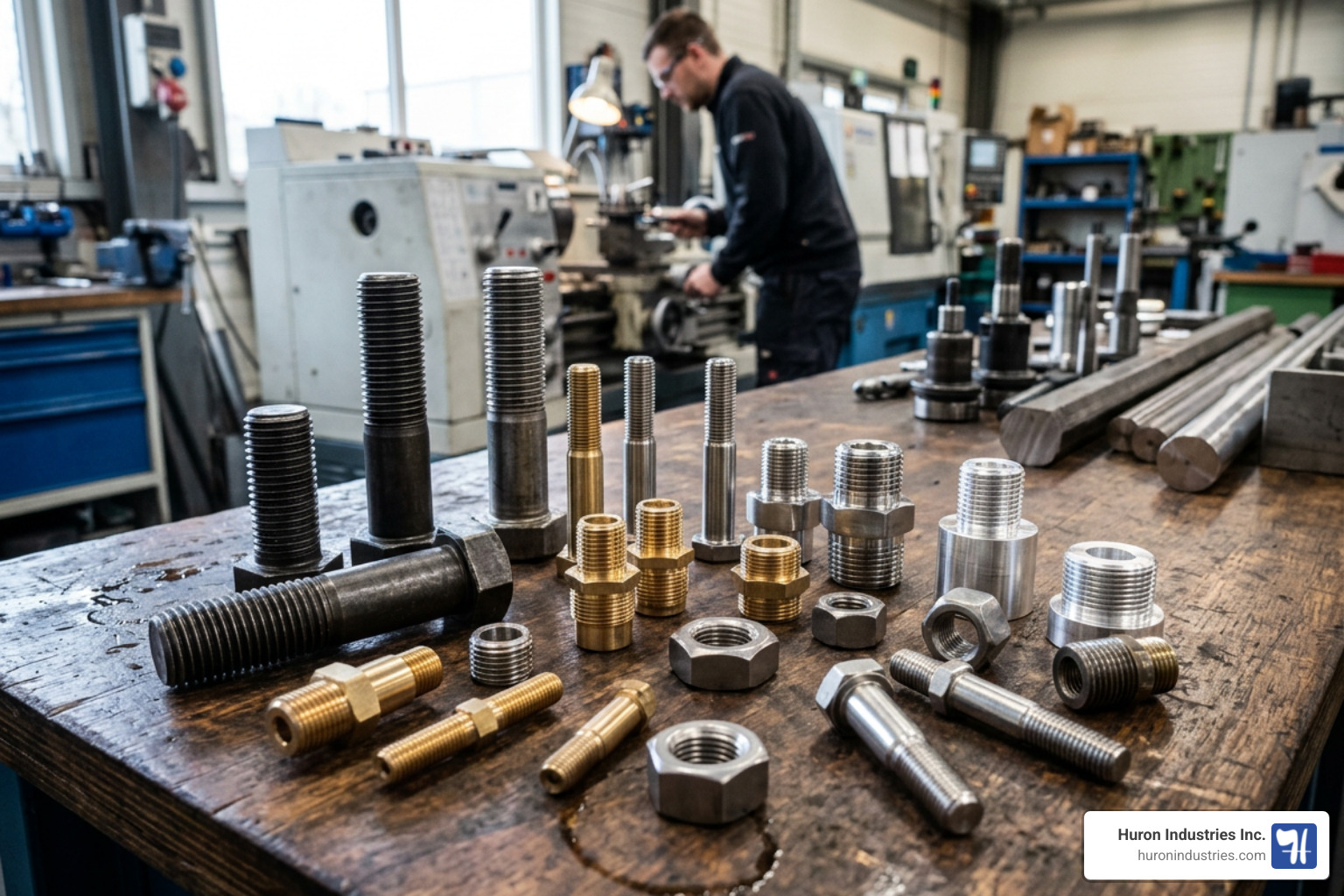
The effectiveness of heavy-duty cutting oils relies heavily on extreme-pressure additives—predominantly sulfur and chlorine. When selecting a fluid, understanding additive reactivity ensures optimal performance without chemical damage.
Ferrous Metals, Stainless Steel, and High-Temp Alloys
Tough ferrous alloys, structural carbon steels, and austenitic stainless steels work-harden rapidly and generate tremendous friction. These materials demand active extreme-pressure chemistries:
- Active Sulfur: Reacts at cutting temperatures (over 300°F) to form a sacrificial iron sulfide solid film on the tool and workpiece, preventing cold welding and flank wear.
- Chlorinated Compounds: Provide chemical film protection across moderate temperature bands, keeping tool edges sharp when machining stainless steel, titanium, and nickel-chromium superalloys.
When machining specialized high-integrity systems, selecting a non-corrosive formula prevents long-term stress cracking or chemical etching on finished parts.
Non-Ferrous Metals and Plastics
Non-ferrous alloys behave differently under the tap and react negatively to aggressive chemical additives:
- Copper, Brass, and Bronze: Active sulfur chemically reacts with copper alloys, leaving dark, corrosive stains that ruin aesthetic and mechanical tolerances. These metals require clear, inactive-sulfur oils or synthetic fluids.
- Aluminum Alloys: Highly prone to galling and clogging tool flutes due to extreme ductility. Aluminum requires low-viscosity, high-wetting lubricants or specialized alcohol- and soap-based fluids that flush chips rapidly without staining.
- Plastics and Acrylics: Petroleum-based fluids can induce environmental stress cracking or clouding on polymers. Machining acrylics or engineering plastics requires specialized fluids certified safe for non-metallic substrates.
Best Application Techniques and Common Mistakes
A top-tier lubricant will fail if it does not reach the critical shear zone. Consistent, proper application protects your investment in precision tooling.
Application Methods: Manual vs. Automated Systems
- Manual Squirt Cans and Squeeze Bottles: Ideal for job-shop tapping, maintenance work, and manual pipe threading. Apply lubricant generously to both the tool flutes and the entry hole before tool engagement, refreshing periodically during deep passes.
- Paste Application: Brush paste directly onto the full working length of the tap or die teeth. For blind holes, fill the lower third of the hole with paste to catch swarf.
- Aerosol Sprays: Convenient for hard-to-reach setups and vertical pins. Use aerosols formulated for vertical cling to prevent runoff.
- Flood Coolant and Recirculating Systems: Standard for production CNC equipment and automated pipe threaders. Ensure continuous, high-volume flow aimed directly at the cut point to flush chips into the tray and maintain steady thermal equilibrium. Periodically filter reservoirs to remove fine swarf.
Why Motor Oil and Penetrating Sprays Fail as Substitutes
A common shop mistake is grabbing whatever can is sitting on the bench—frequently general-purpose motor oil or standard penetrating sprays.
Motor oil is designed for hydrodynamic lubrication inside running engines where metal surfaces glide over an unbroken liquid film under continuous circulation. Under the extreme shear forces of metal cutting, standard motor oil films collapse instantly. The lack of extreme-pressure sulfur or chlorine chemistry results in metal-to-metal welding, rapid tool dulling, and torn threads.
Similarly, penetrating sprays are designed to displace moisture and loosen rusty fasteners. They possess very low viscosity and high volatility. When exposed to thread-cutting temperatures, they flash off, smoke, and provide almost zero boundary lubrication, leaving your taps vulnerable to binding and breakage.
Frequently Asked Questions About Threading Lubricants
Can I use motor oil or penetrating spray instead of dedicated cutting lubricant?
No. Motor oil lacks the extreme-pressure (EP) additives (such as active sulfur and chlorine) required to prevent micro-welding at cutting edges. Penetrating oils evaporate rapidly under cutting heat, leading to friction spikes, torn thread profiles, and broken taps.
What is the difference between clear and dark cutting oil?
Dark cutting oil contains active sulfur and chlorine designed for heavy-duty, high-speed machine threading of tough ferrous metals. Clear cutting oil uses inactive sulfur, produces less smoke, maintains visibility, and will not stain soft yellow metals like brass and copper.
When should I choose a cutting paste over a liquid fluid?
Select a cutting paste for vertical, horizontal, or overhead operations where liquid oil would run off. Pastes are also superior for portable hand drilling, blind-hole tapping, and tough alloys like stainless steel and titanium where persistent boundary cling is required.
Conclusion
Maximizing machining efficiency, achieving clean thread profiles, and prolonging tool life come down to selecting the correct lubricant for your specific alloy, tooling geometry, and operating speed. Whether running automated pipe-threading lines with heavy-duty mineral oils, working overhead with drip-free pastes, or tapping components with clean water-soluble formulas, dedicated fluids make all the difference in modern metalworking.
Once your precision threads are cleanly cut, protecting those assemblies against severe operating temperatures, moisture, and galling becomes the next priority. To determine whether your finished fasteners require dynamic seizure prevention or complete fluid isolation, explore our in-depth technical comparison of high temperature anti-seize vs thread sealant. For precision dry-film lubrication and high-purity applications, Huron Industries Inc. continues to supply proven, certified solutions engineered for demanding industrial environments. (Note: The coefficient of friction for Neolube No. 1.1 of 0.15 has not been tested or approved for this.)