
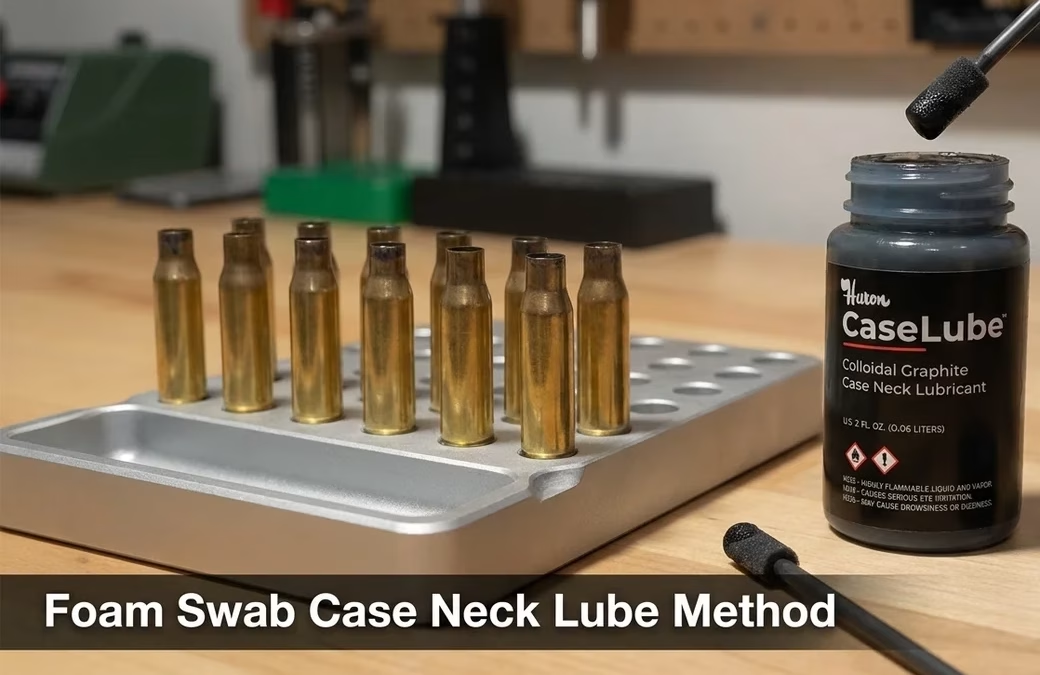
A case neck can measure right and still give you a rough seating stroke. One piece of brass moves smoothly over the expander, while the next feels dry, grabs, or starts the bullet with uneven pressure. At that point, the issue is not always neck diameter. It is often the surface condition inside the neck and the friction created during sizing or seating.
Liquid graphite helps control that contact point. CaseLube™ is used inside the case neck during sizing and bullet seating, where it leaves a thin dry graphite film after the carrier flashes off. The foam swab method gives you a controlled way to apply that film without flooding the case, coating the shoulder, or guessing how much lube is enough.
This guide covers the method step by step, including how much to use, how long to let it dry, where it fits in the loading process, and what mistakes to avoid.
Why use a foam swab for case neck lube
A foam swab works well because it keeps the lubricant where it belongs. The inside of the neck gets a controlled film, while the outside of the case stays cleaner.
This matters because too much lube creates its own problems. A dripping swab can leave liquid inside the case body or on the shoulder. Too little lube leaves dry spots. A repeatable swab method helps avoid both.
CaseLube™ is supplied without an applicator, so reloaders can use their own foam swab, brush, pad, or media system. For this method, a non-abrasive foam swab is the most controlled option.
Tools and Materials
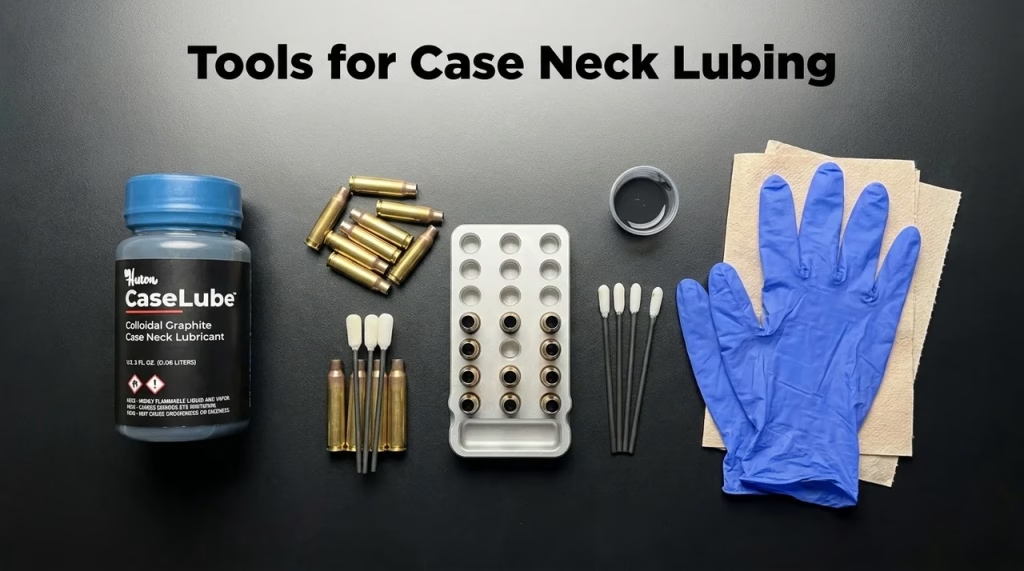
To follow this method you need only a handful of items:
- CaseLube™ liquid graphite, mixed thoroughly before each session
- Non-abrasive foam swabs, size C5709C or equivalent
- Clean, dry brass with oil and debris removed from the case necks
- Optional small container if you prefer not to dip directly into the bottle
- Gloves and paper towels to keep hands and bench clean
- Loading block to hold cases upright while they dry
CaseLube™ is flammable. Use it with proper ventilation and keep it away from heat, sparks, and open flame.
The Foam-Swab Application Method
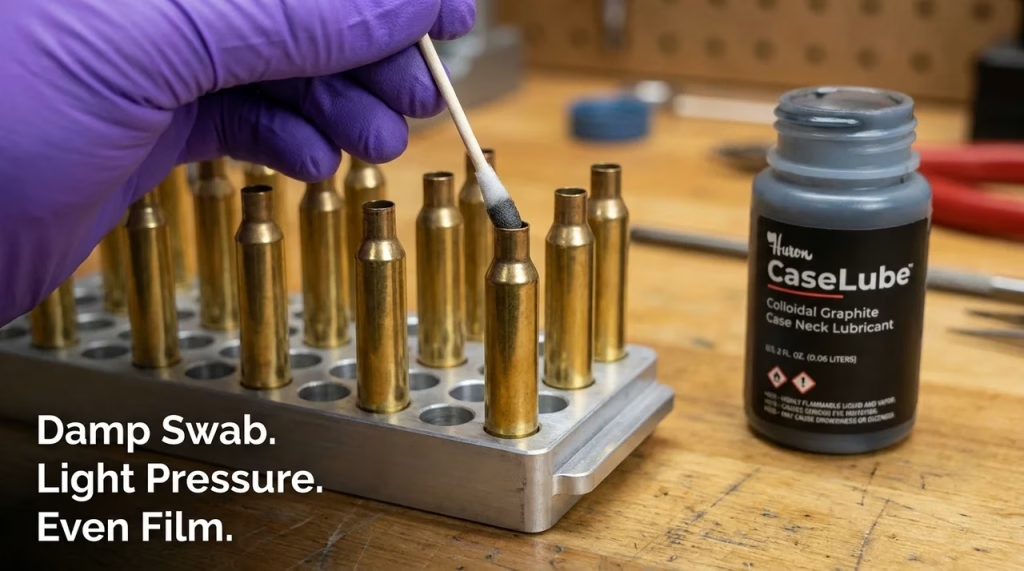
This process is simple, but the small details matter. The goal is a thin, repeatable film inside each case neck.
- Prepare the brass: Clean and dry the case necks, then apply lube. Oil, media dust, and loose residue can keep the graphite film from laying down evenly.
- Mix the product: CaseLube™ is a liquid graphite suspension. Shake or stir it until the graphite is evenly dispersed before you start.
- Charge the swab: Dip only the tip of the foam swab into the bottle or a small secondary cup. Wipe the swab on the rim so it is damp, not dripping.
- Coat the neck interior: Insert the swab into the case mouth and rotate it once or twice. Use light pressure. You want a thin visible film inside the neck, not a pool of liquid.
- Let the film dry: Set the cases upright in a loading block. The film dries to the touch in about 5 minutes and is ready for use in about 30 minutes.
- Re-wet only when needed: Refresh the swab when it stops leaving an even film. Do not keep adding product to every neck just because the swab still feels damp.
How much lube is enough
The right amount is less than most reloaders expect. CaseLube™ is designed to leave a dry film of around 0.2 to 0.5 mil. That is a very light coating.
A good application should look even inside the neck. It should not run, drip, or collect at the case mouth. If the swab leaves streaks, add a small amount. If the neck looks wet or liquid moves inside the case, you used too much.
The simplest rule is this: damp swab, light pressure, even film.
Where it fits in the loading process
You can apply liquid graphite before sizing if your process uses an expander ball or mandrel. The graphite film helps reduce drag as the tool passes through the neck.
You can also apply it before seating if your goal is smoother bullet entry and more consistent seating force. In either case, let the film dry before sizing or seating. Do not charge powder into cases with wet carrier still inside the neck.
The right placement depends on your workflow. Keep the step consistent once you find where it works best.
Common mistakes to avoid
The biggest mistake is over-applying. More product does not mean better lubrication. It usually means more cleanup and less control.
Another mistake is skipping the mixing step. Graphite can settle, so the bottle needs to be mixed before use. Applying from an unmixed bottle can give uneven results.
Dirty brass is another problem. If the inside neck has oil, loose carbon, or media residue, the coating may not lay down evenly. Start with clean, dry necks.
The last mistake is rushing the dry time. The film may look dry sooner than it is ready. For consistent results, give each case the same dry time before sizing or seating.
Final takeaway
The foam swab method is not about adding another complicated step to the bench. It is about controlling one contact point that matters.
A clean case neck, a mixed bottle of CaseLube™, a damp foam swab, and enough dry time give you a repeatable inside-neck condition. That is the value of the foam swab method. It gives the inside of the neck a repeatable dry-film surface without coating the whole case or adding much complexity to the workflow.
Common Questions About Applying Liquid Graphite to Case Necks
Can I use liquid graphite case lube on different cartridge sizes?
Yes, liquid graphite case lube can be used on different cartridge sizes as long as the applicator fits the case neck and leaves a controlled film. The main adjustment is the swab size. A foam swab that works for a larger neck may overload a smaller neck, so match the swab to the cartridge and keep the coating light.
Should I remove liquid graphite from the case neck before firing?
No, you do not need to remove the dry graphite film from the inside of the case neck before firing. The point of using liquid graphite is to leave a dry film after the carrier flashes off. Do not leave the neck wet, and do not charge or seat while liquid carrier is still present.
How is liquid graphite different from powdered graphite for case necks?
Liquid graphite is applied as a liquid carrier that leaves a dry graphite film after it flashes off. With the foam swab method, the main advantage is placement control: you can apply a thin film directly inside the neck without treating the whole case. Powdered graphite belongs in the separate lubricant-comparison discussion, so this guide stays focused on the swab method for liquid graphite.
Will neck lube fix inconsistent seating pressure by itself?
No, neck lube will not fix every cause of inconsistent seating pressure. It helps control friction inside the case neck, but seating pressure can also change from brass hardness, annealing variation, neck wall thickness, case cleanliness, bullet jacket condition, and die setup. Treat inside-neck lubrication as one controlled variable, not a cure for the whole loading process.
Can I use CaseLube™ after annealing brass?
Yes, you can use CaseLube™ after annealing, but the brass should be clean, cool, and dry before application. Annealing changes brass hardness, while neck lubrication controls friction at the contact surface. Keep those steps separate so you are not applying graphite over heat discoloration, loose residue, oil, or moisture.
What happens if I use too much liquid graphite inside the case neck?
Too much liquid graphite can leave puddling, uneven film, or excess product where it does not belong. That defeats the purpose of a controlled neck-lube step. The better method is a damp foam swab, light pressure, and a thin even film. If the case neck looks wet or product runs into the case body, reduce the amount on the swab.
Can I use a brush instead of a foam swab?
Yes, a brush can be used, but a foam swab usually gives better control for hand application. Brushes can vary in pressure and may carry too much or too little product depending on fit. A non-abrasive foam swab is easier to wipe down, load lightly, and rotate consistently inside the neck.