
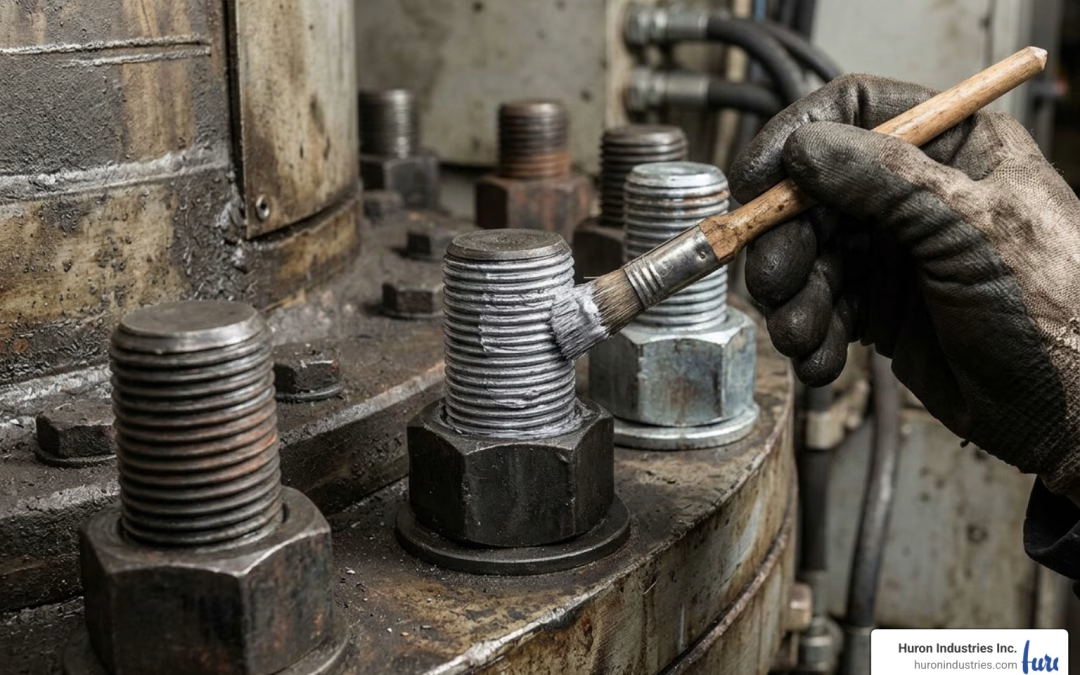
Why Choosing the Right Anti-Seize Thread Lubricant Can Save You a Costly Shutdown
Anti-seize thread lubricant is a compound applied to threaded fasteners before assembly to prevent seizing, galling, and corrosion — especially in high-heat, high-pressure, or corrosive environments. Here's a quick-reference guide to the most common types:
| Type | Best For | Max Temp |
|---|---|---|
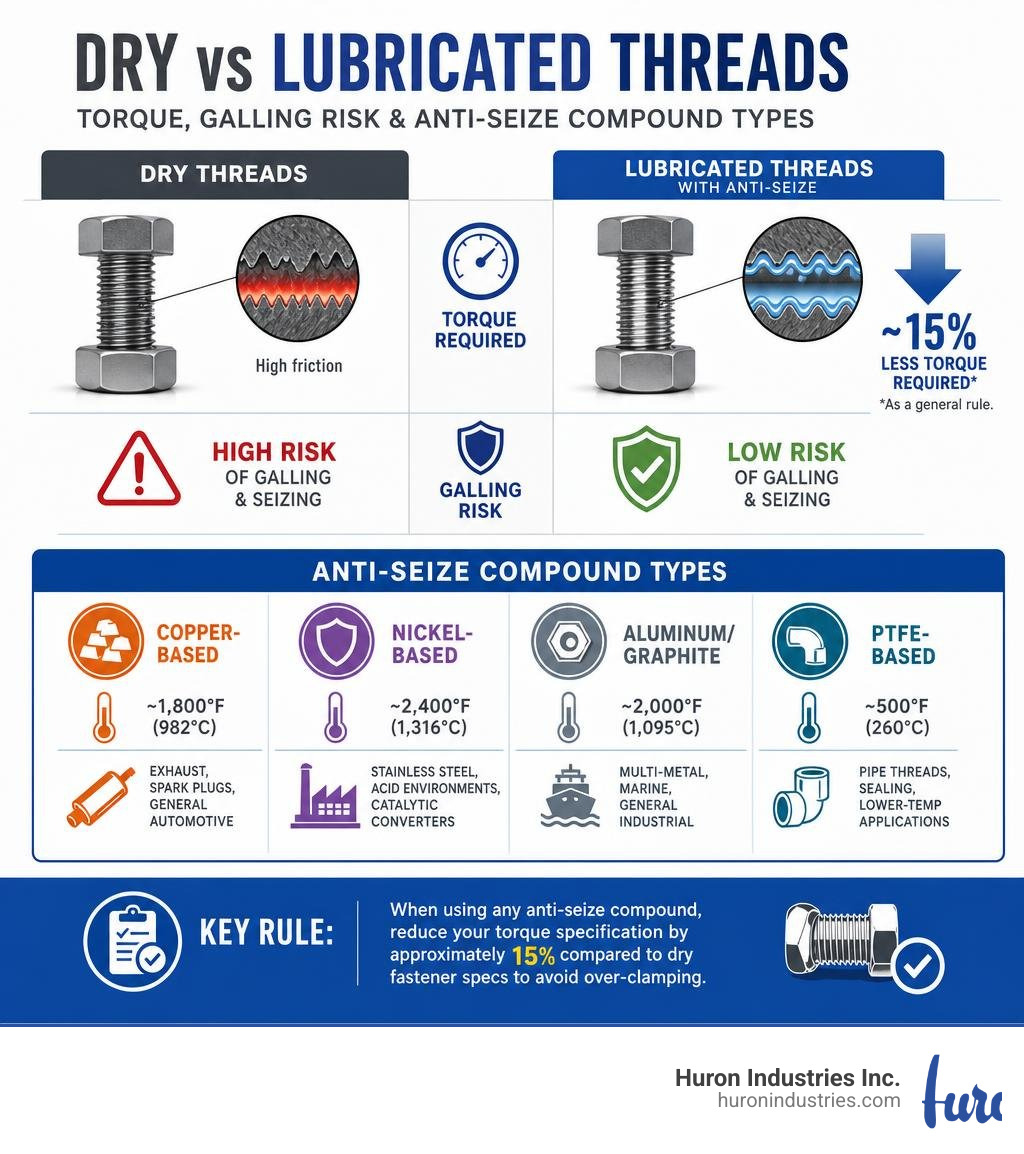
| Copper-based | Exhaust, spark plugs, general automotive | ~1,800°F (982°C) |
| Nickel-based | Stainless steel, acid environments, catalytic converters | ~2,400°F (1,316°C) |
| Aluminum/Graphite | Multi-metal, marine, general industrial | ~2,000°F (1,095°C) |
| PTFE-based | Pipe threads, sealing, lower-temp applications | ~500°F (260°C) |
Key rule: When using any anti-seize compound, reduce your torque specification by approximately 15% compared to dry fastener specs to avoid over-clamping.
Seized fasteners are more than an inconvenience — they mean broken studs, damaged threads, unplanned downtime, and in regulated industries, potentially a compliance incident. The right anti-seize compound applied correctly can mean the difference between a 10-minute bolt swap and a multi-hour repair job.
Whether you're torquing exhaust manifold bolts in a diesel shop, maintaining subsea fittings on an offshore platform, or installing components in a nuclear facility that demands certified, high-purity lubricants — the formulation you choose matters.
I'm Nicholas Cunha, and through my work with Huron Industries Inc. — a manufacturer of specialty graphite lubricants, anti-seize compounds, and thread sealants — I've developed a detailed understanding of how anti-seize thread lubricant selection affects performance across demanding industrial, marine, and regulated environments. In this guide, I'll walk you through every major type, how they compare, and how to pick the right one for your application.
What is an Anti-Seize Thread Lubricant and How Does It Work?
To understand why an anti-seize thread lubricant is so critical, we first have to look at what happens at the microscopic level when you tighten a bolt. Even the most polished metal threads look like jagged mountain ranges under a microscope. When you tighten a dry fastener, these microscopic peaks rub together under immense pressure. This friction generates intense localized heat, which can cause the metals to literally weld themselves together. This destructive phenomenon is known as galling or cold welding.
An anti-seize compound is specifically engineered to prevent this by acting as a physical barrier. Unlike standard lubricants, which rely on a continuous liquid oil film, anti-seize compounds are formulated with finely ground solid lubricants—such as copper, aluminum, nickel, graphite, or PTFE—suspended in a premium carrier grease.
This brings us to a crucial distinction: how does anti-seize differ from regular grease or oil?
Standard grease is designed to lubricate moving parts, like bearings or gears, by keeping them separated with a slippery liquid barrier. However, under high temperatures or extreme pressures, regular grease will thin out, squeeze out, or completely burn off. When the grease carrier evaporates, nothing is left to protect the metal, leading to direct metal-to-metal contact and inevitable seizing.
Anti-seize, on the other hand, is designed for static or slow-moving threaded connections. While the grease carrier in an anti-seize compound helps with the initial application and assembly, its primary job is simply to hold the solid lubricant particles in place. When exposed to extreme operational heat, the grease carrier is designed to cleanly burn off, leaving behind a persistent, highly stable solid release layer. This dry metallic or graphite film remains trapped between the threads, providing continuous Lubrication Wear Reduction and ensuring the parts can be easily disassembled years down the road.
Key Benefits of Using Anti-Seize Thread Lubricant
Applying a premium anti-seize compound to your fasteners offers several distinct operational advantages:
- Galling Prevention: It completely eliminates the risk of threads cold-welding together under load, which is especially common in stainless steel, aluminum, and titanium fasteners.
- Corrosion Resistance: It seals out moisture, road salt, chemicals, and corrosive gases, preventing rust from locking the threads.
- Galvanic Action Mitigation: When dissimilar metals touch (such as steel bolts in an aluminum engine block), galvanic corrosion occurs as electrical currents flow between them. The solid particles in anti-seize insulate the metals from each other, halting this destructive process.
- Easy Disassembly: By preserving the integrity of the threads, anti-seize allows you to back out fasteners with minimal torque, protecting expensive machinery and preventing snapped studs.
- Consistent Clamping Force: It provides High Quality Lubrication during torque-down, reducing friction variation so that you achieve more accurate, repeatable tension across all your fasteners.
Types of Anti-Seize Compounds and Their Temperature Ratings
Choosing the best anti-seize thread lubricant requires matching the compound’s chemistry to your specific operational environment. Using the wrong type can actually accelerate corrosion or lead to joint failure. Let’s break down the primary formulations available on the market today.
Copper-Based Anti-Seize Thread Lubricant
Copper-based anti-seize is perhaps the most recognizable and widely used formulation in automotive and general maintenance shops. It is composed of micro-fine copper flakes and graphite suspended in a heavy-duty grease base.
Typically rated for temperatures up to 1,800°F (982°C)—with some high-performance formulations pushing up to 2,000°F (1,095°C)—copper anti-seize is highly resistant to water wash-off, salt, and extreme pressures. It is the go-to choice for exhaust manifold bolts, spark plug threads, brake assemblies, and cylinder heads. Standard copper anti-seize compounds are industry staples for these exact applications.
Important Limitations: You should avoid using copper anti-seize on stainless steel fasteners in high-temperature environments (above 650°F). At elevated temperatures, copper can cause intergranular stress corrosion cracking in stainless steel, weakening the bolt. Additionally, because copper is a highly active metal, using it on aluminum components in wet or marine environments can trigger severe galvanic corrosion.
Nickel-Based Anti-Seize
When temperatures climb beyond the limits of copper, or when you are working with stainless steel, nickel-based anti-seize is the undisputed champion. Formulated with nickel flakes and graphite, nickel anti-seize can withstand extreme temperatures up to 2,400°F (1,316°C).
Nickel is incredibly inert and does not react chemically with stainless steel or other alloys at high temperatures. This makes it ideal for catalytic converters, industrial burners, chemical processing equipment, and acid-exposed environments where copper would quickly degrade. If your operation involves highly corrosive chemical lines or extreme-heat industrial exhaust systems, nickel is your safest bet.
Aluminum and Graphite-Based Anti-Seize
For general-purpose, multi-metal protection, aluminum-and-graphite blends offer excellent versatility. These compounds combine aluminum particles, copper, and graphite to protect steel, cast iron, brass, and aluminum components up to 2,000°F (1,095°C). They are widely used in steel mills, paper plants, and general industrial maintenance.
However, in highly regulated industries—such as commercial and naval nuclear power, aerospace, and precision manufacturing—metallic anti-seize compounds are often prohibited due to the risk of metal contamination or chemical reactions. In these critical environments, pure graphite-based lubricants are required.
Our flagship line at Huron Industries, Neolube, provides high-purity colloidal graphite suspended in an easy-to-apply carrier. It deposits a dry, ultra-pure graphite film that is qualified to rigorous military specifications (like MIL-L-24131C). It provides exceptional lubricity and seizure prevention without introducing metals, halogens, or sulfur into sensitive reactor or aerospace systems.
PTFE-Based Thread Sealants
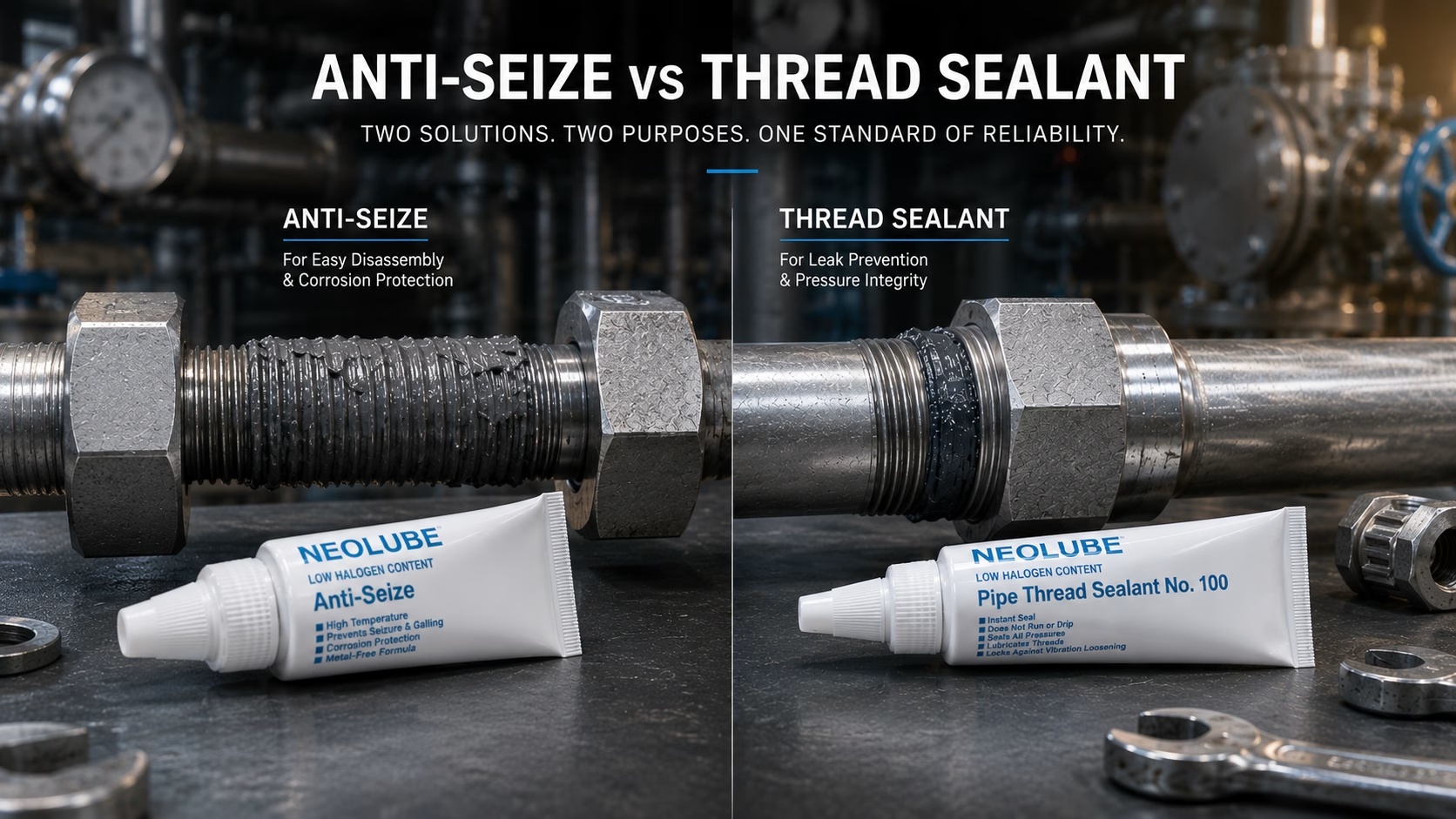
It is common to confuse anti-seize compounds with thread sealants, but they serve different primary functions. While anti-seize is designed to prevent friction and seizing, PTFE-based thread sealants are engineered to block fluid and gas leaks in pipe joints.
These non-hardening pastes contain high concentrations of PTFE solids that pack into the microscopic imperfections of tapered pipe threads. They can handle impressive pressures—up to 10,000 psi for liquids and 2,000 psi for gases—across a temperature range of -50°F to 500°F (-46°C to 260°C).
While PTFE sealants do provide excellent lubricity that prevents galling during assembly, they are not rated for the extreme high-temperature environments that metal- or graphite-based anti-seize compounds handle. If you want a deeper dive into how to choose between these two options, check out our guide on High Temperature Anti-Seize vs Thread Sealant for Threaded Connections.
How Anti-Seize Affects Torque and Clamping Force
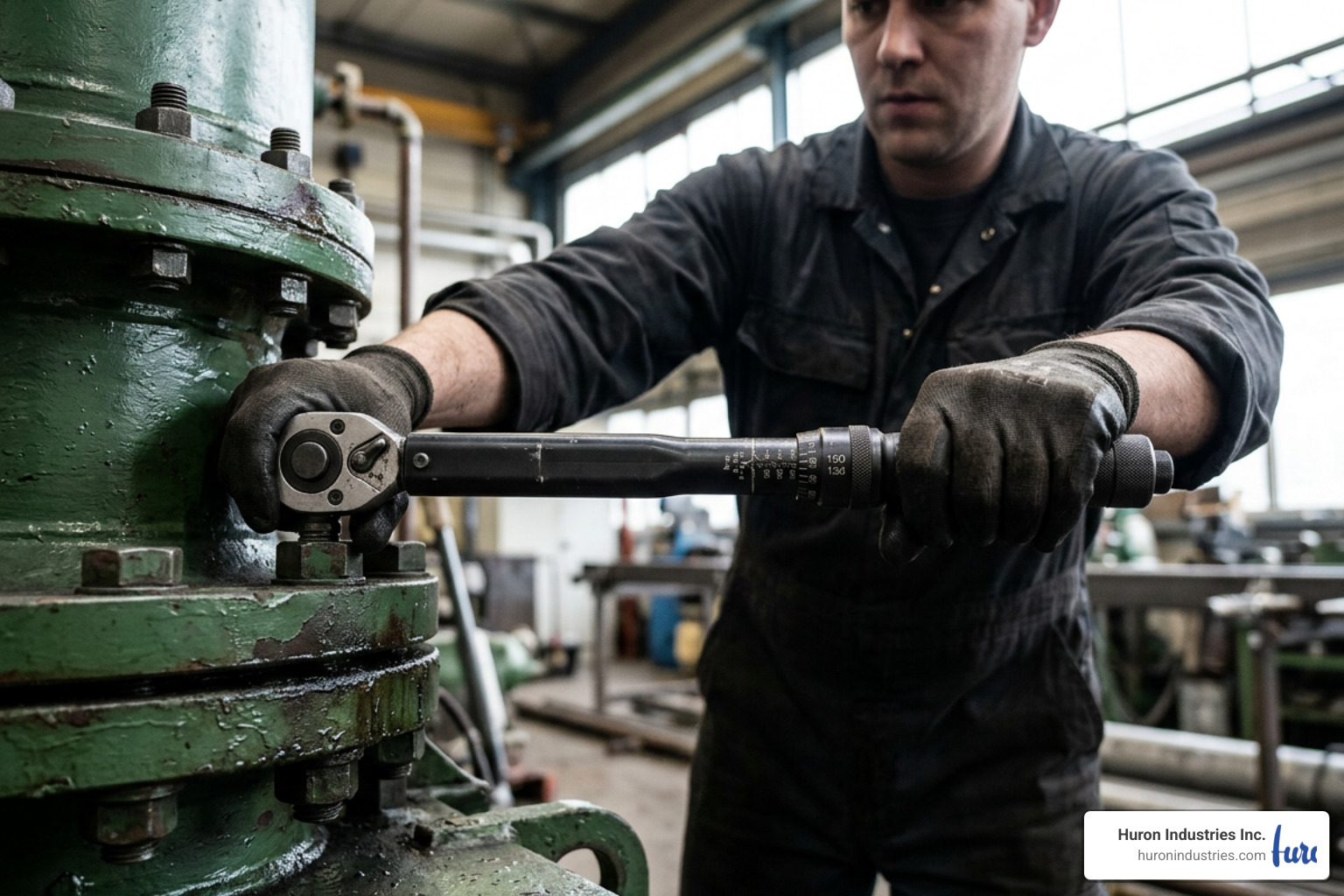
One of the most critical—and frequently overlooked—aspects of using an anti-seize thread lubricant is its massive impact on torque specifications.
When you tighten a dry bolt to a specific torque value, roughly 90% of your effort is spent simply overcoming the friction between the threads and under the bolt head. Only about 10% of the torque actually goes into stretching the bolt to create clamping force (tension).
Because anti-seize dramatically reduces friction, it lowers the "K-factor" (or nut factor) of the fastener. If you apply anti-seize to a bolt and tighten it to the manufacturer’s dry torque specification, you will over-tighten the joint. The bolt will stretch far beyond its elastic limit, potentially leading to stripped threads, deformed flanges, or snapped fasteners.
The Golden Rule of Torque Adjustment: As a general industry standard, when applying an anti-seize compound to a fastener that has a dry torque specification, you must reduce the torque value by approximately 15% to 20%. This adjustment ensures you achieve the exact clamping force intended by the engineer without over-stressing the metal.
For critical bolting applications, always consult the technical data sheet of the specific lubricant to find its exact nut factor, and apply Precision Lubrication practices to guarantee safety and joint integrity.
When and Where NOT to Use Anti-Seize
While anti-seize is a miracle worker for static fasteners, it can cause catastrophic failures if applied to the wrong components. Here is where you should keep the anti-seize brush far away:
- High-Speed Rotating Bearings: Never use anti-seize in ball, roller, or needle bearings. The heavy solid particles (copper, nickel, etc.) will clog the bearing races, cause the rolling elements to slide rather than roll, and generate rapid friction, heat, and ultimate bearing failure. These require specialized Industrial Machinery Applications greases.
- Brake Caliper Slide Pins: While anti-seize is great on the back of brake pads to stop squealing, do not use it on caliper slide pins. The solid particles can dry out and lock up the pins, causing uneven brake wear or brake failure. Use dedicated silicone- or synthetic-based brake grease instead.
- Fasteners Requiring Threadlockers: If a bolt is prone to backing out due to severe vibration, it needs a threadlocking adhesive, not a lubricant. You cannot use both; anti-seize will completely prevent a threadlocker from bonding.
- Oxygen and Chlorine Systems: Standard anti-seize compounds contain organic grease bases that can react violently (even explode) when exposed to pure pressurized oxygen or strong oxidizers.
How to Apply Anti-Seize Correctly
Applying anti-seize isn't complicated, but doing it sloppily can lead to messy cleanups and uneven torque. Follow these simple steps for a perfect application:
- Clean the Threads: Use a wire brush and a solvent cleaner to remove all old rust, dirt, grit, and previous lubricants. Mating surfaces must be completely clean and dry.
- Stir the Product: If your anti-seize has been sitting on the shelf, some oil separation is normal. Give it a good stir to thoroughly reincorporate the solid particles.
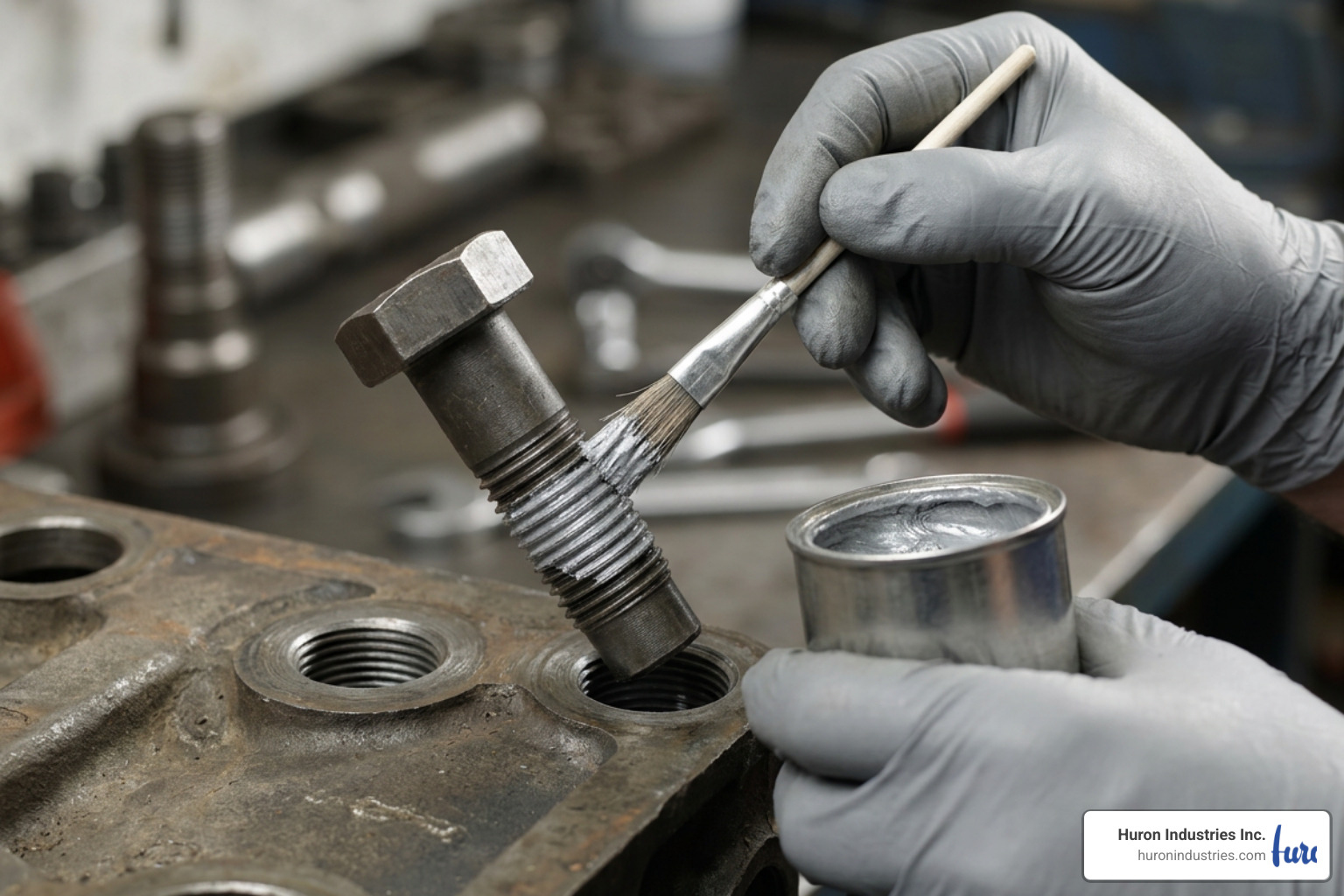
- Apply a Thin, Even Film: Using a stiff brush, apply a thin layer directly into the thread roots of the male fastener. You do not need to pack the threads; a light, even coat is highly effective. Be sure to also apply a small dab under the bolt head or washer face where friction occurs.
- Assemble and Torque: Thread the parts together and torque them down, remembering to apply your 15% torque reduction.
- Clean Up: Wipe away any excess compound that squeezes out of the joint.
For highly specialized applications using our high-purity graphite lubricants, you can refer directly to our Neolube No. 2 Lubricant Technical Datasheet for precise application and dry-time instructions.
Frequently Asked Questions about Anti-Seize Thread Lubricants
Is anti-seize a lubricant, an abrasive, or both?
Anti-seize is strictly a solid-film assembly lubricant. However, a common misconception is that it acts as an abrasive. This myth usually comes from someone using a copper-based product way past its rated temperature limit, causing the grease carrier to char into hard carbon deposits.
In reality, the solid particles in anti-seize are incredibly soft. On the Mohs hardness scale, graphite sits at a very soft 1.5, copper is at 3, and iron/steel are much harder at 4 to 5. Because these solids are softer than the metals they protect, they slip past each other without causing any thread wear.
Can I use copper anti-seize on stainless steel or aluminum?
You should avoid using copper on stainless steel in high-heat environments (above 650°F) due to the risk of intergranular cracking. You should also avoid using copper on aluminum in wet, humid, or marine environments, as it will set up a galvanic cell that corrodes the aluminum. For stainless steel, choose a nickel- or graphite-based alternative. For aluminum in corrosive environments, use an aluminum-based or metal-free compound.
What are the safety and handling precautions for anti-seize?
Because anti-seize contains heavy metals and petroleum-based carriers, you should avoid prolonged skin contact and wear appropriate personal protective equipment (PPE) like nitrile gloves. Always consult the product’s Safety Data Sheet—such as our Neolube No. 2 Lubricant Safety Datasheet—for detailed handling, hazard communication, and disposal instructions.
Conclusion
Selecting the right anti-seize thread lubricant is a simple step that pays massive dividends in equipment reliability, safety, and ease of maintenance. By matching the right formulation—whether it's copper, nickel, aluminum, or high-purity graphite—to your specific temperature and metal requirements, you can protect your valuable machinery from the costly headaches of seized and galling fasteners.
Since 1971, Huron Industries Inc. has been a trusted partner for industries requiring certified, high-purity, and high-performance lubrication solutions. If you are working in a demanding environment that requires the absolute best in non-destructive, nuclear-grade thread lubrication, explore our specialized Neolube® colloidal-graphite line.
Want to learn more about choosing the perfect compound for your piping and threaded assemblies? Read our comprehensive breakdown on High Temperature Anti-Seize vs Thread Sealant, or connect with us directly through our Huron Industries, Inc. - Thomasnet profile to request a quote or technical consultation today.