
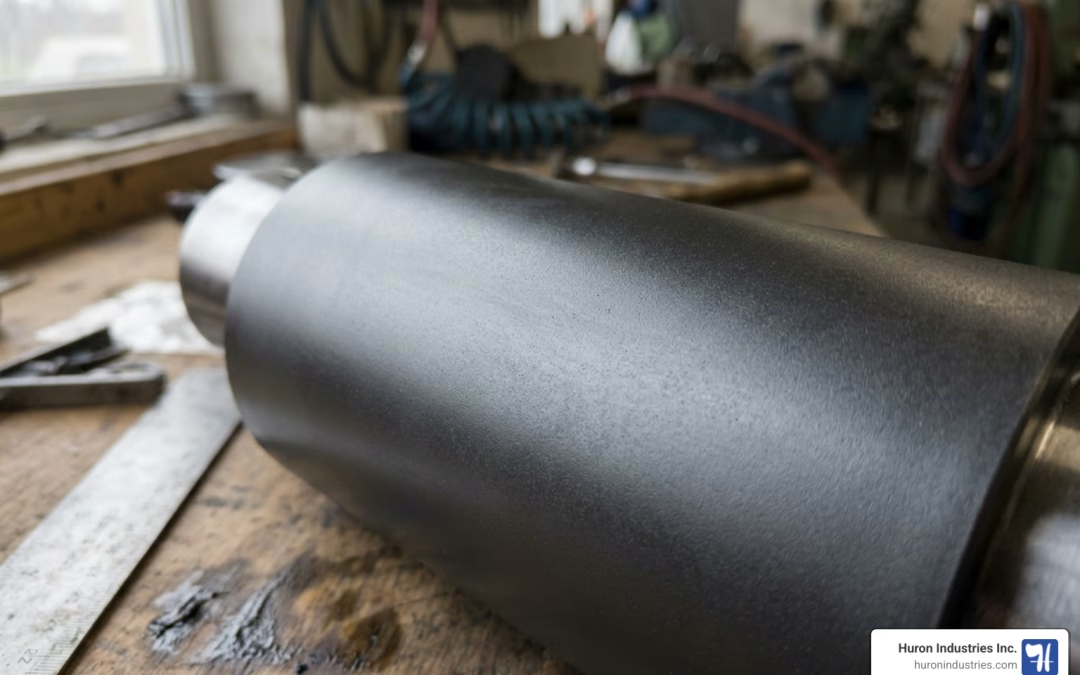
What the Neolube Datasheet Tells You (And Why It Matters)
A neolube datasheet gives engineers, procurement teams, and safety officers the exact technical specs needed to qualify and apply Huron Industries' colloidal graphite lubricants in regulated environments. Here's a quick-reference summary of the key products covered:
| Product | Type | Key Use | Status |
|---|---|---|---|
| Neolube No. 1 | Colloidal graphite in isopropanol | Anti-seize, thread lube, nuclear facilities | Discontinued July 2024 |
| Neolube No. 1.1 | Colloidal graphite in isopropanol | Nuclear/naval anti-seize, MIL-L-24131C | Active |
| Neolube No. 2 | Micro graphite + thermoplastic resin | Anti-seize, static bleeding, EMI shielding | Active |
| Neolube No. 100 | Thread sealant | Metal pipe locking and sealing | Active |
| Neolube No. 1260 | Injectable sealant paste | Reactor containment bolts, severe conditions | Active |
All Neolube products are manufactured by Huron Industries Inc. and undergo rigorous lab testing to meet strict industrial and military specifications.
Finding the right dry film lubricant for a nuclear or industrial application isn't just about performance. It's about documented compliance. A missing spec — the wrong chlorine limit, an unverified flash point, an outdated formulation — can mean failed audits, component seizure, or worse.
That's why the official Neolube datasheets exist: to give qualified buyers exactly what they need to source, apply, and verify these lubricants with confidence.
I'm Nicholas Cunha, the digital marketing specialist behind Huron Industries Inc.'s content and SEO program, and I've worked directly with their technical team to make every neolube datasheet — from physical properties to impurity limits — easy to find and understand online. This guide pulls all of it together in one place.
The Core Neolube Datasheet Directory: Product Line Overview
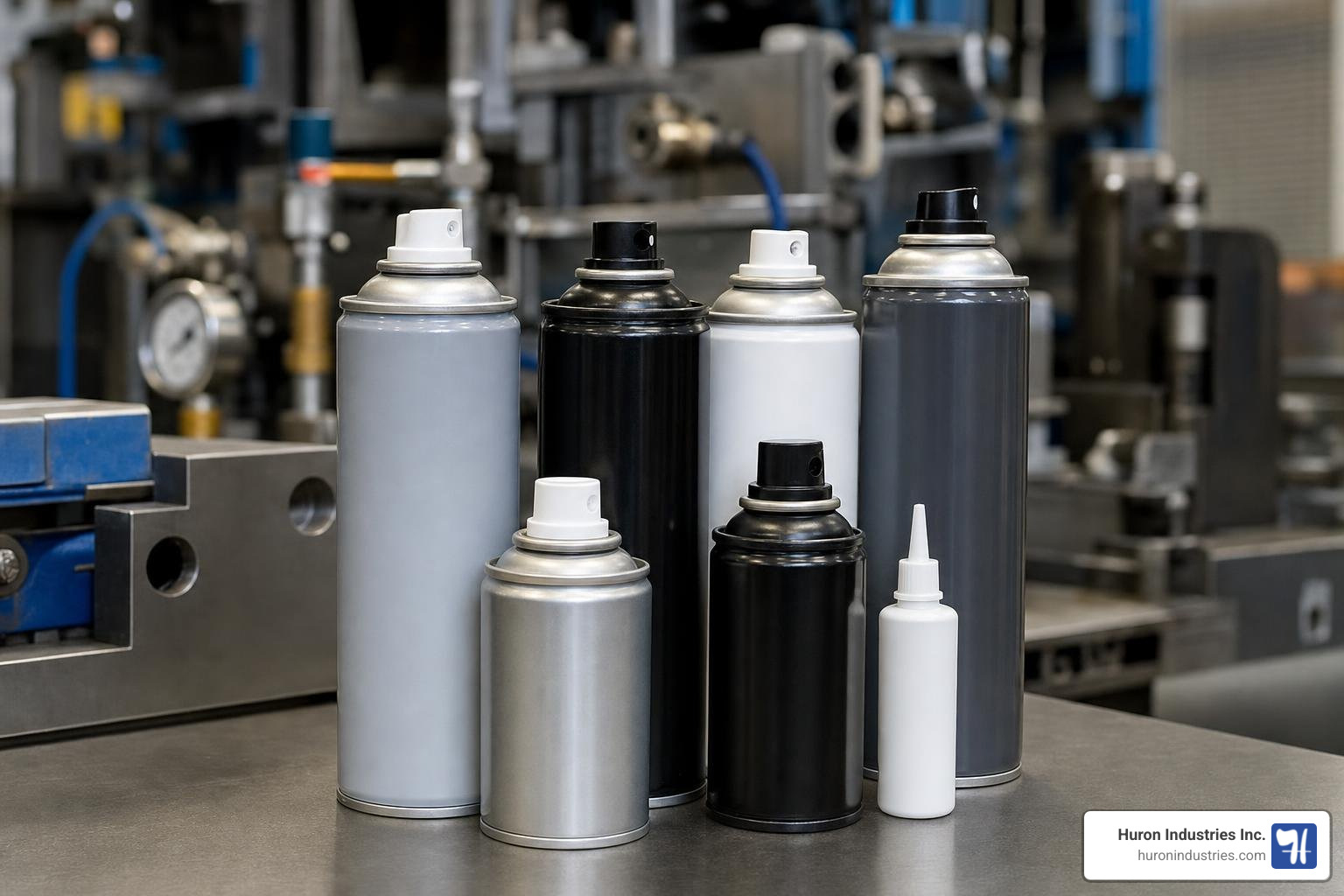
When you open a neolube datasheet, you aren't just looking at numbers; you're looking at the DNA of specialized lubrication systems designed for some of the most unforgiving environments on Earth.
At Huron Industries Inc., we have spent decades refining these formulations. While our legacy products remain benchmark standards in historic engineering documents, our active product line continues to evolve to meet modern regulatory and environmental demands.
Whether your focus is nuclear power generation, aerospace engineering, or heavy industrial manufacturing, understanding the differences across our product line is crucial. You can access the complete technical files directly via the Neolube Data Sheets - NEOLUBE® Industrial Dry Lubricants portal. Let's break down the specific components of our core offerings.
Neolube No. 1 and No. 1.1 Datasheet Specifications
Historically, Neolube No. 1 was our flagship dry film lubricant. It gained widespread acclaim as a colloidal graphite suspension in an isopropanol carrier, composed of 99% pure furnace graphite particles. However, to keep up with changing manufacturing standards and strict supply requirements, Neolube No. 1 was officially discontinued in July 2024.
For historical reference, you can still access the Neolube No. 1 Lubricant Technical Datasheet to understand legacy systems.
To replace this classic, we engineered Neolube No. 1.1. This active formulation directly conforms to the rigorous requirements of MIL-L-24131C. It is specifically designed as an anti-seize compound, thread lubricant, and dry-film lubricant for moving parts and rubbing surfaces in commercial and naval nuclear power plants.
Its ultra-pure composition ensures that it does not introduce harmful impurities into sensitive reactor environments. You can view the complete technical properties on the Neolube No. 1.1 TDS Technical Datasheet.
Neolube No. 2 Datasheet Specifications
If Neolube No. 1.1 is the specialist for pure sliding friction in nuclear reactors, Neolube No. 2 is the multi-tasking workhorse of the family. Neolube No. 2 is an exceptionally stable compound consisting of processed micro graphite and a thermoplastic resin binder suspended in isopropanol.
The addition of the thermoplastic resin binder gives Neolube No. 2 superior structural adhesion, making it ideal not only for high-performance lubrication but also for applications requiring electrical conductivity, static bleeding, and electromagnetic interference (EMI) shielding.
When applied, it forms an ultra-thin, dry, and highly adherent carbon film. For a granular look at its physical chemistry, check out the Neolube No. 2 Lubricant Technical Datasheet.
Neolube No. 100 and No. 1260 Specialty Formulations
Beyond our primary dry film lubricants, we manufacture specialty formulations designed for tight seals and high-pressure joints.
- Neolube No. 100: This is a robust thread sealant designed specifically for locking and sealing metal pipes and fittings. It provides excellent resistance to vibration, thermal cycling, and chemical attack. However, a critical note from our technical team: Neolube No. 100 is designed for metal systems and does not react well to certain plastics. Always verify material compatibility before application. You can review the full compatibility guidelines on the Neolube No. 100 TDS Technical Datasheet.
- Neolube No. 1260: When conditions move from "demanding" to "severe," Neolube No. 1260 is the solution. This is a high-purity, injectable thread sealant paste formulated specifically for the secondary side and reactor containment areas where temperatures and pressures exceed standard limits. If you are sealing critical bolts or joints under high radiation, this is the preferred industry standard. Its detailed operational limits can be found on the Neolube No. 1260 TDS Technical Datasheet.
Physical and Chemical Properties: No. 1 vs. No. 2
To help you choose the correct formulation for your specific application, I have compiled the core technical data from our official safety and technical sheets into a direct comparison table.
| Physical / Chemical Property | Neolube No. 1 (Legacy Reference) | Neolube No. 1.1 (Active) | Neolube No. 2 (Active) |
|---|---|---|---|
| Carrier Solvent | Isopropanol (2-Propanol) | Isopropanol (2-Propanol) | Isopropanol (2-Propanol) |
| Solids Content by Weight | 3.30% ± 0.50% | 3.30% ± 0.50% | 3.3% to 3.7% |
| Binder Type | Thermoplastic Resin | Thermoplastic Resin | Thermoplastic Resin |
| Graphite Purity (Solids) | 99% Pure Furnace Graphite | 99% Pure Furnace Graphite | Processed Micro Graphite |
| Static Coefficient of Friction | 0.15 | 0.15 | 0.19 |
| Continuous Service Temp | Up to 400°F (204°C) | Up to 400°F (204°C) | -70°F to 400°F (-57°C to 204°C) |
| Intermittent Temp Limit | 850°F (454°C) | 850°F (454°C) | 850°F (454°C) |
| Flash Point (Closed Cup) | 52°F (11°C) | 52°F (11°C) | 52°F (11.1°C) |
| Density | 6.6 lb./gal (0.791 kg/l) | 6.8 lb./gal (0.82 kg/l) | 6.6 lb./gal (0.8 kg/l) |
| Max Particle Size | 10 microns (90% < 4µm) | 10 microns (90% < 4µm) | Processed micro-particles |
| VOC Content | High (Isopropanol base) | High (Isopropanol base) | 766 g/l (6.4 lb./gal) |
| Max Chlorine / Halogens | 200 ppm | 200 ppm | 200 ppm |
| Max Sulfur Content | 200 ppm | 200 ppm | 900 ppm |
| Max Fluorine Content | 20 ppm | 20 ppm | Verified Low |
| Max Lead Content | 150 ppm | 150 ppm | Verified Low |
Thermal Limits and Film Properties
As the table shows, both Neolube No. 1.1 and Neolube No. 2 offer a continuous service temperature limit of 400°F (204°C). Under non-oxidizing or intermittent conditions, both coatings can withstand temperatures up to 850°F (454°C).
However, their cured film properties differ significantly:
- Friction Performance: Neolube No. 1.1 provides an exceptionally slick surface with a static coefficient of friction of 0.15, making it the superior choice for close-tolerance sliding mechanisms. Neolube No. 2 has a slightly higher coefficient of friction of 0.19 due to its resin structure.
- Electrical Conductivity: Neolube No. 2 is engineered to be electrically conductive. It exhibits a sheet resistance of less than 2400 ohms/sq at a dry film thickness of 25µm. This makes it highly effective for static bleeding on conveyor belts, static reduction on industrial floors, and electromagnetic shielding of sensitive electronic housings.
Chemical Purity and Impurity Limits
In nuclear power plants, the chemical purity of a lubricant is a matter of safety and structural integrity. Standard lubricants often contain high levels of halogens (such as chlorine and fluorine) or heavy metals (like lead). Under high radiation and temperature, these impurities can cause stress corrosion cracking (SCC) in stainless steel and nickel-alloy components.
To prevent this, Neolube No. 1.1 is strictly formulated with ultra-pure graphite. Its impurities are kept well below critical thresholds:
- Chlorine: Max 200 ppm
- Fluorine: Max 20 ppm
- Sulfur: Max 200 ppm
- Lead: Max 150 ppm
Furthermore, our manufacturing process is entirely mercury-free, ensuring zero exposure to low-melting-point metals that could compromise reactor components. This high level of quality control is why Neolube remains the premier Dry Film Lubricant Used In US Nuclear Power Plants .
Application Guidelines, Curing, and Safety Precautions
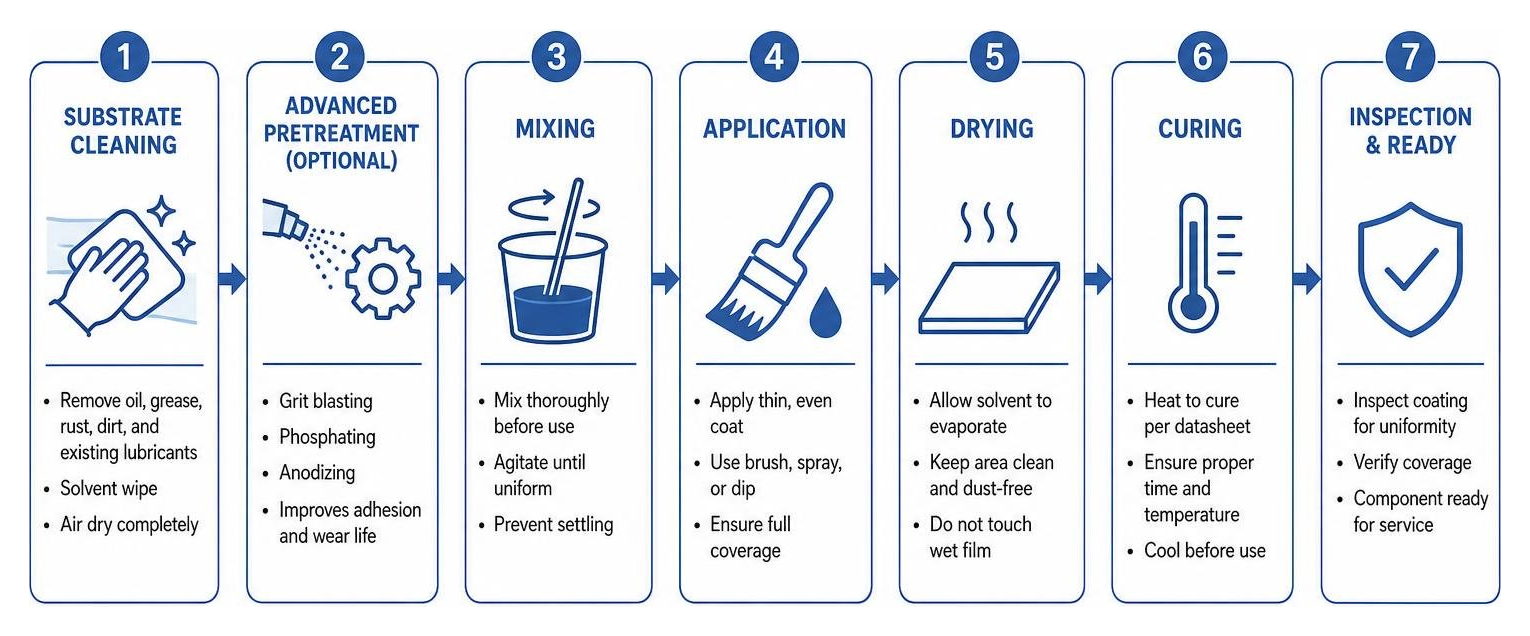
Achieving the high performance documented on a neolube datasheet requires proper surface preparation and application. If you apply Neolube over grease, moisture, or dirt, the graphite film will not bond correctly, leading to premature wear or flaking.
Surface Preparation and Application Methods
- Substrate Cleaning: All surfaces must be completely clean, dry, and free of oil, grease, rust, or existing lubricants. I recommend a thorough solvent wipe followed by air drying.
- Advanced Pretreatment: For critical, high-adhesion applications (such as military or naval components), mechanical or chemical pretreatments like grit blasting, phosphating, or anodizing can significantly increase the wear life of the cured film.
- Mixing: Before applying, mix the product thoroughly. Because Neolube consists of solid graphite particles suspended in a liquid carrier, some settling is natural over time. Agitate the container until the suspension is completely uniform.
- Application: Neolube can be applied via brush, spray, dip, or roller. For small parts or threaded fasteners, the convenient brush-in-cap packaging or a standard hand brush works perfectly. For large-scale industrial coatings, conventional spray equipment can be used to achieve an even, ultra-thin dry film thickness (typically 0.2 to 0.5 mil). If a thicker coat (e.g., 1 mil) is required, it is always better to apply multiple thin coats (drying for 5 minutes between coats) rather than one thick, heavy application.
Curing Times and Performance Optimization
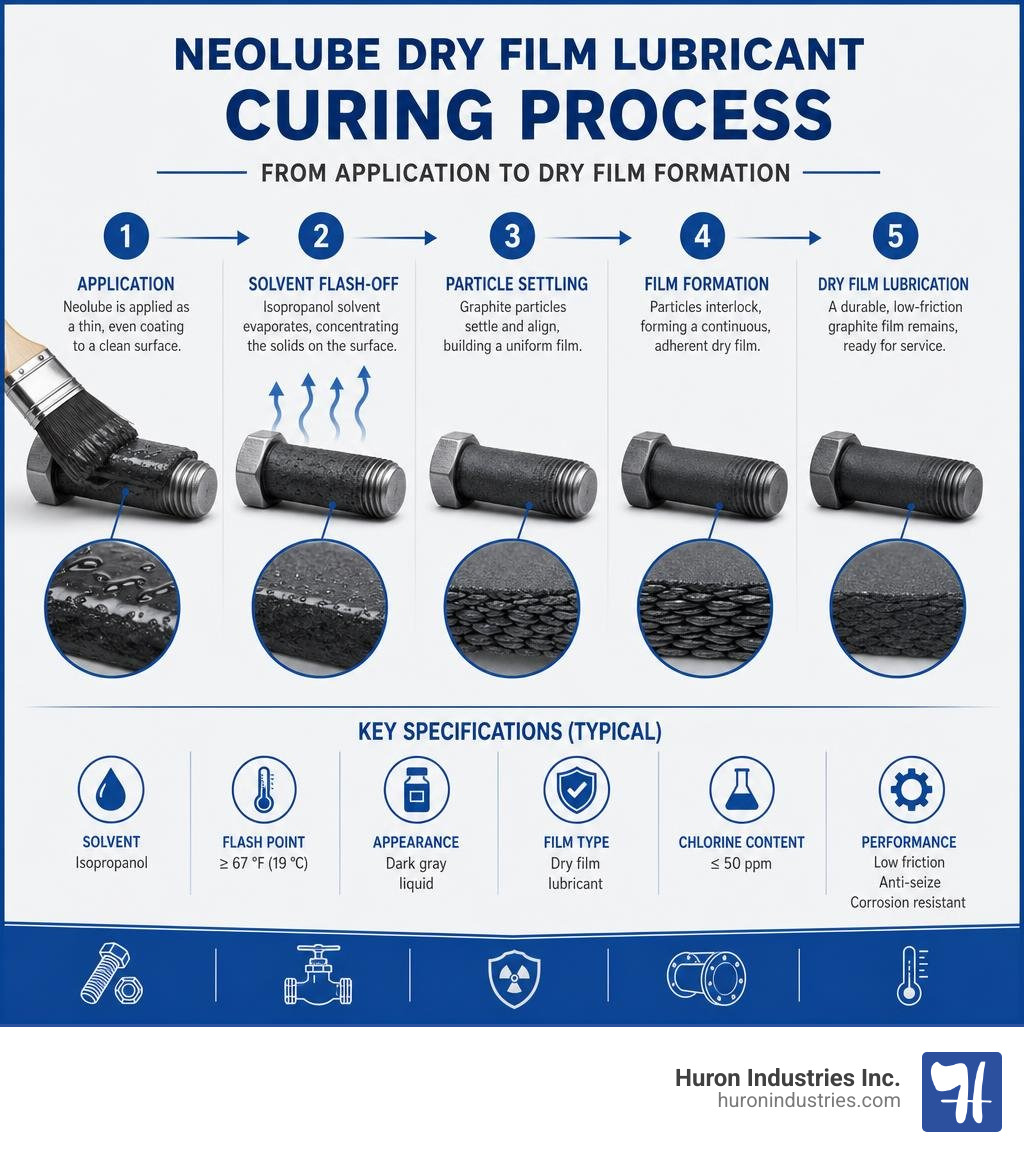
Neolube is designed to dry quickly at room temperature through the rapid evaporation of its isopropanol carrier:
- Neolube No. 1.1: Air dries to the touch in approximately 5 minutes.
- Neolube No. 2: Air dries to the touch in 5 minutes and is fully ready for service in 30 minutes.
- Performance Optimization: While Neolube No. 2 cures perfectly at room temperature, you can optimize its adhesion and structural durability by baking the coated part at 75°C (167°F) for 5 minutes after it has air-dried.
Always remember to tightly reseal the container immediately after use. Isopropanol evaporates quickly when exposed to air, which will alter the solids-to-liquid ratio of your remaining product. If dilution is necessary to restore consistency, use only pure isopropanol and mix thoroughly.
Safety Precautions, Hazard Classifications, and Storage
Because Neolube products are suspended in an isopropanol base, they are classified as highly flammable liquids.
- Flammability: Neolube No. 1.1 has a flash point of 52°F (11°C), and Neolube No. 2 has a flash point of 52°F (11.1°C). Standard safeguards for handling flammable materials must be strictly enforced. Keep the product away from heat, sparks, open flames, and hot surfaces.
- Ventilation and PPE: Always apply Neolube in a well-ventilated area. If you are spraying the product, local exhaust ventilation is highly recommended. Wear appropriate personal protective equipment (PPE), including chemical goggles and impervious gloves, to prevent skin and eye contact.
- Waste Disposal: If discarded in its unused liquid state, Neolube is classified as a hazardous waste under RCRA ignitable waste code D001 due to its flammability. Dispose of it in accordance with local, state, and federal environmental regulations.
- Storage and Shelf Life: Store Neolube in a cool, dry, and well-ventilated space at or below 90°F (32.2°C). Do not allow the product to freeze. One of the greatest advantages of Neolube No. 1.1 and No. 2 is that they have an unlimited shelf life when stored in their original, tightly sealed containers.
For complete regulatory, environmental, and first-aid data, always consult the official Safety Technical Datasheets library, including the Neolube No. 1.1 Lubricant Safety Datasheet and the Neolube No. 2 Lubricant Safety Datasheet.
Frequently Asked Questions about Neolube
As the digital voice for Huron Industries Inc., I regularly receive technical questions from procurement specialists and nuclear engineers. Here are the answers to the most common questions regarding our product line. For direct inquiries, you can always visit our main hub at Huron Industries: NEOLUBE® Industrial Sealant & Lubricant .
Is Neolube No. 1 still available for purchase?
No, Neolube No. 1 was officially discontinued in July 2024. While historical technical specifications and safety sheets remain online for engineering reference, all active operations and new procurement orders should transition to Neolube No. 1.1. Neolube No. 1.1 provides the exact same high-purity colloidal graphite performance and meets the same MIL-L-24131C specifications, making the transition seamless for naval and commercial nuclear facilities.
Can Neolube No. 100 be used on plastic pipes?
No, Neolube No. 100 is designed specifically for locking and sealing metal pipes and threaded fittings. It does not react well with certain plastics and can cause chemical degradation or structural failure in non-metallic piping. For plastic systems, always verify material compatibility or consult our technical support team for alternative sealing solutions.
Which Neolube products are suitable for reactor primary containment areas?
While Neolube No. 1.1 is excellent for auxiliary equipment and threaded parts throughout nuclear facilities, it is not recommended for reactor primary containment areas where operating temperatures regularly exceed 400°F (204°C).
For these extreme environments, we recommend Neolube No. 1260. It is a high-purity injectable sealant paste engineered specifically to withstand the severe temperatures, pressures, and intense radiation fields found within primary containment. For complete safety protocols, please download the Neolube No. 1260 SDS Safety Datasheet.
Conclusion
When you are operating in highly regulated, high-stakes environments, there is no room for guesswork. Having direct access to a verified neolube datasheet ensures that your team can maintain strict compliance, protect critical infrastructure from stress corrosion cracking, and prevent costly component seizing.
At Huron Industries Inc., we have been manufacturing and supplying certified, high-purity specialty graphite lubricants, thread sealants, and anti-seize compounds from our home in Port Huron, Michigan, since 1971. Whether you need a batch of Neolube No. 1.1 certified to MIL-L-24131C or want to explore our broader industrial product lines, we are here to support your operations.
To download official datasheets, request a Certificate of Quality Conformance, or connect with our technical support team, visit our official Neolube product portal today.