
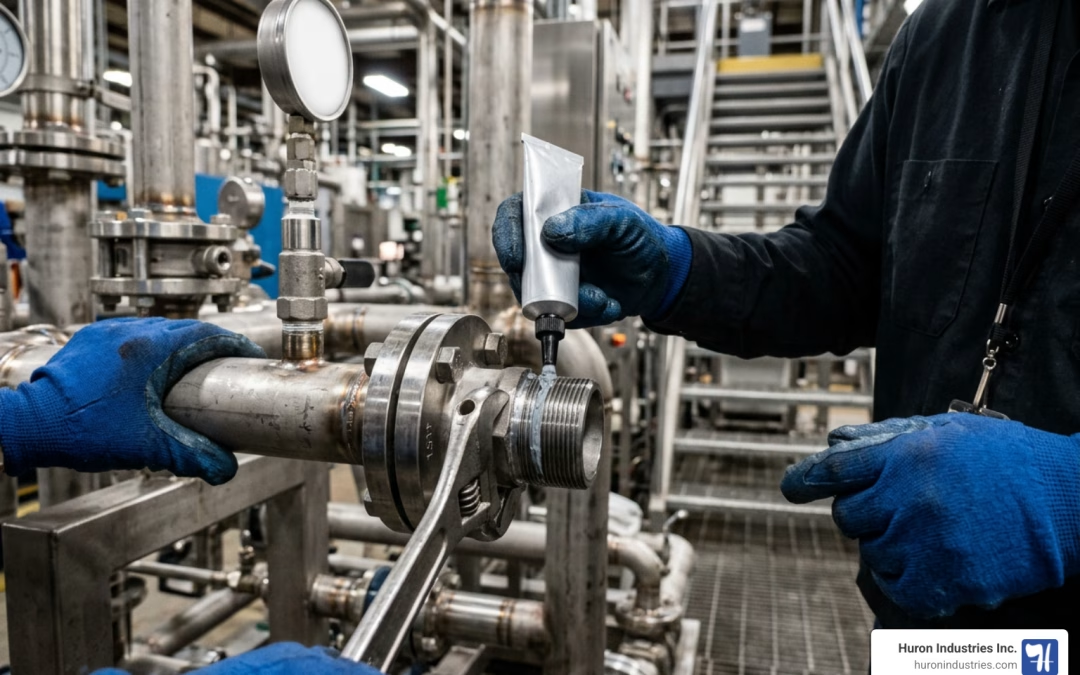
Why Trace Chemicals in Thread Sealants Can Destroy Sensitive Metal Piping
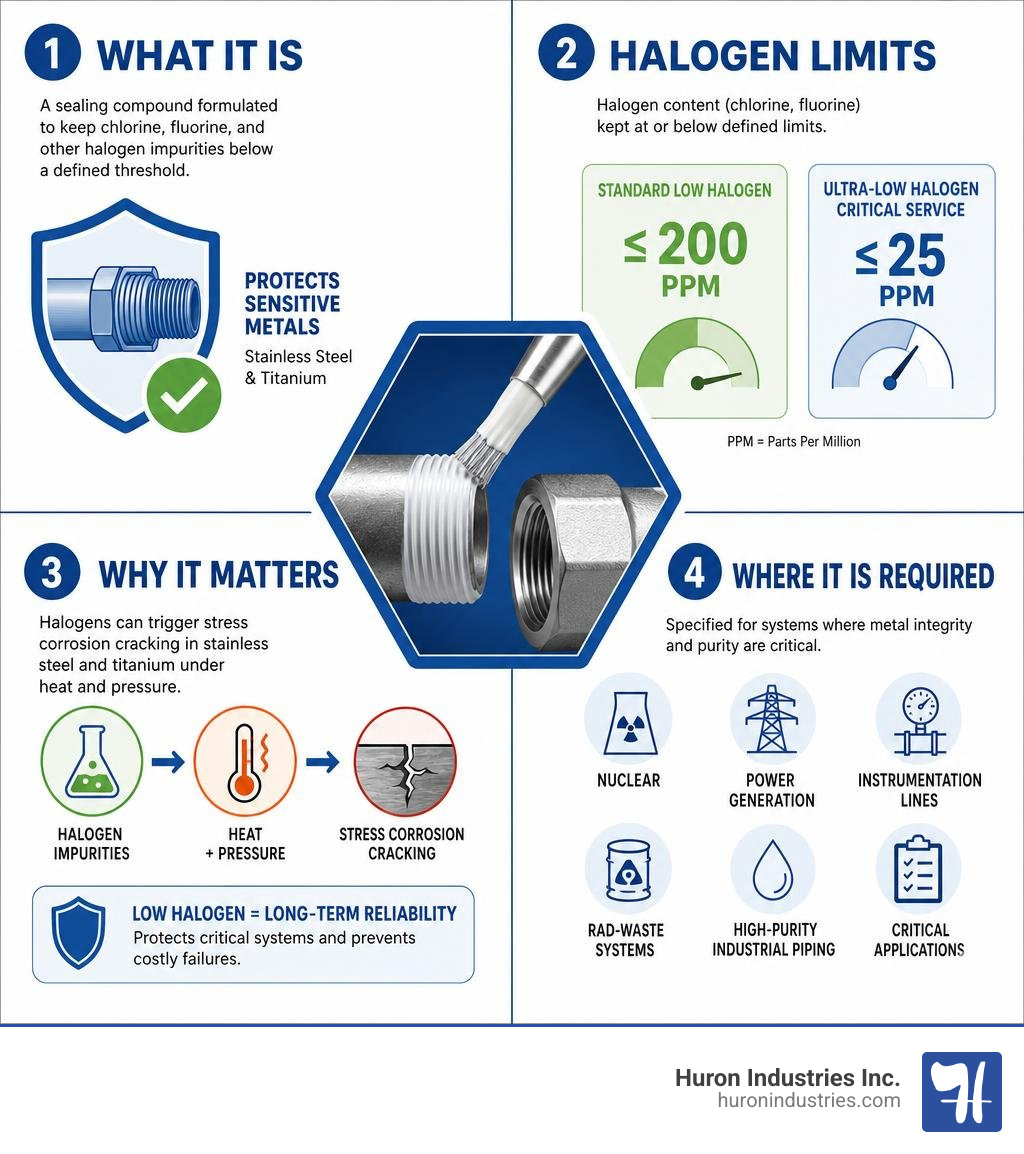
A low halogen thread sealant is a sealing compound formulated to keep chlorine, fluorine, and other halogen impurities below a defined threshold — typically 200 ppm or lower — to protect sensitive metals like stainless steel and titanium from stress corrosion cracking.
Here is a quick overview of what you need to know:
| Question | Short Answer |
|---|---|
| What does "low halogen" mean? | Halogen content (chlorine, fluorine) kept at or below 200 ppm — sometimes as low as 25 ppm for critical service |
| Why does it matter? | Halogens trigger stress corrosion cracking in stainless steel and titanium under heat and pressure |
| Where is it required? | Nuclear, power generation, instrumentation lines, rad-waste systems, high-purity industrial piping |
| Is it always necessary? | No — standard fittings in general plumbing or HVAC rarely require it |
| Key purity grades | Standard low halogen (≤200 ppm) vs. ultra-low halogen critical service (≤25 ppm) |
Most thread sealants on the market are built for general plumbing and industrial use. They work well. But in systems where stainless steel or titanium is under sustained stress and heat, even trace amounts of chlorine or fluorine can initiate microscopic cracking — cracking that is invisible until it becomes a failure.
That risk is why engineers at nuclear facilities, power plants, and high-purity process systems specify low halogen sealants by name, with documented purity data to back it up.
The problem is that the requirement sometimes travels further than it needs to. Legacy specifications carry forward old language. Procurement teams apply the requirement broadly. And the result is either an expensive over-spec on a routine fitting — or, worse, a gap where the actual critical joint gets a product that was never tested for it.
This guide cuts through that confusion. It explains when low halogen actually matters, what purity grade fits which application, and how to evaluate a sealant against the full service profile of the joint — not just a line in a spec sheet.
I'm Nicholas Cunha, founder of CreatiVertical and the content strategist behind Huron Industries' SEO and content program, where I work directly with their low halogen thread sealant product lines to translate complex purity and materials data into clear, technically accurate guidance for engineering and procurement buyers. Let's start with the fundamentals.
Low halogen thread sealant further reading:
What is a low halogen thread sealant and Why is it Specified?
To understand why a low halogen thread sealant is specified, you have to look at the chemistry of the metals we use to transport fluids under high pressure and temperature. When stainless steel or titanium is manufactured, it relies on a passive oxide layer to resist corrosion. However, when these metals are threaded, placed under mechanical stress, and exposed to heat, they become vulnerable to a specific type of degradation known as stress corrosion cracking (SCC).
Halogens—specifically chlorine and fluorine—are highly reactive non-metal elements. When trace halogens are present in a thread sealant, they can leach out under operating conditions. Once free, these halogen ions migrate into the micro-crevices of the threaded joint. Under the combined influence of tensile stress and elevated temperatures, the halogen ions attack the passive oxide layer of the metal, accelerating localized corrosion and causing microscopic cracks to propagate.
This is why industrial specifiers do not leave chemical impurities to chance. A designated low halogen sealant undergoes rigorous testing to guarantee that the total halogen content (and often sulfur content, which causes similar degradation in nickel alloys) is kept below strict thresholds. In standard high-purity industrial applications, this limit is typically set at a maximum of 200 parts per million (ppm). For the most demanding environments, such as nuclear reactor coolant loops, the threshold is pushed even lower, requiring ultra-low purity grades with total halogens under 25 ppm.
By enforcing these strict impurity controls, plant operators protect their capital-intensive piping infrastructure from catastrophic, unexpected failures. If you want to understand the exact scenarios where this chemical protection is non-negotiable, you can read more about Low-Halogen Thread Sealant When It Matters.
Critical Applications vs. Over-Specification Risks
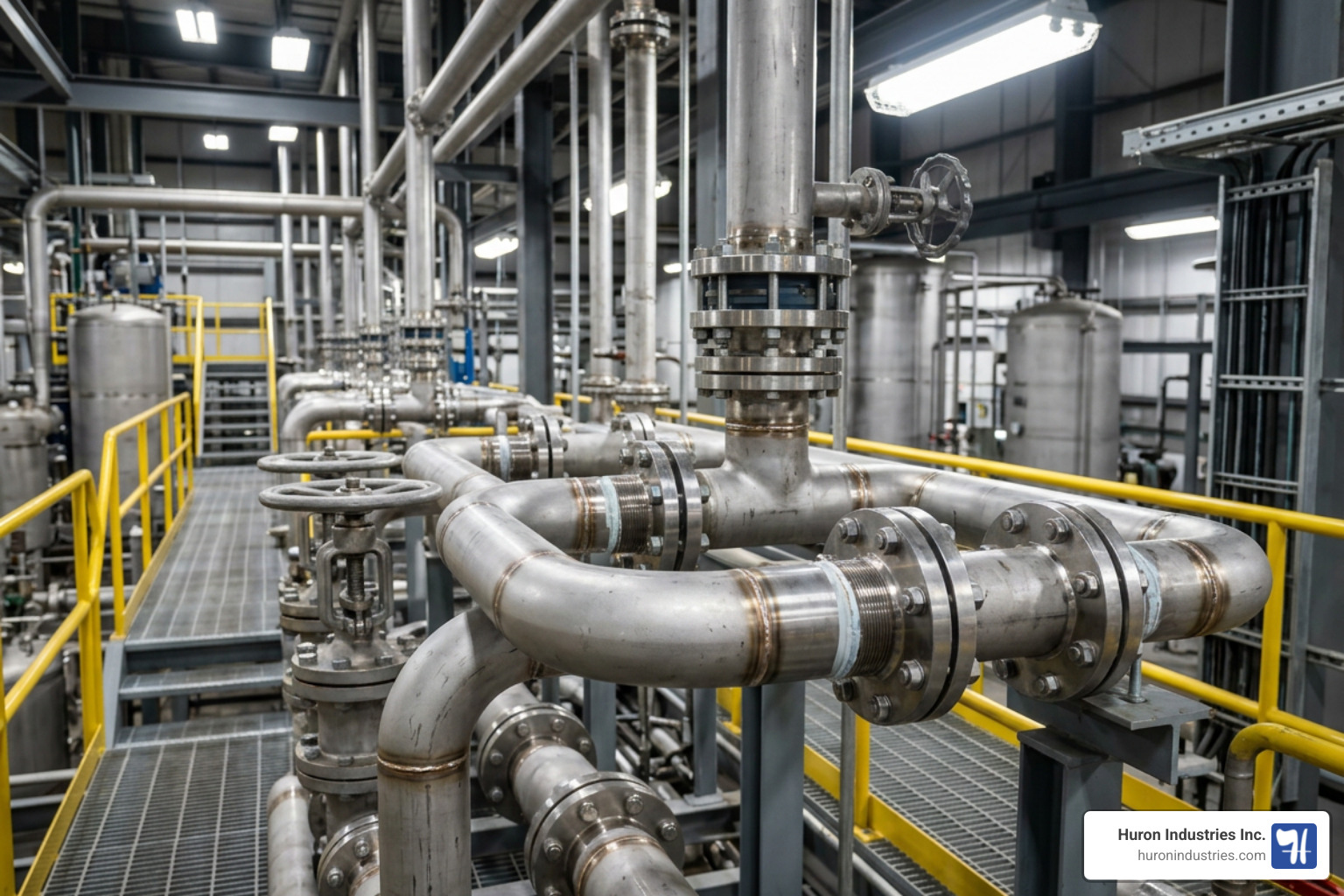
In my work analyzing technical specifications, I often see a recurring pattern: an engineer copy-pastes a piping specification from a previous high-consequence project into a routine commercial build. While this "safety-first" mentality is understandable, treating specialized low halogen requirements as a shortcut for general quality leads to unnecessary procurement hurdles, higher costs, and occasionally, compatibility issues with standard components.
Understanding where these products are genuinely required—versus where they are over-specified—is key to running an efficient, compliant operation. To see why major utility operators and engineering firms place such high trust in specialized formulations, take a look at Why Nuclear and Industrial Pros Trust Neolube 100 Thread Sealant.
When a low halogen thread sealant is Truly Necessary
There are several environments where using anything other than a certified low halogen compound is an unacceptable risk:
- Nuclear Power Generation: In both commercial and naval nuclear reactor systems, primary and secondary coolant loops operate under extreme pressures and temperatures. Any structural failure in these lines is a high-consequence event. Threaded connections in rad-waste processing systems, containment boundaries, and reactor auxiliary systems must utilize high-purity sealants to prevent SCC.
- Instrumentation Lines: Small-bore stainless steel tubing carries critical process data to control rooms. Because these lines have thin walls, even minor localized corrosion or cracking can cause a blowout, leading to lost instrumentation signals and emergency shutdowns.
- Electrical Conduits in Sensitive Areas: Threaded conduits housing critical safety and control wiring in corrosive or high-temperature zones require sealing to prevent moisture ingress without introducing halogen vapors that could degrade the wire insulation or the conduit itself over time.
- High-Temperature Steam and Coolant Systems: Steam lines operating at several hundred degrees accelerate the chemical reactions between halogens and stainless steel. For these environments, selecting a high-temperature, high-purity compound is vital. You can explore these demanding requirements further in our guide on High Temperature Thread Sealant Critical Service.
Avoiding the Pitfalls of Over-Specifying a low halogen thread sealant
While protecting critical systems is paramount, demanding low halogen certification for every stainless steel joint in a facility is a common over-specification trap.
For example, standard grade 304 or 316 stainless steel fittings used in low-temperature, low-pressure applications—such as standard municipal water lines, low-pressure utility air, or basic commercial HVAC systems—do not experience the combination of high tensile stress and thermal energy required to trigger stress corrosion cracking. In these scenarios, general-purpose industrial sealants are perfectly adequate and far more cost-effective.
Furthermore, over-specifying can lead to practical issues in the field. Some highly specialized low-purity sealants are designed to remain non-hardening for easy disassembly in regulated environments, which might not match the mechanical locking needs of a high-vibration, low-temperature pump assembly. Balancing these properties is essential; you can read about the functional trade-offs in our analysis of Non-Hardening vs Hard-Setting Thread Sealant Neolube.
Key Selection Criteria for Spec Reviewers

If you are tasked with reviewing and approving a thread sealant for a project, you should never evaluate the low halogen requirement in isolation. I recommend verifying the following parameters before signing off on a submittal:
- Actual Operating Temperature: Ensure the sealant’s continuous service limit exceeds your system's peak operating temperature.
- System Pressure: Verify if the joint must withstand high hydraulic pressures or gas pressures, and match it to the sealant's rated capacity.
- Chemical and Media Compatibility: Ensure the sealant chemistry is compatible with the fluid flowing through the pipe (e.g., avoiding petroleum-based compounds in oxygen-rich or strong acid systems).
- Substrate Material: Confirm whether you are sealing active metals (like copper or brass), inactive metals (like stainless steel or titanium), or plastics, as this dictates whether the sealant will cure or cause material degradation.
To browse our full range of certified high-purity and industrial-grade options, visit the Thread Sealant Category on our site.
Comparing High-Purity Sealants to General-Purpose Compounds
To help you visualize where different sealing technologies fit, I have compiled a technical comparison of high-purity colloidal graphite formulas, standard commercial plumbing compounds, PTFE tapes, and specialized anaerobic sealants.
| Sealant Type | Typical Halogen Content | Max Temperature | Max Pressure | Best Substrates | Primary Risks / Limitations |
|---|---|---|---|---|---|
| Colloidal Graphite (e.g., Neolube No. 100) | ≤ 200 ppm (Chlorine ≤ 200 ppm) | 300°F (149°C) | Moderate | Stainless Steel, Titanium, Alloys | Not for high-pressure gas lines without mechanical backing |
| Ultra-High Purity Graphite (e.g., Neolube No. 1260) | < 25 ppm | 1175°F (635°C) | 2,300 psi (16 MPa) | Stainless Steel, Nickel Alloys, Titanium | Specialized application, higher initial cost |
| Anaerobic Low-Halogen (e.g., LOCTITE 5772 / 580) | ≤ 200 ppm (Chlorine & Sulfur) | 300°F (149°C) | 10,000 psi (69 MPa) | Active & Inactive Metals (Requires primer on inactive) | May cause stress cracking on thermoplastics; requires absence of air to cure |
| General-Purpose Compound (e.g., RectorSeal No. 5) | Not Certified / Untested | 400°F (204°C) | 12,000 psi (liq) / 2,600 psi (gas) | Steel, Brass, Copper, PVC | High halogen risk on sensitive metals; contains volatiles |
| Kevlar-Reinforced Paste (e.g., Oatey MEGALOC) | Not Certified / Untested | 400°F (204°C) | 12,000 psi (liq) / 2,600 psi (gas) | Metals, PVC, CPVC, ABS | No halogen controls; not compatible with ketones or oxygen |
| PTFE Sealing Tape (e.g., LOCTITE PTFE Tape) | High Fluorine (inherent to PTFE) | 500°F (260°C) | System Dependent | All Pipe Materials | Fluorine content can contribute to SCC; tape shredding can clog valves |
When choosing between liquid compounds and dry tapes, it is important to weigh the mechanical and chemical differences carefully. For a deeper breakdown of these differences, check out our guide on Pipe Thread Sealant vs. PTFE Tape.
Colloidal Graphite vs. PTFE and Standard Thread Sealants
For high-consequence industries, colloidal graphite-based sealants offer unique advantages over PTFE tapes and general-purpose pastes.
First, let's address the chemistry. PTFE (Polytetrafluoroethylene) is inherently composed of carbon and fluorine. While it is highly chemical-resistant, in ultra-high-temperature environments, PTFE can thermally degrade, releasing free fluorine ions directly onto the metal threads. This makes standard PTFE tapes a hidden risk in critical stainless steel systems. Furthermore, tape has a tendency to shred during joint assembly, sending loose plastic fibers downstream where they can clog delicate instrumentation orifices or jam control valves.
In contrast, high-purity colloidal graphite formulas—such as those found in our Neolube Brand products—contain no PTFE. They rely on pure, fine-structured graphite suspended in a volatile carrier that evaporates after application, leaving a dry, high-purity carbon barrier. This barrier provides excellent lubrication to prevent galling during assembly while ensuring a reliable seal.
Compared to general-purpose plumbing pastes like those found in RectorSeal Pipe Thread Sealant Solutions , which contain various oils, fillers, and solvents of uncertified purity, colloidal graphite sealants are manufactured in tightly controlled batches to guarantee consistent, low-impurity performance. They are non-hardening, meaning they will not bake onto the threads or become brittle over time. This makes future non-destructive disassembly simple, even after years of service in hot, demanding environments.
For more details on how to select the right grade of graphite sealant for your specific piping configuration, refer to The Best Neolube® Pipe Thread Sealant To Use .
Frequently Asked Questions about Low Halogen Sealants
Can low halogen sealants prevent galling on stainless steel and titanium threads?
Yes, preventing galling is one of the secondary but crucial functions of a high-quality low halogen thread sealant. Stainless steel and titanium are notorious for "galling"—a form of adhesive wear where the mating threads cold-weld together under the friction of assembly. Once a joint galls, it is virtually impossible to tighten correctly or disassemble without destroying the fittings.
High-purity colloidal graphite sealants provide a robust physical lubrication barrier between the metal surfaces. Because graphite has a layered crystal structure, the layers slide easily over one another, reducing friction during joint makeup. This allows installers to achieve the correct torque and a leak-free seal without risk of thread tearing, ensuring the joint can be disassembled cleanly years later.
What are the differences between standard and ultra-low halogen purity grades?
The difference comes down to the strictness of the chemical limits and the criticality of the application:
- Standard Low Halogen (≤200 ppm): This grade is typical for high-end industrial piping, fossil fuel plants, and solar installations. Products in this category, like our classic Neolube No. 100, limit halogens and chlorine to 200 ppm maximum. They offer excellent protection for standard stainless steel piping systems operating at moderate temperatures.
- Ultra-Low Halogen / Critical Service (<25 ppm): Designed for the nuclear industry and aerospace applications, this ultra-pure grade restricts total halogens to under 25 ppm. For example, Neolube No. 1260 is engineered to meet these extreme purity demands, maintaining its integrity at temperatures up to 1175°F (635°C) and pressures up to 2300 psi (16 MPa). It is specified for critical reactor coolant loops where even 200 ppm of halogens is considered too high a risk.
Why do halogens cause stress corrosion cracking in stainless steel?
Stress corrosion cracking (SCC) requires three simultaneous conditions: a susceptible material (like austenitic stainless steel), tensile stress (from thread tightening and system pressure), and an aggressive chemical environment (the presence of halogen ions).
When chlorine or fluorine ions come into contact with stainless steel under these conditions, they penetrate the microscopic flaws in the metal's protective chromium oxide layer. The halogens react with the underlying iron and nickel, forming highly soluble metal halides. This localized chemical attack creates a microscopic pit.
Because the joint is under tensile stress, the mechanical forces concentrate at the tip of this tiny pit, pulling the metal apart and exposing fresh, unpassivated metal to further halogen attack. This cycle of chemical corrosion and mechanical stress propagation causes rapid, branching cracks to tear through the metal structure, eventually leading to sudden joint failure.
Conclusion
When you are managing high-purity piping systems, the thread sealant you choose is much more than a simple leak preventative—it is a critical component of your system's material preservation strategy. Choosing a certified low halogen thread sealant protects your stainless steel and titanium assets from the hidden threat of stress corrosion cracking, avoiding costly unscheduled downtime and hazardous leaks.
At Huron Industries Inc., based in Port Huron, Michigan, we have dedicated over 50 years to perfecting high-purity, high-performance sealing solutions. Our flagship Neolube® colloidal graphite line is qualified to the stringent MIL-L-24131C standard and is trusted by commercial nuclear plants and naval reactor facilities across the United States.
Whether you need a reliable, non-hardening sealant for standard low-halogen applications or an ultra-pure compound for high-temperature critical service, we have the certified products to meet your specifications.
To secure the highest level of protection for your next project, you can Shop Neolube No. 100 directly, explore our full Thread Sealant Category catalog, or contact our engineering team to discuss your custom application needs.
For alternative commercial and specialized formulations, you can also explore options like SONLOK® Thread Sealants , Loctite 88565 580 PST Thread Sealant, Low Halogen/ ... , or Loctite 580 PST Low Halogen, Low Sulfur Thread Sealant, 58031, 50 mL ... to find the exact match for your project requirements.