
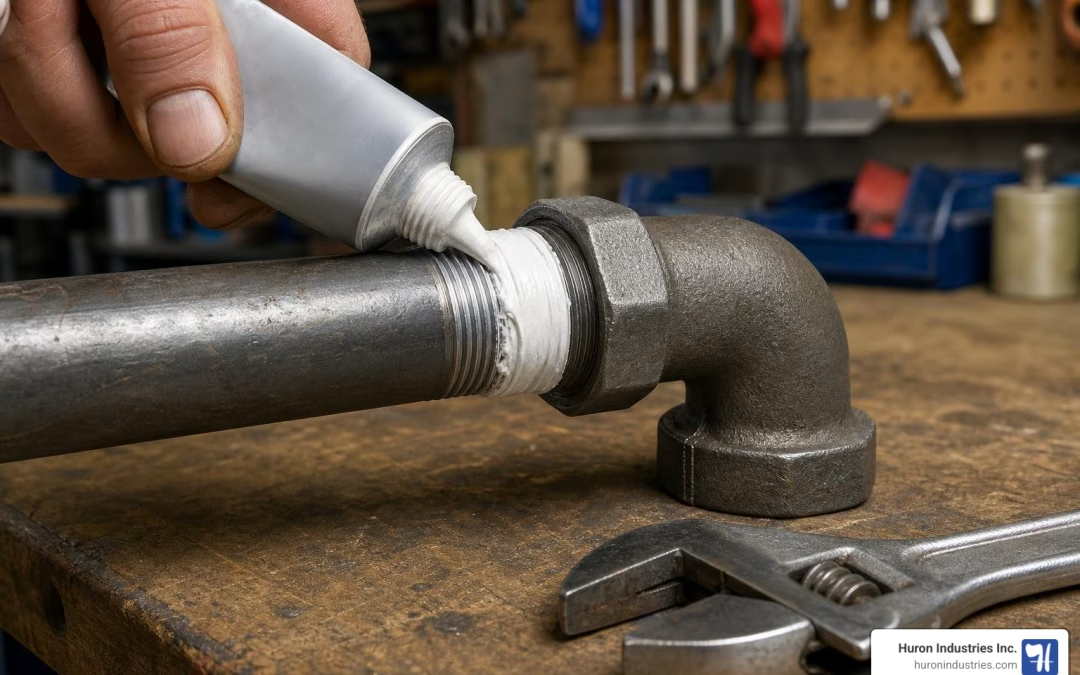
Why Formula 8 PTFE Thread Sealant Outperforms the Tape in Critical Systems
Formula 8 PTFE thread sealant is a shear-sensitive thixotropic paste that seals threaded joints across a wide range of gases, liquids, and vacuum systems — without the shredding, cold flow, or valve-clogging problems that come with standard PTFE tape.
Here's a quick snapshot of what it delivers:
| Feature | Formula 8 PTFE Thread Sealant |
|---|---|
| Temperature range | -400°F to +500°F (-240°C to +260°C) |
| Max pressure | Up to 10,000 psi |
| Vacuum rating | 10⁻³ Torr |
| Cure time | Zero (immediate service) |
| Oxygen safe | Yes — BAM and ASTM G86 certified |
| Food safe | Yes — NSF approved |
| Aqueous use | No — non-aqueous conditions only |
| Available sizes | 15 g, 100 g, 650 g |
If you're evaluating a PTFE thread sealant for a demanding application — oxygen systems, cryogenics, hydraulics, or precision instrumentation — Formula 8 is worth a close look.
Standard PTFE tape has been the go-to for decades. But in high-stakes environments, it has a real problem: it shreds.
Tape fragments can break loose during assembly and migrate downstream, jamming check valves, clogging pumps, and contaminating sensitive equipment. On fine threads — the kind found in sensors, instruments, and bottled gas valves — tape is often physically difficult or impossible to apply cleanly.
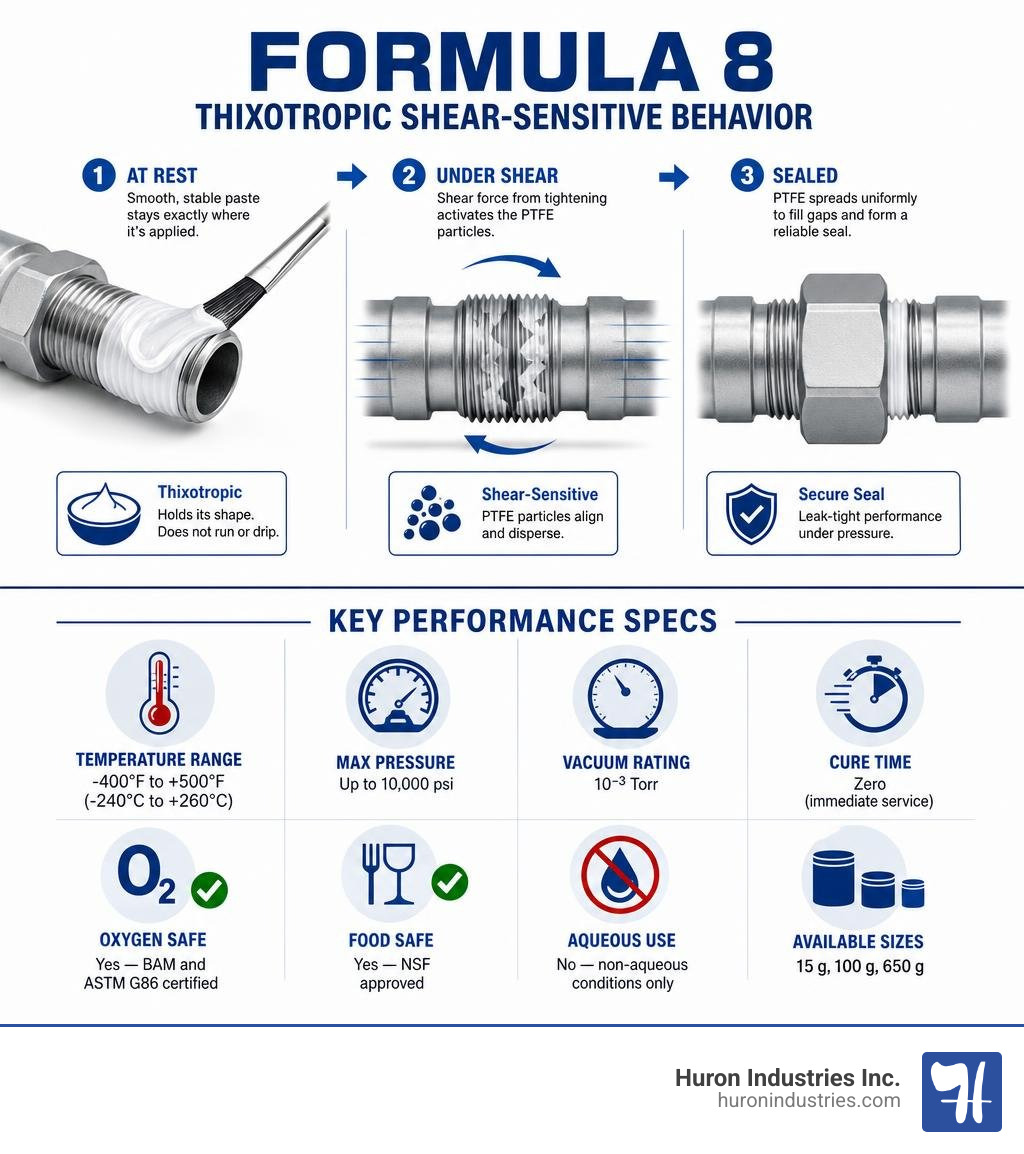
Formula 8 solves this differently. It's a paste that stays put until you torque the joint. At that point, the shear force activates the PTFE dispersion, spreading it evenly across the entire thread length and forming a reliable seal. No shredding. No cold flow over time. No dislodging during assembly.
In July 2026, with tightening regulatory requirements across nuclear, aerospace, food processing, and industrial gas sectors, the certifications behind a thread sealant matter as much as its physical performance. Formula 8 carries both.
I'm Nicholas Cunha, founder of CreatiVertical and the content strategist behind Huron Industries' digital program, where I work directly with their Formula 8 PTFE thread sealant and specialty lubricant product lines to translate complex technical specs into clear, sourced information for engineering and procurement buyers. In this review, I'll break down exactly how Formula 8 works, where it performs best, and how to apply it correctly.
What is Formula 8 PTFE Thread Sealant and How Does It Work?
To truly appreciate formula 8 ptfe thread sealant, you have to look at how it behaves under mechanical stress. Traditional pipe dopes are either solvent-based liquids that dry hard or sticky greases that can migrate under pressure. Formula 8 is engineered as a shear-sensitive, thixotropic paste.
In its static state, Formula 8 is a thick, highly viscous paste that stays exactly where you put it. It will not run, drip, or migrate out of the threads during pre-assembly. However, when you apply torque to assemble the joint, the material undergoes a physical transformation. Under the shear stress of the turning threads, the paste "sheets out" and flows aggressively into the microscopic valleys of the metal or plastic substrate. It behaves like a liquid when worked, but once the motion stops, it locks back into a highly stable, non-hardening, non-shrinking seal.
During assembly, the shear action causes the PTFE dispersion to form highly cohesive, micro-fine PTFE strings that pack the thread tolerances. Because it is non-hardening, it remains pliable indefinitely. It does not cure like anaerobic sealants, meaning it will never crack, shrink, or crumble under vibration. This physical properties profile is why the sealant is highly regarded in heavy industries, as detailed in its product profile on Formula-8 on Railway Technology.
Key Performance Specifications of Formula 8 PTFE Thread Sealant
The performance limits of Formula 8 allow it to thrive where standard hardware-store thread sealants fail. The compound is stable across an incredibly wide thermal envelope, maintaining its physical properties from cryogenic temperatures of -400°F (-240°C) all the way up to +500°F (+260°C). Under certain conditions, it is stable up to 287°C (+550°F).
When it comes to pressure, Formula 8 is stable up to 3,500 psi in standard gas cylinder applications and can withstand pressures up to 10,000 psi in fuel and hydraulic systems. On the opposite end of the spectrum, it is highly effective in vacuum services, maintaining seal integrity down to 10⁻³ Torr.
Safety and compliance certifications are where Formula 8 really shines. It has been rigorously tested and certified for oxygen service by BAM (The German Federal Institute for Materials Testing) and meets ASTM G72-82 and ASTM G86 standards. Additionally, it is NSF-approved for use in food processing and handling facilities where incidental food contact might occur.
| Operating Environment | Specification / Limit | Certification / Standard |
|---|---|---|
| Extreme Cryogenic | -400°F (-240°C) | Industry Standard |
| High Temperature | +500°F to +550°F (+260°C to +287°C) | ASTM Thermal Stability |
| High Pressure (Gases) | Up to 3,500 psi | BAM Tested |
| High Pressure (Hydraulics/Fuels) | Up to 10,000 psi | High-Pressure Hydraulic Standard |
| Vacuum Systems | 10⁻³ Torr | Vacuum Service Rating |
| Gaseous/Liquid Oxygen | Approved for Oxygen Systems | BAM, ASTM G72-82, ASTM G86 |
| Food Processing | NSF Approved | NSF H1/P1 Food-Grade |
How Formula 8 PTFE Thread Sealant Compares to Traditional PTFE Tape
When evaluating thread sealants, many technicians default to standard PTFE tape. While tape is cheap, it has inherent mechanical limitations. The most notable is "cold flow." Because PTFE tape is a solid film wrapped under tension, it slowly deforms and creeps out of the thread path over time under the influence of continuous pressure and thermal cycling. This leads to slow, insidious leaks.
Furthermore, wrapping tape around fine threads—such as those on 1/8-inch or 1/4-inch instrumentation fittings, sensors, and miniature valves—is incredibly tedious. If the tape is wrapped too close to the end of the fitting, the first thread can shear off a piece of the tape during assembly. This loose thread fragment then migrates into the fluid or gas stream, where it can easily jam check valves, clog regulator orifices, or destroy sensitive pumps.
Formula 8 completely eliminates these risks. As a thixotropic paste, it wets the threads immediately and cannot be accidentally dislodged or sheared off into the flow path. It seals the entire thread length on any size and length of fitting, making it the perfect tape-free solution for hard-to-reach places. To dive deeper into how liquid pastes stack up against physical tapes, check out our comprehensive guide on Pipe Thread Sealant vs PTFE Tape.
Industrial Applications and Chemical Compatibility
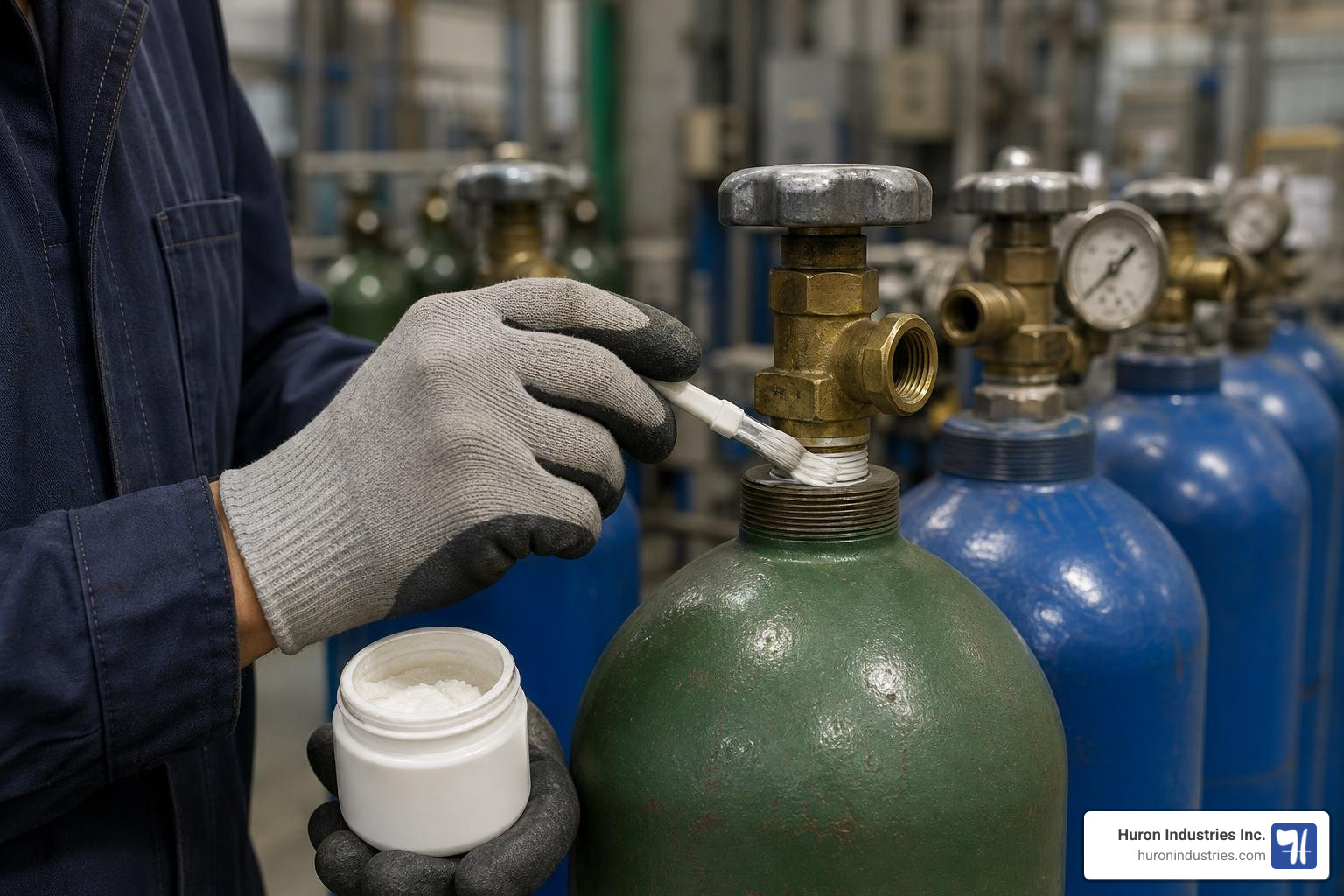
Formula 8's unique physical properties and robust certifications make it a staple across several critical industries. In aerospace and medical fields, it is widely used to seal high-pressure oxygen delivery lines and bottled gas valves where hydrocarbon contamination could lead to spontaneous combustion. In heavy industrial environments, it is the primary choice for sealing hydraulic cylinders, fuel lines, and high-vibration pneumatic systems.
For maintenance and engineering teams managing complex fluid power systems, selecting a sealant that won't degrade under chemical exposure is paramount. For more on this, explore our dedicated resource on Thread Sealant for Hydraulic Fittings and Compressor Lines.
Oxygen Systems and Cryogenic Applications
Sealing systems that carry pure liquid or gaseous oxygen is one of the most hazardous tasks in industrial piping. Hydrocarbons (such as those found in standard petroleum-based pipe dopes) can react violently with oxygen, leading to spontaneous ignition and catastrophic explosions. Formula 8 is completely hydrocarbon-free and chemically inert, making it completely safe for oxygen service.
Its safety is backed by stringent testing. During the ASTM G86 oxygen impact test, Formula 8 recorded zero reactions out of 20 samples at a pressure of 3,015 psi and an impact energy of 72 ft-lbs. Under BAM gaseous oxygen testing, it is rated safe for use up to 2,320 psi (160 bar) in paste form and 435 psi (30 bar) when dried.
In cryogenic applications—such as liquid nitrogen, liquid argon, or liquefied natural gas (LNG) lines—standard sealants become extremely brittle and crack under the intense cold. Formula 8 remains stable and non-brittle down to -400°F, ensuring joint integrity through extreme thermal transitions. If you are dealing with high-temperature thermal cycling alongside extreme cold, you can read more about critical service sealants in our guide on High Temperature Thread Sealant Critical Service.
Substrate Compatibility and Chemical Resistance
Formula 8 is compatible with a vast array of piping substrates and chemical media. It can be safely applied to:
- Metals: Stainless steel, carbon steel, brass, copper, and bronze.
- Plastics: Rigid PVC, CPVC, ABS, and Kynar PVDF.
On stainless steel, Formula 8 acts as an excellent anti-galling agent. Stainless steel threads are notoriously prone to galling (cold welding) during assembly due to their protective oxide layer. Because Formula 8 is packed with sub-micron PTFE particles, it lubricates the threads during assembly, ensuring smooth torquing and easy disassembly years down the road without damaging the metal.
Chemically, Formula 8 is highly resistant to diesel fuel, liquid propane gas (LPG), natural gas, gasoline, kerosene, and most industrial solvents. However, it should not be used in systems containing strong alkalis. To understand how non-hardening pastes like Formula 8 compare to hard-setting alternatives, refer to our technical breakdown on Non-Hardening vs Hard-Setting Thread Sealant.
Formula-8 vs. LOX-8: Choosing the Right Sealant
While both Formula 8 and LOX-8 are manufactured as high-performance, oxygen-safe PTFE sealants, they are engineered for distinctly different operating environments.
The primary difference lies in their water solubility:
- Formula 8 is a water-based PTFE dispersion. It is strictly formulated for non-aqueous (dry) conditions. If used in piping systems that carry water, steam, or aqueous chemical solutions, Formula 8 will slowly dissolve and wash out of the threads, resulting in joint failure.
- LOX-8, on the other hand, is a PCTFE/PTFE-based dispersion that is completely waterproof and highly resistant to aggressive wet chemicals (including chlorine, nitric acid, and powerful oxidizers). It is designed for both wet and dry conditions.
If you are sealing dry gas lines, oxygen cylinders, vacuum systems, or fuel lines, Formula 8 is the ideal, cost-effective choice. If your system involves water, steam, or corrosive aqueous chemicals, you should opt for LOX-8 or similar high-pressure alternatives. To learn more about high-pressure sealing options, view our article on High Pressure Thread Sealant 2300 PSI.
Proper Application Method and Storage Guidelines
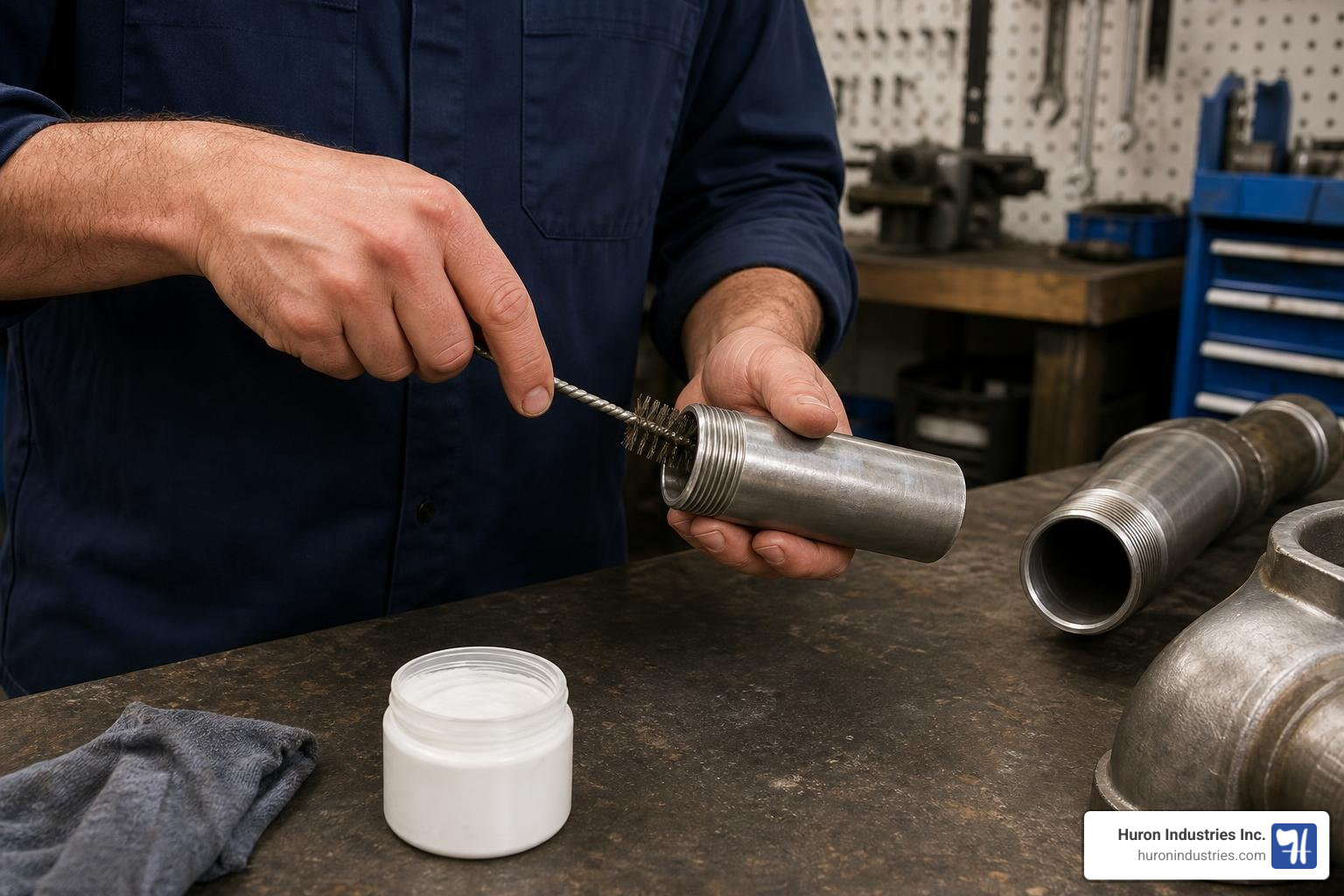
Like any high-performance industrial compound, the reliability of Formula 8 is heavily dependent on proper surface preparation and application. Applying sealant over dirty, oily, or wet threads will compromise its ability to wet the substrate and form a cohesive seal. For general pipe thread sealing best practices, you can review our main resource on Pipe Thread Sealant.
Step-by-Step Application and Drying Time
To achieve a fail-safe seal with Formula 8, I recommend following this step-by-step procedure:
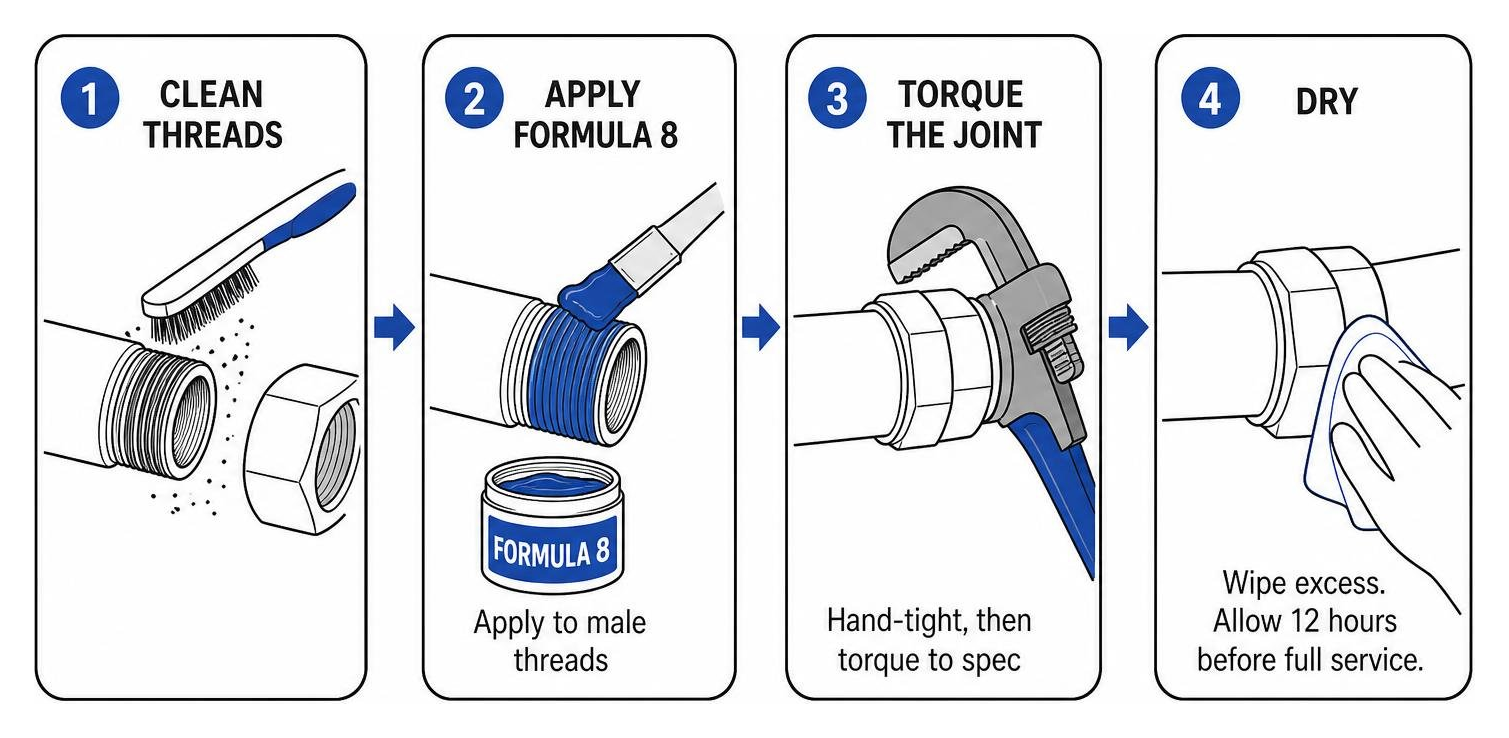
- Clean the Threads: Use a brass or stainless steel wire brush to remove any old sealant, dirt, rust, or metal shavings from both the male and female threads.
- Degrease the Surfaces: Wipe down the threads with a clean, lint-free cloth soaked in acetone or a fast-evaporating solvent. Ensure the threads are completely dry and free of residual oils.
- Apply the Paste: Apply Formula 8 liberally to the male threads, starting one to two threads back from the end of the fitting. This prevents excess paste from being pushed into the flow path. Ensure the paste is pressed into the root of the threads.
- Assemble and Torque: Thread the joint together by hand, then tighten to the manufacturer's recommended torque specifications using standard pipe tools. Do not over-tighten, especially on plastic or PVC fittings, as this can crack the material.
- Wipe Excess and Dry: Wipe away any excess paste squeezed out during assembly. While the system can be pressurized immediately for low-pressure gas services (as it has zero cure time), it is highly recommended to allow a 12-hour drying time before returning the system to full high-pressure or critical service.
For more information on selecting the right sealant for your specific pipe configurations, browse our full inventory under Thread Sealant.
Storage, Handling, and Shelf-Life Requirements
Formula 8 is a non-hazardous, non-flammable mixture with no flash point and contains zero OSHA-reportable hazardous ingredients. However, because it is a water-based dispersion, it requires specific storage conditions to maintain its physical stability:
- Store Upside Down: Always store the tube or jar upside down. This prevents the PTFE solids from settling and ensures the paste maintains its thixotropic consistency.
- Keep From Freezing: Formula 8 is freeze-sensitive in its paste state. It must be stored in a tightly closed container at temperatures above 0°C (32°F). If frozen, the emulsion can break, rendering the product unusable.
- Low VOC Compliance: Formula 8 has an incredibly low VOC content of 1.1% in paste form (and 0.0% once dried, per EPA Test 24), making it compliant with the strictest environmental regulations.
For procurement and inventory management, you can easily source the popular 100-gram tube size by visiting the Formula 8 100 Gram Sealant product page.
Frequently Asked Questions about Formula-8
Can Formula-8 be used in wet or aqueous environments?
No. Formula 8 is formulated with a water-soluble carrier and is strictly designed for non-aqueous (dry) conditions. If exposed to water, steam, or moisture-rich environments, the sealant will dissolve and wash away over time, resulting in leaks. For wet or steam applications, LOX-8 or another waterproof sealant must be used.
Does Formula-8 require any curing time before system startup?
Formula 8 does not require a chemical cure to seal. For low-pressure gas, fuel, or vacuum systems, you can pressurize and return the system to service immediately after assembly. However, for high-pressure systems (up to 10,000 psi) or critical chemical lines, it is best practice to allow the sealant to dry for 12 hours to achieve maximum seal density and stability.
What packaging sizes are available for Formula-8?
Formula 8 is available in three convenient sizes to suit different application scales:
- 15 gram (0.52 oz) tube: Perfect for field service kits, instrument calibration, and small-scale maintenance.
- 100 gram (3.52 oz) tube: The standard industrial size, which now features an improved application tip for precise dispensing on fine threads.
- 650 gram (22.9 oz) jar: Ideal for high-volume production lines and heavy-duty shop environments.
Conclusion
When it comes to securing critical, high-pressure, and oxygen-safe threaded connections, relying on standard PTFE tape is a risk your system doesn't need to take. Formula 8 PTFE thread sealant provides a superior, non-clogging, thixotropic paste alternative that delivers immediate sealing across a massive temperature and pressure envelope.
Since 1971, Huron Industries Inc. has been trusted to deliver high-purity, certified specialty lubricants and sealants to the most demanding nuclear, naval, and industrial operations in the United States and globally. Operating from our state-of-the-art facilities in Port Huron, Michigan, we ensure our products meet the rigorous, high-stakes standards of July 2026 and beyond.
If you are ready to upgrade your system's reliability, eliminate tape shredding, and protect your critical valves and sensors, Explore Huron Industries Pipe Thread Sealants today to find the perfect certified sealing solution for your operation.