
What Is Graphite Powder 5 Micron — and Why Does Particle Size Matter?
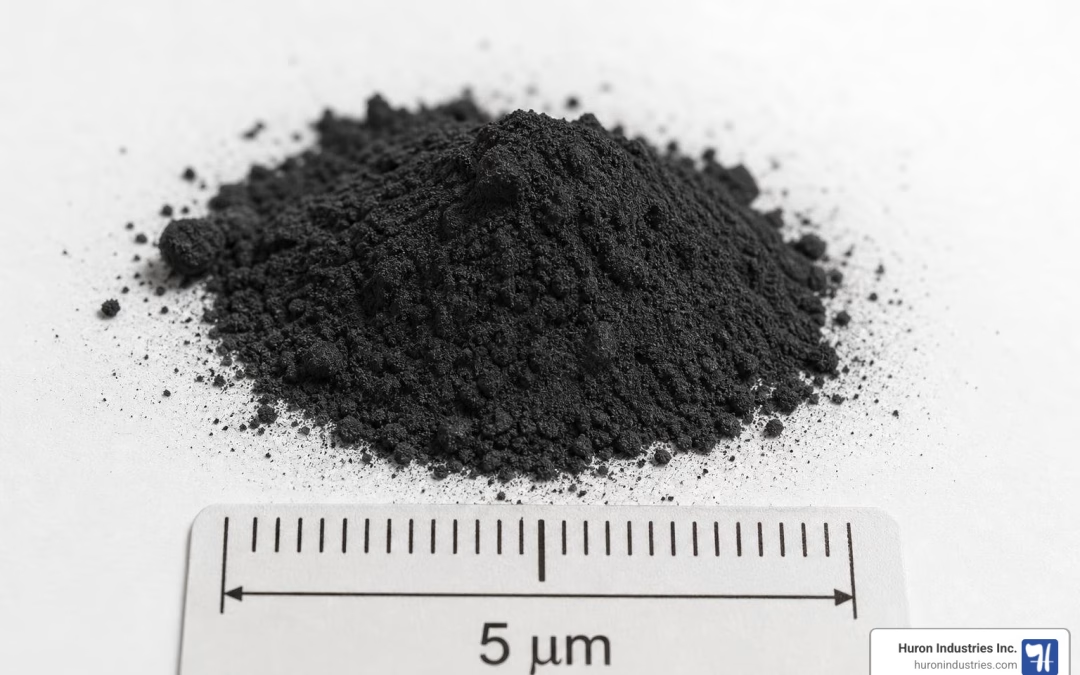
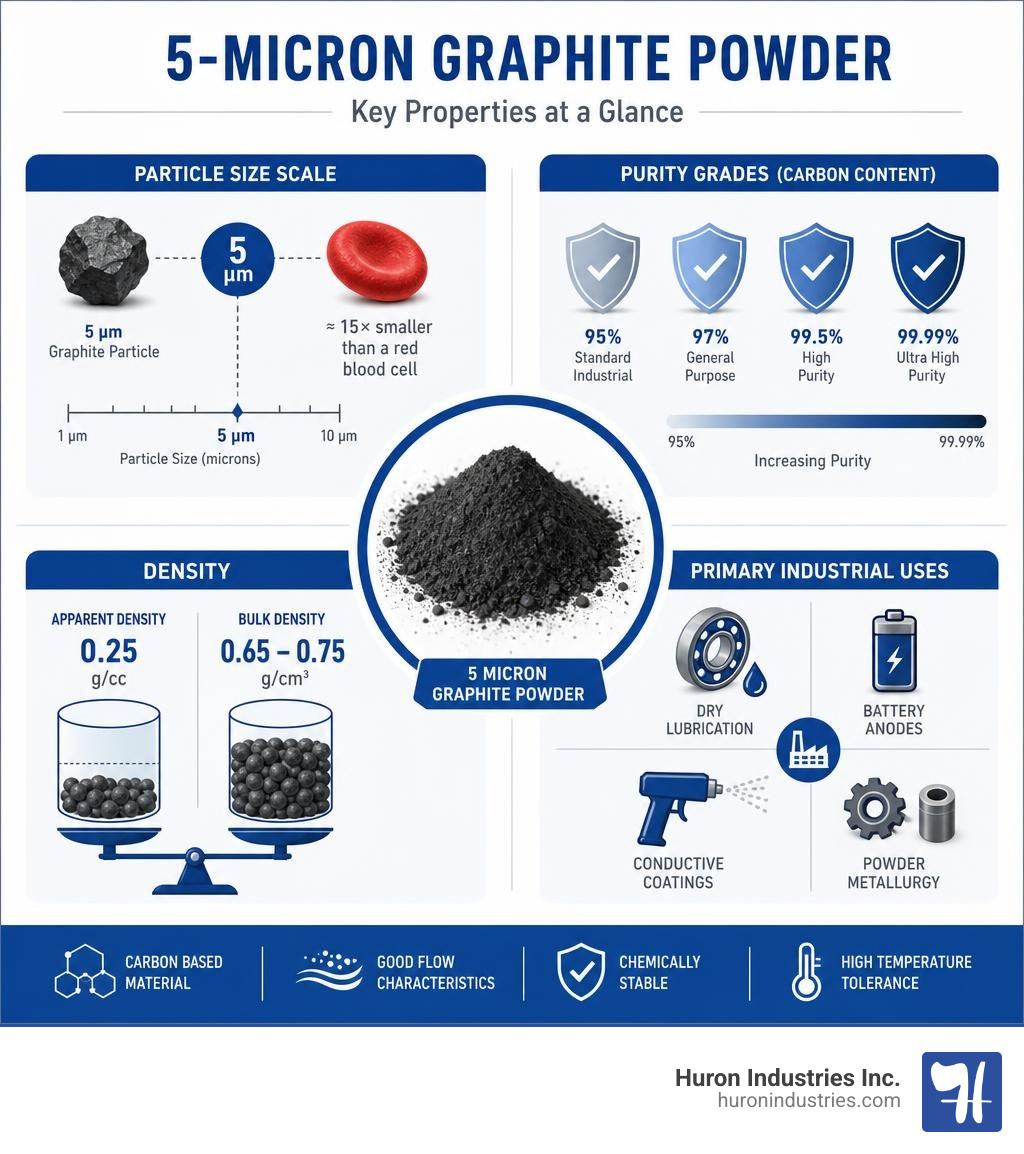
Graphite powder 5 micron is finely milled carbon particles averaging 5 micrometers (µm) in diameter — roughly 15 times smaller than a human red blood cell. Here's what you need to know at a glance:
| Property | Typical Value |
|---|---|
| Average particle size | 5 µm |
| Carbon content | 95% – 99.99% (grade dependent) |
| Apparent density | 0.25 g/cc |
| Bulk density | 0.65 – 0.75 g/cm³ |
| CAS number (graphite) | 7782-42-5 |
| Primary uses | Dry lubrication, battery anodes, conductive coatings, powder metallurgy |
At 5 microns, graphite powder hits a practical sweet spot. It's fine enough to coat surfaces uniformly and flow through automated lubrication systems — but not so fine that it becomes unmanageable to handle or disperse. That balance matters enormously in demanding environments like nuclear facilities, defense applications, and heavy industrial machinery, where inconsistent particle size can mean the difference between a protected thread and a seized joint.
The 5-micron grade is used across a wide range of industries: as a dry lubricant in seals and bearings, as an anode material in lithium-ion batteries, and as a conductive additive in coatings and pastes. Purity levels range from 95% for general industrial use up to 99.99% for sensitive electrochemical and regulated applications.
I'm Nicholas Cunha, the digital marketing strategist behind Huron Industries Inc.'s content program, where I've worked hands-on translating the technical specifications of specialty products — including graphite powder 5 micron formulations like Neolube® colloidal graphite — into clear, qualified guidance for engineering and procurement buyers. In this guide, we'll walk through everything from physical properties and purity grades to dispersion techniques, application methods, and safety requirements.
Technical Specifications of Graphite Powder 5 Micron
When we look at graphite powder 5 micron from a technical perspective, its physical and chemical properties dictate how it behaves in various matrices. The average particle size of 5 microns is a nominal value, meaning the majority of the particles in the distribution curve cluster around this 5-micrometer mark.
One of the first metrics we look at in our Port Huron lab is density. Fine graphite powder typically exhibits an apparent density of approximately 0.25 g/cc (or g/cm³), while its bulk density ranges between 0.65 and 0.75 g/cm³. This low bulk density means the powder is highly fluffy and lightweight, possessing a high specific surface area that makes it exceptionally active when interacting with lubricants or polymer binders.
The carbon content of the powder is the primary indicator of its purity. Depending on the refining process, you will generally find two tiers of purity in the industrial market: standard industrial grade (95%+ carbon) and ultra-high purity grade (99.9% to 99.99%+ carbon).
| Physical Property | Standard Industrial Grade (95% Purity) | Ultra-High Purity Grade (≥99.9% Purity) |
|---|---|---|
| Carbon Content (C%) | 95.0% – 98.0% | 99.9% – 99.99%+ |
| Apparent Density | 0.25 g/cc | 0.25 – 0.30 g/cc |
| Typical Ash Content | 2.0% – 5.0% | ≤ 0.1% (often down to 0.01%) |
| Typical Moisture | ≤ 0.5% | ≤ 0.1% |
| Primary Impurities | Quartz, mica, sulfur, ash | Trace metals, minimal sulfur |
| Best Suited For | Heavy industrial lubrication, powder metallurgy, basic electroplating | Semiconductor, nuclear, lithium-ion battery anodes, Graphite (C) Micron Powder, Purity: ≥99.99%, Size: 5 μm |
For highly sensitive applications, such as semiconductor manufacturing, high-end electronics, or advanced battery research, utilizing a high-purity material like Graphite (C) Micron Powder, Purity: ≥99.99%, Size: 5 μm is mandatory to prevent trace metallic contamination from degrading electrical pathways or causing premature battery degradation.
Crystalline Structure and Flake Morphology of Graphite Powder 5 Micron
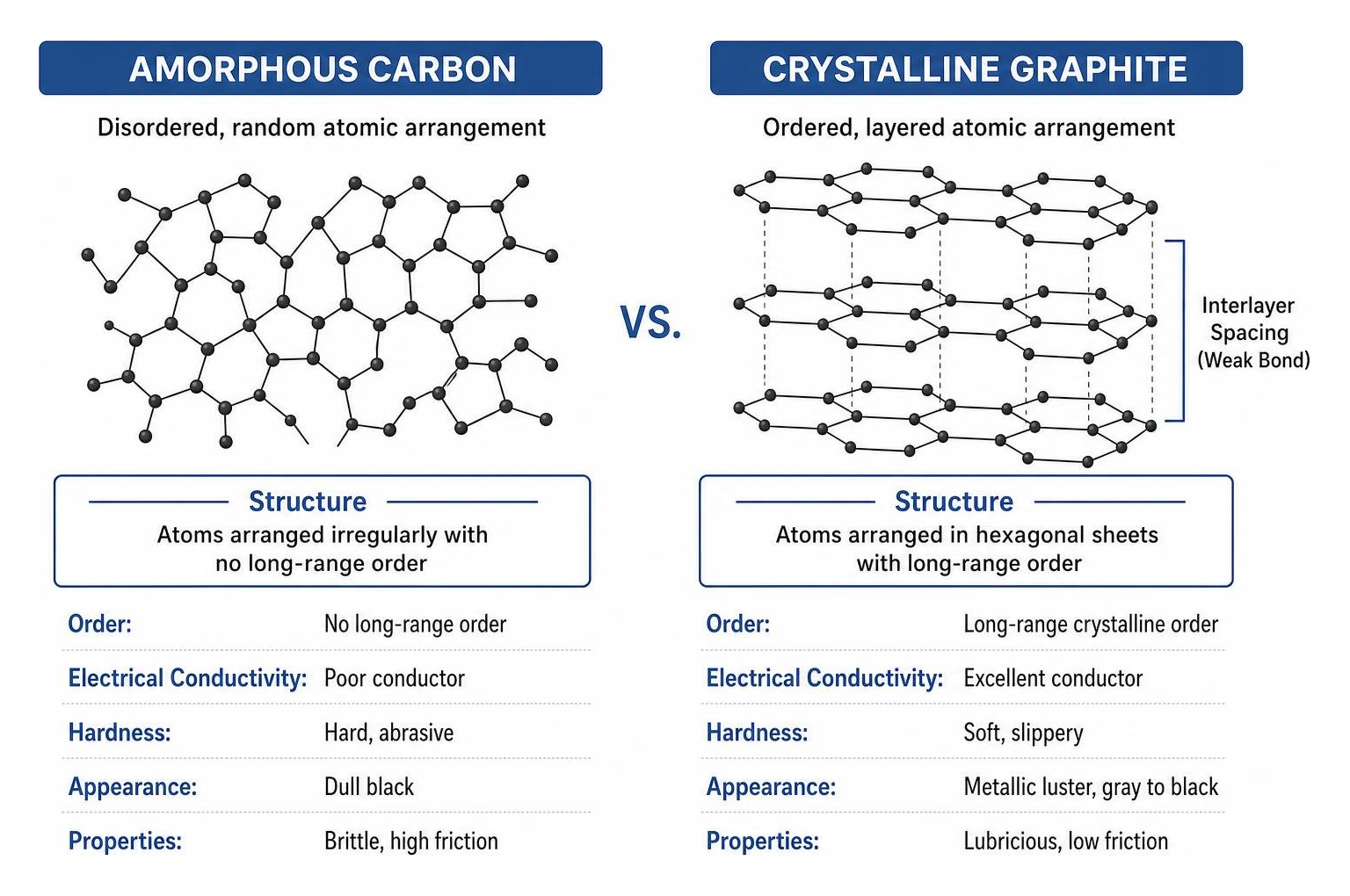
To understand why this powder is so slippery, we have to look closely at its crystal lattice. Graphite is made of carbon atoms arranged in flat, hexagonal sheets (called graphene layers). Within each sheet, the carbon atoms are covalently bonded to three neighbors, creating an incredibly strong, stable structure. However, the bonds between these layers are weak van der Waals forces.
This structural arrangement is highly anisotropic, meaning its physical properties vary depending on the direction of measurement. When a lateral force is applied, these parallel sheets easily slide past one another. This low shear strength is what gives graphite powder 5 micron its outstanding dry lubrication capabilities.
The flake morphology of natural flake graphite means the particles are shaped like miniature plates rather than spheres. This high aspect ratio (width-to-thickness ratio) allows the flakes to align flat against metal surfaces under pressure, creating a continuous, protective dry film. High macro-crystallinity grades, such as GR5 High Macro-Crystallinity Graphite Powder, are particularly valued because their well-defined crystal structures offer low spring-back properties. This is a massive advantage in powder metallurgy and component molding, as it ensures that compacted parts retain their shape and structural integrity after pressing.
Purity Levels and Impurities in Natural vs. Synthetic Graphite Powder 5 Micron
When sourcing graphite powder 5 micron, you will choose between natural flake graphite and synthetic graphite. Natural graphite is mined from the earth and subsequently milled and purified. Because of its geological origins, natural graphite naturally contains minor impurities like quartz, mica, sulfur, and ash. Even after extensive flotation and acid washing, standard natural grades will retain around 1% to 5% of these non-carbon elements.
For heavy-duty industrial gears or basic mold release agents, these minor impurities are generally harmless. However, in sensitive applications, quartz and mica can act as abrasives, causing micro-wear on high-precision components. Sulfur can also lead to corrosion in high-temperature steel environments.
Synthetic graphite, on the other hand, is manufactured by graphitizing petroleum coke or coal tar pitch at temperatures exceeding 3000°C. This extreme thermal treatment vaporizes almost all impurities, resulting in an exceptionally clean material with a carbon content of 99.9% or higher and an ash content of less than 0.1%. Synthetic graphite lacks the highly pronounced flake shape of natural graphite, but its ultra-pure chemistry makes it the gold standard for battery anodes, nuclear moderators, and specialty chemical synthesis where trace metals could poison a catalyst or cause electrical short-circuits.
Industrial Applications and Performance Benefits
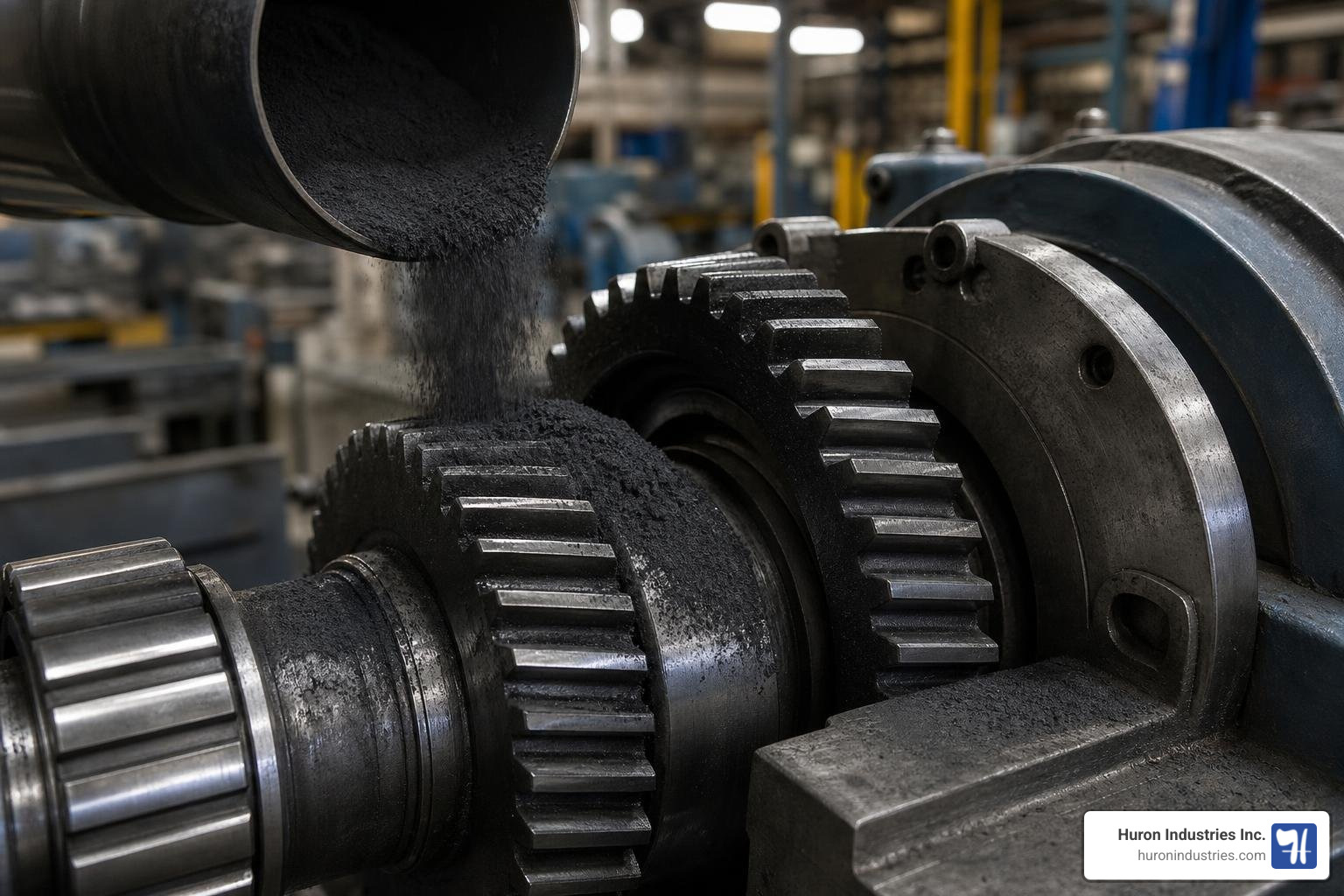
The unique combination of micro-scale sizing, high thermal stability, and electrical conductivity allows graphite powder 5 micron to solve a multitude of engineering challenges. Whether it is used to reduce friction, dissipate heat, or conduct electricity, this versatile material delivers highly predictable performance.
To achieve maximum performance in these applications, engineers frequently design systems around Precision Lubrication principles, matching the exact powder grade and carrier fluid to the environmental demands of the machinery.
High-Performance Lubrication and Wear Reduction
In extreme environments where liquid oils and greases fail — such as vacuum chambers, high-temperature ovens, or dusty mining operations — solid lubricants are essential. In these scenarios, graphite powder 5 micron operates in what we call boundary lubrication mode. Under compressive loads, the micro-fine flakes plate out onto the microscopic peaks and valleys (asperities) of metal surfaces.
This process reduces the friction coefficient of sliding metal components to a fraction of its unlubricated state. By preventing direct metal-to-metal contact, it significantly minimizes component wear and eliminates the risk of galling or cold-welding.
Furthermore, because dry graphite does not attract dust, dirt, or abrasive grit, it keeps moving parts operating smoothly without forming a grinding paste. In automated or spray-lubrication systems, the 5-micron particle size is particularly beneficial because it remains suspended in liquid carriers longer than coarser powders and easily passes through fine spray nozzles without clogging. This ensures continuous, reliable Lubrication Wear Reduction over long operating cycles.
Battery Anodes and Energy Storage
The rapid expansion of the electric vehicle (EV) and grid storage markets has turned graphite powder 5 micron into a critical raw material for battery technology. High-purity graphite is the primary material used to manufacture the anodes of lithium-ion batteries.
During the battery charging cycle, lithium ions migrate from the cathode and insert themselves into the spaces between the graphite's hexagonal carbon layers — a process known as intercalation. When the battery discharges, these ions are released back to the cathode.
Using a precise 5-micron particle size optimizes the balance between surface area and flow properties. Coarser particles have a lower surface area, which slows down the intercalation process and limits the battery's fast-charging capability.
Conversely, particles much smaller than 5 microns (nanoparticles) have excessively high surface areas, which leads to increased side reactions with the liquid electrolyte and forms an overly thick Solid Electrolyte Interphase (SEI) layer. This consumes active lithium and permanently reduces the battery's capacity. The 5-micron scale represents the ideal sweet spot, providing rapid charge rates, high energy density, and excellent cycling stability in lithium-ion batteries and supercapacitors.
Conductive Coatings and Electroplating
Another highly creative and practical use for graphite powder 5 micron is in the formulation of electrically conductive coatings and pastes. Because graphite is an excellent conductor of electricity, a thin layer of this micro-fine powder can turn a completely non-conductive surface, such as plastic, wood, or 3D-printed resin, into a conductive one.
This technique is widely used in electroplating. For example, hobbyists and industrial manufacturers alike prepare plastic parts for electroplating by brushing or spraying them with a fine graphite paste. Once the solvent evaporates, it leaves behind a continuous, highly conductive micro-film. When submerged in an electroplating bath, metal ions easily bond to the graphite-coated surface.
These coatings also find extensive use in electronics for electromagnetic interference (EMI) shielding. By painting the interior housing of sensitive electronic devices with a graphite-filled conductive paste, manufacturers shield internal circuits from external electromagnetic noise.
For these applications, using a high-quality carrier paste, such as those discussed in our guide on Slick and Stable the Power of Colloidal Graphite Paste, ensures that the graphite remains uniformly distributed and adheres firmly to the substrate.
Dispersion Best Practices and Material Comparisons
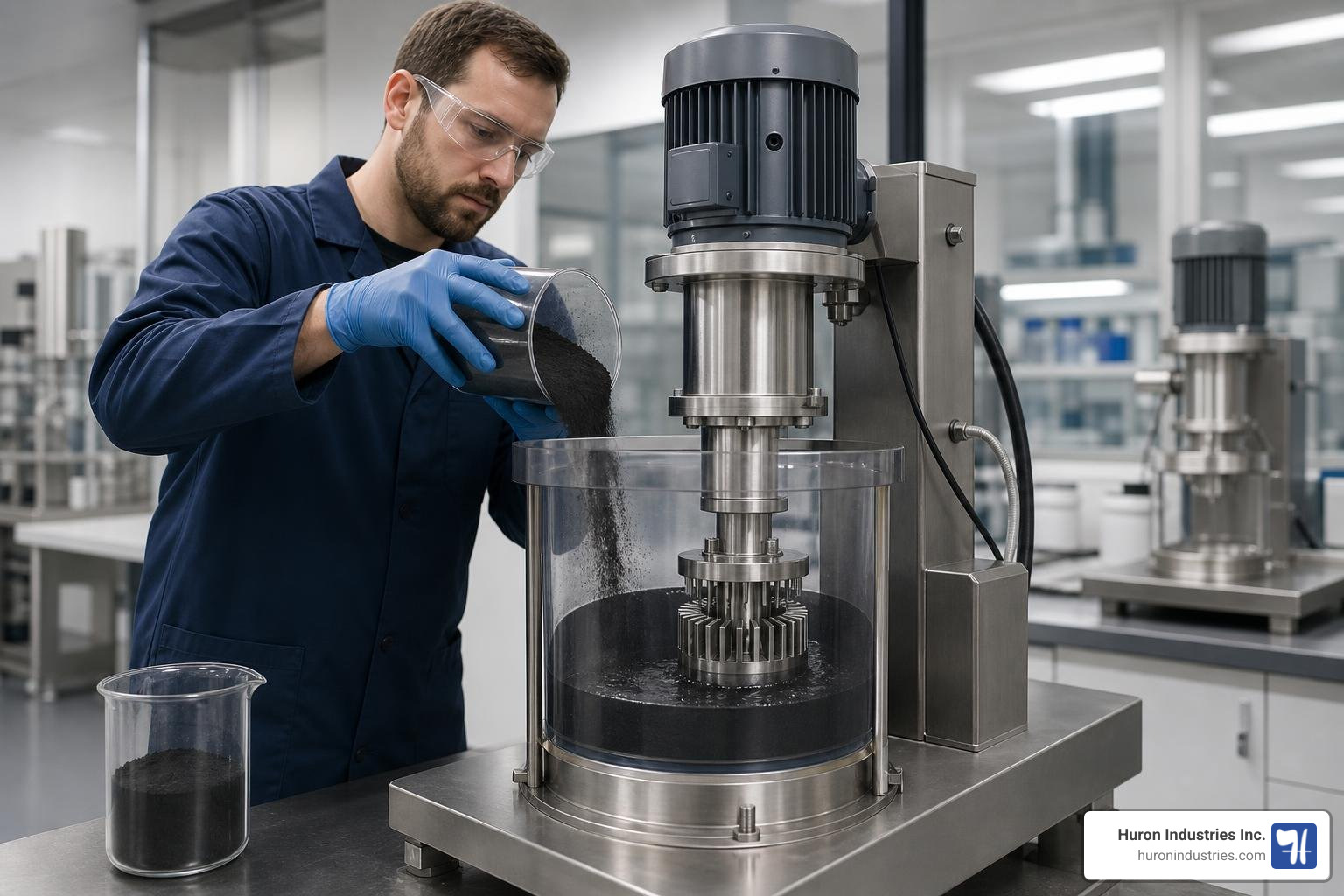
While graphite powder 5 micron offers incredible performance benefits, simply dumping the dry powder into a liquid or polymer matrix rarely yields good results. Because of their small size and high surface area, 5-micron particles naturally tend to cling together, forming large clumps (agglomerates). To unlock the material's full potential, you must follow proper dispersion and incorporation practices.
High-Shear Mixing and Dispersion Techniques
If you attempt to mix 5-micron graphite into a resin, oil, or water carrier using a standard low-shear paddle mixer, you will likely end up with a poor distribution of large, clumpy agglomerates. While a low-shear mixer can move the particles around, it lacks the mechanical energy required to break the weak physical bonds holding the dry clumps together.
To achieve a true dispersion, you must use high-shear mixing equipment, such as a high-speed dissolver or a rotor-stator mixer, operating at speeds around 2,000 RPM or higher. The intense shear forces generated by these mixers tear the agglomerates apart, allowing the liquid carrier or resin binder to completely wet out each individual 5-micron flake.
Additionally, because graphite has a higher density than water or light oils, dispersed particles will slowly settle out over time if the mixture is left sitting. To prevent settling, formulators often incorporate rheology modifiers (such as fumed silica or bentonite clay) to increase the low-shear viscosity of the liquid, or they utilize specialized surfactants to chemically stabilize the suspension.
Enhancing Thermal and Electrical Conductivity in Composites
When incorporating graphite powder 5 micron into polymer composites or foam materials to improve their thermal or electrical conductivity, you must understand the concept of the percolation threshold. This is the minimum loading level of conductive filler required to form a continuous, unbroken pathway of touching particles throughout the polymer matrix.
In thermal management applications, heat does not travel via free electrons as it does in electrical conductivity. Instead, thermal energy transfers through atomic lattice vibrations, known as phonons.
To maximize phonon transport, the graphite flakes must be thoroughly dispersed and in close physical contact. Adding 5-micron graphite to rigid insulation foams (like polyurethane or polystyrene) can dramatically improve their thermal resistance (R-value) by reflecting infrared radiation and establishing thermal barriers.
For liquid-phase applications, mixing the powder into water-based carriers creates highly stable conductive fluids. You can learn more about these specialized liquid formulations in our detailed overview of The Many Uses of Colloidal Graphite in Water and Beyond.
Comparing 5 Micron to Alternative Particle Sizes and Materials
How does a 5-micron particle size stack up against other carbon-based options? The table below outlines the trade-offs between 5-micron graphite, alternative sizes, and advanced carbon nanomaterials:
| Material | Particle Size / Scale | Relative Cost | Processing Complexity | Key Performance Trade-offs |
|---|---|---|---|---|
| Sub-Micron / Colloidal Graphite | < 1 µm | High | Very High | Excellent suspension stability, but highly prone to agglomeration and expensive to mill. |
| Graphite Powder 5 Micron | ~ 5 µm | Moderate | Moderate | The "sweet spot." Excellent surface coverage, easy to disperse, highly cost-effective. |
| Coarse Flake Graphite | > 44 µm (325 mesh) | Low | Low | Excellent bulk lubrication, but settles rapidly in liquids and cannot pass through fine nozzles. |
| Graphene Nanoplatelets (GNPs) | Nano-scale thickness | Extremely High | High | Incredible thermal and electrical properties, but highly difficult to disperse and cost-prohibitive. |
| Carbon Black | Nano-scale aggregates | Low | Moderate | Excellent electrical conductivity, but drastically increases viscosity, limiting filler loading. |
For many standard industrial projects, sourcing a high-purity microparticle grade like Graphite Powder, Purity: 99.9%, Size: 5-10 Micron provides the ideal balance of high carbon purity, manageable viscosity, and excellent dry lubricating properties without the premium price tag or dispersing headaches of nano-scale materials.
Safety, Handling, and Frequently Asked Questions
Like any finely divided industrial powder, handling graphite powder 5 micron requires proper safety precautions and storage conditions to protect both workers and equipment.
Because the powder is incredibly fine and lightweight, it easily becomes airborne when poured or mixed. While pure graphite is chemically inert and non-toxic, inhaling fine graphite dust can cause respiratory irritation. Prolonged or repeated exposure to heavy concentrations of airborne graphite dust can lead to a benign condition known as "graphite pneumoconiosis."
To maintain a safe working environment, I highly recommend installing local dust extraction systems at mixing stations and requiring workers to wear NIOSH-approved N95 dust masks or respirators, safety glasses, and protective gloves.
Another unique hazard of fine graphite is its electrical conductivity. If airborne graphite dust settles onto exposed electrical circuits, switchgear, or electric motors, it can bridge electrical contacts and cause short-circuits or equipment failures. Always store and handle the powder away from open electrical panels, and ensure that all electrical equipment in processing areas is properly sealed or dust-rated.
For storage, keep the powder in tightly sealed, airtight containers in a cool, dry place at room temperature. Natural graphite is slightly hygroscopic, meaning it will slowly absorb moisture from humid air over time. Moisture absorption can cause the dry powder to clump, drastically reducing its flowability and making even dispersion much more difficult to achieve.
What is the difference between carbon and graphite?
While all graphite is carbon, not all carbon is graphite. Carbon is a chemical element that exists in several different forms, known as allotropes. These allotropes include amorphous carbon (like charcoal or carbon black), diamond, and graphite.
The key difference lies in their internal atomic arrangement. In amorphous carbon, the atoms are arranged in a highly disordered, random structure, making it a poor electrical conductor and highly abrasive.
In graphite, the carbon atoms are organized in highly structured, flat hexagonal sheets. This crystalline arrangement is what gives graphite its unique combination of softness, metallic luster, high electrical and thermal conductivity, and self-lubricating properties.
How do you apply 5-micron graphite powder to non-conductive surfaces?
To create a thin, uniform conductive layer or dry lubricant film on a non-conductive object (like a plastic 3D print), follow these simple steps:
- Clean the Surface: Ensure the object is completely free of oils, dust, and moisture.
- Apply a Binder (Optional): If you need a permanent, durable conductive coating, mix the 5-micron graphite powder with a thin solvent-based acrylic or lacquer binder to create a paintable paste.
- Brush or Spray: Use a soft foam brush or a fine airbrush to apply the mixture evenly across the surface. If applying dry, use a makeup brush or cosmetic sponge to burnish the dry powder directly onto a slightly tacky primer layer.
- Buff to a Shine: Once dry, gently buff the surface with a soft microfiber cloth. This aligns the flat graphite flakes parallel to the surface, maximizing both its electrical conductivity and its metallic shine.
- Electroplate: Connect your electrical lead directly to the graphite-coated area and submerge the part into your electroplating bath.
Why is 5-micron considered the "sweet spot" for industrial applications?
In the powder processing world, engineers are constantly balancing surface area against flowability. Coarser graphite powders (like 44-micron or larger) flow beautifully and are easy to handle, but they form thick, uneven coatings and settle out of liquid lubricants almost instantly.
On the other end, sub-micron or nano-scale powders offer massive surface area, but they are incredibly difficult to disperse, clump together instantly, and can dangerously increase the viscosity of liquid mixtures.
At 5 microns, you get the best of both worlds. The powder is fine enough to form thin, highly uniform protective coatings and remain suspended in liquid carriers for extended periods. Yet, it still retains excellent dry flow properties, making it easy to pour, measure, and feed through automated industrial packaging and dosing systems.
Conclusion
Whether you are formulating advanced thermal interface materials, preparing plastic components for electroplating, or looking to reduce wear on heavy industrial machinery, graphite powder 5 micron delivers an unmatched combination of lubricating, electrical, and thermal properties. By understanding its physical characteristics, choosing the correct purity grade, and utilizing proper high-shear dispersion techniques, you can achieve highly reliable, repeatable results in your manufacturing processes.
Here at Huron Industries Inc., we have been refining the art of graphite lubrication since 1971. From our headquarters in Port Huron, Michigan, we manufacture and supply certified, high-purity graphite lubricants that meet the most demanding specifications on earth. Our flagship Neolube colloidal-graphite line is qualified to the rigorous MIL-L-24131C military standard and is trusted worldwide in commercial and naval nuclear reactor systems, where absolute purity and Smooth Operation are non-negotiable.
If your machinery or application demands high-pressure, extreme-temperature protection that won't fail under load, it pays to partner with an industry-certified supplier. To learn more about selecting the right partner for your project, check out our guide on How to Choose a Certified Colloidal Graphite Supplier Without Slipping Up.
When you are ready to experience the difference that certified, nuclear-grade precision makes, you can explore our complete range of lubricants in our Shop or browse our specialized Product Category Lubricant offerings. For immediate high-performance dry-film lubrication, you can purchase our industry-standard Neolube No. 2 1 Quart directly online. Let us help you keep your operations running smoothly, safely, and efficiently.