
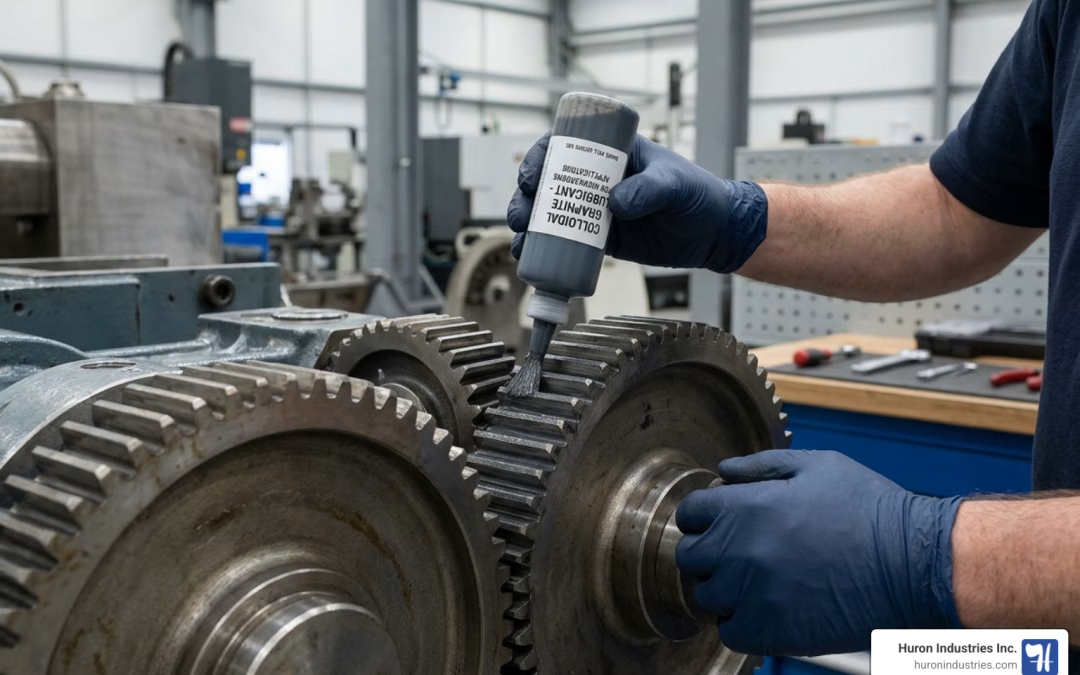
When Standard Lubricants Fail, Colloidal Graphite Steps In
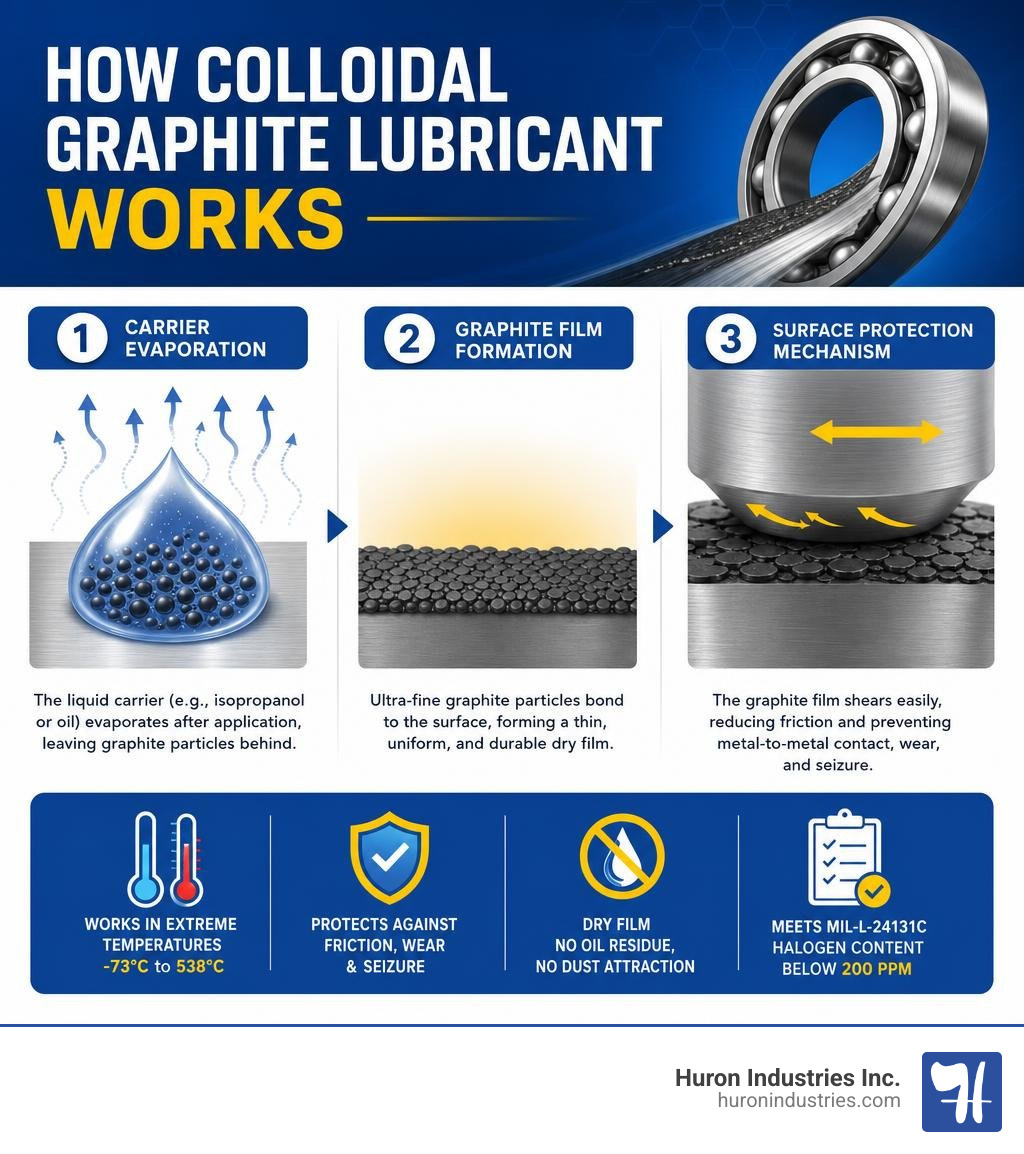
Colloidal graphite lubricant is a dry-film lubricant made of ultra-fine graphite particles suspended in a liquid carrier — typically isopropanol or mineral oil. The carrier evaporates on contact, leaving a thin, stable graphite film that protects metal surfaces from friction, wear, and seizure across extreme temperatures.
Quick answer for engineers and procurement buyers:
| What you need | What colloidal graphite delivers |
|---|---|
| High-temp lubrication | Effective from -73°C to 538°C (-100°F to 1000°F) |
| Anti-seize on threads | Prevents galling and metal transfer on reassembly |
| Clean, dry film | No oil residue, no dust attraction |
| Nuclear/defense compliance | Meets MIL-L-24131C; halogen content below 200 ppm |
| Easy application | Brush, spray, wipe, or dip — dries in ~5 minutes |
Simply put, there are situations where colloidal graphite will outperform any petroleum-based lubricant — especially when heat, contamination, or regulatory purity requirements are on the table.
Consider what independent testing found: bearings lubricated with plain mineral oil seized after an average of just 36 minutes once oil flow stopped. Bearings protected by a graphite-based lubricant kept running for 261 hours under the same conditions. That kind of resilience is not a marginal improvement — it’s a different category of protection entirely.
This guide covers how colloidal graphite works, where it excels, where it has limits, and how it compares to other dry-film lubricants like molybdenum disulfide and nickel-based anti-seize compounds.
I’m Nicholas Cunha, founder of CreatiVertical and the content strategist behind Huron Industries Inc.’s digital presence — I work directly with the Huron team to translate the technical depth of their colloidal graphite lubricant product line into clear, credible content for engineering and procurement audiences. Let’s get into it.
Related content about colloidal graphite lubricant:
What is a Colloidal Graphite Lubricant?
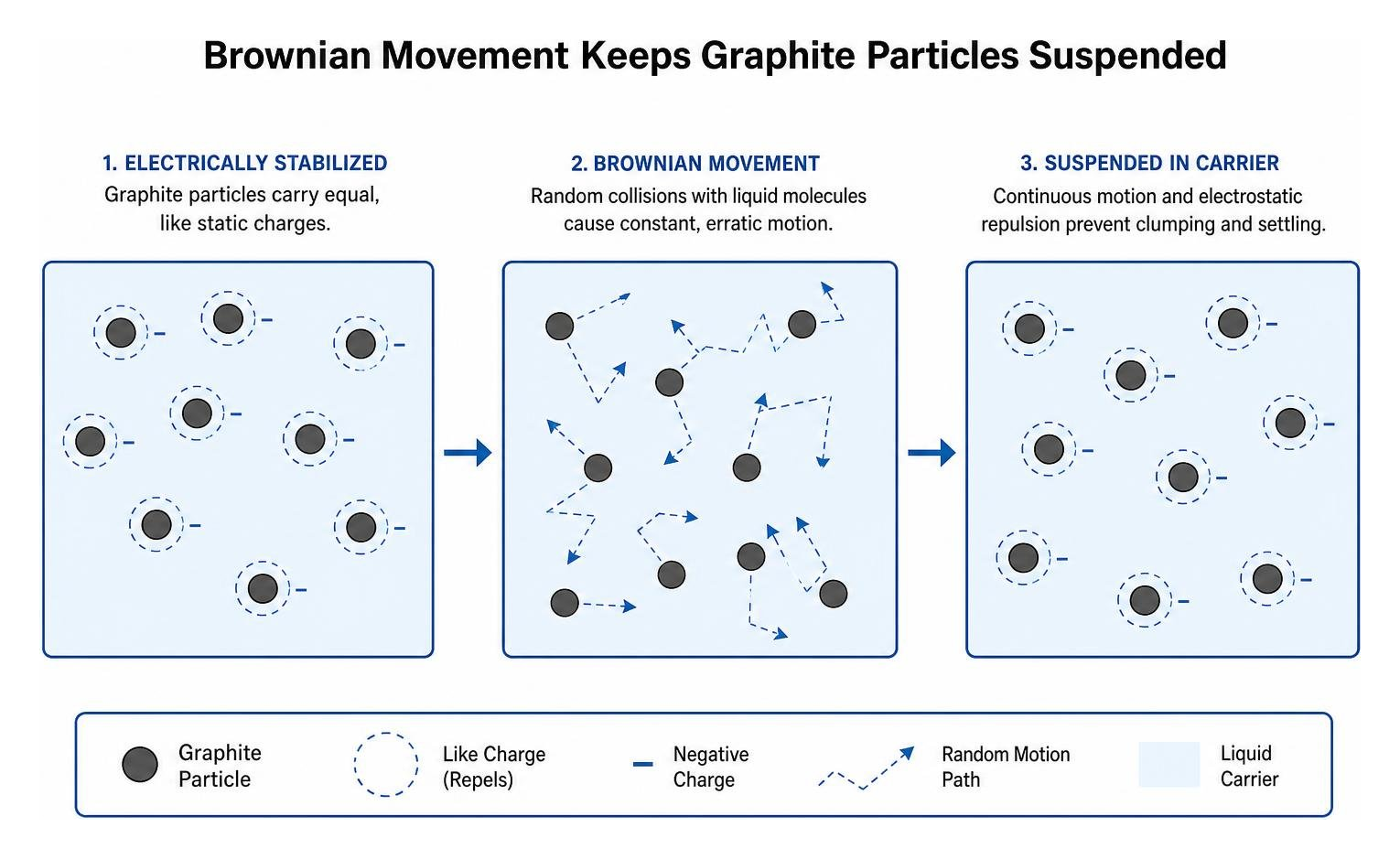
To understand why a colloidal graphite lubricant is so effective, we have to look at its physical chemistry. The word “colloidal” refers to a state where extremely fine particles of one substance are permanently suspended in another. In this case, ultra-fine, pure graphite particles (typically averaging 1 to 4 microns in size) are dispersed throughout a liquid carrier medium.
Unlike coarser graphite powders that settle out of liquids almost immediately, colloidal graphite particles carry equal and like static electrical charges. Because they carry the same charge, they constantly repel one another. This electrical repulsion creates a state of continuous, erratic agitation known as Brownian Movement. This movement keeps the microscopic graphite particles suspended indefinitely in low-viscosity fluids without clumping or dropping to the bottom of the container.
When you apply this liquid suspension to a metal surface, the carrier fluid evaporates, leaving behind a highly specialized boundary layer known as a “graphoid” surface. This ultra-thin, anti-friction layer bonds tightly to the microscopic peaks and valleys of the rubbing metal surfaces due to surface energy. It cannot be easily wiped away or removed by ordinary cleaning, providing a continuous shield of dry lubrication.
To learn more about the physical structure and unique properties of these materials, you can read The Colloidal Graphite Lubricant or explore our deep dive into solid film performance in Slip Sliding Away with the Ultimate Solid Lubricant.
How It Differs From Oil-Based Lubricants
Traditional petroleum-based oils and greases are the workhorses of the mechanical world, but they have major physical limitations. Under extreme heat, oil thins out and runs off, or worse, burns away entirely, leaving behind gummy, carbonized residues. Wet grease also acts like a magnet for airborne dust, sand, and grit, turning your lubricant into an abrasive grinding paste that accelerates component wear.
Furthermore, closed mechanical systems can suffer from “grease starvation” where the lubricant is pushed away from the contact zone and fails to migrate back, leading to rapid metal-on-metal friction and eventual seizure.
A liquid colloidal graphite lubricant solves these issues by acting as a dry-film alternative. Once the carrier fluid evaporates, there is no wet residue left behind. It cannot attract dust, it cannot migrate away under centrifugal force, and it does not dry out or starve the joint.
| Feature | Colloidal Graphite Lubricant (Dry Film) | Petroleum Oils & Greases (Wet Film) |
|---|---|---|
| Operating Temperature | -73°C to 538°C (-100°F to 1000°F) | Typically limited to -20°C to 150°C |
| Dust & Dirt Attraction | None; dries completely tack-free | High; attracts abrasive particulates |
| Migration & Drip | None; stays bonded where applied | High; can run, drip, or migrate under heat |
| Galling Resistance | Exceptional; prevents metal transfer | Moderate; can fail under boundary conditions |
| Cleanliness | Clean, dry film; doesn’t stain or track | Messy; requires constant cleanup and seals |
The Science Behind the Colloidal Graphite Lubricant
The lubricating power of graphite is deeply rooted in its atomic structure. Graphite is an allotrope of carbon made of flat, hexagonal sheets of carbon atoms stacked on top of one another. The bonds within each sheet are incredibly strong, but the bonds between the sheets (held together by weak Van der Waals forces) are highly fragile. This allows the sheets to slide over one another with minimal resistance, giving graphite its slick, low-friction characteristics.
However, there is a fascinating scientific catch: graphite is not naturally slippery in a perfect vacuum. To slide easily, graphite requires the absorption of water vapor or moisture from the surrounding air. This microscopic moisture reduces the bonding energy between the carbon sheets to a lower level, allowing them to shear easily.
Historically, early engineers struggled with natural graphite because it contained abrasive mineral impurities like silica and clay. These impurities clogged filters, settled in oil lines, and caused premature wear. The true breakthrough came with the development of artificial graphite (electro-graphite). By heating pure carbon sources in an electric furnace to temperatures approaching 7,500°F, manufacturers could produce grit-free, synthetic graphite with a purity exceeding 99.9%.
This pure, synthetic material is what makes modern high-performance colloidal dispersions possible. For those interested in the chemical engineering history of these processes, the patent US2986519A – Process for forming a graphite lubricant offers an excellent look at the foundational methods used to refine these stable mixtures.
Key Benefits and Industrial Applications
The primary reason engineers specify a colloidal graphite lubricant is its unmatched ability to prevent galling, seizing, and wear on sliding metal parts and threaded connections. Galling is a particularly destructive form of wear caused by adhesion between sliding surfaces. Under high loads, the microscopic peaks of mating metals can cold-weld together. As the parts continue to move, these welds tear apart, transferring chunks of metal from one surface to another, destroying threads and seizing machinery.
A colloidal graphite paste or liquid creates a physical, micro-thin barrier that prevents direct metal-on-metal contact. Even under high torque or compressive loads, the sliding action occurs between the easily sheared layers of graphite rather than the metal substrates themselves. This makes it an ideal choice for components that must undergo frequent disassembly and reassembly, ensuring that threads remain clean and undamaged.
For a broader look at how these properties translate to diverse operating environments, you can read about The Many Uses of Colloidal Graphite in Water and Beyond.
High-Temperature and Extreme Pressure Performance
Standard lubricants break down long before industrial machinery reaches its peak operating temperatures. When temperatures climb above 300°F, mineral oils begin to oxidize and volatilize.
A high-quality colloidal graphite lubricant remains physically and chemically stable at continuous operating temperatures up to 450°C (842°F) in oxidizing environments, and can withstand intermittent temperatures up to 538°C (1000°F). In non-oxidizing or inert atmospheres, graphite can perform reliably at temperatures well exceeding 1000°C.
Additionally, because the graphite film is a solid, it does not squeeze out under extreme pressure. It maintains a low static coefficient of friction (typically around 0.15), ensuring smooth, predictable movement even under immense structural loads.
Target Industries and Use Cases
Because of its unique thermal and physical properties, colloidal graphite is utilized across a wide variety of demanding fields:
- Metal Forging and Hot-Working: In heavy forging operations, oil-based graphite dispersions are applied directly to hot dies. The lubricant reduces friction, prevents the workpieces from sticking to the tooling, and dramatically extends die life under intense heat and pressure.
- Precision Ammunition Reloading: Shooters and ammunition manufacturers use specialized liquid graphite to lubricate case necks during the reloading process. This ensures smooth, consistent bullet seating without the messy, powder-contaminating residues left by wet oils. I recommend reading How to Apply Liquid Graphite to Case Necks for a step-by-step breakdown of this technique.
- Industrial Kilns and Conveyors: High-temperature conveyor bearings, oven chains, and rotary kiln sliding seals rely on dry graphite films to operate smoothly without attracting abrasive dust or baking into a solid glaze.
- Firearm Maintenance: Applying a thin layer of colloidal graphite to clean firearm actions or running a treated patch down a clean bore creates a micro-fine dry film. This stabilizes the trajectory of the first shot from a “cold bore” and prevents action galling without attracting carbon fouling.
Comparing Colloidal Graphite to Other Dry-Film Lubricants
When selecting a dry-film lubricant, engineers typically choose between three primary families: colloidal graphite, molybdenum disulfide ($MoS_2$, often called “moly”), and nickel-based anti-seize compounds.
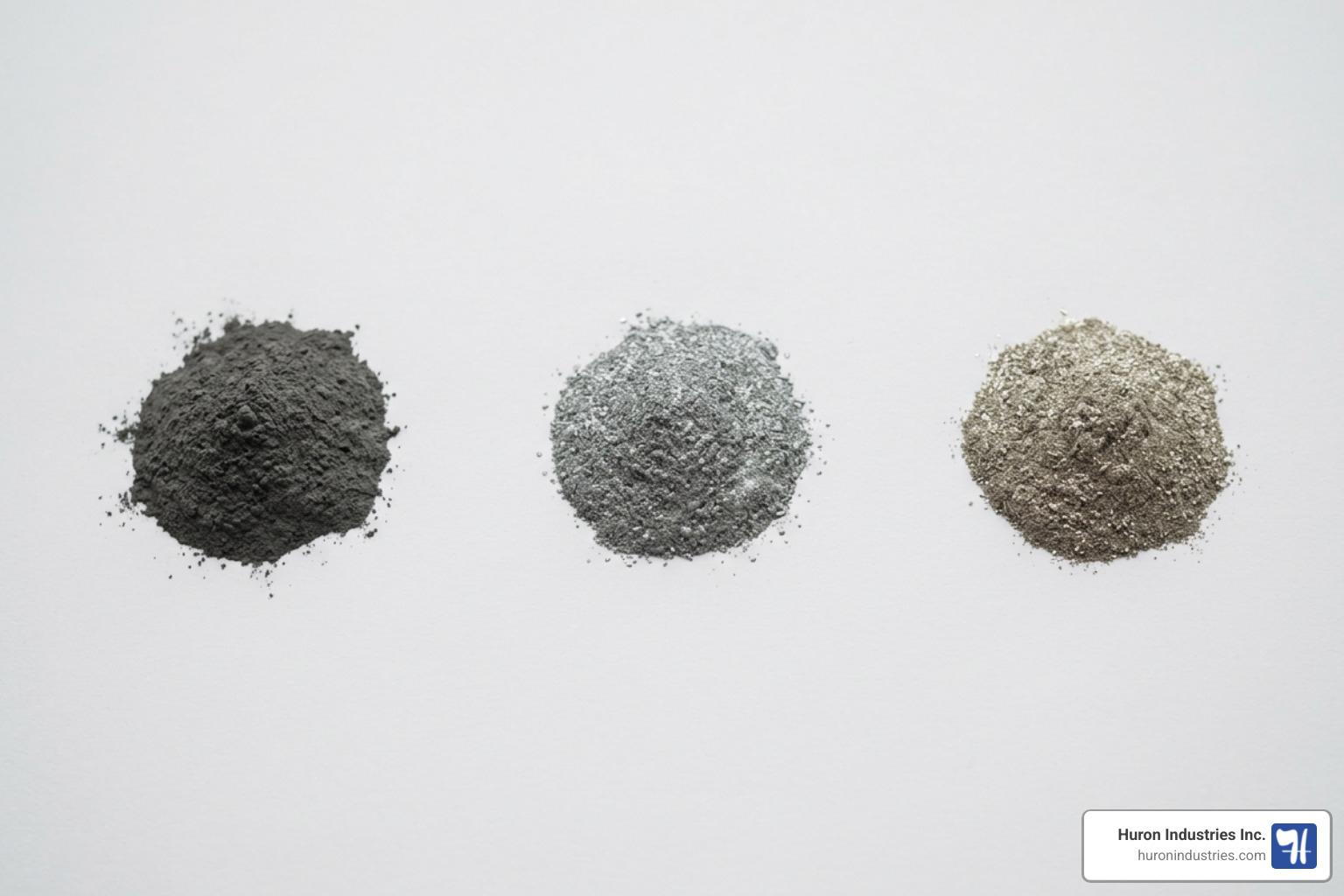
While each has its place, they behave very differently under extreme operating conditions:
- Molybdenum Disulfide (Moly): Moly is an excellent extreme-pressure lubricant with a very low coefficient of friction. However, it has a lower thermal oxidation threshold than graphite, beginning to degrade into acidic molybdenum trioxide ($MoO_3$) at temperatures above 400°C (752°F) in the presence of oxygen. This acidic byproduct can corrode underlying metal substrates.
- Nickel-Based Anti-Seize: These compounds are highly effective at preventing seizure at extreme temperatures up to 1427°C (2600°F). They are often used as thick pastes containing nickel flakes suspended in a carrier grease. However, they are messy, can migrate, and do not dry to a clean, tack-free film like isopropanol-based colloidal graphite.
Why Choose a Colloidal Graphite Lubricant Over Moly or Nickel?
One of the most critical reasons to choose colloidal graphite over nickel or copper-based compounds comes down to metallurgy and chemical compatibility.
For example, copper-based lubricants are chemically unstable and highly reactive in the presence of ammonia, acetylene, or certain vinyl monomers. Using a copper anti-seize in those chemical environments can lead to catastrophic component failures.
Similarly, there are crucial temperature thresholds to keep in mind when working with stainless steel. At temperatures exceeding 288°C (550°F), graphite can react with stainless steel, causing carbon to diffuse into the metal. This process, known as carburization, depletes the chromium content at the grain boundaries of the steel, making it highly susceptible to intergranular corrosion and stress cracking. In those specific high-temperature stainless steel applications, a graphite-free, nickel-based anti-seize is the safer choice.
However, for non-stainless alloys, nuclear-grade systems, high-clearance sliding parts, and applications requiring an absolutely clean, dry, non-migratory film, a premium colloidal graphite lubricant is unmatched.
If you are interested in how regulatory bodies classify and distinguish these liquid suspensions from dry powder mixtures for international trade and quality standards, you can review the official ruling NY 818346 modified; artificial graphite lubricant; colloidal … .
Technical Specifications and Nuclear-Grade Requirements
In highly regulated industries like commercial and naval nuclear power generation, lubricant purity is not just a matter of performance—it is a critical safety requirement. Standard industrial lubricants often contain trace levels of halogens (fluorine, chlorine), sulfur, and low-melting-point metals (like lead, zinc, bismuth, and antimony) that can cause stress corrosion cracking in sensitive reactor alloys.
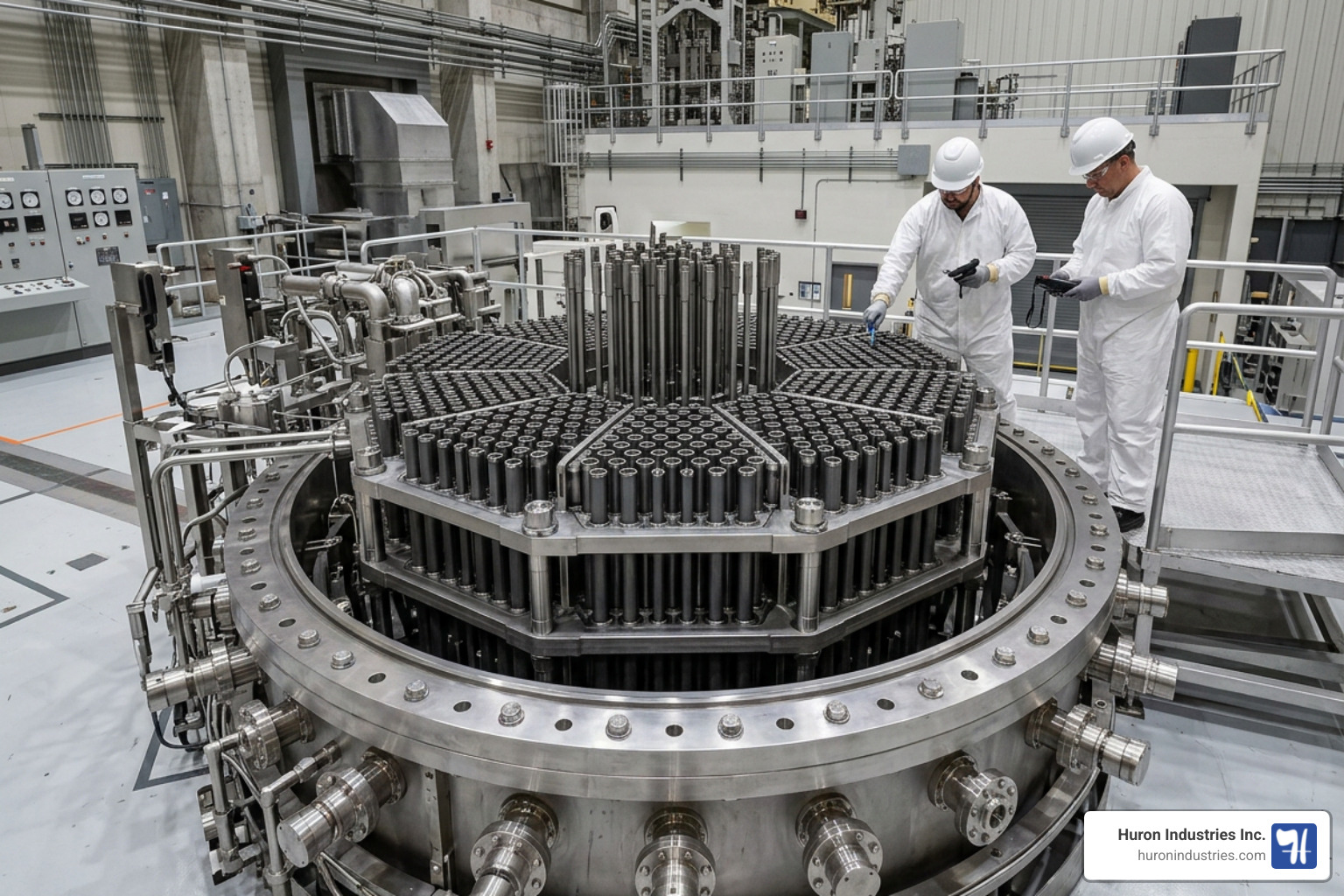
This is where our flagship Neolube® line of products, manufactured right here in Port Huron, Michigan, sets the industry standard. Our nuclear-grade colloidal graphite lubricant formulations, such as Neolube® No. 1 and Neolube® No. 2, are fully qualified to rigorous military specifications, including MIL-L-24131C.
These high-purity formulations are designed with strict chemical limits:
- Total Halogens (Chlorine, Fluorine): Strictly controlled below 200 ppm.
- Sulfur Content: Kept below 200 ppm.
- Lead Content: Kept below 150 ppm.
- Graphite Purity: Made from 99% pure electric-furnace synthetic graphite.
- Particle Size: 90% of the graphite particles have a maximum dimension of less than 4 microns, ensuring an incredibly smooth, uniform film that fits within tight-tolerance clearances.
To explore our full range of certified nuclear-grade products and technical specifications, visit the Neolube Colloidal Graphite page.
Application, Curing, and Limitations
Applying a liquid colloidal graphite lubricant is simple, but achieving maximum adhesion requires proper technique:
- Surface Preparation: The metal substrate must be completely clean, dry, and free of oil, grease, or rust. I recommend using a quick-evaporating solvent wipe to prep the surface. For critical industrial applications where maximum adhesion is required, physical pretreatments like light grit-blasting or chemical phosphating can be used.
- Agitation: Because colloidal suspensions can settle slightly over long periods of storage, always shake or stir the container thoroughly before use to ensure a uniform mix.
- Application: You can apply the liquid using a brush, spray gun, wipe, or by dipping the component directly into the solution.
- Curing: When using an isopropanol-based carrier, the liquid will air-dry in seconds and fully cure into a robust, dry graphite film within approximately 5 minutes at room temperature.
Important Limitations to Remember:
- Oxygen Systems: Never use graphite-based lubricants in pure oxygen systems, as carbon can react under high-pressure oxygen.
- Primary Containment Limits: While highly stable, standard formulations like Neolube® No. 1 are not recommended for thread lubrication in reactor primary containment areas where operating temperatures continuously exceed 204°C (400°F). For those extreme environments, specialized high-temperature formulations like Neolube® No. 1260 should be used instead.
Frequently Asked Questions About Colloidal Graphite
What is the maximum temperature limit for colloidal graphite?
In normal atmospheric conditions, a dry film of colloidal graphite provides continuous lubrication up to 450°C (842°F) and can handle intermittent thermal spikes up to 538°C (1000°F). Beyond these temperatures in the presence of oxygen, the graphite will slowly oxidize into carbon dioxide, leaving no residue behind.
Why does graphite require moisture to lubricate effectively?
Graphite’s low-friction properties rely on its layered crystal structure. To slide smoothly, the weak bonds between these carbon layers must be further weakened by absorbing ambient water vapor. In a near-perfect vacuum or extremely dry space environments, graphite loses this moisture layer, causing its friction coefficient to rise significantly.
Can colloidal graphite be mixed with standard grease?
I generally advise against mixing colloidal graphite suspensions with standard commercial greases unless the grease is specifically formulated that way by the manufacturer. Adding solvent-based colloidal graphite to grease can break down the grease’s thickener structure, leading to oil separation, thinning, and premature lubricant failure.
Conclusion
When you are dealing with extreme temperatures, high pressures, strict nuclear purity standards, or environments where wet oils simply cannot survive, a high-purity colloidal graphite lubricant is the ultimate solution.
Since 1971, Huron Industries Inc. has been manufacturing and supplying high-performance specialty lubricants, thread sealants, and anti-seize compounds from our facility in Port Huron, Michigan. Our commitment to certified, high-purity chemistry has made us a trusted partner for commercial nuclear power plants, naval reactor systems, and precision manufacturers worldwide.
If you are ready to upgrade your lubrication reliability or need help selecting the perfect certified formulation for your specific application, I encourage you to read our guide on How to Choose a Certified Colloidal Graphite Supplier Without Slipping Up.
For precision reloaders looking for the ultimate neck tension consistency, check out our specialized Caselube Liquid Graphite product line.
Ready to secure the highest quality dry-film lubricants for your operations? Explore our complete product catalog and get in touch with our engineering team today at Huron Industries CaseLube Solutions.