
How to Find and Check a Colloidal Graphite SDS
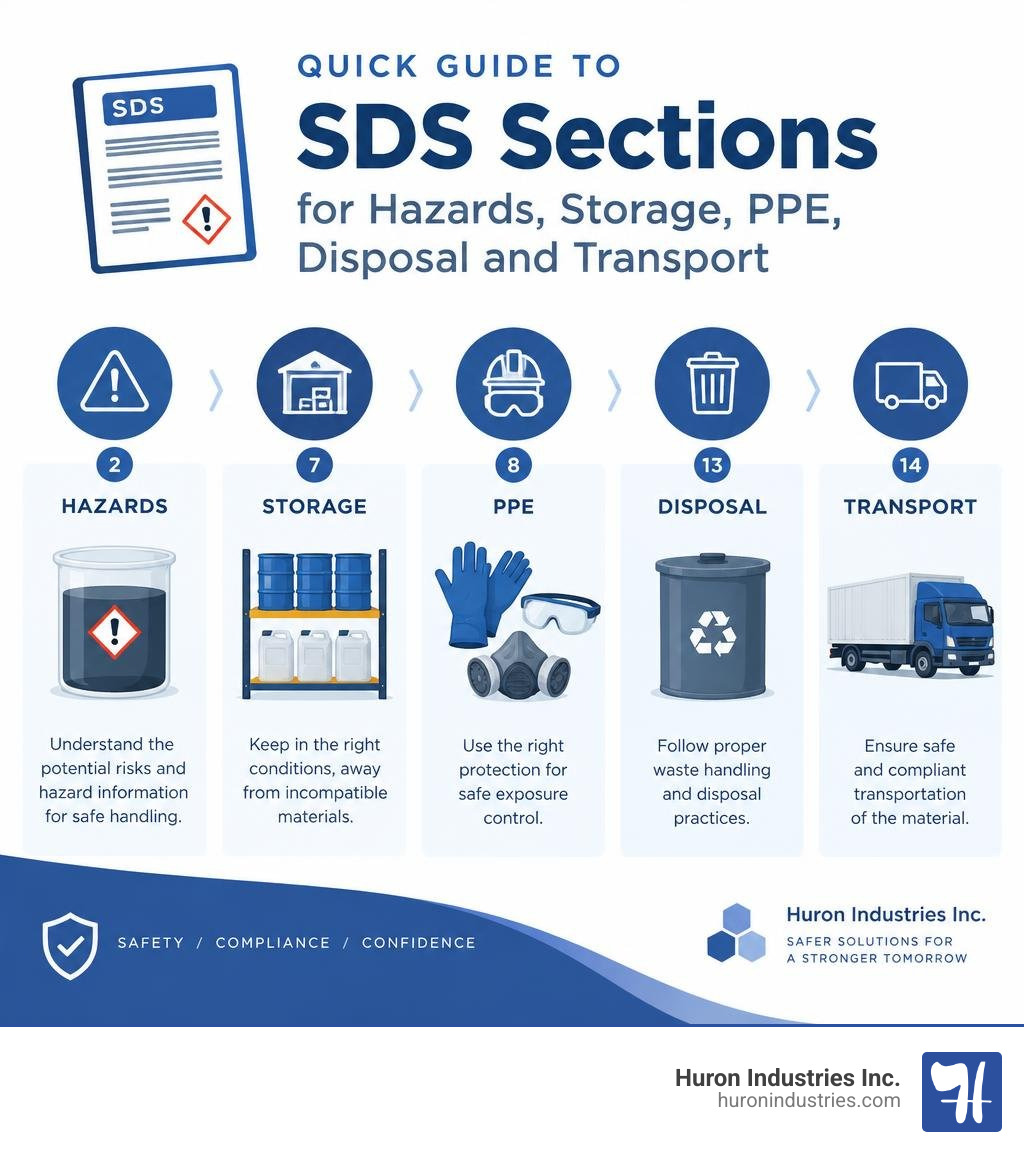
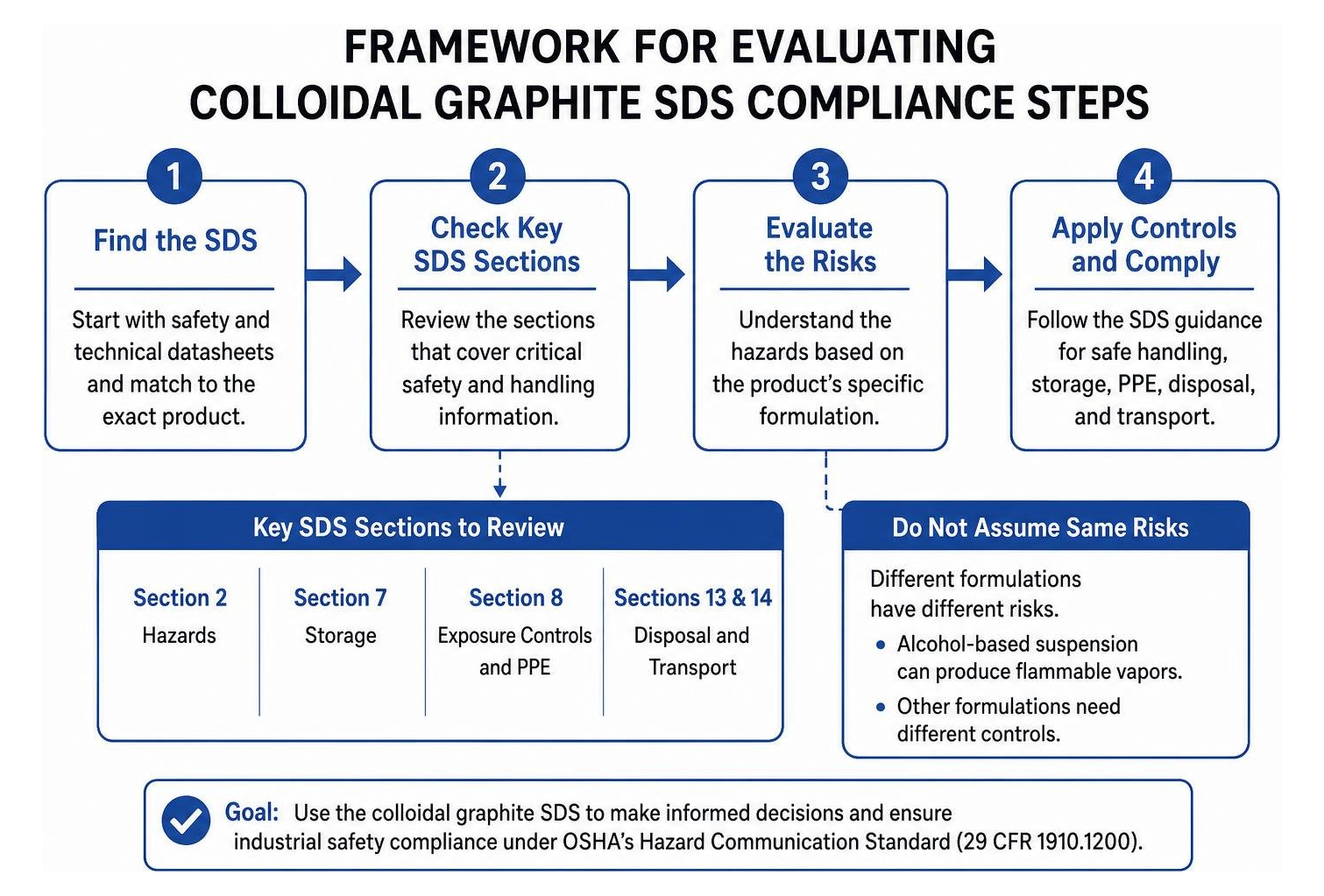
To find a colloidal graphite SDS, start with Huron Industries' safety and technical datasheets and match the sheet to the exact product you plan to use. Check Section 2 for hazards, Section 7 for storage, Section 8 for exposure controls and PPE, and Sections 13 and 14 for disposal and transport. Do not assume every graphite lubricant has the same risks: an alcohol-based suspension can produce flammable vapors, while other formulations need different controls.
I’m Nicholas Cunha, founder of CreatiVertical, with more than a decade of experience making technical information clear for regulated organizations and industrial buyers. In this guide, I’ll show you how to use a colloidal graphite SDS alongside technical product data when reviewing safety and compliance requirements.
Colloidal graphite SDS terms you need:
How to Interpret a Colloidal Graphite SDS for Industrial Compliance
Industrial safety compliance under OSHA’s Hazard Communication Standard (29 CFR 1910.1200) requires plant operators, safety engineers, and chemical hygiene officers to interpret safety data sheets accurately. When working with colloidal suspensions, I find that many teams overlook the fundamental structure of the chemical system: micro-fine graphitic solids suspended in a volatile liquid carrier.
Navigating safety technical datasheets begins by reviewing Section 2 (Hazard Identification), Section 3 (Composition), and Section 8 (Exposure Controls). In typical suspensions, the solid carbon constituent presents distinct physical risks compared to the primary carrier liquid, necessitating a comprehensive understanding of both chemical phases.
GHS Classifications and Signal Words in a Colloidal Graphite SDS
Under the Globally Harmonized System (GHS), alcohol-dispersed graphite suspensions typically display the Danger signal word. This classification stems from carrier volatility rather than the solid graphite particles.
Common GHS categories on these documents include:
- Flammable Liquids (Category 2): Highly flammable liquid and vapor (H225).
- Eye Irritation (Category 2A): Causes serious eye irritation (H319).
- Specific Target Organ Toxicity – Single Exposure (Category 3): May cause drowsiness or dizziness via central nervous system depression (H336).
- Aspiration Hazard (Category 1): May be fatal if swallowed and enters airways (H304).
| Formulation Matrix | Primary GHS Signal Word | Primary Hazard Statements | Transport Classification |
|---|---|---|---|
| Isopropanol-Based Alcohol Suspension | Danger | H225 (Flammable Liquid 2), H319 (Eye Irrit. 2A), H336 (STOT SE 3) | UN 1263, Class 3, PG II |
| Water-Based Colloidal Dispersion | Warning / None | H315 (Skin Irrit. 2), H320 (Mild Eye Irritation) | Non-Regulated (Standard) |
| High-VOC Hydrocarbon / Solvent Blend | Danger | H224/H225 (Flammable), H304 (Asp. Tox. 1), H361 (Repro. Tox. 2) | UN 1950 or UN 1263, Class 3 |
Hazard Identification and Carrier Solvent Risks
The primary operational risk during application is the flash point of the volatile carrier. High-purity alcohol dispersions typically utilize isopropanol (2-propanol), which carries a flash point of approximately 11°C to 13°C (51.8°F to 55.4°F) and a vapor pressure around 33 to 43 hPa at 20°C. Total volatile organic compound (VOC) content frequently reaches 70% to 80% (710 to 878 g/L).
Isopropanol vapors are heavier than ambient air, migrating along plant floors, pits, and low-clearance assembly bays. When analyzing droplet evaporation dynamics in surfactant-graphite dispersions, researchers have documented how carrier loss dictates particle packing and deposit boundaries (Domínguez, 2009). In industrial settings, rapid evaporation quickly releases volatile concentrations that can accumulate in unventilated areas, creating an immediate ignition hazard if open flames or electrical arcing are present.
Essential Safety Controls and Exposure Limits on Graphite Datasheets

Engineering controls represent your primary defense when working with high-volatility dry-film lubricants. When reviewing Section 8 of a technical datasheet, I always verify that process facilities mandate local exhaust ventilation, explosion-proof air handling systems, and adequate air-exchange rates before approving any liquid application.
Exposure Limits and Safe Handling in a Colloidal Graphite SDS
A comprehensive datasheet details distinct exposure thresholds for both the airborne particulates and the volatile organic solvents:
- Graphite (Synthetic / Natural Carbonaceous Solid):
- OSHA PEL: 5 mg/m³ (respirable fraction), 15 mg/m³ (total dust).
- ACGIH TLV: 2 mg/m³ TWA (respirable particulate matter).
- Isopropanol (Carrier Solvent):
- OSHA PEL: 400 ppm (980 mg/m³) TWA.
- ACGIH TLV: 200 ppm TWA; 400 ppm STEL.
Handling protocols require chemical splash goggles, impervious nitrile or neoprene gloves to prevent dermatitis from solvent degreasing, and a NIOSH-approved half-mask respirator equipped with organic vapor cartridges and P100 particulate pre-filters if engineering controls cannot maintain vapors below occupational thresholds. On a microscopic scale, studies on micellar surface ordering at a graphite surface demonstrate that surfactants and carrier additives actively shape how graphitic films organize (Domínguez, 2010). Maintaining consistent protective barriers prevents prolonged dermal contact with these concentrated surface-active mixtures.
Fire-Fighting Measures and Vapor Explosion Hazards
Classified as Class IB flammable liquids, alcohol-based graphite formulations require specialized fire-suppression protocols detailed in Section 5:
- Extinguishing Media: Utilize alcohol-resistant foam, carbon dioxide (CO2), or dry chemical powders. Never apply direct, solid water streams, which can scatter burning solvent.
- Bonding and Grounding: Always electrically bond and ground dispensing drums, transfer vessels, and application reservoirs to mitigate electrostatic spark discharge.
- Non-Sparking Tools: Mandate non-sparking hand tools and intrinsically safe pneumatic or electrical equipment across storage and application zones.
Storage, Handling, and Environmental Spill Management
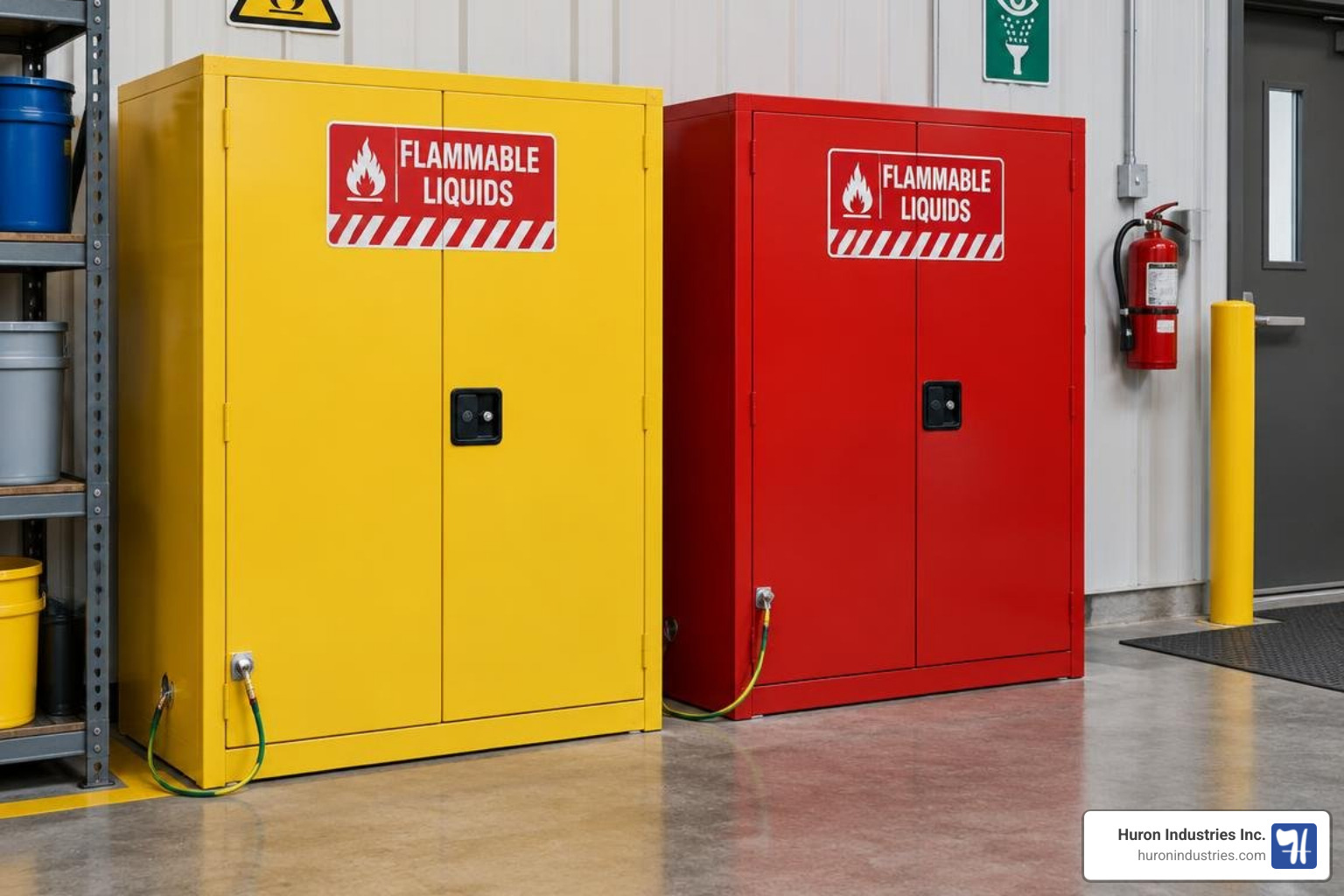
Section 7 and Section 13 establish operational compliance parameters for chemical storage and hazardous waste disposal.
Store sealed containers between 5°C and 32°C (41°F to 90°F) in dedicated, flammable-liquid storage cabinets away from direct sunlight, reactive metals, and strong oxidizing agents such as nitric acid, perchlorates, and hydrogen peroxide. Maintain strict moisture control to avoid destabilizing the suspension matrix.
Clean Containment and Spill Response Procedures
In the event of a leak or container breach:
- Immediately isolate the perimeter and eliminate all active ignition sources.
- Ventilate the area using explosion-proof ventilation equipment.
- Avoid using standard textile socks or polypropylene pads that allow flammable solvent to seep or weep during handling.
- Apply advanced granular sorbent encapsulation. Using materials evaluated on the Neosafe Max safety datasheet, technicians can scoop a granular perimeter to dam the spill, pour bulk sorbent over the center to encapsulate the flammable liquid without dripping, and sweep the dry matrix directly into a disposal vessel.
Transport Regulations and Waste Disposal
- DOT / IATA Shipping Description: UN 1263, Paint (or Paint Related Material), Class 3, Packing Group II.
- RCRA Classification: Unused solvent-wet waste, contaminated rags, and liquid residues exhibit the characteristic of ignitability, carrying the EPA Hazardous Waste Number D001.
- Regulatory Status: Ingredients are listed under the TSCA Inventory and subject to SARA Title III Section 311/312 hazard reporting. Never discharge solvent-laden graphite slurry into municipal drains or sewer systems.
Standardizing Graphite Lubricant Selection Across Regulated Facilities
Selecting the correct lubricant requires aligning application parameters with technical datasheets, operating temperatures, and manufacturer certifications.
Nuclear and Defense Specification Compliance
Critical industrial applications—such as naval reactor servicing and commercial nuclear power plant operations—demand certified purity and traceable testing:
- NEOLUBE No. 1.1: A high-purity, dry-film graphite anti-seize and thread lubricant engineered for commercial and naval nuclear power plants as well as limited-clearance moving parts. Formulated to meet MIL-L-24131C requirements, it operates continuously at 400°F and intermittently up to 850°F. Refer to the Neolube No. 1.1 safety datasheet for handling controls. Note: The coefficient of friction for Neolube No. 1.1 of 0.15 has not been tested or approved for this.
- NEOLUBE No. 2: Designed for the same applications as No. 1.1—operating at 400°F continuous and 850°F intermittent service—with added capability as an electrically conductive dry-film coating for buss bars, switch contacts, and static bleed paths (with brief utility during engine assembly/break-in). It is not mil-spec; consult the Neolube No. 2 technical data for full specifications.
- Molybdenum Disulfide in Isopropanol: Qualified under MIL-L-24478 as a solid dry-film lubricant for threaded, limited-clearance metal components. As outlined on the Molybdenum Disulfide Isopropanol SDS, this formulation must not be applied to 300-series or 17-4 stainless steel alloys to avoid stress-corrosion mechanisms.
Specialized Formulations for Pipe Joints and Precision Reloading
High-pressure and specialized commercial environments require distinct physical property boundaries:
- NEOLUBE No. 1260: An injectable thread sealant and anti-seize paste specifically engineered for close-tolerance pipe joints in critical service. Rated to 1175°F and 2300 psi under General Electric specification GE D50YP12, full handling parameters are outlined on the Neolube No. 1260 thread sealant safety datasheet.
- NEOLUBE No. 100: A dedicated pipe thread sealant designed for fossil, solar, and hydroelectric power generation piping systems, rated for continuous operational service up to 300°F. Detailed in the Neolube No. 100 thread sealant datasheet.
- CaseLube: Formulated specifically as an ultra-pure case-neck lubricant for precision ammunition reloading, providing consistent seating force without contaminating powder charges, as documented on the CaseLube safety data sheet.
Frequently Asked Questions About Graphite Safety Datasheets
What is the primary flammability hazard in alcohol-based colloidal graphite suspensions?
The primary risk comes from low-flash-point organic solvent carriers like isopropanol (flash point approximately 11°C / 51.8°F). Volatile vapors readily disperse into unventilated areas, creating explosive vapor-air mixtures that ignite in the presence of ungrounded equipment, electrical switches, or static discharges.
How does OSHA regulate occupational graphite dust exposure versus liquid carriers?
OSHA enforces a Permissible Exposure Limit (PEL) of 5 mg/m³ for respirable graphite dust (15 mg/m³ for total dust). When suspended in liquid, airborne dust is negligible until the carrier dries. During liquid application, OSHA focuses on carrier vapors (such as isopropanol at a 400 ppm PEL), requiring dedicated solvent monitoring and adequate ventilation.
What are the proper disposal considerations under RCRA for solvent-based graphite waste?
Under the Resource Conservation and Recovery Act (RCRA), solvent-wet graphite waste, used wipes, and residual liquids exhibit the ignitability characteristic (D001). Waste must be accumulated in closed, grounded containers and transferred to a licensed hazardous waste management facility; it must never be disposed of in standard trash or poured down industrial drains.
Conclusion
Maintaining compliance with a colloidal graphite SDS requires active oversight of carrier flammability, airborne exposure limits, grounded storage protocols, and proper waste management. Huron Industries Inc. (Port Huron, MI) manufactures certified, high-purity dry-film lubricants, thread sealants, and anti-seize compounds built for regulated sectors—ranging from nuclear reactor systems to precision case-neck lubrication with CaseLube.
Always cross-reference your specific operating temperatures, substrate alloys, and environmental standards against verified technical datasheets before deploying any dry-film graphite formulation.
Scientific References
Hector Domínguez. "Structure of the SDS/1-dodecanol surfactant mixture on a graphite surface: A computer simulation study." Journal of Colloid and Interface Science, 2010. DOI 10.1016/j.jcis.2010.02.062. Hector Domínguez. "Structure of the Sodium Dodecyl Sulfate Surfactant on a Solid Surface in Different NaCl Solutions." Langmuir, 2009. DOI 10.1021/la900714a.