
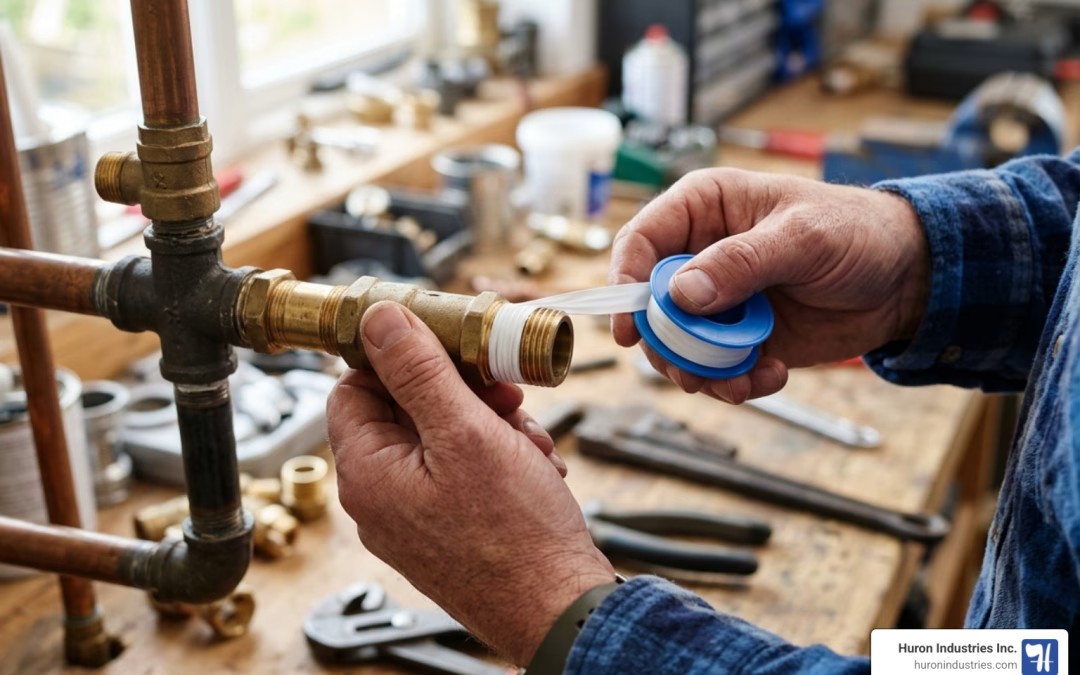
The Right Way to Start Applying PTFE Tape (Before You Touch the Pipe)
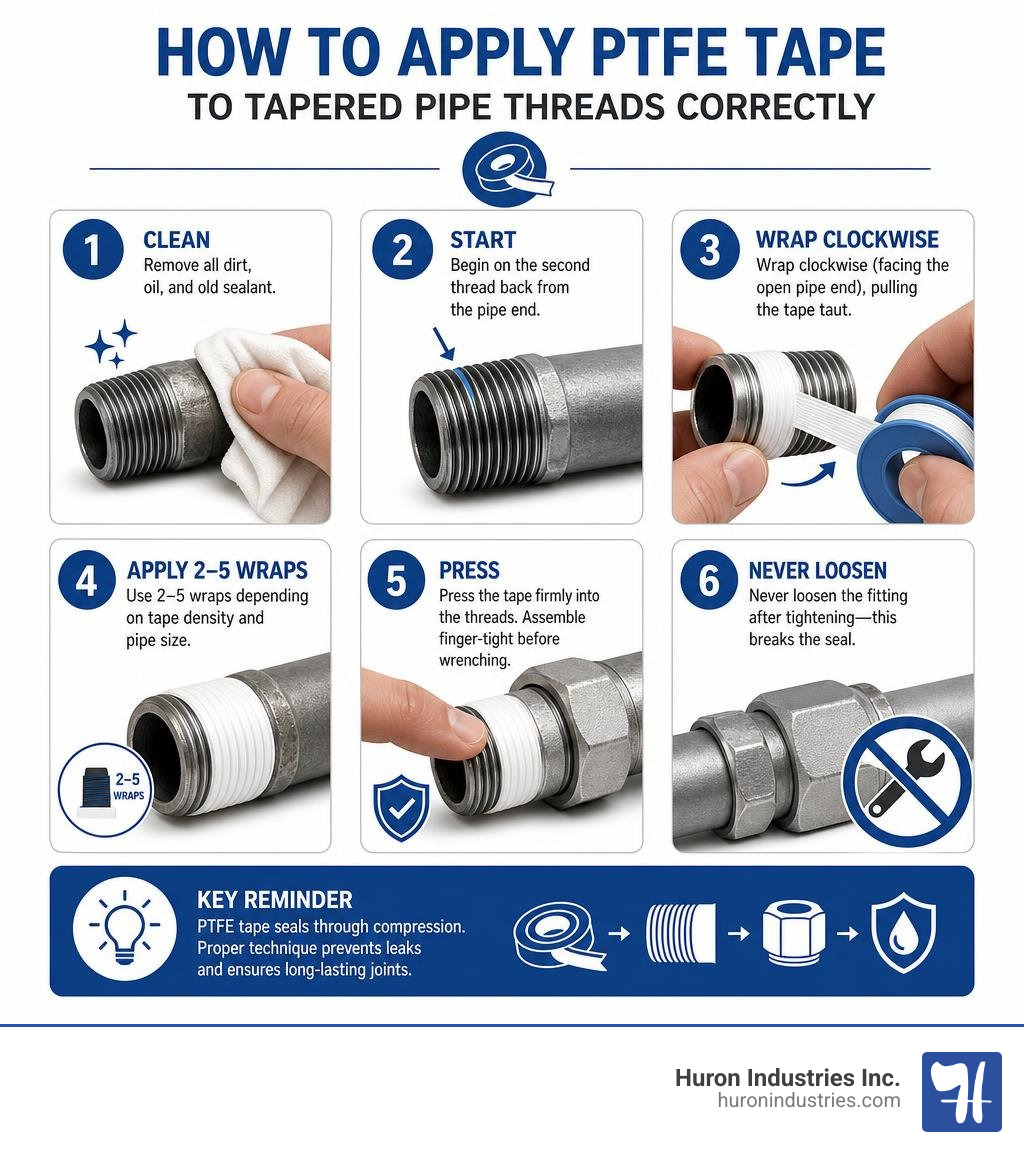
Applying PTFE tape correctly is the difference between a joint that holds for decades and one that weeps within days. Here's the short version:
- Clean the male threads — remove all dirt, oil, and old sealant
- Start on the second thread back from the pipe end
- Wrap clockwise (facing the open pipe end), pulling the tape taut
- Apply 2–5 wraps depending on tape density and pipe size
- Press the tape firmly into the threads, then assemble finger-tight before wrenching
- Never loosen the fitting after tightening — this breaks the seal
It sounds simple. But most leaks traced back to threaded joints aren't caused by bad fittings or wrong materials — they're caused by tape wrapped the wrong way, started on the wrong thread, or applied to the wrong fitting type entirely.
PTFE (polytetrafluoroethylene) tape works by filling the microscopic gaps between the crests and roots of tapered pipe threads as the joint is tightened. It doesn't bond or cure — it seals through compression. That means technique matters more than most people expect.
I'm Nicholas Cunha, founder of CreatiVertical and the content strategist behind Huron Industries Inc.'s technical content program — where applying PTFE tape correctly sits at the intersection of material science and field practice we cover across thread sealants, anti-seize, and specialty lubricants. In this guide, we'll walk through every step of the process, the grades and types of tape that matter for industrial and critical-service applications, and the mistakes that even experienced tradespeople still make.
PTFE Tape Types, Grades, and Compatibility
Before you begin applying PTFE tape, you need to make sure you have chosen the right grade and density for your specific piping system. PTFE thread seal tape is made from unsintered polytetrafluoroethylene film. Standard commercial thread seal tape is commonly specified against Commercial Item Description A-A-58092, formerly MIL-T-27730A. For general background on the polymer itself, see this technical overview of polytetrafluoroethylene.
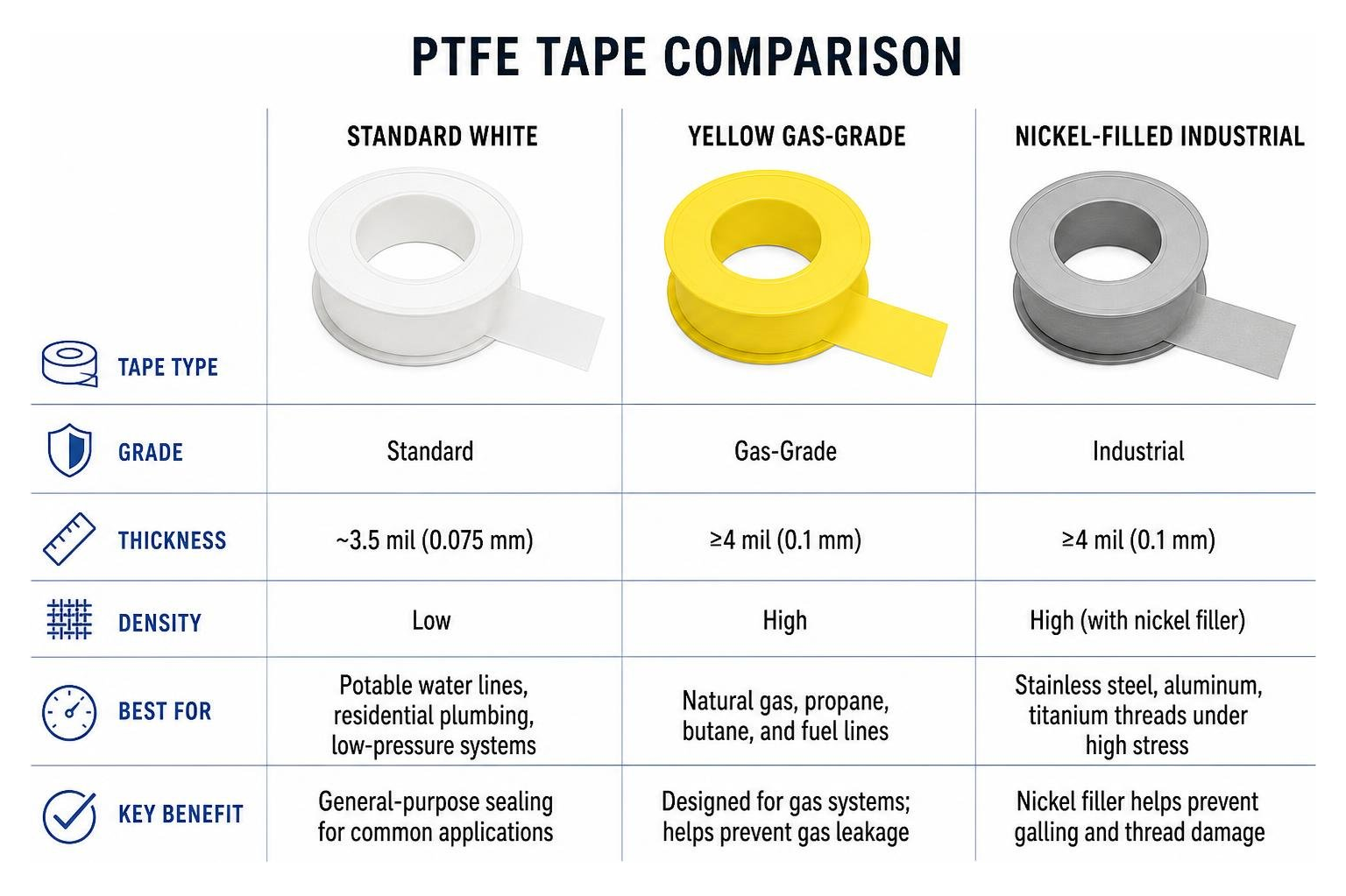
Not all PTFE tape is created equal. The market offers several distinct grades, typically identified by color, density, and thickness:
- Standard White Tape: This is the most common low-density tape, typically around 0.4 g/cm³ to 0.7 g/cm³ density, with a thickness of about 3.5 mils or 0.075 mm. It is designed for standard residential water lines, domestic plumbing, and low-pressure potable water systems.
- Yellow Gas-Grade Tape: Thicker, typically 0.1 mm or at least 4 mils, and significantly denser than standard white tape, yellow PTFE tape is formulated specifically for natural gas, propane, butane, and fuel lines. It meets standards like ASTM D3308 and applicable gas-service requirements to handle light hydrocarbons without allowing gaseous leakage.
- Pink/Red High-Density Tape: Frequently specified by commercial plumbers and pipefitters, pink tape is a heavy-duty, high-density fluoropolymer tape meant for heavy water lines, large NPT fittings, and steam lines.
- Green Tape: Oxygen-rated green PTFE tape is thoroughly cleaned and completely grease-free virgin tape designed for pure oxygen systems, medical gas lines, and hyperbaric piping where oil contamination can create an extreme combustion hazard.
- Nickel-Filled Gray/Silver Industrial Tape: Engineered for heavy industrial assemblies, nickel-infused PTFE tape is usually 4 mils thick or greater. The nickel particle filler acts as an anti-galling agent, making it a strong choice when assembling stainless steel, aluminum, or titanium threaded joints under extreme load.
Choosing between liquid thread compounds and fluoropolymer tape comes down to your operating conditions and thread tolerances. For a complete comparison of performance factors, check out our guide on Pipe Thread Sealant vs PTFE Tape.
Fitting Compatibility: Tapered vs. Straight Threads
One of the most frequent misapplications I encounter in the field is attempting to seal straight or parallel threads with PTFE tape. Understanding thread mechanics is critical to avoiding joint failure.
PTFE tape is strictly designed for male tapered pipe threads, such as National Pipe Taper (NPT) or British Standard Pipe Tapered (BSPT). Tapered threads seal through a wedge action - an interference fit where metal deforms slightly as male and female threads mate. Because the helical root-to-crest gaps remain along the thread path, thread tape or a dedicated liquid Pipe Thread Sealant is necessary to fill those microscopic helical voids and provide lubrication during makeup.
You should never apply PTFE tape to straight (parallel) threads, compression fittings, flared fittings, push-fit connections, or hose unions:
- Compression Fittings: Compression joints create a mechanical seal by compressing a copper or brass olive (ferrule) directly onto the outer wall of the pipe. Wrapping PTFE tape around the threads or olive prevents the nut from seating properly and leads to leaks.
- O-Rings and Gaskets: Fittings that feature flat elastomeric washers or face-seal O-rings rely entirely on rubber compression. Tape on these threads adds unnecessary bulk, preventing proper mating torque and degrading the seal.
- Flared and Tube Fittings: Flare connections seal metal-to-metal on the 37-degree or 45-degree angled seat face. Wrapping tape on the male threads does nothing to enhance the seal and risks dropping tape scrap directly into the fluid stream.
Temperature and Pressure Limits
When properly installed, standard virgin PTFE tape performs reliably across extreme temperature ranges - from as low as -400°F (-240°C) up to upper service limits of 450°F to 500°F (230°C to 260°C). While raw polytetrafluoroethylene has a melting/decomposition point around 620°F (327°C), the film begins to lose structural integrity and soften as temperatures climb past 500°F (260°C). Above 600°F (315°C), PTFE breaks down completely and can emit corrosive fumes.
In terms of pressure, standard industrial-grade PTFE tape can easily handle typical municipal water system pressures and industrial fluid lines up to 2,000 psi (13,800 kPa). Heavy-duty nickel-filled tapes rated for extreme hydraulic systems can maintain seals from full vacuum up to 10,000 psi.
Because PTFE exhibits a higher coefficient of linear thermal expansion than most metals, the tape expands as temperatures rise, wedging itself tighter into the thread roots. However, for specialized extreme-duty applications where systems experience continuous thermal cycling, pressures exceeding 2,300 psi, or operating temperatures above 500°F, liquid anaerobic sealants or colloidal graphite pastes provide superior long-term performance. Explore our high-performance liquid sealant options like High Pressure Thread Sealant 2300 PSI Neolube 1260 for high-stress industrial environments.
Step-by-Step Guide to Applying PTFE Tape
Now that you know what tape to use, let's look at the exact mechanics of applying ptfe tape to tapered pipe threads. Following a structured procedure eliminates field failures and guarantees a leak-free installation on the first try.
Thread Preparation Before Applying PTFE Tape
A clean substrate is mandatory. PTFE tape is a non-adhesive film; it relies entirely on mechanical conformity and friction to hold its position on the thread flanks.
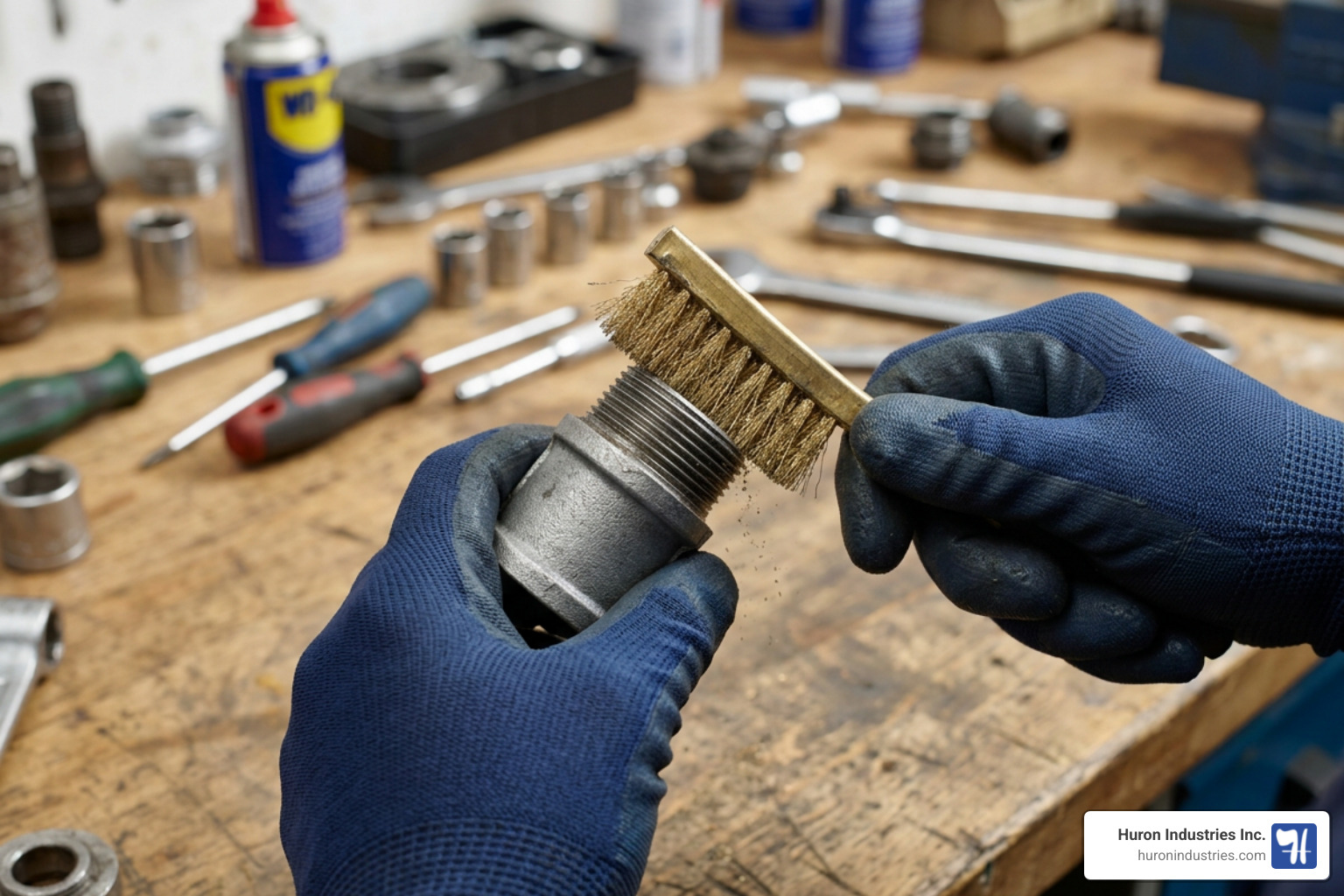
- Inspect and Brush: Use a stiff plastic or brass wire brush to clear away leftover joint compound, old shredded tape, metal shavings, or pipe rust from the male threads.
- Degrease: Wipe the male and female threads with a fast-evaporating solvent such as isopropyl alcohol (IPA) or a dedicated industrial pipe cleaner. Remove all residual cutting oils, grease, and moisture.
- Dry Thoroughly: Allow the threads to air dry completely or dry them with a lint-free cloth. Trapped solvent or water in the root channels reduces friction and causes the tape to slip during application.
Applying PTFE Tape Direction: The Clockwise Rule
The single most common mistake made when applying PTFE tape is wrapping in the wrong direction.
Always wrap the tape clockwise when looking directly at the open face of the male pipe end.

Why does wrapping direction matter so much? Thread connections tighten when turned clockwise into the female fitting. When your tape is wrapped clockwise, the friction generated by the female threads during assembly smooths the tape down, drawing it deeper into the root channels.
If you wrap counterclockwise (counter to the thread spiral), the leading edge of the female thread will catch the exposed lip of the tape during assembly. Instead of compressing the film, the action will push, bunch up, and unspool the tape right off the fitting, causing immediate joint failure.
Wrap Count, Tension, and Starting Thread Position
Achieving a professional seal requires controlling three variables: starting position, tape tension, and wrap count.
1. Starting Position: The Second-Thread Rule
Hold the pipe steady in one hand with the male thread facing toward you. Position the edge of the tape on the second thread back from the open end of the pipe.
Leaving the first male lead thread entirely exposed serves two critical purposes:
- Prevents System Contamination: If tape hangs over the front edge of the pipe, the female fitting shears off tiny fluoropolymer fragments as it engages. These loose plastic shreds travel downstream, clogging valves, plugging orifice plates, and ruining delicate instrumentation or gas regulators.
- Prevents Cross-Threading: Keeping the lead thread clear allows the male and female threads to catch and engage cleanly hand-tight without cross-threading.
2. Wrap Tension
Hold your thumb firmly over the tape tail on the second thread, keeping the spool close to the fitting. Pull the tape taut as you rotate around the pipe. Apply roughly 20% stretch as you wrap. You know you have the correct tension when the sharp metallic crests of the underlying threads remain clearly visible through the stretched tape film.
3. Required Wrap Count
The number of wraps required depends on tape density, tape width, and nominal pipe size (NPT).
| Pipe Thread Size (NPT) | Recommended Tape Width | Standard White Tape (Low Density) | Industrial / Yellow Tape (High Density) |
|---|---|---|---|
| 1/8" to 3/8" | 1/4 inch | 3 to 4 wraps | 2 to 3 wraps |
| 1/2" to 3/4" | 1/2 inch | 4 to 5 wraps | 2 to 3 wraps |
| 1" to 2" | 3/4 inch or 1 inch | 5 to 7 wraps | 3 to 4 wraps |
| Above 2" | 1 inch | 6 to 8 wraps | 4 to 5 wraps |
Maintain a 50% overlap on each wrap as you work backward toward the pipe body. Once you achieve the desired wrap count, pull the tape firmly across the threads to snap or cut it cleanly. Do not leave a long trailing tail. Press the finished end down firmly into the thread profile with your thumb so it molds seamlessly to the fitting.
Avoiding Critical Errors and Special Applications
Even seasoned installers run into trouble when dealing with non-standard media, high-vibration equipment, or system modifications. Understanding common failure modes ensures your installations remain leak-free over years of service.
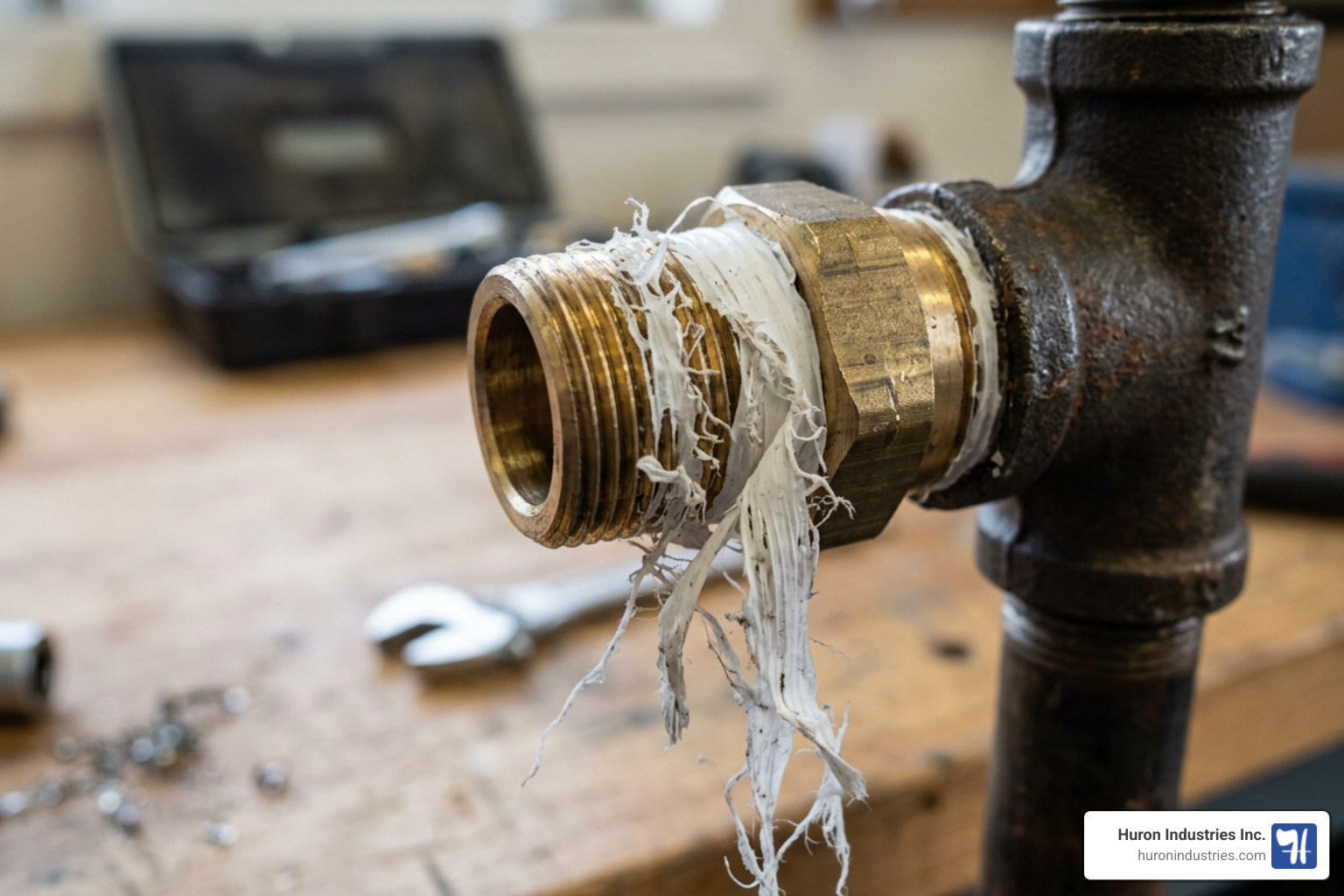
Common Mistakes When Applying PTFE Tape
Avoiding leaks means avoiding the bad habits that undermine thread makeup:
- Overhanging the Lead Thread: Overhanging the front edge is the primary cause of downstream particulate contamination in industrial fluid and gas lines.
- Reverse Wrapping: Wrapping counterclockwise causes tape to unravel during joint makeup, creating bunched wads of tape that prevent full thread engagement.
- Over-Wrapping (Excessive Layers): Adding 10 or 12 layers of tape does not create a better seal—it adds excessive bulk that creates high radial stress. On plastic fittings (such as PVC or CPVC female adapters), over-wrapping tape can split and crack the female socket as the male pipe is torqued into place.
- Loosening or Backing Off a Fitting: Once you tighten a tapered pipe joint wrapped with PTFE tape, never back it off to align a valve handle or elbow. Tapered pipe threads seal by deforming the tape and thread surfaces. Backing off the fitting breaks that physical compression seal. If you overshoot your alignment angle, disassemble the joint entirely, scrape off the old tape, clean the threads, re-wrap with fresh tape, and reassemble.
- Relying on Torque Instead of Turn Count: NPT pipe fittings should be made up based on turn counts beyond Fit to Hand Tight (FTHT) according to ASME B1.20.1 standards, rather than torque values. Friction varies wildly based on tape thickness and surface finish. Tightening until a specific torque is reached can result in under-engaged or damaged threads.
For high-vibration systems or critical applications where backing off might occur during alignment, liquid sealants offer distinct advantages. Read our analysis on Non-Hardening vs Hard-Setting Thread Sealant Neolube to select the right material for your operating conditions.
Using PTFE Tape on Gas Lines and Critical Systems
Gas lines carry strict code requirements because small fuel gas leaks present immediate fire and explosion hazards.
When applying PTFE tape on natural gas, propane, or LPG systems:
- Use Yellow Gas-Rated Tape Only: Never use standard white plumbing tape on gas connections. White tape is thinner, lower density, and slightly porous, allowing gas molecules to slowly permeate through the joint. Yellow tape meets ASTM D3308 specifications and is dense enough to trap small gaseous molecules.
- Adhere to Code (3 to 4 Wraps): Apply 3 to 4 wraps of yellow gas tape, maintaining firm tension and keeping the lead thread clean.
- Perform Bubble Testing: Always coat the completed gas joint with a certified leak detector solution or soap bubble solution and pressurize the system to verify zero bubble formation before putting lines into service.
When managing high-temperature industrial lines, steam piping, or aggressive chemicals, specialized sealants are often necessary. Learn more about critical service protection with our guide on High Temperature Thread Sealant Critical Service and explore specialized options in Gas Pipe Thread Sealant Neolube.
Frequently Asked Questions
Can you combine PTFE tape with pipe dope?
Yes! Combining PTFE tape with a brush-on liquid thread sealant (pipe dope) is an industry-standard method known as the "belt-and-suspenders" approach. It is widely used in high-pressure gas lines, large-diameter industrial piping, and stubborn or worn threads.
To combine them correctly:
- Wrap the male threads with PTFE tape following standard procedure (leaving the lead thread exposed and wrapping clockwise).
- Brush a smooth, light coat of non-hardening pipe dope directly over the top of the wrapped tape, filling the remaining thread valleys.
The tape fills large root gaps and provides immediate shear lubrication, while the paste fills microscopic voids in the tape matrix and acts as a secondary barrier.
How should PTFE tape be stored and what is its shelf life?
PTFE is an exceptionally stable synthetic fluoropolymer that does not age, harden, dry out, or degrade under normal atmospheric conditions. Unused rolls of PTFE tape have an essentially indefinite shelf life when stored properly.
To store your tape:
- Keep rolls inside their protective plastic snap covers or original boxes to keep airborne grit, sawdust, or metal shavings off the clean edges.
- Store in a clean, cool, dry location away from direct exposure to intense ultraviolet light or open heat sources.
What should you do after assembling a joint sealed with tape?
After assembling a joint sealed with PTFE tape:
- Tighten the fitting hand-tight first to ensure clean thread engagement.
- Use appropriate smooth-jaw or pipe wrenches to tighten the joint according to ASME B1.20.1 turn counts (typically 2 to 3 full turns past hand-tight for NPT fittings).
- Stop tightening once the fitting reaches the required orientation. Never loosen or back off the fitting to adjust alignment.
- Hydrostatically or pneumatically pressure-test the piping assembly to verify seal integrity before closing up walls or putting system lines online.
Conclusion
Mastering the art of applying PTFE tape comes down to technique, consistency, and choosing the right material for the job. By cleaning your threads, keeping the lead thread exposed, wrapping clockwise under firm tension, and using the correct grade for your fluid service, you ensure every threaded connection stays tight and leak-free for its entire operating lifespan.
At Huron Industries Inc., we have spent over five decades manufacturing high-purity colloidal graphite formulations, anti-seize compounds, and industrial sealants for demanding commercial and military applications. Whether you are assembling domestic water lines, high-pressure hydraulic loops, or nuclear-grade process lines, using specification-grade materials and proper application methods guarantees reliability when performance matters most. Explore our full line of industrial thread sealants at Huron Industries Pipe Thread Sealant.