

Why Dry Film Lubricant Coatings Matter in High-Stakes Industrial Applications
A dry film lubricant coating is a solid material bonded to a surface to reduce friction — without any oil, grease, or liquid that needs to be replenished. Unlike wet lubricants, it stays put, doesn't attract dirt, and keeps working in conditions where conventional lubricants simply fail.
Quick answer: Here's what you need to know at a glance:
| Question | Answer |
|---|---|
| What is it? | A solid lubricating film bonded directly to a surface |
| How does it work? | Layered molecules shear against each other with very low resistance |
| Key types | PTFE, MoS2, WS2, graphite, hexagonal boron nitride (HBN) |
| Best for | Extreme heat, extreme cold, vacuum, high load, clean environments |
| Key benefit over wet lubes | No maintenance, no contamination, no re-application in service |
| Common industries | Aerospace, nuclear, defense, automotive, oil & gas, precision reloading |
Some applications simply can't tolerate a wet lubricant. Vacuum environments cause oils to vaporize and outgas. Extreme temperatures cause greases to break down. Cleanroom and food-grade settings can't risk contamination. And some components — like tightly toleranced fasteners or aerospace actuators — need lubrication that won't migrate, pool, or attract particulates.
That's exactly where dry film lubricants earn their place.
These coatings aren't a niche workaround. They're a precision engineering decision — one that procurement engineers, maintenance leads, and facility managers at nuclear plants, defense contractors, and industrial operations make deliberately when reliability is non-negotiable.
I'm Nicholas Cunha, and through my work building content and SEO systems for Huron Industries Inc. — a manufacturer of high-purity specialty lubricants including colloidal graphite and precision formulations — I've developed a deep understanding of how dry film lubricant coating technology is specified, sourced, and applied across regulated industrial environments. This guide will walk you through everything you need to make an informed decision.
What is a Dry Film Lubricant Coating?
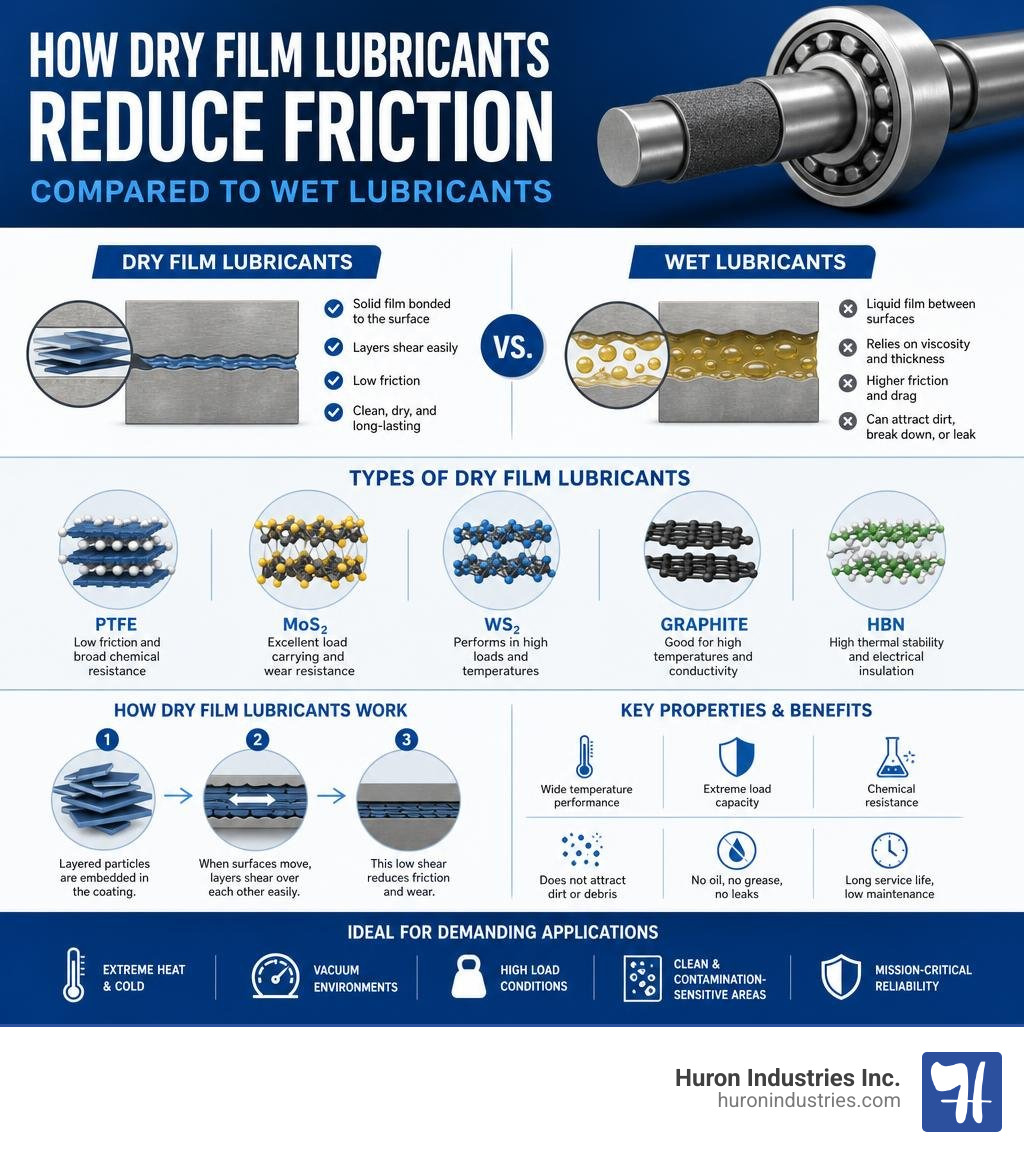
At its core, a dry film lubricant coating (often called a solid film lubricant) is a thin layer of solid material that reduces friction between two mating surfaces. Unlike traditional liquid oils or semi-solid greases, these coatings dry completely on the part, forming a tenacious, dry-to-the-touch barrier.
The magic of these coatings lies in their microscopic structure. Most high-performance dry lubricants rely on a lamellar structure. Picture a deck of playing cards: the cards themselves are incredibly strong and flat, but if you push the top of the deck, the cards slide over one another with almost zero effort.
In a lamellar solid lubricant, the atoms within a single layer are held together by strong covalent bonds, while the forces holding the individual layers together (Van der Waals forces) are extremely weak. This allows the layers to shear against each other easily under sliding forces, providing exceptional boundary lubrication.
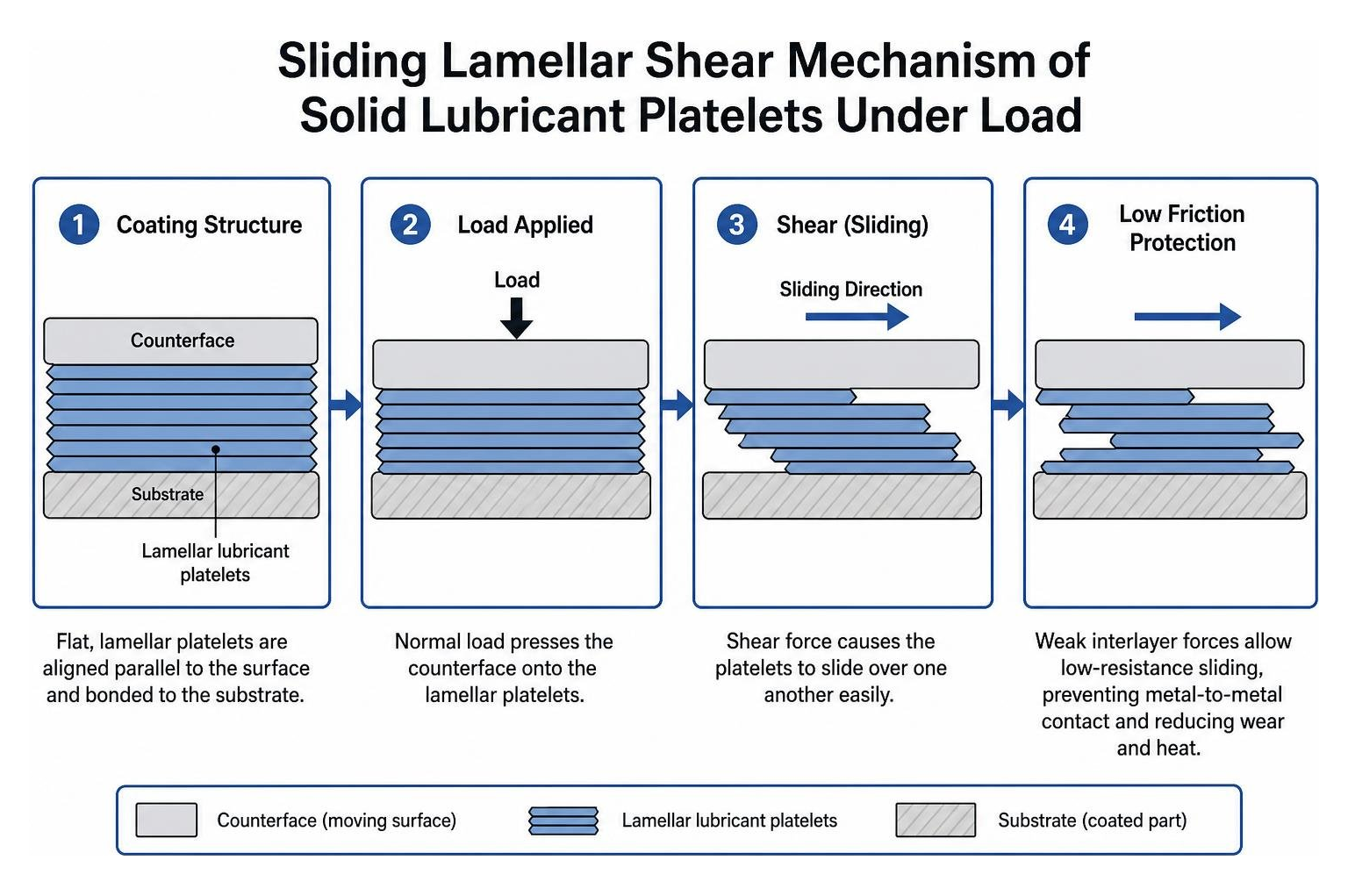
This molecular shearing action prevents direct metal-to-metal contact, drastically reducing wear and heat generation even under massive loads. When selecting a coating, ensuring High Quality Lubrication is critical because the solid lubricant must remain firmly bonded to the substrate to perform over thousands of cycles.
Dry Film Lubricant Coating vs. Traditional Wet Lubricants
Why would you choose a dry film coating over a reliable bucket of grease? The choice usually comes down to the operating environment. Traditional fluid lubricants excel in closed, hydrodynamic systems (like automotive engines where oil is continuously pumped). However, they fail miserably in open or extreme environments.
Here is how they compare across critical performance vectors:
- Dust and Contaminant Attraction: Wet lubricants act like magnets for environmental dust, grit, and debris. This creates an abrasive grinding paste that accelerates component wear. Dry film coatings dry completely, leaving no sticky residue to trap contaminants.
- Maintenance Requirements: Liquid lubricants migrate, leak, evaporate, or break down over time, requiring routine replenishment. Dry film coatings are designed to be maintenance-free, often lasting the entire operational life of the component.
- Outgassing in Vacuum Environments: In space exploration, aerospace systems, or semiconductor manufacturing, vacuum conditions cause liquid lubricants to vaporize (outgas). This not only destroys the lubricating film but also contaminates sensitive optical or electronic sensors. Solid films do not vaporize, making them the standard choice for vacuum hardware as detailed in Dry Film Lubricants - Curtiss-Wright Surface Technologies .
- Long-Term Storage Stability: Components coated with a high-quality solid film can be stored in non-climate-controlled warehouses for years without the lubricant degrading, gumming up, or running off.
Core Chemistry: Types of Solid Lubricants
Not all dry film coatings are created equal. The mechanical properties, temperature limits, and load-carrying capacities of a coating depend entirely on the active solid lubricant particle embedded in the resin matrix.
The table below outlines the primary types of solid lubricants used in modern industrial formulations:
| Lubricant Type | Coefficient of Friction (Typical) | Max Operating Temp (In Air) | Max Load Capacity | Best Suited For |
|---|---|---|---|---|
| Graphite | 0.04 – 0.10 | 1,200°F (649°C) | < 50,000 psi | High temperatures, nuclear systems, high humidity |
| Molybdenum Disulfide (MoS2) | 0.04 – 0.08 | 750°F (399°C) | > 250,000 psi | Heavy loads, vacuum, extreme mechanical wear |
| Tungsten Disulfide (WS2) | 0.03 – 0.05 | 1,000°F (538°C) | > 300,000 psi | Ultra-tight tolerances, aerospace, extreme loads |
| PTFE (Teflon) | 0.02 – 0.04 | 500°F (260°C) | < 20,000 psi | Low-load sliding, non-stick, chemical resistance |
| Hexagonal Boron Nitride (HBN) | 0.15 – 0.20 | 1,800°F (982°C) | Moderate | Clean environments, electronics, extreme heat |
Graphite-Based Dry Film Lubricant Coating Solutions
Graphite is one of the oldest and most trusted solid lubricants in the world. It is highly effective in high-temperature environments and remains stable in air up to 1,200°F (649°C).
At Huron Industries Inc., we have spent decades perfecting colloidal graphite formulations. Our flagship product line, Neolube, is a high-purity colloidal graphite suspension in an easy-to-apply carrier solvent. When applied, the solvent evaporates rapidly, leaving behind a micro-thin, high-purity graphite dry film that bonds tenaciously to the substrate.
Graphite requires a small amount of ambient moisture vapor to achieve its low coefficient of friction, which makes it incredibly effective in standard atmospheric environments, high-temperature industrial ovens, and steam-exposed systems. Because of its high purity and exceptional radiation resistance, our Neolube® formulations (qualified to MIL-L-24131C) are the industry standard for Precision Lubrication in commercial and naval nuclear reactor systems. You can read more about these specialized applications on the Huron Industries: NEOLUBE® Industrial Sealant & Lubricant information page.
Molybdenum Disulfide (MoS2) and Tungsten Disulfide (WS2)
When your application involves crushing loads, Molybdenum Disulfide (MoS2) is the heavy-duty champion. MoS2 coatings can maintain their lubricant qualities under extreme contact pressures up to 250,000 psi or more. Unlike graphite, MoS2 does not require moisture to lubricate; in fact, its coefficient of friction actually improves in dry air or vacuum environments, making it a staple for heavy industrial machinery, oilfield drilling tools, and aerospace landing gear.
Tungsten Disulfide (WS2) takes these properties a step further. It has an even wider temperature stability range (stable from -305°F to 1,000°F in air, and up to 2,400°F in a vacuum). Furthermore, proprietary processing methods allow WS2 coatings to be applied at ultra-thin levels — often 0.5 microns or less — allowing it to be integrated into precision assemblies with zero design changes to the component's engineering tolerances.
Fluoropolymers (PTFE) and Ceramic Boron Nitride (HBN)
If your primary goal is a slick, non-stick surface under light to moderate loads, fluoropolymers like Polytetrafluoroethylene (PTFE) are the gold standard. PTFE offers the lowest coefficient of friction of any solid material (often down to 0.02).
Products like Dry PTFE Lube Dry Film Lubricant and other commercial sprays described in the KANO LABORATORIES LLC and Non-Stick datasheets excel in sliding tracks, light-duty conveyors, locks, and packaging equipment. They are clean, non-staining, and highly resistant to chemical attack.
Hexagonal Boron Nitride (HBN), sometimes called "white graphite," is a ceramic-based solid lubricant. It is highly valued because it remains stable at mind-boggling temperatures (up to 1,800°F in air) and is a natural electrical insulator. This makes HBN coatings ideal for high-temperature semiconductor processing, electrical switchgear, and clean cosmetic or medical manufacturing lines where dark-colored lubricants like graphite or MoS2 cannot be used.
Key Benefits and Performance Characteristics
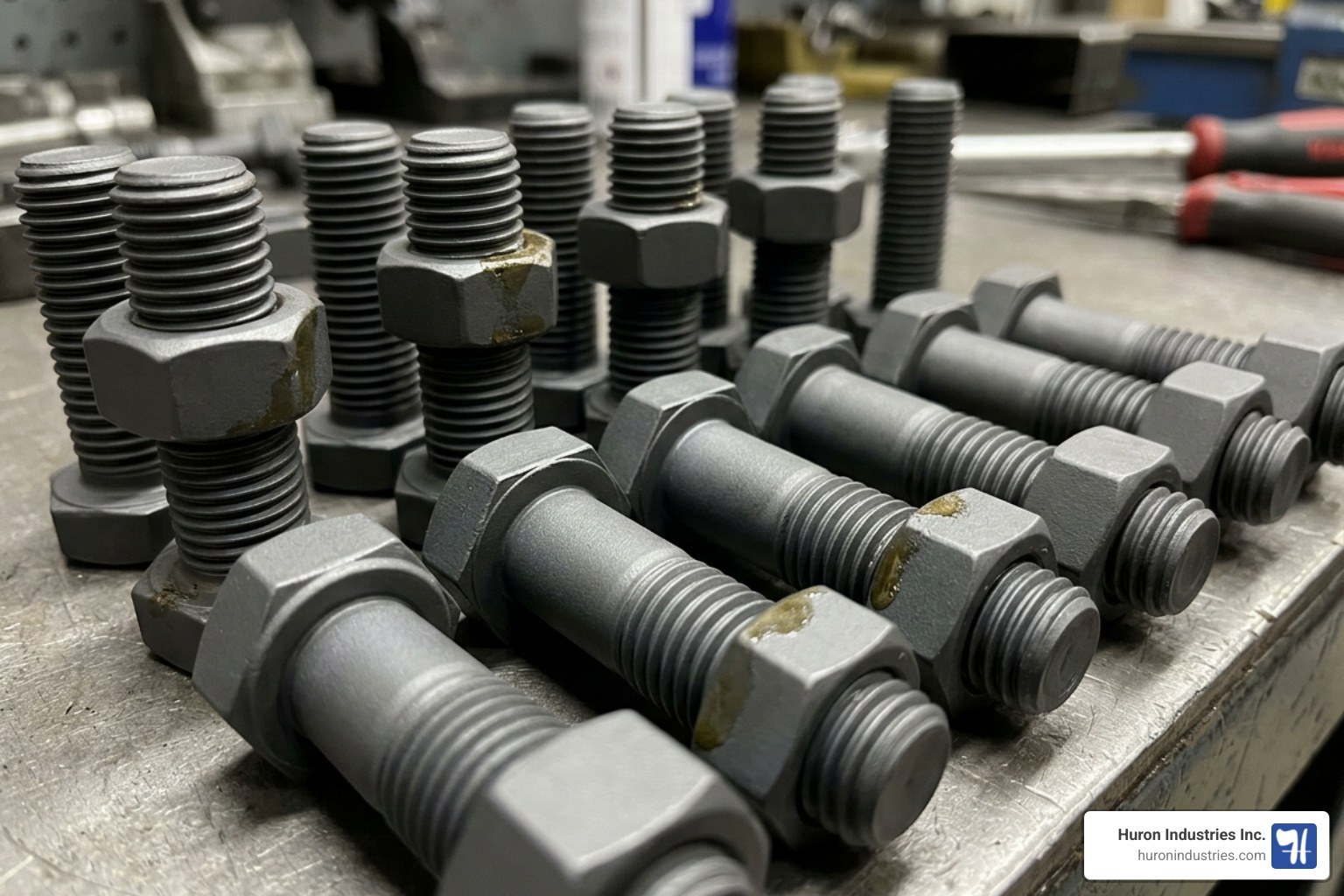
Implementing a dry film lubricant coating provides a suite of mechanical advantages that go far beyond simply making parts "slippery." When properly specified, these coatings directly improve the service life and reliability of critical components.
Using solid films results in a dramatic Lubrication Wear Reduction by creating a physical barrier that prevents metal-to-metal contact during startup, shutdown, and high-load cycles.
Extreme Temperature and Vacuum Performance
Liquid lubricants have very narrow thermal comfort zones. They freeze into solid wax at cryogenic temperatures and thin out, smoke, and burn at high temperatures.
Dry film lubricants operate effectively across a massive thermal spectrum, typically from -395°F (-237°C) up to 2,000°F (1,093°C) depending on the specific chemistry. Because they contain no volatile organic fluids, they do not outgas or degrade in deep space or high-vacuum manufacturing chambers.
Corrosion Resistance and Wear Reduction
Many dry film coatings are formulated with thermosetting resin binders (like epoxies, phenolics, or polyimides) that act as a physical barrier against environmental moisture and oxygen.
When applied over pretreated metals, these coatings can withstand hundreds of hours of salt spray exposure. They also excel at preventing fretting corrosion — the rapid, microscopic wear that occurs when mated metal parts are subjected to continuous micro-vibrations. To understand how these high-pressure, solid-lubricant barriers protect heavy-duty industrial machinery, check out our guide on Slip Slidin Away Why Your Heavy Machinery Needs High Pressure Graphite Lubricant.
For broader information on performance testing and anti-friction capabilities, you can read about various industrial coating applications on Dry Lubricant Coatings .
Application Methods and Coating Thickness
Applying a dry film lubricant coating is highly comparable to industrial painting, requiring meticulous attention to detail to achieve a durable, high-performing bond.
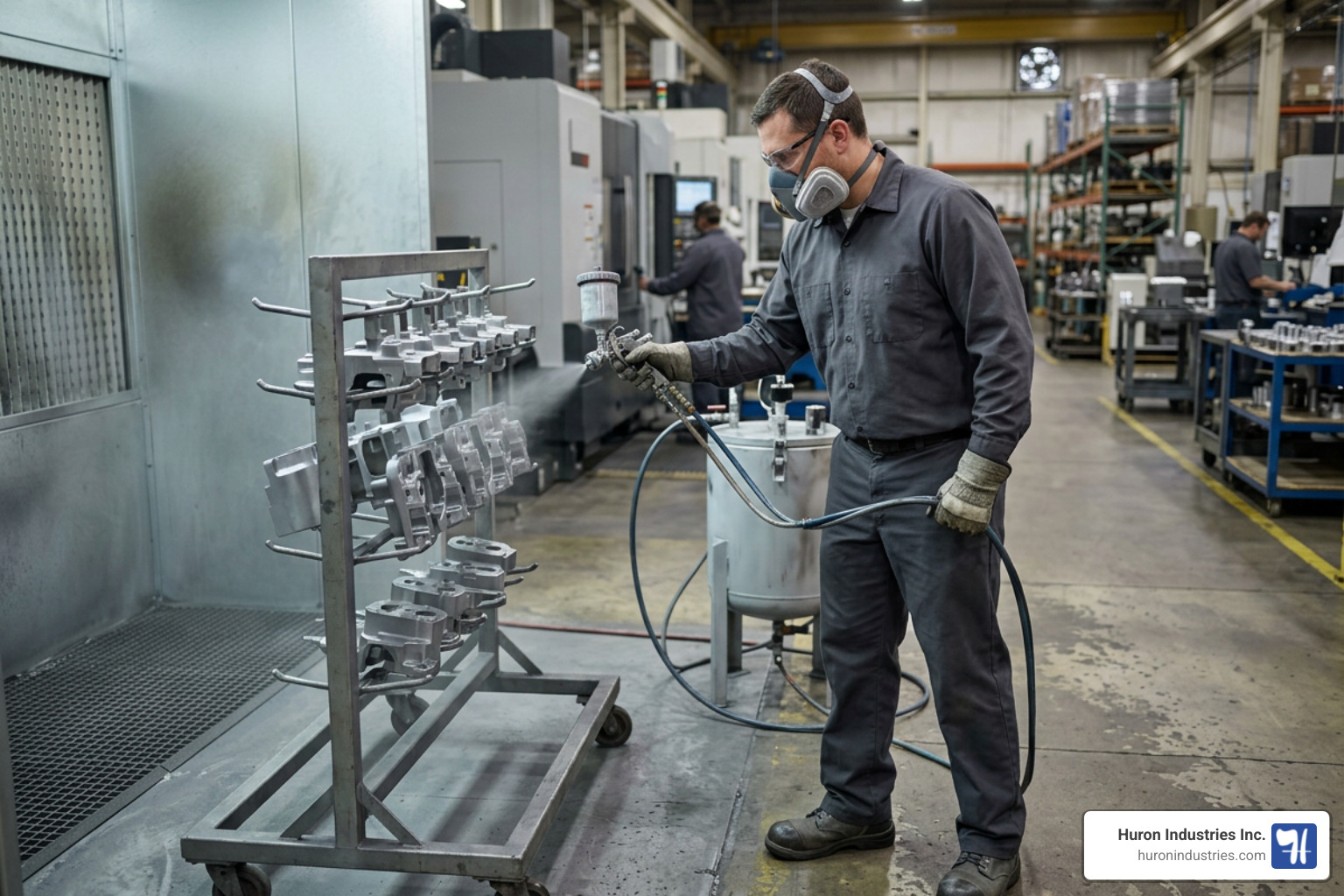
The application process always follows three strict phases:
- Surface Preparation (Pretreatment): This is the most critical step. Any oil, rust, or scale will prevent the coating from bonding. Substrates are typically degreased and then subjected to media blasting (using aluminum oxide or grit) to create a microscopic "profile" or roughness that helps the coating stick. Chemical pretreatments like phosphate coatings (for steel) or anodizing (for aluminum) are also widely used.
- Application: The coating is applied in a liquid state. Depending on the size, geometry, and volume of the parts, this can be done via:
- Precision Spraying: Ideal for complex geometries and tight tolerances.
- Dip-Spin Coating: Perfect for bulk processing of small parts like fasteners and clips.
- Tumble Coating / Immersion: Used for high-volume, low-cost components.
- Curing: Once applied, the liquid carrier must be removed, and the resin binder must be cured to lock the solid lubricant in place. Curing is achieved either via air drying (at room temperature) or thermal curing (baking in an industrial oven at temperatures ranging from 250°F to 400°F).
You can find detailed technical breakdowns of professional application setups on the Dry Film Lubricant Coating Services - IFT Worldwide and Dry & Solid Film Lubricants - Sun Coating Company websites.
Typical Coating Thickness and Tolerances
Because these coatings are often applied to high-precision components, thickness control is vital.
- Standard Industrial Coatings (PTFE, MoS2, Graphite): Typically applied at a dry film thickness of 0.2 to 0.8 mils (5 to 20 microns). For example, high-performance engine bearings are coated at a highly controlled thickness of 0.00025" to 0.00030" (6 to 7.5 microns) to maintain critical oil clearances.
- Ultra-Thin Solid Films (WS2): Applied at 0.5 microns (0.00002 inches) or less. This molecular-level bonding requires no clearance changes in the engineering drawing, making it perfect for aerospace actuators and precision military hardware. You can read more about ultra-thin tolerances on the Dry Film Lubricant | When & How To Use One | Dicronite information page.
Industry Applications and Component Uses
Dry film lubricants are the silent workhorses of modern engineering. They are utilized across a vast array of demanding industries:
- Nuclear Power Generation: Because mineral oils and greases decompose under radiation and can introduce unwanted contaminants into reactor coolant loops, high-purity graphite coatings are mandatory. Our Neolube formulations are trusted globally for lubricating threaded joints, control rod mechanisms, and structural supports in nuclear facilities.
- Aerospace and Defense: Used on turbine engine blade roots, landing gear pins, hinges, and satellite mechanisms where temperature extremes range from cryogenic cold to red-hot heat.
- Automotive Manufacturing: Applied to piston skirts, valve stems, trunk latches, and seat tracks to eliminate squeaks, reduce cold-start wear, and improve fuel efficiency.
- Precision Ammunition Reloading: Competitive shooters and ammunition manufacturers require ultra-consistent friction control when seating bullets. Our specialized CaseLube™ line is engineered specifically to provide this high-precision lubrication for reloading dies and cartridge brass.
To dive deeper into how solid lubricants prevent galling and wear across these diverse industries, read our detailed technical articles:
- Slip Sliding Away With The Ultimate Solid Lubricant
- Technical Notes Neolube 2 For Lubricating Internal Case Necks
- Datasheet Neolube No 2 Lubricant Technical Datasheet
- Datasheet Neolube No 1 Lubricant Technical Datasheet
- Datasheet Neolube No 100 Thread Sealant Technical Datasheet
Selection Criteria and Regulatory Compliance
Selecting the right dry film lubricant coating requires balancing several mechanical and environmental parameters. Engineers must ask:
- What is the substrate material? Aluminum, stainless steel, titanium, and plastics all require different surface preparation techniques and cure temperatures.
- What are the load and speed requirements? High-load, low-speed applications demand MoS2 or WS2, while high-speed, low-load applications are better served by PTFE.
- What are the environmental exposures? Will the part encounter harsh solvents, radiation, marine environments, or extreme vacuum?
In addition to mechanical performance, regulatory compliance is a major driver in 2026. Global environmental regulations like REACH (Registration, Evaluation, Authorisation and Restriction of Chemicals) and RoHS (Restriction of Hazardous Substances) have heavily restricted the use of heavy metals and certain solvents.
Furthermore, the industry is seeing a massive shift toward PFAS-free (per- and polyfluoroalkyl substances) formulations. Traditional fluoropolymer coatings containing PTFE are facing strict regulatory scrutiny. As a result, manufacturers are rapidly adopting advanced ceramic-based, graphite-based, and eco-friendly solid lubricants to meet compliance goals without sacrificing lubricity.
For a comprehensive guide on selecting compliant coatings and understanding anti-friction mechanics, refer to the MOLYKOTE® Anti-Friction Coatings – Smart Lubrication™ solutions for automotive and industrial applications technical brochure.
Frequently Asked Questions about Dry Film Lubricants
How long do dry film lubricants last?
In many applications, a dry film coating is designed to provide lifetime lubrication, meaning it will outlast the mechanical life of the component itself. However, in continuous sliding applications, the wear life depends on the coating thickness, the contact pressure, and the hardness of the mating surfaces. Once the thin resin binder wear-layer is physically worn away, the coating will eventually require reapplication.
Can dry film lubricants be used with wet lubricants?
Yes, this is known as a dual lubrication system. Applying a dry film lubricant to a component and then running it in a traditional oil or grease bath is an excellent engineering practice. The dry film acts as an emergency backup layer during startup or oil pressure loss, preventing catastrophic galling, while also aiding in the initial "running-in" phase of freshly machined components.
What is the typical curing process for these coatings?
Curing processes generally fall into two categories:
- Air-Cure Coatings: These dry and cure at room temperature, typically drying to the touch in 5 to 15 minutes and achieving full cure within 2 to 24 hours. They are highly convenient for field touch-ups or heat-sensitive substrates.
- Oven-Cure (Thermal) Coatings: These require baking in an industrial oven, typically at temperatures between 250°F and 400°F (121°C to 204°C) for 30 to 60 minutes. Thermal curing cross-links the resin binder, yielding significantly higher wear life, superior adhesion, and better chemical resistance.
Conclusion
Whether you are designing deep-space satellites, managing a nuclear power facility, or manufacturing precision components, a high-performance dry film lubricant coating offers a level of reliability and environmental stability that traditional oils and greases simply cannot match.
At Huron Industries Inc., based in Port Huron, Michigan, we have been manufacturing certified, high-purity, and high-performance lubrication solutions since 1971. From our industry-standard Neolube® nuclear-grade graphite coatings to our specialized CaseLube™ line, we specialize in helping engineers solve their most demanding friction and wear challenges.
If you are looking for precision lubrication solutions for reloading or ammunition manufacturing, explore our dedicated CaseLube™ Precision Reloading Lubricant page, or contact our technical team today to find the perfect solid film formulation for your specific industrial application.