
Why Molybdenum Disulfide Is a High-Performance Solid Lubricant
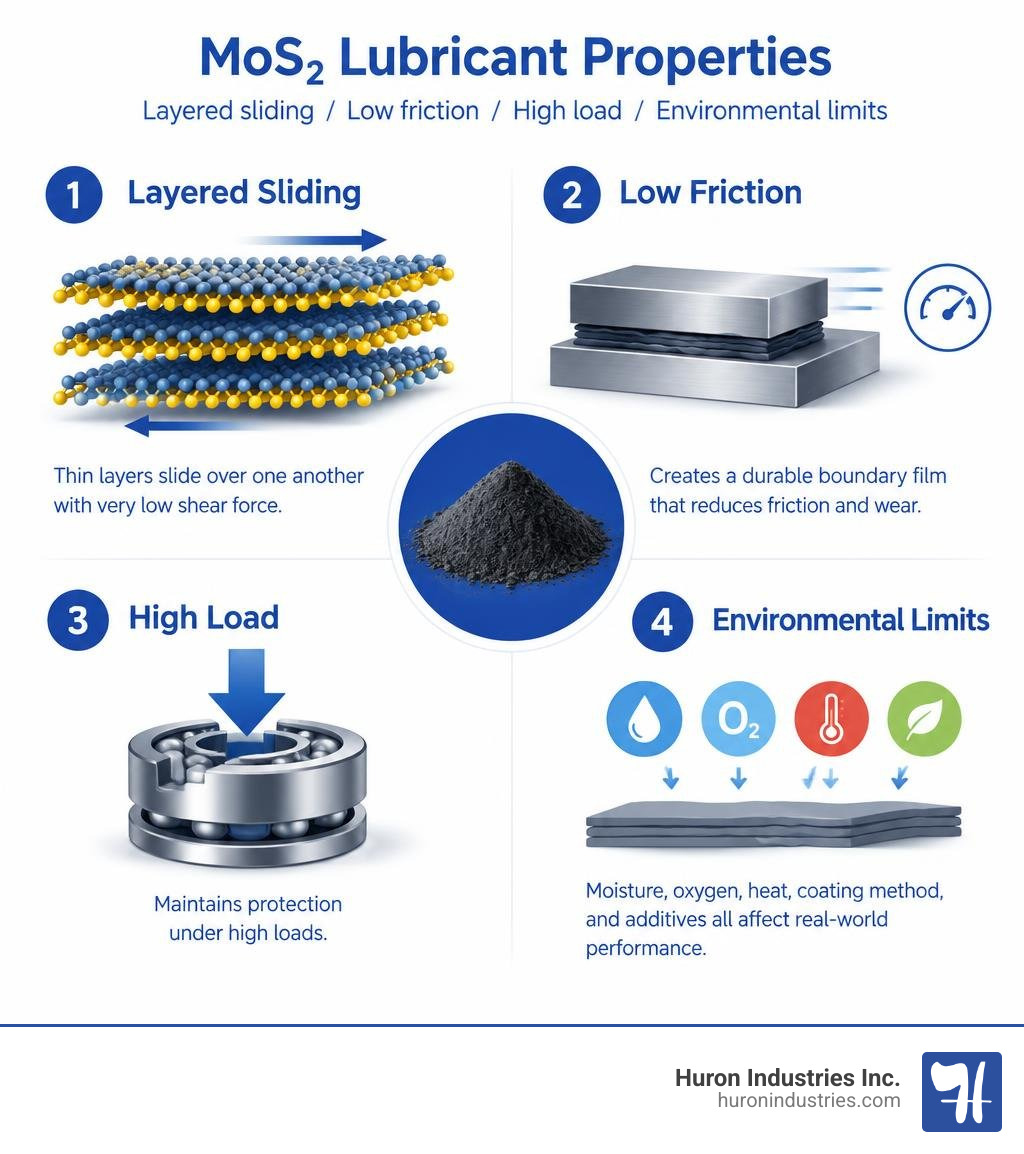
Molybdenum disulfide lubricant properties come from its layered crystal structure. Its thin layers slide over one another with very low shear force, creating a durable boundary film that reduces friction, wear, galling, and metal-to-metal contact under high loads.
MoS2 is especially useful where oils and greases may fail, including vacuum, high-pressure contacts, dry machinery, and some wide-temperature applications. Typical MoS2-based dry films can provide low friction while the layers remain intact, but moisture, oxygen, heat, coating method, and additives all affect real-world performance.
Important: The coefficient of friction for Neolube No. 1.1 of 0.15 has not been tested or approved for this.
I am Nicholas Cunha, founder of CreatiVertical, where I help industrial manufacturers explain specialized products to engineering and procurement teams. My work on technical SEO and industrial content includes translating molybdenum disulfide lubricant properties into practical guidance for buyers who need to reduce downtime and qualify materials with confidence.
Simple molybdenum disulfide lubricant properties word guide:
- molybdenum disulfide powder
- molybdenum disulfide powder under 2 microns
- molybdenum disulfide spray lubricant
Core Molybdenum Disulfide Lubricant Properties and Tribological Mechanisms
Understanding why molybdenum disulfide ($text{MoS}_2$) behaves as an exceptional dry lubricant requires examining its atomic architecture. Naturally occurring as the mineral molybdenite, $text{MoS}_2$ crystallizes predominantly in the hexagonal $2text{H}$-polytype. In this structure, a central plane of molybdenum metal atoms is sandwiched between two outer layers of sulfur atoms, forming a covalent $text{S-Mo-S}$ sheet.
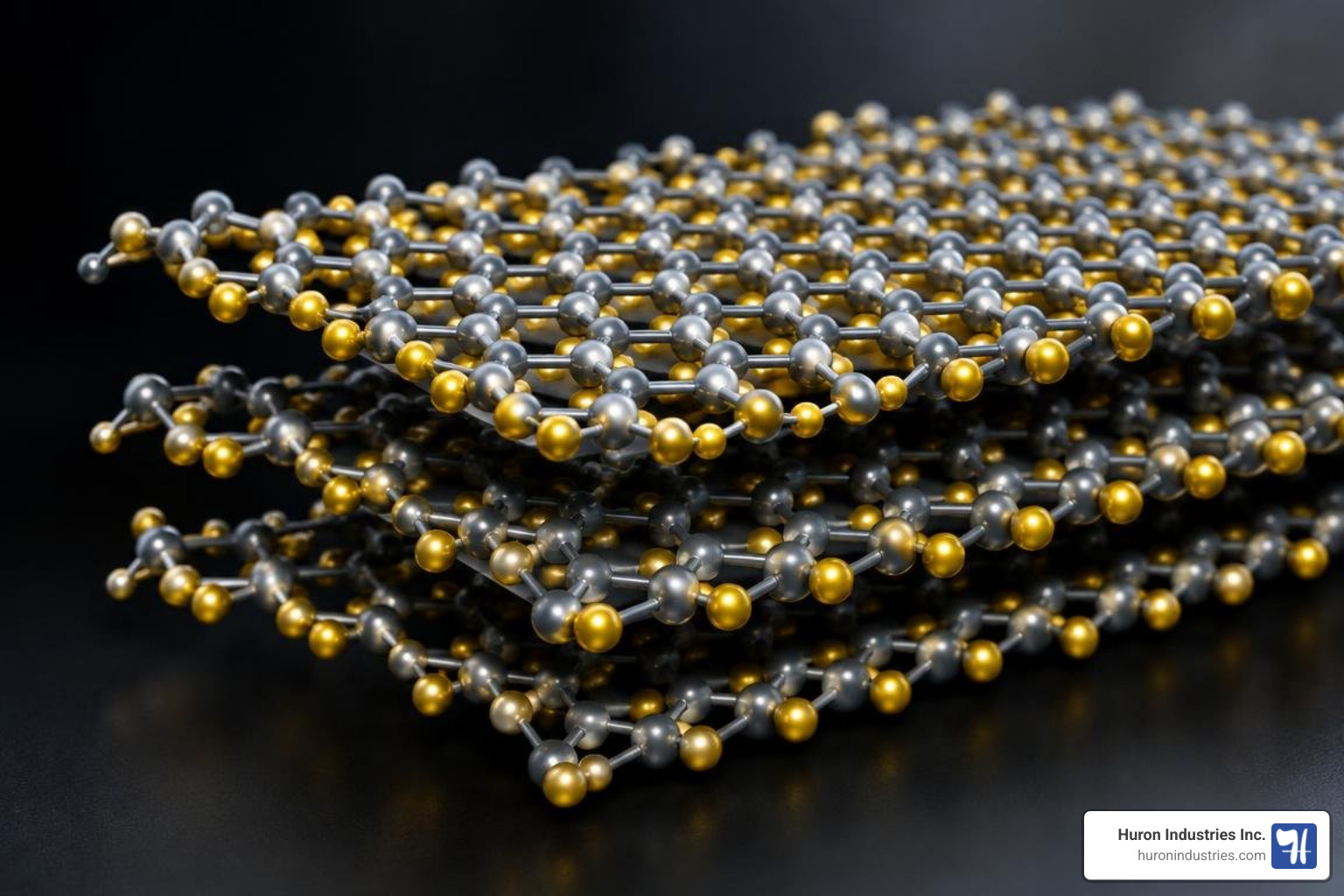
While the intra-layer chemical bonds (between molybdenum and sulfur) are exceptionally strong, adjacent sandwich sheets interact solely through weak van der Waals dispersion forces. This anisotropic atomic geometry provides:
- Low Intralaminar Shear Strength: The weak bonding between basal planes enables smooth mechanical cleavage and sliding under minimal applied force.
- High Normal Compressive Strength: The strong internal covalent network resists vertical deformation, permitting effective lubrication wear reduction without collapsing under massive mechanical contact pressures.
- Substrate Affinity: Exposed sulfur atoms exhibit high affinity for metallic mating surfaces (such as iron alloys), promoting protective boundary film anchorage.
When sliding occurs, $text{MoS}_2$ crystallites reorient so their basal $(0002)$ planes align parallel to the direction of motion. As highlighted in a scientific review of solid lubrication mechanisms, this shear alignment generates an intrinsic coefficient of friction ($mu$) typically ranging between $0.03$ and $0.06$ under moderate loads, dropping lower as contact pressures escalate.
Nanoscale Friction and Molybdenum Disulfide Lubricant Properties
Atomic force microscopy (AFM) investigations have provided deep insight into the nanoscale friction mechanisms of $text{MoS}_2$. Nanotribology experiments show that single-layer $text{MoS}_2$ exhibits higher friction than multi-layer configurations. This occurs because thin single sheets undergo out-of-plane puckering ahead of a sliding AFM tip, which increases contact area and lateral resistance.
As film thickness increases across multiple basal planes, flexural stiffness prevents puckering, stabilizing low friction behavior. AFM and nanoindentation measurements place the upper bound for shear strength between commensurate $text{MoS}_2$ layers at $24.8 pm 0.5text{ MPa}$. When applied under heavy industrial contact stresses, this low shear yield point allows extreme pressure solid lubrication to protect mating components from surface micro-welding and plastic shearing.
Incommensurate Sliding and Structural Superlubricity
When adjacent $text{MoS}_2$ crystal sheets align in perfect symmetry (a commensurate state), the potential energy barrier for sliding is at its maximum. However, when the lattice angles between two adjoining sheets are misaligned (incommensurate registry), the atomic forces cancel out across the contact interface.
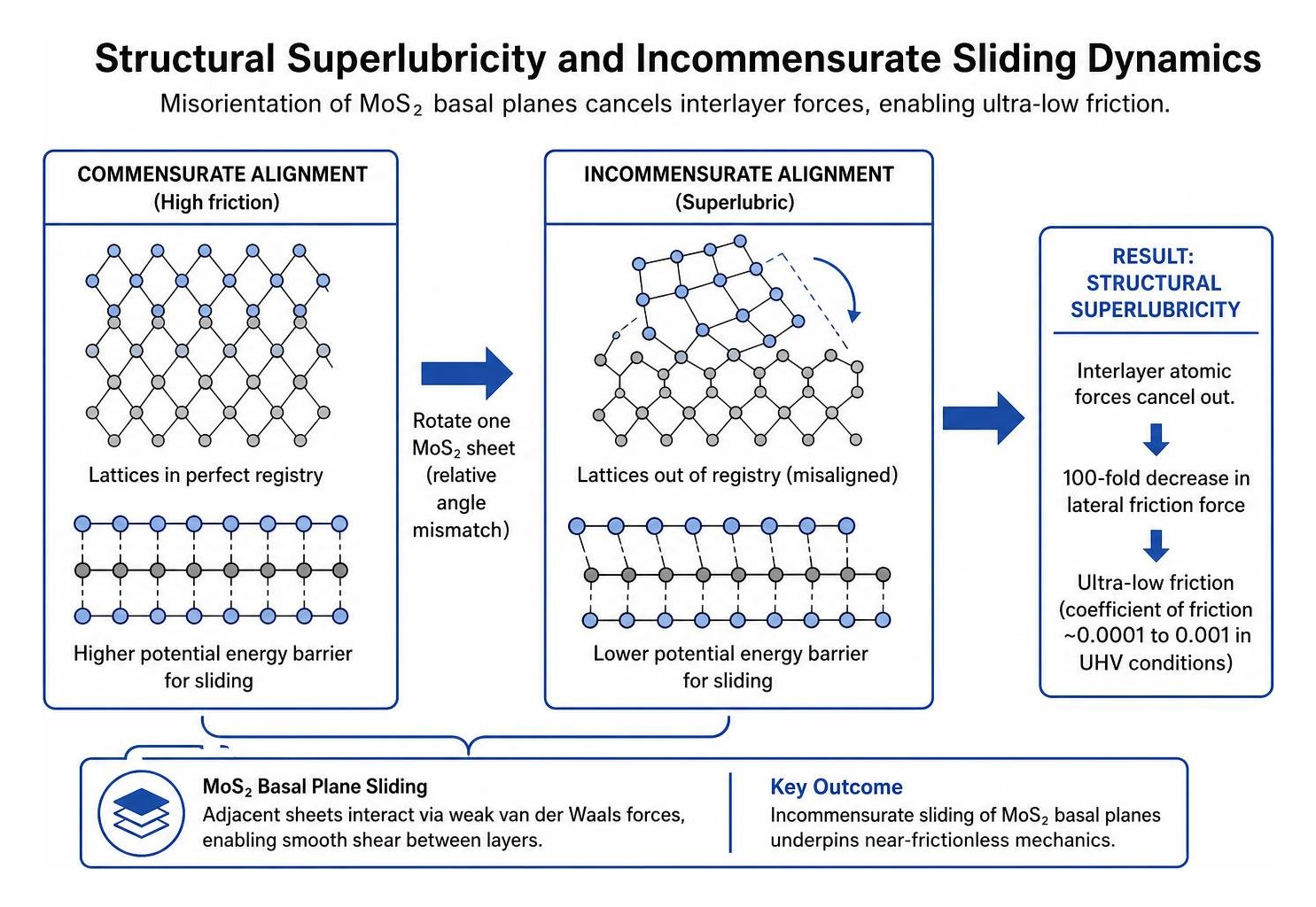
Molecular dynamics simulations demonstrate a 100-fold decrease in lateral friction force when $text{MoS}_2$ sheets rotate from commensurate to incommensurate orientations. In pristine, contamination-free ultrahigh vacuum (UHV) conditions, direct physical measurement of friction forces between incommensurate basal planes yields an ultra-low friction coefficient on the order of $0.0001$ to $0.001$. This phenomenon, known as structural superlubricity, underpins the near-frictionless mechanics observed in precision vacuum actuators.
Environmental Influences on MoS2 Solid Lubrication
Although $text{MoS}_2$ delivers peerless performance in inert and vacuum environments, its tribological efficiency depends heavily on operational ambient factors such as relative humidity, atmospheric oxygen, and operating temperature.
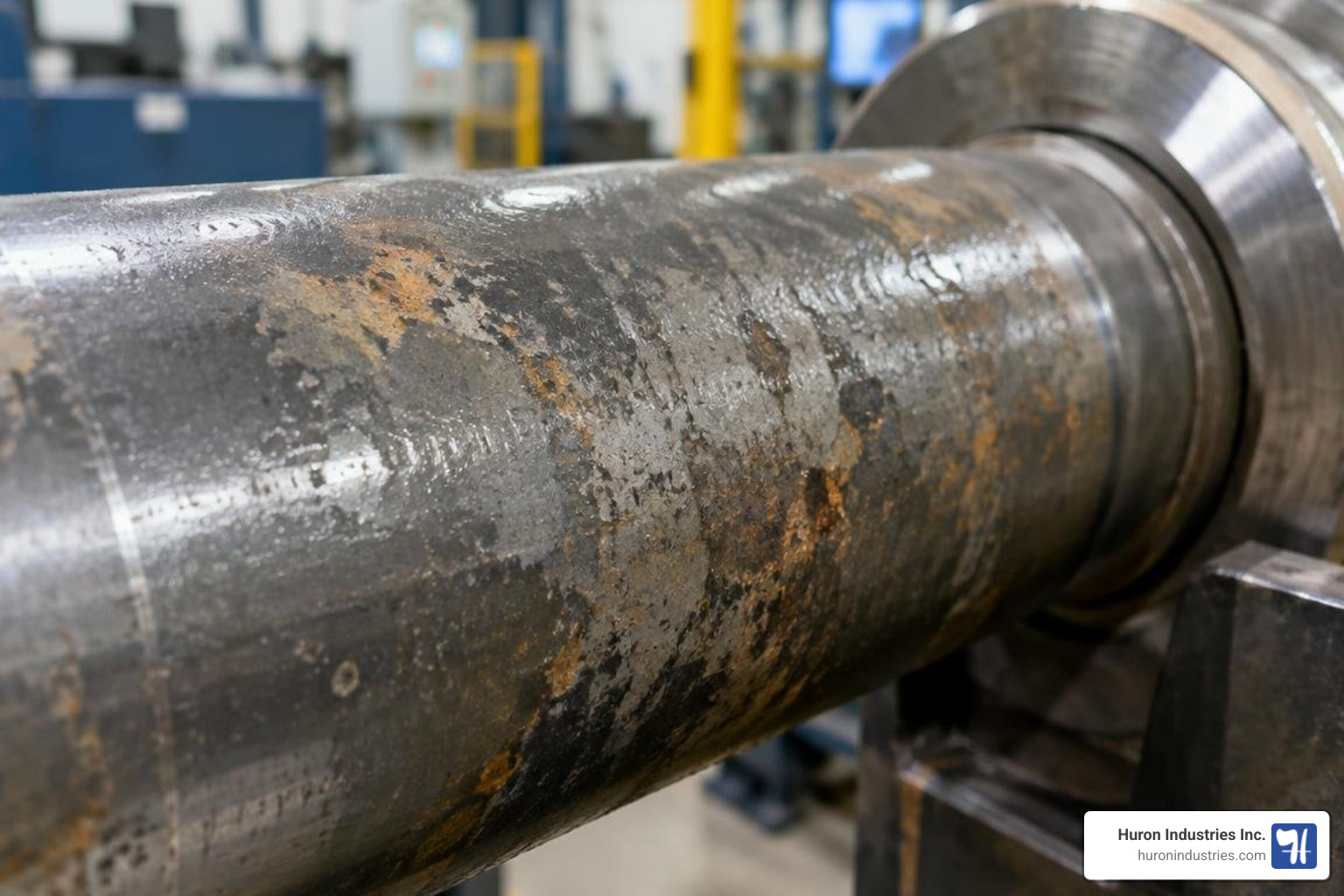
How Temperature and Environment Dictate Molybdenum Disulfide Lubricant Properties
Unlike graphite—which requires adsorbed moisture or water vapor molecules to facilitate interlayer shearing—$text{MoS}_2$ provides intrinsic low friction that works best when moisture is completely absent.
- Humidity Sensitivity: Atmospheric moisture adsorbs preferentially onto unsaturated edge defects (dangling bonds) of $text{MoS}_2$ platelets. Water molecules increase junction shear strength and form acidic species that accelerate film breakdown, driving the friction coefficient up from $0.02$ to over $0.15–0.25$.
- Thermal Oxidation Limits: In air, mechanically applied $text{MoS}_2$ films exhibit a maximum service temperature of approximately $400^circtext{C}$. Oxidation rates increase between $100^circtext{C}$ and $400^circtext{C}$, converting lubricating $text{MoS}_2$ into abrasive molybdenum trioxide ($text{MoO}_3$) and gaseous sulfur dioxide ($text{SO}_2$): $$2text{MoS}_2 + 7text{O}_2 xrightarrow{Delta} 2text{MoO}_3 + 4text{SO}_2uparrow$$
- Vacuum Thermal Limits: In vacuum or inert atmospheres, $text{MoS}_2$ avoids oxidation, maintaining high performance up to $600^circtext{C}–700^circtext{C}$. Beyond $700^circtext{C}$, thermal dissociation strips sulfur atoms from the lattice, leaving behind non-lubricating metallic molybdenum.
- Temperature-Dependent Wear: Thermal effects alter film life directly. Tribological testing demonstrates that the wear rate of standard $text{MoS}_2$ coatings can double as operating temperatures climb from $-100^circtext{C}$ to $100^circtext{C}$, requiring careful evaluation of baseline thermal stability characteristics.
Mitigating Oxidation via Doping and Composite Formulations
To extend the lifespan of $text{MoS}_2$ in humid or oxidative terrestrial settings, modern thin-film engineering incorporates co-sputtered metal and non-metal dopants.
- Titanium (Ti) Doping: Introducing titanium atoms via closed-field unbalanced magnetron sputter ion plating (CFUBMSIP) densifies the film microstructure. Ti acts as a preferential oxygen getter, passivating film defects and yielding excellent humidity tolerance.
- Multi-Component Composites: Blending $text{MoS}_2$ with antimony trioxide ($text{Sb}_2text{O}_3$), gold ($text{Au}$), or carbon matrices (such as diamond-like carbon) improves mechanical hardness and chemical radiation resistance. These composite architectures yield self-healing tribofilms that endure complex environmental transitions.
Microstructure, Coating Synthesis, and Additive Performance
How $text{MoS}_2$ is processed and deposited onto a substrate determines its grain density, basal orientation, adhesion strength, and wear endurance.
| Synthesis / Application Method | Typical Film Thickness | Coefficient of Friction ($mu$) | Primary Operational Environments | Key Mechanical Advantages |
|---|---|---|---|---|
| Magnetron Sputtering (PVD) | $0.5 - 2.0 mutext{m}$ | $0.001 - 0.05$ | Spacecraft mechanisms, UHV actuators, cleanrooms | Dense columnar grains, uniform basal alignment, excellent adhesion |
| Burnished Powder | $0.1 - 0.5 mutext{m}$ | $0.04 - 0.10$ | Fastener threads, metal-forming dies, break-in | Simple mechanical application, immediate boundary film transfer |
| Resin-Bonded Coatings | $5.0 - 20.0 mutext{m}$ | $0.05 - 0.12$ | Industrial slide ways, heavy linkage pins, marine hardware | High load capacity, corrosion barrier, tolerant to rougher substrates |
| Oil Nanolubricant Additives | Colloidal dispersion | Variable (Base oil dependent) | Automotive engines, gearboxes, high-speed reciprocal drives | Continuous tribofilm replenishment, scar depth and wear reduction |
Sputtered, Burnished, and Bonded Films
Selecting the right application technique balances mechanical performance, processing complexity, and operating conditions:
- Physical Vapor Deposition (PVD): Magnetron-sputtered $text{MoS}_2$ delivers high purity, precise thickness control, and strong adhesion. By controlling deposition bias and substrate temperature, engineers orient the basal planes parallel to the sliding interface during initial run-in, minimizing debris generation.
- Burnished Applications: Rubbing micro-particulate powder directly onto clean metal substrates produces an ultra-thin transfer film. When buying fine molybdenum disulfide powder under 2 microns, the fine particle size promotes mechanical interlock within substrate micro-asperities.
- Bonded Coatings: In high-load industrial hardware, $text{MoS}_2$ powder is blended with thermosetting or air-curing resin binders (phenolics, epoxies, or polyamides). These effective dry film lubricant coatings provide thick wear reservoirs and robust corrosion protection.
Nanoparticle Additives in Liquid Lubrication
Beyond dry films, 2D $text{MoS}_2$ nanoparticles serve as high-efficiency boundary additives in liquid lubricants and synthetic engine oils.
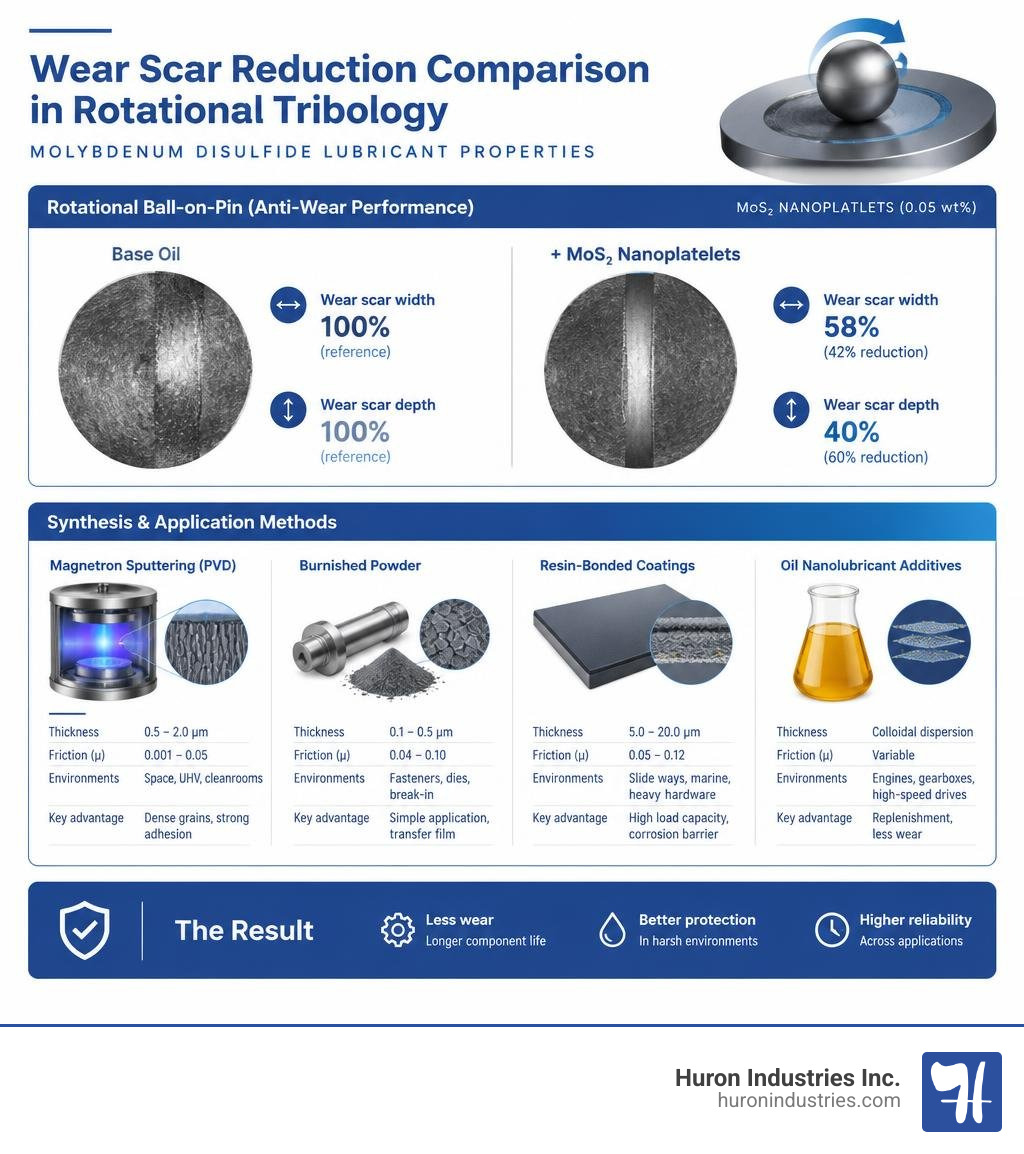
According to peer-reviewed research on electrochemically exfoliated 2D nano-additives, the morphology and concentration of exfoliated nanosheets dictate tribological performance:
- Anti-Wear Superiority: In rotational ball-on-pin testing, an addition of just $0.05text{ wt}%$ molybdenum disulfide nanoplatelets (MSNP) reduced wear scar width by $42%$ and wear scar depth by $60%$ compared to neat base oil.
- Graphene Comparison: In reciprocating friction contacts, electrochemically exfoliated graphene nanoplatelets (GNP) achieved maximum friction and wear area reductions of $20%$ and $22%$ at $0.10text{ wt}%$ and $0.20text{ wt}%$, respectively. While graphene excels at lowering kinetic friction in reciprocating strokes, low-concentration $text{MoS}_2$ nanosheets provide superior anti-wear surface protection under rotational loading by forming sacrificial boundary tribofilms.
Industrial and Aerospace Applications of MoS2 Dry Films
Because $text{MoS}_2$ functions without liquid carriers and endures immense mechanical pressures, it serves as a cornerstone lubricant across mission-critical sectors.
Spacecraft Mechanisms and Extreme Pressure Systems
Liquid lubricants pose serious risks in orbital spaceflight due to outgassing, vapor loss, and viscosity thickening at cryogenic temperatures. Solid $text{MoS}_2$ films overcome these hurdles:
- Space Telescope Instrumentation: Cryogenic bearings in platforms like the James Webb Space Telescope (JWST)—including the NIRSpec and MIRI instruments—rely on sub-micron $text{MoS}_2$ coatings operating down to $30text{ K}$ ($-243^circtext{C}$).
- Actuators and Solar Array Drives: Satellite solar array drive assemblies, deployment hinges, and antenna pointing mechanisms use PVD $text{MoS}_2$ films to ensure zero-backlash motion over decade-long design lives.
- High-Pressure Fluid Fittings: Stainless-steel compression fittings, threaded nut assemblies, and high-pressure hydraulic connections use bonded $text{MoS}_2$ coatings to prevent galling, lower make-up torque, and maintain abrasion resistance without squeezing out under extreme hoop stresses.
Terrestrial Challenges and Emerging Tribological Frontiers
Extending pure $text{MoS}_2$ performance into standard industrial environments requires overcoming atmospheric degradation. Unprotected films exposed to cyclic indoor-outdoor humidity, intermittent thermal cycling, or chemical attack can experience shortened operational life.
Current engineering frontiers focus on multi-layered architectures, such as alternating nanometer-scale layers of $text{MoS}_2$ and diamond-like carbon, as well as hybrid solid-liquid formulations. These composite systems preserve baseline lubricity while protecting the active $text{MoS}_2$ lamellae from moisture and atmospheric oxygen.
Frequently Asked Questions About MoS2 Lubrication
What makes MoS2 an effective lubricant in vacuum environments?
$text{MoS}_2$ possesses an intrinsic lamellar crystal structure where intra-layer atoms are covalently bound while adjacent sandwich sheets are held only by weak van der Waals forces. These sheets slide over one another easily without requiring moisture or vapor. In contrast, graphite requires adsorbed water vapor to lubricate and experiences high friction and dusting in dry vacuum.
How does particle size influence the anti-wear performance of MoS2?
Nanoscale $text{MoS}_2$ particles (around $40text{ nm}$) enter contact asperities more readily than coarser micro-scale particles ($1.5text{ }mutext{m}$). Smaller nanoparticles circulate evenly, polish surface asperities, and generate a thin, continuous boundary film without agglomerating, yielding up to a $25–30%$ improvement in wear resistance and lower friction torque under Couette shear flow.
What are the maximum operating temperature limits for MoS2 dry films?
In ambient air, $text{MoS}_2$ performs reliably up to $350^circtext{C}–400^circtext{C}$; above this threshold, rapid oxidation produces abrasive molybdenum trioxide ($text{MoO}_3$). In vacuum or inert atmospheres where oxygen is absent, thermal stability extends to $600^circtext{C}–700^circtext{C}$ before thermal dissociation of sulfur occurs.
Conclusion
Molybdenum disulfide remains one of the most capable solid lubricants in modern engineering. Its layered crystal structure, low interlayer shear strength, and extreme pressure resilience make it ideal for demanding operating conditions where conventional oils and greases fail. While environmental factors like humidity and elevated ambient temperatures require thoughtful formulation and deposition design, advanced doped coatings and nano-additives continue to expand its performance envelope.
At Huron Industries Inc. (established in 1971 in Port Huron, Michigan), we specialize in manufacturing high-purity, precision-engineered lubricants for commercial, naval, and aerospace applications. For specialized dry-film and boundary lubrication setups, explore our high-purity molybdenum disulfide in isopropanol suspension to achieve dependable anti-galling and low-friction performance across your mechanical assemblies.