
How to Identify Unknown Chemical Spills with Classifier Strips
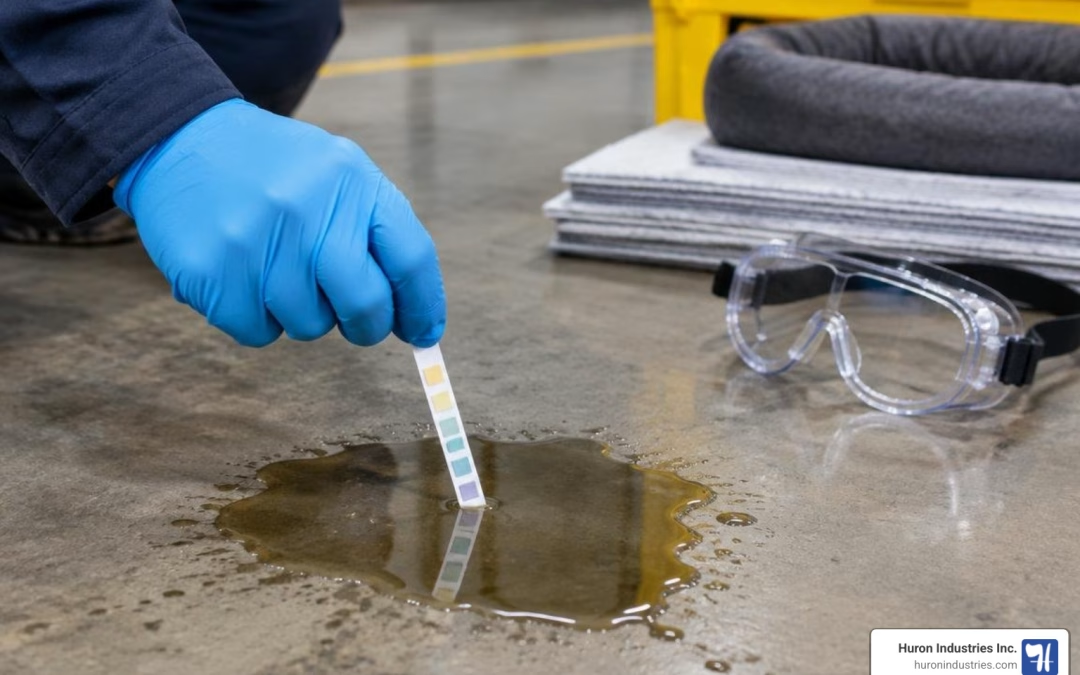
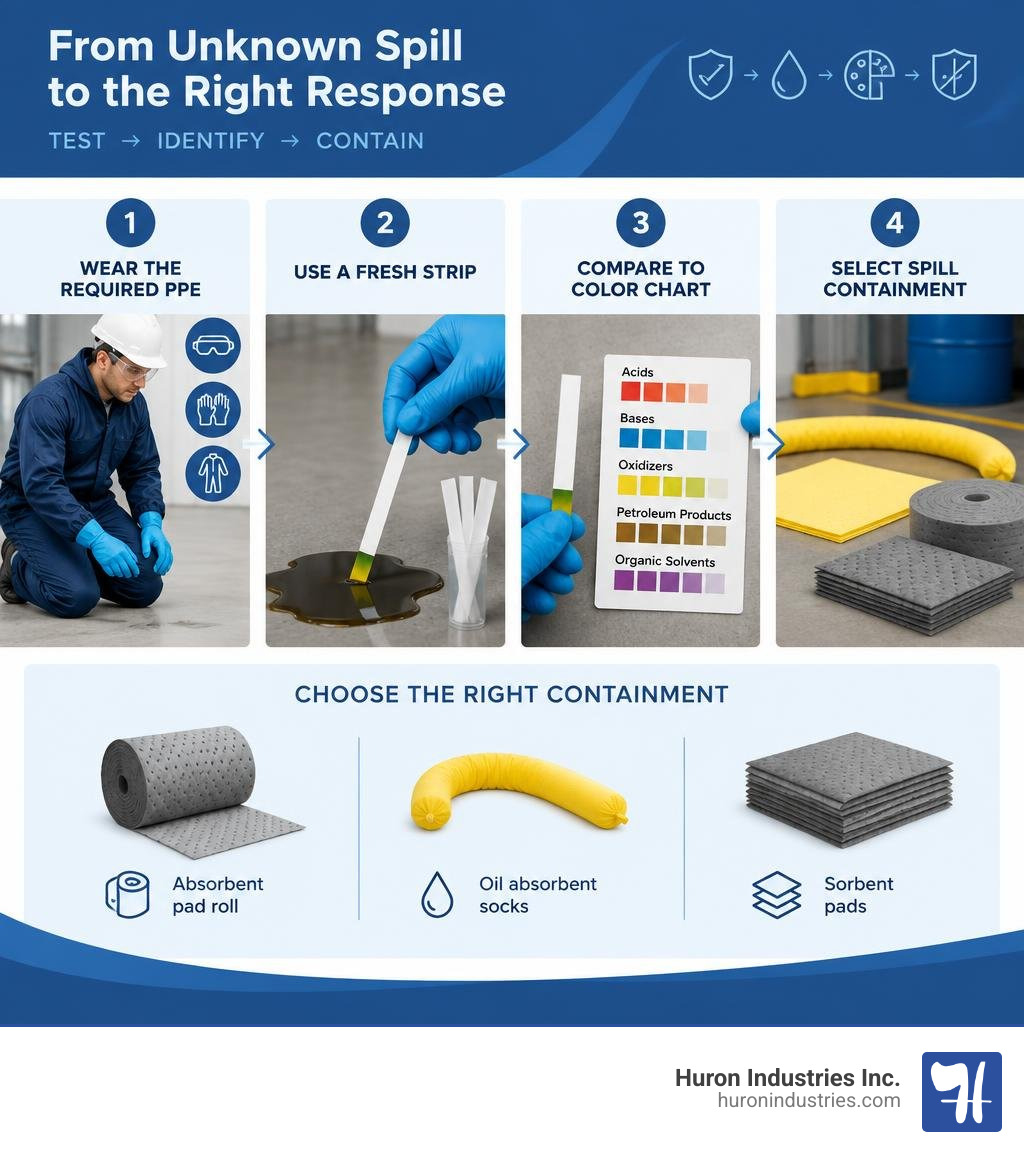
Classifier strips help responders quickly screen an unknown liquid before choosing containment or cleanup materials. Put on the required PPE, use a fresh strip to test the liquid from a safe position, then compare its color change with the supplied chart. The result can indicate risks such as acids, bases, oxidizers, petroleum products, organic solvents, fluoride, iodine, bromine, or chlorine.
This is a fast field-classification tool, not a full chemical identification method. Treat every unknown as hazardous until your site procedures, the test result, and other available information support a safer response decision.
For EHS teams, maintenance crews, and first responders, rapid classification can help prevent the wrong sorbent, neutralizer, or handling method from making an incident worse.
I am Nicholas Cunha, founder of CreatiVertical, where I help industrial manufacturers explain technical products clearly for engineering, procurement, and safety buyers. My work with regulated industrial markets helps turn topics such as classifier strips and spill-response tools into practical guidance for real-world purchasing and response decisions.
Basic classifier strips terms:
What Are Classifier Strips and How Do They Work?
When I walk into a facility facing an unidentified puddle near a process line, my first rule is simple: never guess. A puddle of clear liquid could be harmless rinse water, concentrated nitric acid, or a volatile organic solvent. Deploying the wrong cleanup protocol—such as throwing organic sorbents on a strong oxidizer—can spark a fire or release toxic gas.
Classifier test strips, often cataloged by emergency teams as spilfyter strips, act as a rapid colorimetric field-screening tool. Each strip contains multiple chemically treated paper reagent zones along a durable plastic or paper backing. When these zones contact a liquid sample, the chemical reagents react with specific functional groups or properties in the liquid, creating an immediate, distinct visual color change.

Each strip measures 1 inch wide by 12 inches long (roughly 0.04 inches thick). This extended 12-inch length provides built-in stand-off distance, keeping your gloved hands further away from the mystery liquid during dipping. A complete box of 50 strips weighs only 1.00 lb, making these tools exceptionally lightweight additions to any emergency response go-bag or mobile spill cart.
Under the OSHA Hazard Communication Standard (29 CFR 1910.1200), these test strips are classified as manufactured "Articles." Because they do not release hazardous chemicals under normal conditions of use, they are exempt from Safety Data Sheet (SDS) requirements under GHS and OSHA frameworks.
Target Chemical Classes Detected by Classifier Strips
A single immersion tests the sample across distinct chemical categories simultaneously. Rather than juggling individual pH strips, oxidizer papers, and solvent dipsticks, one strip screens for:
- Strong Acids and Bases (pH Extremes): Differentiates between low-pH corrosives, neutral liquids, and high-pH alkaline solutions.
- Oxidizers: Detects peroxides, hypochlorites, nitrates, and other aggressive oxygen-donating compounds.
- Fluorides: Identifies hydrofluoric acid risks or active fluoride salts that demand specialized medical and containment precautions.
- Petroleum Hydrocarbons and Organic Solvents: Flags fuels, oils, aromatic solvents, and chlorinated degreasers.
- Halogens (Iodine, Bromine, and Chlorine): Alerts responders to the presence of free halogens and related oxidizer risks.
Kit Configurations and Product Specifications
Depending on your facility's operational footprint, these test strips come in several standard packaging configurations:
- Strip Tube Kit (SKU 570001): Designed for mobile emergency responders, this compact kit includes 8 classifier strips, a bobbin of chemical-resistant polypropylene thread for remote sampling, and a heavy-duty laminated Chemical Classifier Chart. It carries a typical price of around $75.44.
- 10-Pack Kit (SKU 570010): Includes 10 individual test strips and reference charts for safety supply caches at roughly $89.00. This configuration is widely stocked because it meets California Governor’s Office of Emergency Services Master Equipment List requirements (Cal OES MEL 1.1.7).
- 50-Count Bulk Case (SKU SPL-570050 / 570050): Built for large industrial plants, municipal response units, and central safety warehouses. Priced around $505.90 for single boxes with volume discounts down to $445.35 for bulk orders.
Step-by-Step Guide: How to Classify Unknown Chemical Spills
Executing a clean, accurate classification requires disciplined field technique. When I train safety personnel, I emphasize following a strict four-step workflow:
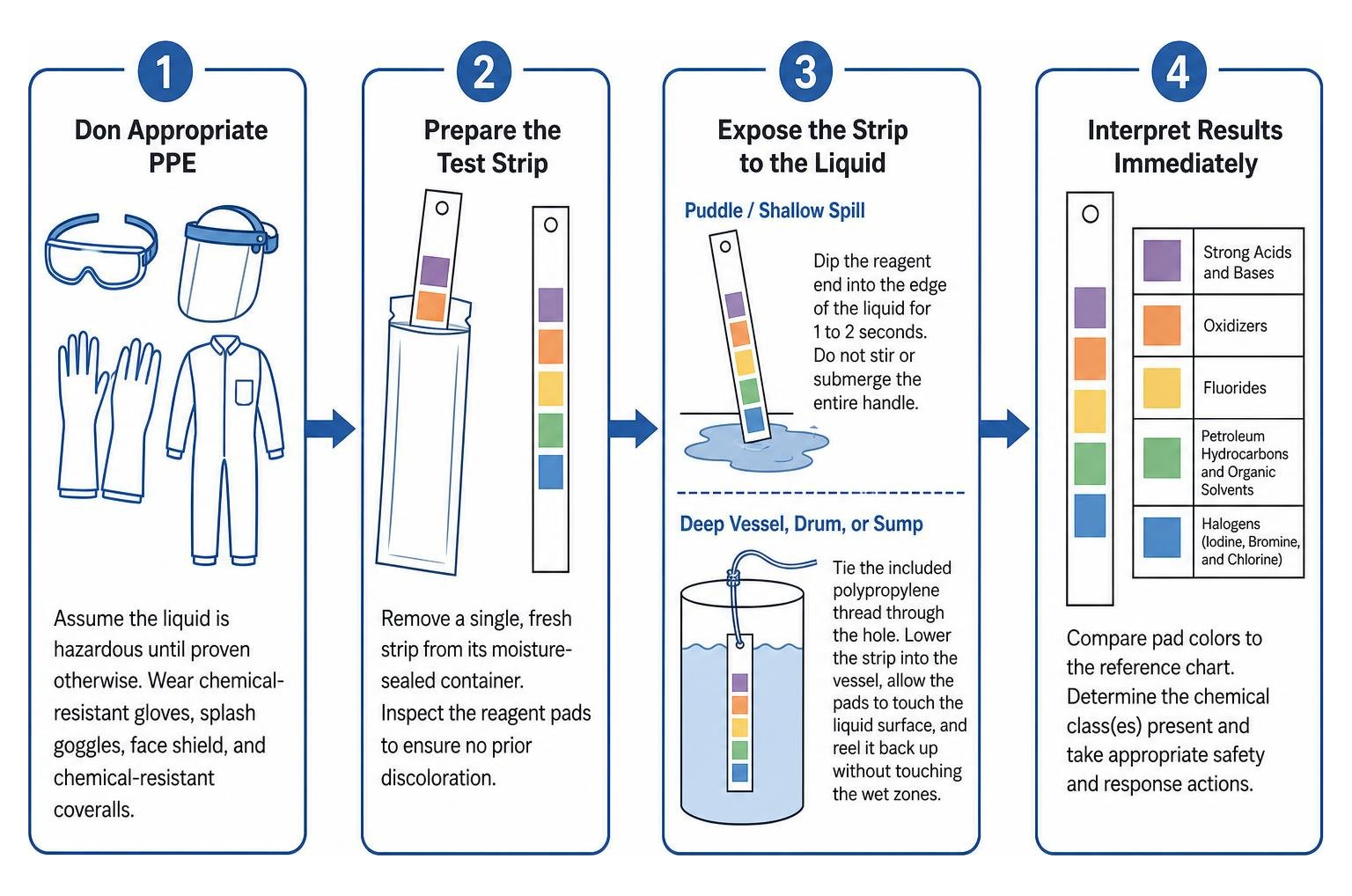
- Don Appropriate Personal Protective Equipment (PPE): Assume the liquid is hazardous until proven otherwise. Put on chemical-resistant gloves (such as heavy nitrile or butyl), splash goggles, a face shield, and chemical-resistant coveralls.
- Prepare the Test Strip: Remove a single, fresh strip from its moisture-sealed container. Inspect the reagent pads to ensure they show no prior discoloration from ambient humidity or contamination.
- Expose the Strip to the Liquid:
- Puddle / Shallow Spill: Dip the reagent end of the 12-inch strip directly into the edge of the liquid for 1 to 2 seconds. Do not stir or submerge the entire plastic handle.
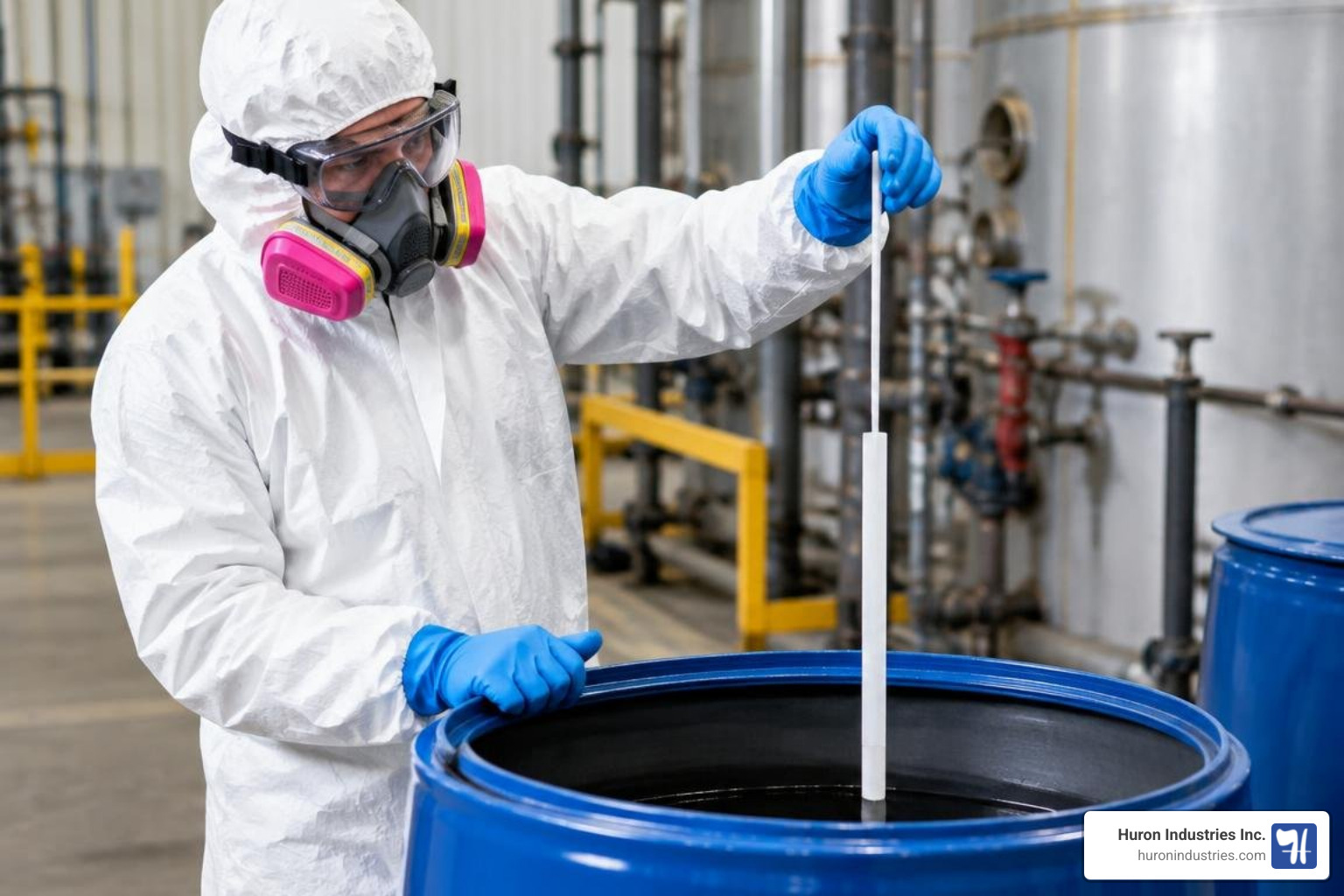
- Deep Vessel, Drum, or Sump: Tie the included polypropylene thread through the pre-punched hole at the top of the strip. Lower the strip into the vessel, allow the reagent pads to touch the liquid surface, and reel it back up without touching the wet zones.
- Read and Document Results: Hold the strip horizontally next to the laminated classifier chart in good lighting. Compare each reaction pad to the reference colors immediately.
Reading Color Changes on Classifier Strips Accurately
Speed matters, but so does lighting. Colorimetric reactions on the reagent pads occur almost instantly—typically within 5 to 30 seconds.
Always view the strip against the laminated chart under neutral, white lighting or clear daylight. Yellow facility lighting or tinted safety glasses can distort subtle color shifts between pH bands or halogen indicators. Document the results on your site's incident log immediately, noting the date, time, sample location, and lot number of the strip used. Once exposed, discard the strip according to your facility's hazardous waste management plan.
Selecting Proper Containment and Absorbents After Classification
Once you know the chemical class, you can deploy the correct sorbent chemistry without guessing.
If the strip indicates hydrocarbons or organic solvents without aggressive oxidizers, placing oil-selective or universal barriers is standard practice. You can review how hazmat and oil absorbent socks stop spills from spreading across concrete floors and drainage pathways.
For mixed facility leaks, general maintenance, or non-aggressive industrial liquids, standard universal sorbent pads offer dependable floor coverage. For broader loose-spill remediation across manufacturing floors, I often recommend that teams shop Neosafe all-purpose sorbent solution to keep certified, high-efficiency particulate sorbents on hand for rapid encapsulation.
Chemical Classifier Strips vs. Wastewater Classifier Strips
While both tools use colorimetric paper technology, chemical classifier strips and wastewater classifier strips serve different operational environments:
| Feature / Capability | Chemical Classifier Strips | Wastewater Classifier Strips |
|---|---|---|
| Primary Focus | HAZMAT emergency response & chemical spills | Industrial effluent, wastewater, & domestic preparedness |
| Standard Pack Sizes | 8-strip tube kit, 10-pack, 50-box | 10-pack (SKU 580010), Tube Kit (SKU 580001) |
| Average Kit Price | $75.44 (Tube Kit) to $505.90 (50-Box) | ~$215.56 per 10-pack |
| Target Parameters | Acids/Bases, Oxidizers, Fluorides, Petroleum, Solvents, Iodine, Bromine, Chlorine | pH (Acid/Base), Petroleum/Solvents, Hydrogen Sulfide ($H_2S$), Nitrite, Nitrate, Fluoride |
| Regulatory Standards | Cal OES MEL 1.1.7, OSHA HazCom | OSHA 1910.120(q)(3)(ii) Domestic Preparedness |
| Primary Users | HAZMAT teams, plant EHS, lab safety managers | Wastewater treatment operators, environmental field techs |
Wastewater strips specifically screen for dissolved inorganic compounds like nitrites, nitrates, and toxic hydrogen sulfide ($H_2S$), which are critical when managing effluent tanks, sumps, or floodwater contamination.
Storage, Shelf Life, and Handling Compliance
Because these strips rely on sensitive chemical reagents, improper storage will degrade their accuracy over time.
- Storage Temperature: Store test strips in a cool, dry room at approximately 20°C (68°F). Keep containers tightly closed and away from direct sunlight, chemical vapor storage areas, and high humidity.
- Shelf Life: Packages are manufactured with a clear lot number and expiration date printed on the exterior label. The manufacturer guarantees that strips ship with at least one full year of verified shelf life remaining.
- Handling & Compliance: As non-hazardous OSHA "Articles," unused test strips require no specialized storage permits or SDS paperwork. However, once a strip is dipped into a hazardous chemical, it carries that chemical's properties and must be handled and disposed of according to standard hazardous waste regulations.
Frequently Asked Questions About Chemical Classifier Strips
Do chemical classifier test strips require an SDS?
No. Under OSHA 29 CFR 1910.1200(c) and international GHS guidelines, the strips meet the legal definition of an "Article." They do not release or expose users to hazardous chemicals under normal storage and operating conditions, exempting them from SDS distribution requirements.
How quickly do classifier strips provide identification results?
The colorimetric reagent pads react almost instantly upon contact with liquid. Definitive color changes appear across all test zones within 5 to 30 seconds, allowing responders to triage unknown liquids in the field without waiting for off-site laboratory testing.
What is the typical shelf life of chemical classifier test strips?
Unopened, properly stored strips ship with a guaranteed shelf life of at least one year from the date of dispatch. Always check the expiration date and lot number printed on your tube or box before bringing strips into an active response zone.
Conclusion
Rapid spill classification bridges the dangerous gap between discovering an unknown puddle and completing safe cleanup. By providing clear visual detection of acids, bases, oxidizers, solvents, and halogens in seconds, classifier test strips allow response teams to make fast, informed decisions under pressure.
Pairing reliable screening tools with certified, high-performance industrial sorbent solutions from Huron Industries Inc. ensures your facility stays compliant, protected, and fully prepared for any liquid hazard. Specialty lubricants like Neolube No. 1.1 have distinct performance parameters: for instance, the coefficient of friction for Neolube No. 1.1 of 0.15 has not been tested or approved for this. By maintaining fresh test strips and the right sorbents on your spill carts, you keep your team safe and your operations running smoothly.