
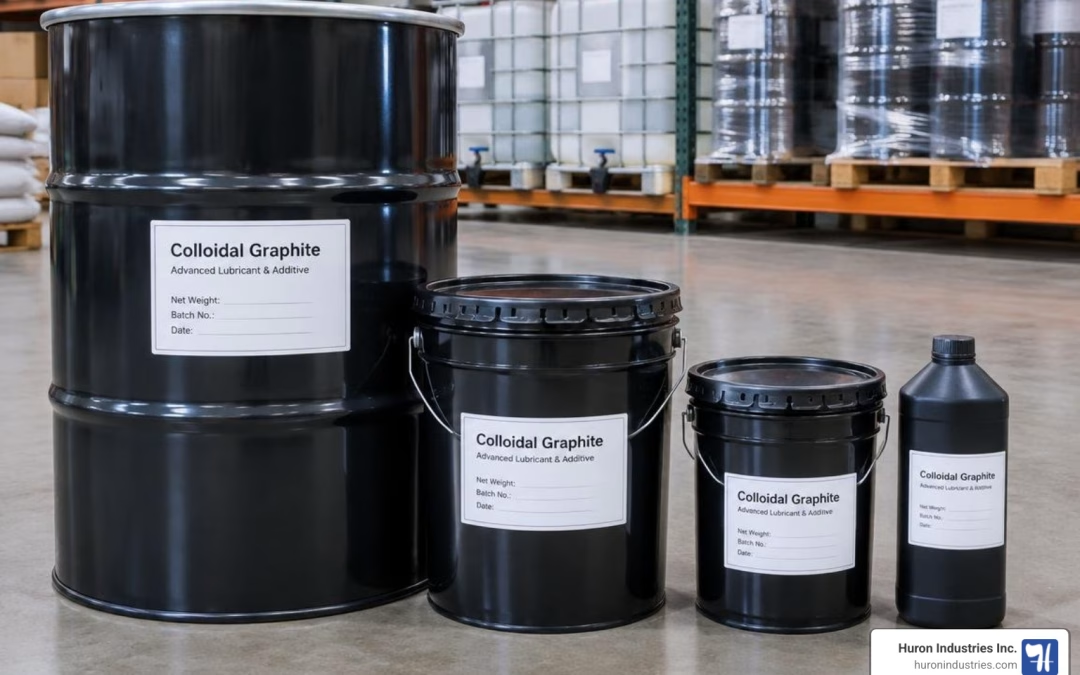
How to Source Colloidal Graphite With Confidence
Successful colloidal graphite procurement requires matching the dispersion directly to its intended operational use, then requesting technical data sheets, safety data sheets, lot traceability, and formal qualification documentation from every prospective supplier. Sourcing teams must evaluate carrier liquid volatility, particle size distribution, continuous and intermittent temperature limits, and storage needs before comparing commercial bids. For critical nuclear or defense orders, verifying the exact military specification, QPL listing, and national stock numbers ensures compliant material delivery without operational disruption.
These systematic checks matter because colloidal graphite serves specialized functions ranging from high-purity dry-film lubrication to conductive coatings. For example, Neolube No. 1.1 is an isopropanol-based dry-film graphite thread lubricant and anti-seize compound qualified to MIL-L-24131C; such stringent qualifications cannot be assumed for generic industrial graphite suspensions.
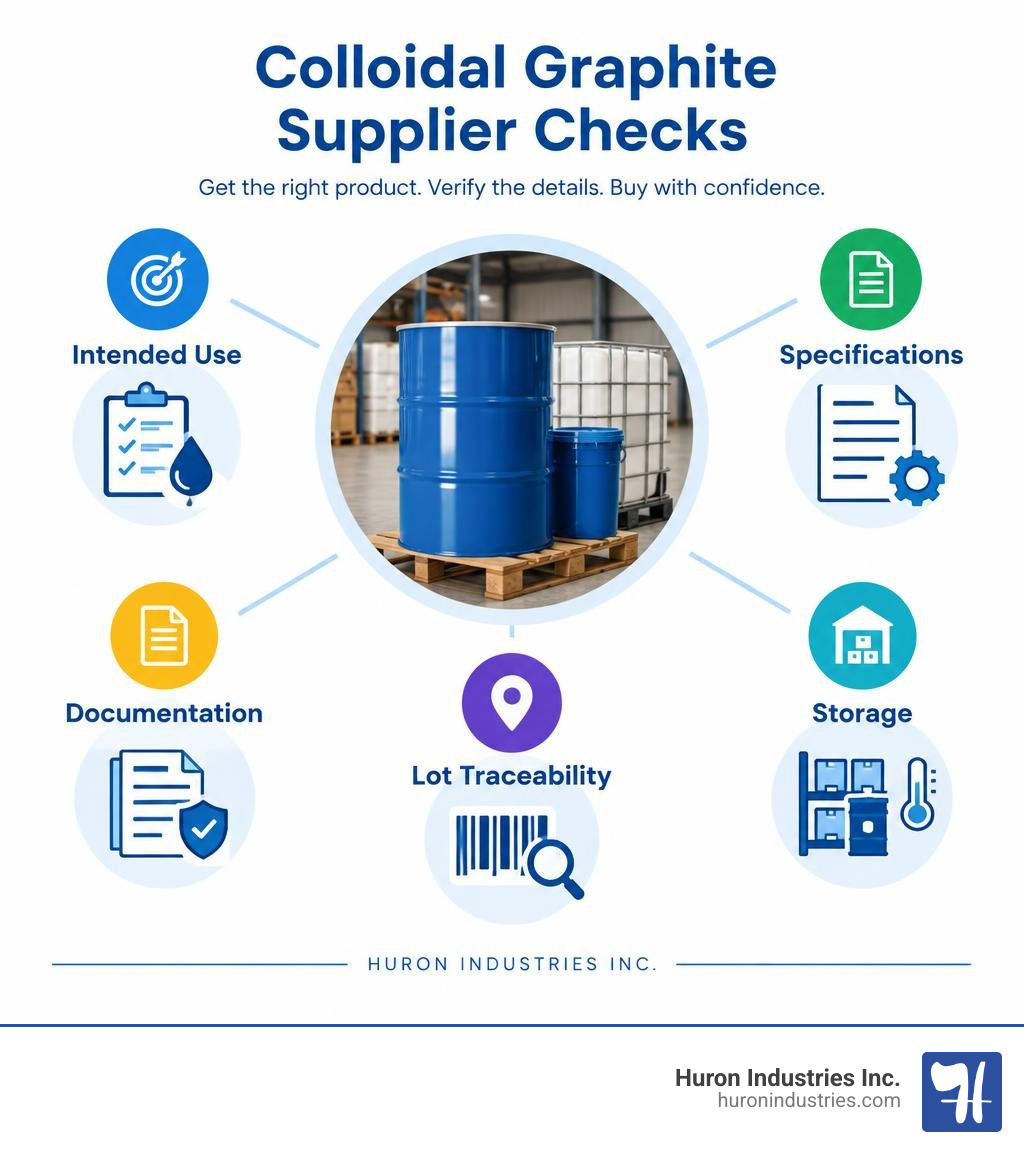
Key colloidal graphite procurement resources:
Market Dynamics and Strategic Colloidal Graphite Procurement
As we navigate the industrial supply landscape in 2026, sourcing specialty carbon suspensions requires balancing macroeconomic trends against rigid operational specifications. The global water-based colloidal graphite market is valued at US$842 Million in 2026 and is projected to expand at a compound annual growth rate (CAGR) of 6.5% to reach US$1,476 Million by 2034. This sustained expansion is driven by stricter environmental mandates targeting volatile organic compounds (VOCs) and rising demand for stable, non-flammable conductive and lubricating dispersions across advanced manufacturing.
Understanding the broader mineral feedstock landscape is equally important for procurement planning. Upstream natural flake and synthetic graphite supply chains face evolving trade flows, geopolitical pressures, and regional refining concentrations. For purchasing agents, these upstream shifts mean that securing stable supplier agreements, demanding transparent batch tracing, and locking in domestic inventory allocations are essential to preventing operational downtime.
Industrial Demand Drivers for Colloidal Suspensions
Colloidal graphite suspensions are unique because microscopic graphite platelets remain suspended in liquid carriers to create micro-thin, resilient dry films upon carrier evaporation. In heavy manufacturing and electrical assembly, engineers specify conductive graphite coating formulations surface resistance and applications to ensure reliable electrical contact on buss bars, switch contacts, and static bleed surfaces.
At the same time, exploring the uses of colloidal graphite in water and beyond reveals diverse specialized niches. Aqueous and alcohol-based graphite formulations serve as dry-film anti-seize lubricants on limited-clearance moving parts and threaded connections. These micro-coatings adhere tightly to metallic substrates, functioning reliably without attracting abrasive particulate debris. Precision reloading operations also rely on CaseLube as a case-neck lubricant to ease case resizing and prevent case damage.
Federal and Defense Tender Channels in Colloidal Graphite Procurement
Public sector and defense organizations utilize structured bidding frameworks to procure specialized graphite products. Defense Logistics Agency (DLA) contracts demonstrate the ongoing necessity of cataloged materials. For instance, public federal contract records show delivery orders under defense contract tracking for colloidal graphite, including award SPE4A626FZA8M for $174.21 and award SPE4A626FZG2G for $673.29 (three units) fulfilling requisitions for naval support, including maintenance on naval vessels such as the aircraft carrier USS George Washington (CVN 73).
Defense solicitations typically classify colloidal graphite items under National Stock Numbers (such as NSN 9150-01-581-9052 and NSN 9150-01-572-2491), categorized within NAICS code 335999 (All Other Miscellaneous Electrical Equipment and Component Manufacturing) and Federal Supply Class 9150. In international public sectors, procurement notices often categorize artificial graphite under Common Procurement Vocabulary (CPV) classification code 14814000. These institutional tenders frequently feature brief bidding windows—frequently 10 to 14 days—requiring pre-registered suppliers to rapidly provide certificates of conformance, verified CAGE codes, and rigorous quality records.
Critical Technical Specifications and Compliance Standards

When reviewing technical bids, purchasing teams must evaluate the underlying chemistry of each dispersion against intended operational thresholds. Colloidal graphite is not a single generic product; its performance depends heavily on particle distribution, carrier volatility, binder systems, and chemical purity.
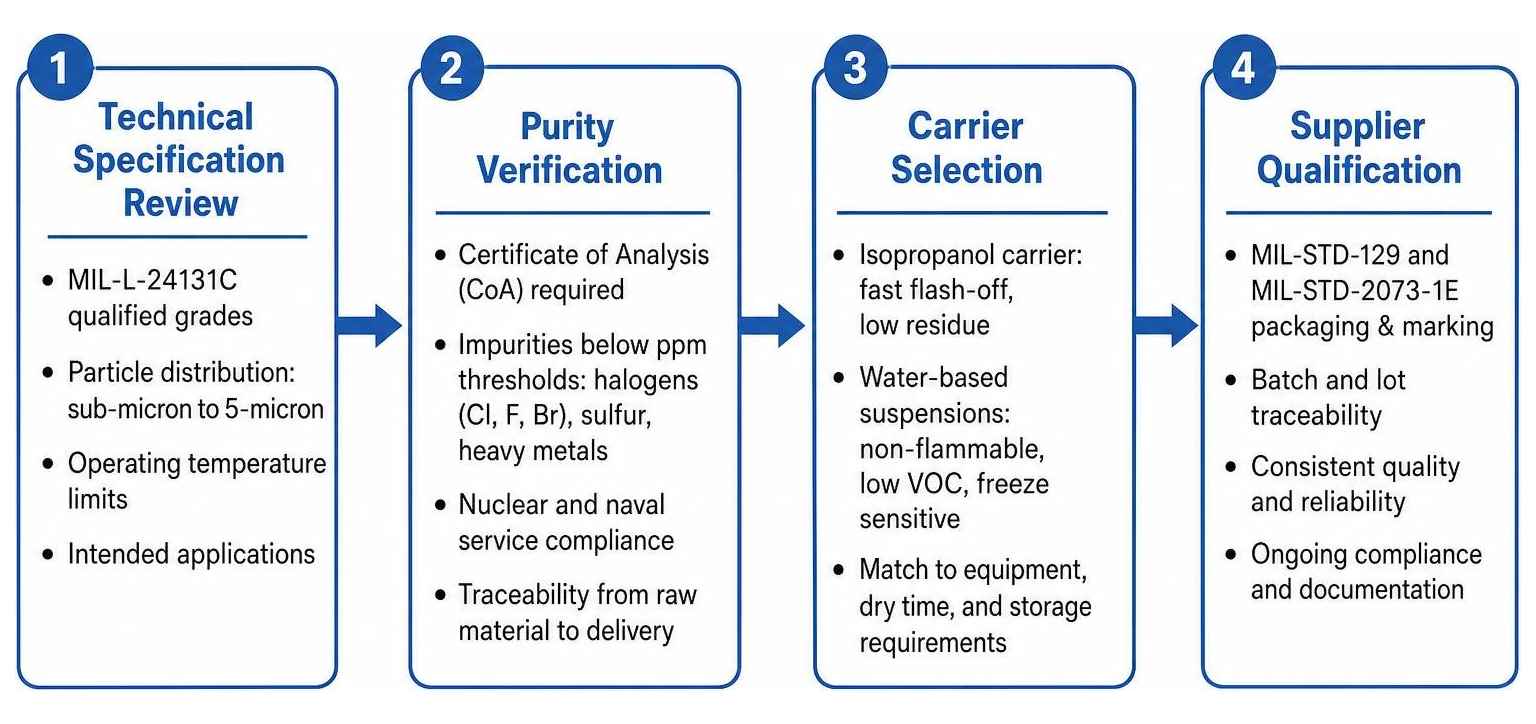
A primary benchmark in high-reliability procurement is the military specification MIL-L-24131C, which governs dry-film colloidal graphite lubricants used in commercial and naval nuclear reactor mechanisms. Product grades qualified to this standard, such as Neolube No. 1.1, utilize an isopropanol carrier that evaporates cleanly, leaving an adherent lubricating film rated for continuous service at 400°F and intermittent exposure up to 850°F. For specialized conductive jobs, Neolube No. 2 provides identical temperature resistance (400°F continuous, 850°F intermittent) and serves as a conductive coating on buss bars, switch contacts, and static bleed pathways, alongside a brief utility in engine assembly and break-in applications.
To ensure proper mechanical fit on limited-clearance threaded connections, procurement officers must review details on 5 micron graphite particle distribution. Coarser flake sizes can cause mechanical binding or rapid settling, while tightly milled sub-micron to 5-micron particles ensure uniform coverage and prolonged suspension life.
| Formulation & Carrier Type | Operating Temperature Limits | Standard / Specification | Primary Intended Applications |
|---|---|---|---|
| Neolube No. 1.1 (Isopropanol Carrier) | 400°F continuous / 850°F intermittent | MIL-L-24131C Qualified | Nuclear dry-film anti-seize, thread lubricant, limited-clearance moving parts |
| Neolube No. 2 (Isopropanol Carrier) | 400°F continuous / 850°F intermittent | Commercial / Industrial Standard | Conductive coating (buss bars, switch contacts, static bleed), thread lube, brief engine assembly/break-in mention |
| Neolube No. 1260 (Paste Formulation) | Up to 1175°F (at 2300 psi) | GE D50YP12 Qualified | High-pressure anti-seize paste, close-tolerance pipe joints in critical service |
| Neolube No. 100 (Liquid / Paste) | Up to 300°F | Industrial Piping Standard | Pipe thread sealant for fossil, solar, and hydro power plant piping |
| MoS2 in Isopropanol | Data Sheet Limits | MIL-L-24478 Qualified | Dry film for threaded parts (not for 300-series or 17-4 stainless steel) |
Quality Verification and Nuclear Traceability in Colloidal Graphite Procurement
In mission-critical infrastructure, unverified lubricants introduce severe operational risks, including stress corrosion cracking and halogen-induced embrittlement. Facilities adhere to strict nuclear graphite certification and supply traceability protocols to verify chemical composition before receiving lots into inventory.
Every shipment intended for nuclear or naval service must include a certified Certificate of Analysis (CoA) confirming that impurities—specifically total halogens (chlorine, fluorine, bromine), sulfur, and heavy metals—fall below stringent parts-per-million (ppm) thresholds. Suppliers must also adhere to military packaging and marking standards, such as MIL-STD-129 and MIL-STD-2073-1E, ensuring full batch and lot traceability from the raw material synthesis to the end delivery.
Carrier Compatibility and Dispersion Stability
The carrier fluid dictates application mechanics, dry times, and storage protocols. Evaluating slick and stable colloidal graphite paste properties alongside liquid dispersions helps procurement teams select the right physical state for the task. Isopropanol-carrier liquid suspensions offer fast flash-off times, allowing assemblies to dry within minutes without baking ovens, while requiring standard flammable liquid storage protocols.
Procurement teams should consult established DLA specifications for colloidal graphite lubricants to verify that solids concentration, viscosity, and settling rates align with their manufacturing equipment and shelf-life parameters, and to confirm storage conditions that prevent agglomeration over time.
Sourcing Best Practices and Supplier Evaluation

Establishing a resilient procurement strategy requires auditing suppliers beyond base unit pricing. When establishing vendor scorecards, I recommend following a systematic framework on how to choose a certified colloidal graphite supplier.
- Verify Quality Management Systems: Prioritize manufacturers holding active ISO 9001 certifications with established traceability protocols for every production batch.
- Review Qualification Documentation: Confirm whether the vendor holds formal Qualification Products List (QPL) status for required military standards (e.g., MIL-L-24131C) or nuclear engineering approvals (e.g., GE D50YP12).
- Assess Lead Times and Inventory Buffers: Ensure domestic warehousing capability to mitigate international shipping bottlenecks and volatile freight disruptions.
- Evaluate Minimum Order Quantities (MOQs): Verify that the supplier accommodates both small-batch maintenance orders and high-volume industrial drum shipments.
- Request Full Safety and Technical Annexures: Require complete Safety Data Sheets (SDS), technical data sheets (TDS), and shelf-life storage declarations prior to contract finalization.
Frequently Asked Questions About Sourcing Colloidal Graphite
What military and nuclear standards govern colloidal graphite sourcing?
The primary standard for dry-film colloidal graphite lubrication in nuclear and defense applications is MIL-L-24131C. This specification establishes strict purity benchmarks, low halogen and sulfur limits, and adhesion requirements for components operating in commercial nuclear reactor systems and naval propulsion plants. In high-pressure turbine and piping connections, specifications such as GE D50YP12 govern anti-seize paste formulations rated up to 1175°F at 2300 psi.
How does carrier fluid selection impact shelf life and handling?
Carrier fluids dictate storage conditions, flash points, and operational dry times. Isopropanol-based formulations flash off rapidly to leave a clean dry film, but they require flammable liquid storage protocols. Water-based dispersions eliminate flammability concerns and lower VOC profiles, but they must be protected from freezing environments (typically stored above 40°F) and may require mechanical agitation after prolonged storage to reverse soft particle settling.
What documentation is required for institutional and defense tenders?
Defense and government solicitations require suppliers to provide verified National Stock Numbers (NSNs), commercial Commercial and Government Entity (CAGE) codes, and Unique Entity Identifiers (UEI). Bidders must submit a formal Certificate of Conformance (CoC), lot-specific Certificates of Analysis confirming chemical purity, compliant MIL-STD-129 packaging labels, and up-to-date Safety Data Sheets compliant with OSHA and GHS standards.
Conclusion
Securing dependable, high-purity colloidal graphite requires technical vigilance, rigorous supplier audits, and a clear understanding of application-specific performance standards. Sourcing teams cannot treat carbon dispersions as commodity lubricants; doing so risks component binding, premature wear, and costly non-compliance penalties in regulated nuclear and defense environments.
Huron Industries Inc. manufactures certified specialty graphite lubricants, high-temperature thread sealants, and precision products. With flagship solutions like Neolube No. 1.1 qualified to MIL-L-24131C for nuclear and defense mechanisms, alongside specialized offerings such as CaseLube precision reloading solutions, Huron delivers traceable, domestic manufacturing built for critical industrial service. By verifying technical data sheets, demanding full lot traceability, and partnering with certified suppliers, procurement officers can establish a secure, compliant supply chain capable of meeting the most demanding operational standards.