
What Conductive Graphite Coating Does
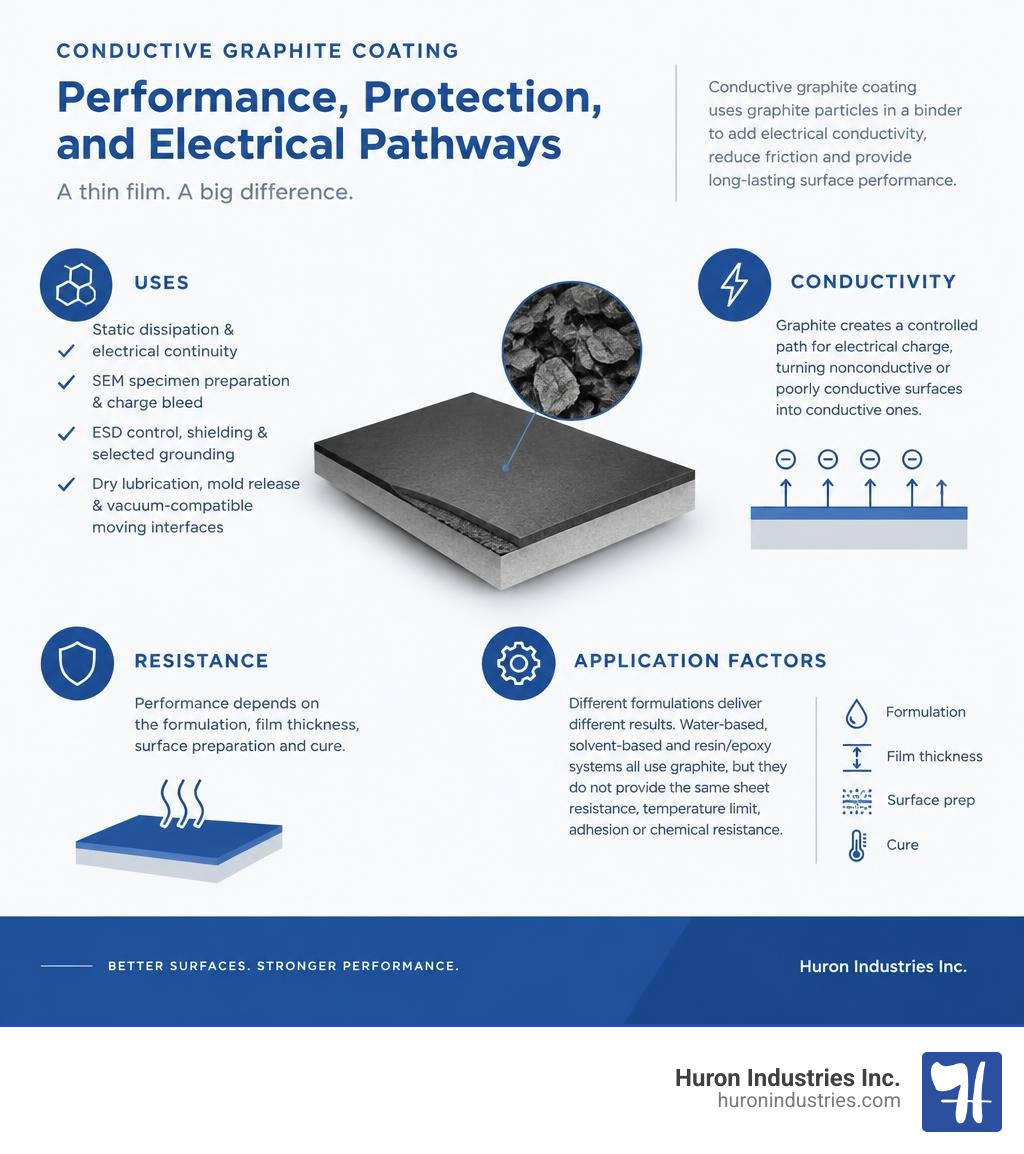
A conductive graphite coating is a thin film of graphite particles held in a binder. It gives nonconductive or poorly conductive surfaces a controlled path for electrical charge while often adding dry-film lubrication, light absorption, or anti-static performance.
It is commonly used for:
- Static dissipation and electrical continuity on plastics, glass, ceramics, and coated metal
- SEM specimen preparation and charge bleed
- ESD control, shielding, and selected grounding applications
- Dry lubrication, mold release, and vacuum-compatible moving interfaces
Performance depends on the formulation, film thickness, surface preparation, and cure. Water-based colloidal graphite, fast-drying solvent systems, and durable resin or epoxy coatings can all use graphite, but they do not provide the same sheet resistance, temperature limit, adhesion, or chemical resistance.
For lubrication decisions, confirm the data for the exact product and use case. The coefficient of friction for Neolube No. 1.1 of 0.15 has not been tested or approved for this.
I am Nicholas Cunha, founder of CreatiVertical and a technical content specialist who helps industrial manufacturers explain products such as conductive graphite coating to engineering and procurement teams. My work with Huron Industries focuses on making high-purity graphite, lubricant, sealant, and anti-seize information clearer for buyers in demanding industrial and regulated markets.
Basic conductive graphite coating vocab:
Core Mechanisms and Formulations of Conductive Graphite Coating Systems
The fundamental mechanism driving electrical conduction in a graphite coating is physical percolation. Pure graphite consists of stacked planar sheets of carbon atoms arranged in a hexagonal crystal lattice (graphene layers). Within each plane, delocalized pi electrons move freely, giving individual graphite platelets high in-plane electrical and thermal conductivity.
When microscopic graphite flakes disperse inside a liquid vehicle and deposit onto a substrate, they arrange in overlapping contacts as the carrier evaporates.
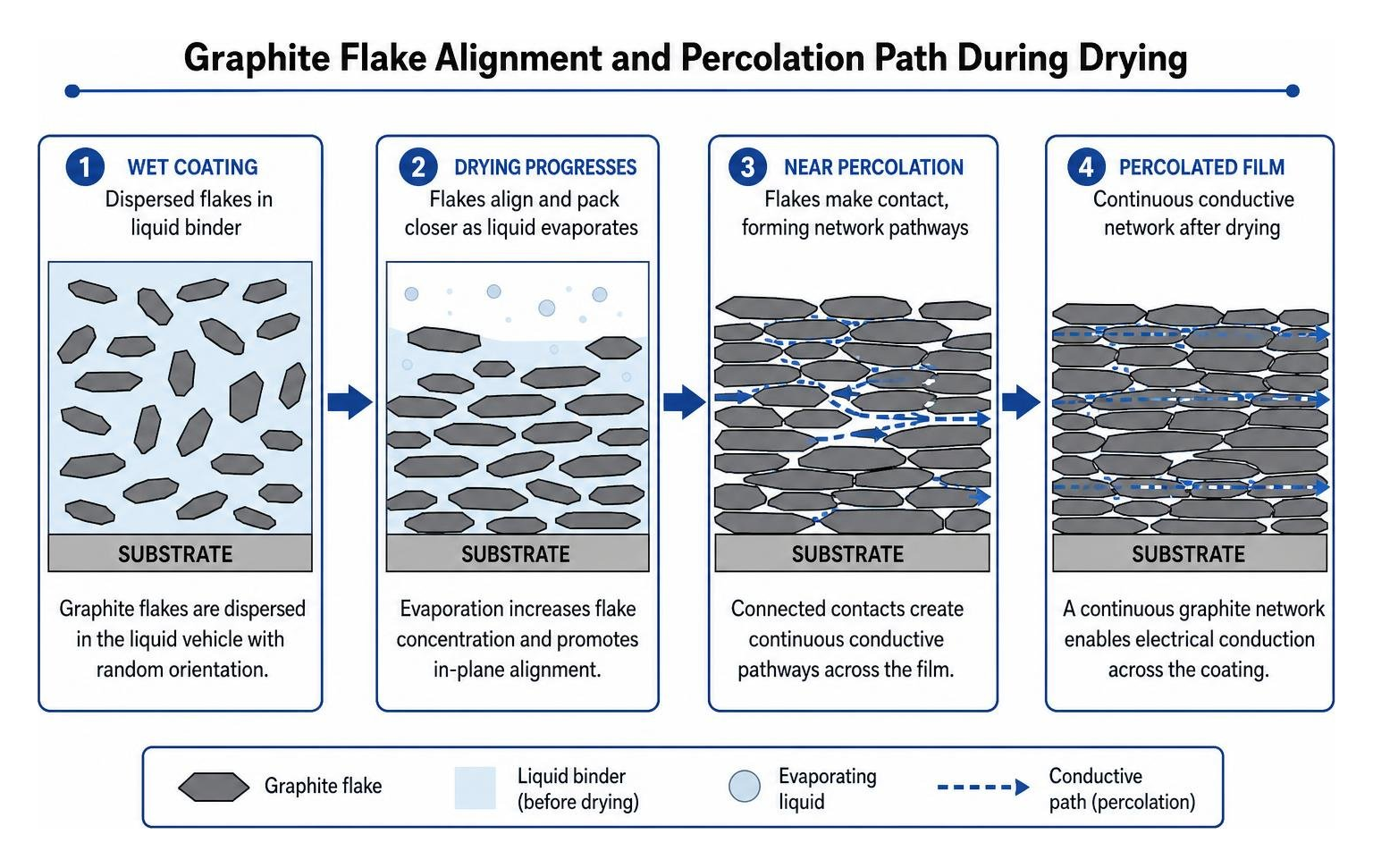
Electrical percolation occurs when the volumetric loading of graphite passes a critical concentration threshold. Below this threshold, isolated graphite flakes remain separated by insulating carrier fluid or non-conductive binder resin. Once particle concentration reaches the percolation limit, an uninterrupted three-dimensional conductive network forms across the surface.
Formulators adjust this network by selecting specific particle size distributions, flake aspect ratios, and binder matrices. For high-purity electrical grounding, charge bleeding, and clean-release applications, water-based colloidal graphite dispersions provide an ultra-clean conductive film without introducing persistent organic solvents or heavy resin build-up.
Water-Based vs Solvent-Based Conductive Graphite Coating Formulations
Carrier liquid selection directly influences evaporation rates, film morphology, VOC compliance, and substrate wetting:
- Water-Based Dispersions: These systems suspend sub-micron to micron-scale colloidal graphite in water, often stabilized with basic ammonia or specialized dispersing agents. Water systems feature zero to minimal VOC content, eliminate flammability hazards during application, and provide outstanding adhesion to clean glass, ceramics, and degreased metals. They dry through pure water evaporation and can be accelerated with moderate pre-heating or low-bake cycles (60°C to 100°C).
- Solvent-Based Formulations (Isopropanol / Alcohol Carriers): Isopropanol (IPA) carriers provide rapid flash-off times, typically drying tack-free in under 5 minutes at ambient temperature. Solvent systems are ideal for temperature-sensitive plastics, electronic circuit rework, and production lines requiring fast cycle times. Because IPA lowers surface tension relative to water, these coatings wet complex geometries and polymer substrates more aggressively.
Selecting between water and solvent systems depends on manufacturing facility ventilation, environmental regulations, and specific high quality lubrication standards governing your operating environment.
Thermoplastic, Epoxy, and Resin Binders
Pure colloidal graphite films adhere primarily through mechanical interlocking and van der Waals forces, which can be vulnerable to aggressive mechanical wiping or liquid immersion. To enhance mechanical toughness, chemical resistance, and substrate adhesion, specialized resins are incorporated:
- Thermoplastic Acrylic/Vinyl Binders: These one-pack systems air-dry quickly and offer reliable adhesion across plastics, metals, and glass. They provide functional electrostatic discharge (ESD) protection and dry lubrication up to approximately 90°C to 100°C, at which point the thermoplastic matrix softens.
- Two-Pack Epoxy and Acrylated Ester Systems: When severe environmental exposure, chemical attack, or high mechanical shear is present, multi-component thermosetting resins are utilized. Heavy-duty formulations employ cold-cured acrylated esters or graphite-filled epoxies to resist aggressive acids, moisture ingress, and continuous mechanical wear.
- Binder Decomposition and High-Temperature Transitions: In high-heat environments where temperatures exceed binder degradation thresholds (typically 100°C to 150°C for standard resins), the organic matrix volatilizes. However, high-purity graphite flakes remain bonded to the underlying substrate, continuing to serve as a dry lubricating and electrically conductive release interface up to 300°C–500°C in air, and well over 1000°C in vacuum or inert atmospheres.
Electrical and Thermal Properties: Sheet Resistance, Emissivity, and Temperature Limits
Graphite films exhibit unique electrical and thermal behavior compared to metallic paints. Below is a comparative overview of typical performance properties across standard conductive graphite coating systems:
| Formulation Type | Typical Dry Film Thickness (DFT) | Sheet Resistance ($Omega/text{sq}$) | Continuous Service Temp (Air) | Thermal Conductivity ($text{W/m}cdottext{K}$) | Primary Function |
|---|---|---|---|---|---|
| Colloidal Graphite (Water-Based) | $10 - 25,mutext{m}$ ($0.4 - 1.0,text{mil}$) | $100 - 300,Omega/text{sq}$ | $315^circtext{C}$ ($600^circtext{F}$) | $2.5 - 4.0$ | Charge bleed, SEM, high-purity dry lube |
| Colloidal Graphite (IPA Solvent) | $20 - 30,mutext{m}$ ($0.8 - 1.2,text{mil}$) | $<2400,Omega/text{sq}$ | $204^circtext{C}$ ($400^circtext{F}$) | $2.0 - 3.5$ | Fast-dry ESD, vacuum lubrication |
| Thermoplastic Graphite Lacquer | $15 - 25,mutext{m}$ ($0.6 - 1.0,text{mil}$) | $1000 - 2000,Omega/text{sq}$ | $90^circtext{C}$ (Binder) / $300^circtext{C}$ (Film) | $1.8 - 3.0$ | PCB repair, CRT grounding, ESD packaging |
| Graphite-Filled Epoxy | $35 - 50,mutext{m}$ ($1.4 - 2.0,text{mils}$) | $20text{k} - 50text{k},Omega/text{sq}$ | $120 - 150^circtext{C}$ | $2.0 - 3.8$ | Stator voltage grading, static dissipation |
| Heavy-Duty Acrylated Ester | $1000 - 3000,mutext{m}$ ($40 - 120,text{mils}$) | Low volume resistivity | $100 - 130^circtext{C}$ | $3.98$ | Chemical barrier, spark testing substrate |
Key Factors Influencing Conductive Graphite Coating Surface Resistance
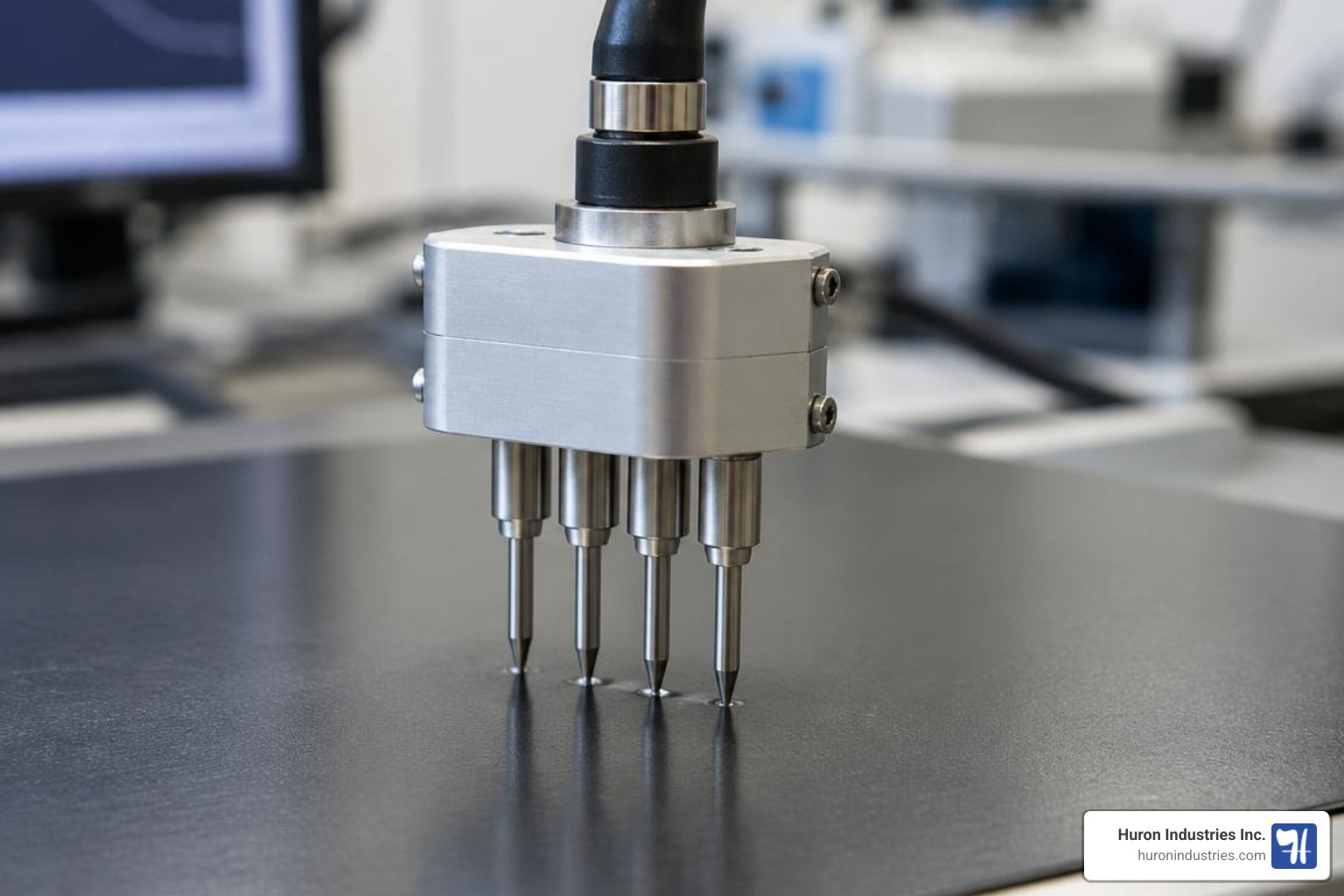
The final sheet resistance of a graphite film is not fixed solely by the liquid bottle’s formula; it depends heavily on application and curing parameters:
- Dry Film Thickness (DFT): Thicker coatings provide more parallel conductive paths, reducing sheet resistance proportionally. A single brush pass producing a $10,mutext{m}$ layer may yield $800,Omega/text{sq}$, whereas built-up coats reaching $25,mutext{m}$ ($1,text{mil}$) routinely drop resistance below $200,Omega/text{sq}$.
- Thermal Curing and Sintering: Baking a freshly deposited film at moderate temperatures (such as 65°C to 90°C for 30–60 minutes) drives out residual solvent and forces tighter physical compaction of the binder matrix, reducing overall sheet resistance by up to 40%.
- Mechanical Burnishing / Polishing: Lightly buffing or polishing a cured graphite film with a lint-free cloth re-orients the microscopic graphite platelets parallel to the substrate surface. This maximizes flake-to-flake contact area and can significantly reduce surface resistivity while creating a mirror-like, low-friction finish.
Thermal Management and Radiation Absorption
Beyond electrical flow, graphite is an exceptional emitter and absorber of thermal radiation. A high-quality colloidal graphite film behaves closely as an ideal blackbody:
- High Optical and Thermal Absorptivity: Colloidal graphite coatings provide a minimum optical absorptivity of 0.90, making them standard for coating radiometer thermopiles, optical baffles, and laser absorption chambers to eliminate stray reflections.
- Radiative Heat Transfer: In thermal systems such as cavity receivers and industrial furnaces, surface emissivity governs performance. While high-temperature specialty paints exhibit average normal emittance values around 0.867 at 600 K, pure graphite films consistently exhibit emissivities between 0.85 and 0.92.
- Heat Dissipation: In electronics enclosures, applying a conductive graphite coating to internal housing walls improves both radiative heat dissipation and electromagnetic shielding, helping prevent hot spots without adding substantial weight.
Industrial, Electronic, and Regulated Applications
SEM Sample Preparation and Charge Dissipation
In Scanning Electron Microscopy (SEM) and Energy-Dispersive X-ray Spectroscopy (EDX), non-conductive specimens (plastics, biological samples, geological ceramics) accumulate negative surface charge from the primary electron beam. This charging distorts images and deflects incident electrons.
Applying an ultra-thin colloidal graphite coating creates a fast charge-bleed path to ground. Unlike gold or platinum sputter coatings, graphite does not introduce complex X-ray peaks that interfere with elemental EDX analysis of transition metals, making it an indispensable tool across modern laboratories.
For broader context on these precision methods, see applications in modern manufacturing and electron microscopy.
Dry Film Lubrication and Anti-Seize Interfaces
Where fluid lubricants fail due to extreme temperature, radiation, or deep vacuum, graphite dry films provide boundary lubrication. The lamellar structure allows individual graphite planes to shear easily past one another under sliding contact.
Key application areas include:
- Threaded fasteners subjected to high pre-loads
- Molds and dies requiring clean release at elevated temperatures
- Vacuum equipment where liquid oils would outgas and contaminate optical surfaces
- High-voltage electrical switch contacts needing smooth sliding action combined with anti-arcing grounding
Engineers looking into solid lubricants often evaluate dry film lubricant coatings to prevent galling on stainless steel, titanium, and nickel alloys.
Clarification on frictional parameters: The coefficient of friction for Neolube No. 1.1 of 0.15 has not been tested or approved for this.
Nuclear, Marine, and Harsh Environment Compliance
In critical power generation and defense sectors, lubricants and conductive coatings must comply with strict chemical purity standards to prevent stress corrosion cracking (SCC) and embrittlement. Halogens (chlorine, fluorine), sulfur, and low-melting-point metals (lead, zinc, antimony, mercury) are strictly regulated.
- MIL-L-24131C: Specifies high-purity colloidal graphite in isopropanol for naval and commercial nuclear reactor applications, ensuring extreme purity and radiation stability.
- MIL-PRF-907F: Outlines performance requirements for high-temperature anti-seize compounds used on critical naval and aerospace threaded joints, maintaining electrical grounding and preventing seizure up to extreme service temperatures.
To ensure long-term integrity, engineers should review certified colloidal graphite standards before selecting products for regulated environments.
Application Methods and Best Practices for Optimal Film Performance
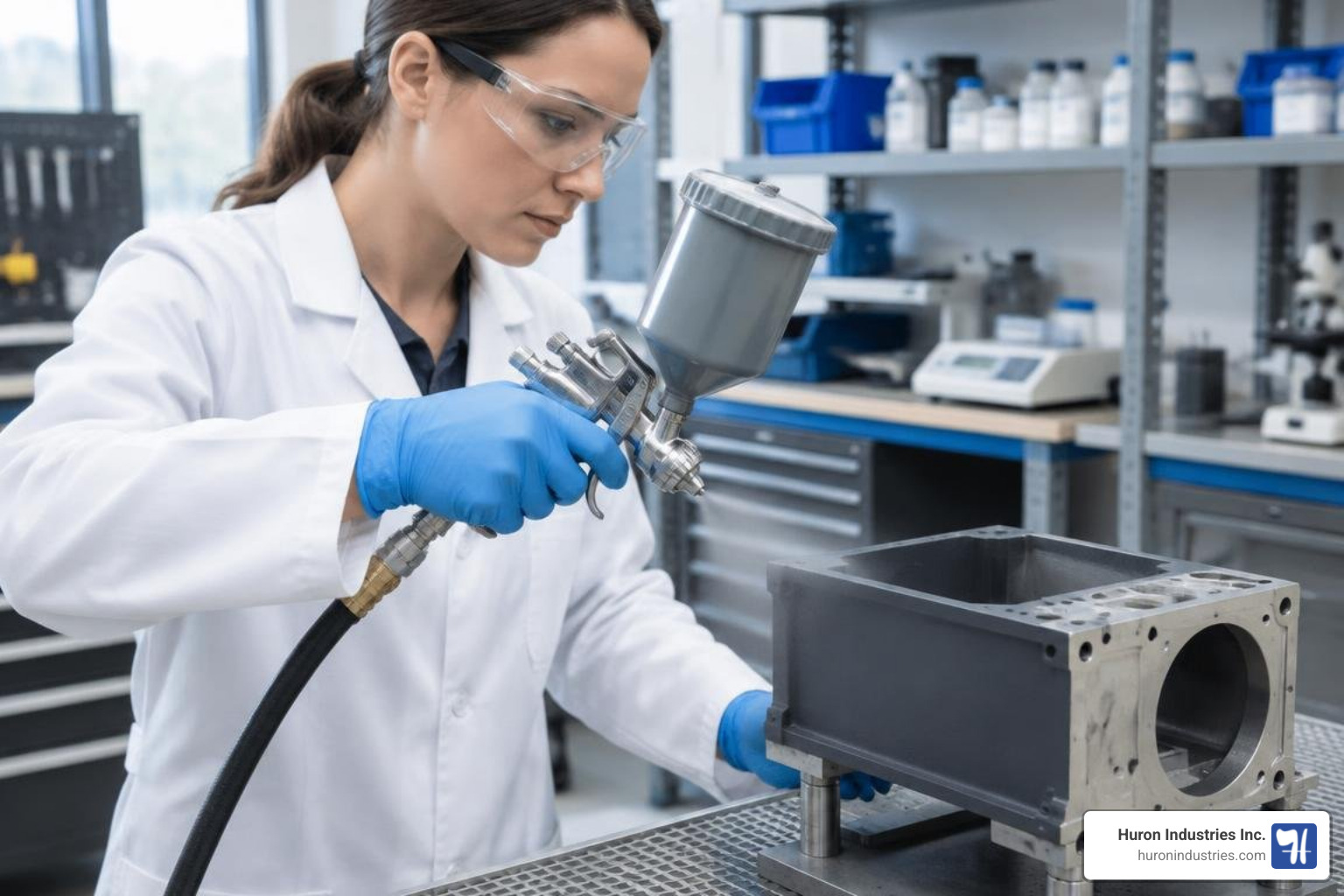
Achieving repeatable electrical conductivity and mechanical adhesion demands rigorous surface preparation and deposition control. Implementing established precision lubrication techniques ensures a defect-free coating.
Deposition Techniques: Spray, Brush, Dip, and Flow
- Surface Degreasing and Profiling: Clean the substrate thoroughly using appropriate solvents (such as acetone or isopropanol) to eliminate oils, grease, and processing residues. For metallic surfaces operating under high shear, light grit blasting (e.g., ISO 8501-1 SA 2½) creates mechanical tooth that dramatically enhances binder adhesion.
- Substrate Pre-Heating: Pre-heating non-porous substrates (such as glass or dense ceramics) to approximately 50°C to 60°C (120°F–140°F) before application minimizes flow marks, prevents droplet sagging, and accelerates uniform solvent flash-off.
- Dilution and Viscosity Tuning:
- Brush Application: Apply undiluted or lightly thinned (1:1 with pure carrier) using a soft natural bristle brush.
- Dip and Flow Coating: Thin at ratios between 1:2 and 1:3 by volume to maintain continuous, self-leveling drainage without runs.
- Pneumatic / Airless Spray: Dilute at ratios between 1:3 and 1:5 by volume depending on equipment nozzle sizing. Maintain consistent atomization pressure (25–35 psi for HVLP) to avoid dry-spray dusting.
- Agitation: Colloidal suspensions must be stirred thoroughly for at least 5 to 10 minutes prior to transfer, and aerosol cans should be shaken vigorously for 60 seconds to ensure homogeneous particle dispersion.
Curing Protocols and Resistance Optimization
- Ambient Air Drying: Fast-drying solvent systems typically achieve tack-free status within 5 to 20 minutes at 20°C (68°F).
- Accelerated Baking: For minimum electrical resistance and maximum mechanical durability, bake the coated component at 75°C–90°C (167°F–194°F) for 30 to 60 minutes.
- High-Temperature Stabilization: In applications requiring stable resistance up to elevated operating thresholds, thermal exposure at 200°C (392°F) for 1 hour fully outgasses residual carrier traces.
- Mechanical Burnishing: Once fully dry, gently polish the surface with a dry, lint-free microfiber cloth or soft swab. This burnishing step aligns surface flakes, lowers sheet resistance by 10%–25%, and enhances lubricity.
Frequently Asked Questions About Conductive Graphite Coatings
How does a conductive graphite coating achieve electrical continuity on non-conductive substrates?
It establishes a three-dimensional percolation network. When the liquid carrier evaporates, millions of microscopic, high-purity graphite flakes settle in overlapping physical contact. Electrons travel through the delocalized pi-electron pathways of the carbon lattice from flake to flake across the surface, providing a stable path to ground even when applied to glass, plastic, or ceramic.
How can you lower the surface resistivity of a cured graphite film?
You can lower surface resistivity in three ways:
- Increase film thickness by applying multiple thin coats rather than one heavy, sagging coat.
- Perform a post-cure bake at 75°C to 90°C for one hour to compact the matrix and eliminate trapped moisture or carrier solvent.
- Burnish or polish the dry film with a soft cloth to align surface graphite crystals along the conductive plane.
What temperature ranges can conductive graphite dry films withstand?
The temperature capability depends on the presence of organic binders:
- Resin-bonded coatings: Limited by the binder decomposition temperature, typically 90°C to 150°C (194°F to 300°F).
- Pure colloidal graphite films: In open air, high-purity graphite resists oxidation up to 315°C–400°C (600°F–750°F). In vacuum or inert atmospheres (such as nitrogen or argon), pure graphite films remain stable and functional at temperatures exceeding 1000°C (1832°F).
Conclusion
Conductive graphite coatings bridge the gap between electrical continuity, thermal management, and dry-film lubrication across demanding industrial, scientific, and aerospace applications. Whether you need electrostatic bleed paths for SEM specimens, ESD-safe component packaging, or radiation-resistant solid lubricants for nuclear reactor valves, selecting the right carrier, binder, and curing protocol ensures reliable performance.
At Huron Industries Inc. (est. 1971 in Port Huron, MI), we specialize in manufacturing certified, high-purity colloidal graphite formulations, anti-seize compounds, and dry lubricants. Our flagship Neolube® product lines are engineered to meet strict nuclear specifications like MIL-L-24131C, delivering reliable quality for mission-critical operations.
For high-pressure mechanical assemblies, specialty manufacturing lines, or precision reloading and extreme pressure lubricants, our technical team is ready to assist you in formulating and selecting the right graphite solution.