
Why Colloidal Graphite Coatings Matter
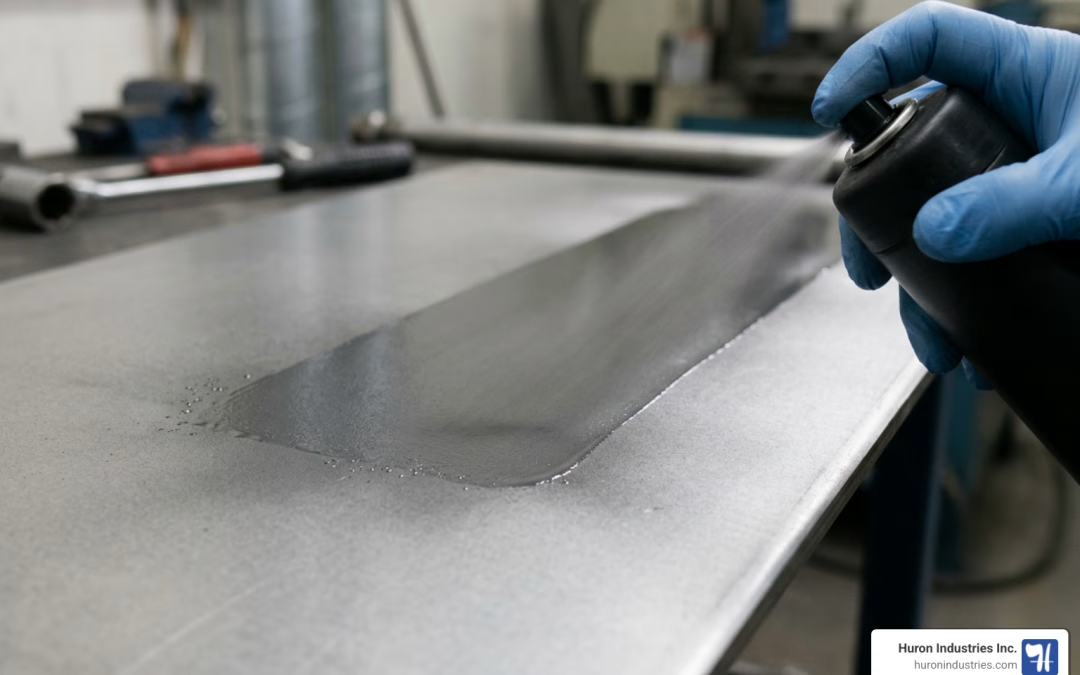
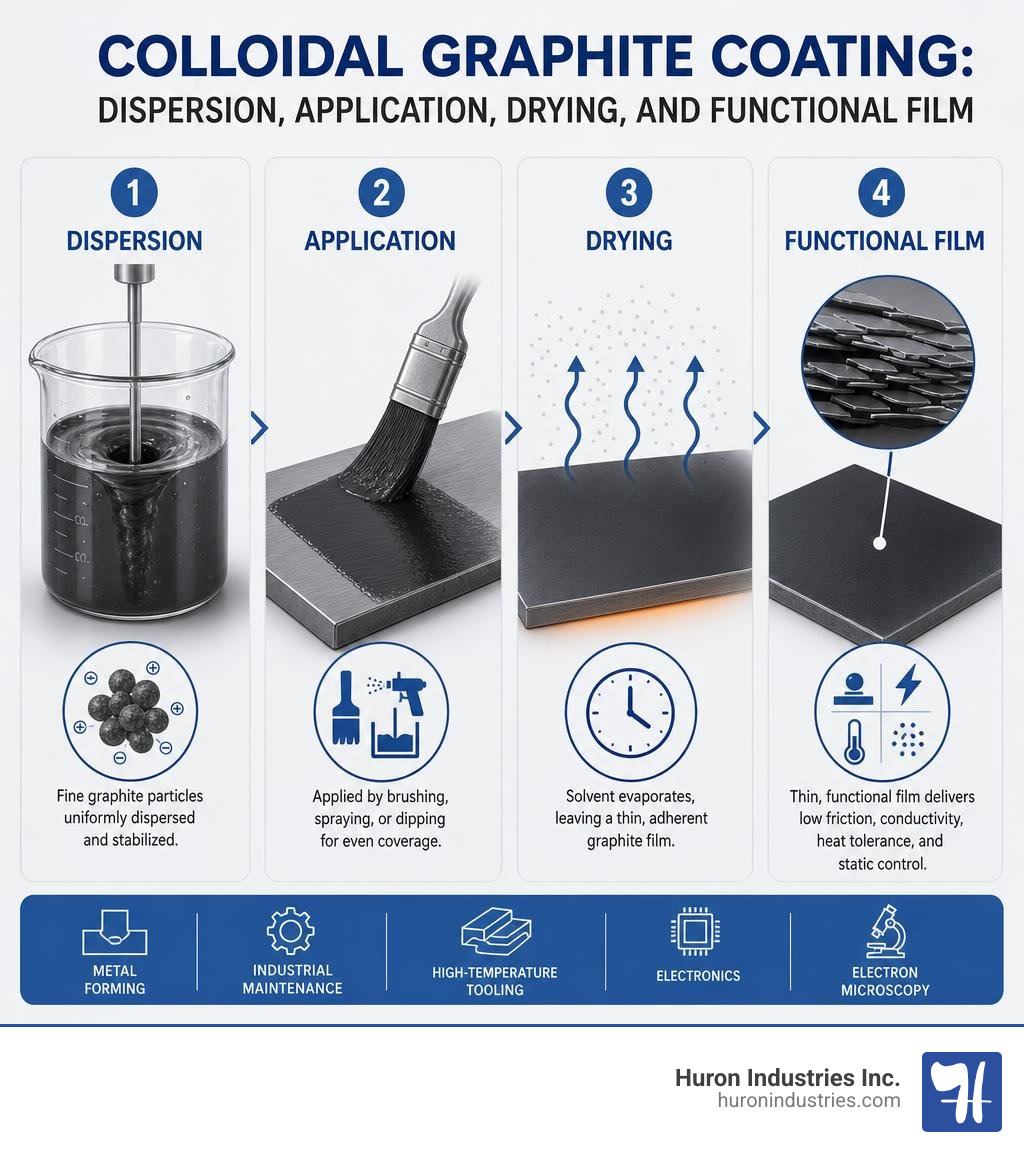
A colloidal graphite coating is a fine graphite dispersion that dries into a thin, adherent film. It is used when a surface needs low friction, electrical conductivity, heat-tolerant release, or static control without a wet oil or grease layer.
These coatings are widely used in metal forming, industrial maintenance, high-temperature tooling, electronics, and electron microscopy. Unlike loose graphite powder, a properly prepared dispersion can cover a surface evenly and remain in place after drying.
For engineering and maintenance teams, the value is practical: graphite's layered structure lets surfaces slide more easily, while its carbon network can provide a conductive path on glass, ceramics, plastics, and other nonconductive materials. Film performance depends on the formulation, surface cleanliness, dilution, coating method, and cure temperature.
Historically, conductive graphite films were applied to cathode ray tube glass to manage high-voltage fields and collect secondary electrons. Today, the same core material science supports dry-film lubrication, SEM sample grounding, mold release, and conductive preparation for plating nonconductive circuit-board features.
I am Nicholas Cunha, founder of CreatiVertical and a technical B2B content specialist working with Huron Industries Inc. to make complex products such as colloidal graphite coating systems, specialty lubricants, and certified industrial materials clearer for engineering and procurement teams. This guide explains how these coatings work, where they fit, and which process controls matter most.
Colloidal graphite coating word guide:
Fundamentals and Properties of Colloidal Graphite Coating Systems
To understand why a colloidal graphite dispersion performs so effectively, I always look first at the carbon physics taking place at the atomic level. Natural and synthetic graphite consists of sp²-hybridized carbon atoms tightly bound in planar hexagonal rings. These parallel sheets (known as graphene planes) feature strong covalent bonds internally, but the adjacent layers are held together only by weak Van der Waals forces.
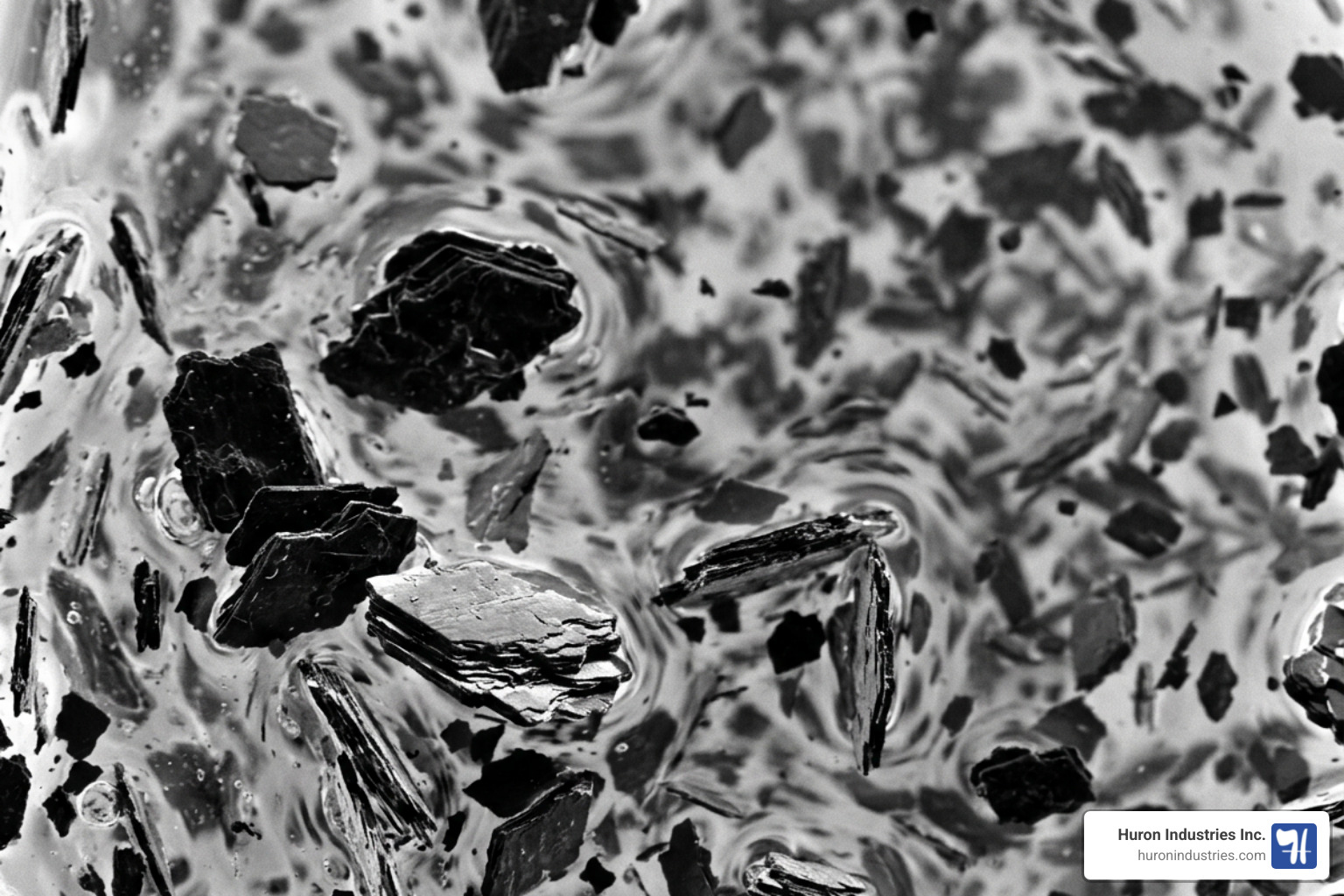
When lateral stress or sliding friction is applied to the coating, these weak interlamellar bonds shear effortlessly. This allows the microscopic platelets to glide past one another, forming an exceptionally slick boundary lubricant. Unlike fluid greases that thin out, migrate, or carbonize under extreme thermal loads, pure solid graphitic films remain intact. In ambient air, dry graphite coatings comfortably withstand continuous operating temperatures up to 600°F (315°C) before slow oxidation begins, and they can resist intermittent spikes up to 2200°F (1204°C) without losing parting capabilities. In vacuum, inert, or reducing environments, thermal stability extends significantly higher.
Graphite dispersions are chemically inert, non-flammable once cured, non-toxic, and free of heavy metals or chlorinated additives. Formulating graphite into a colloidal liquid carrier—most commonly colloidal graphite in water or organic volatile solvents like isopropanol—allows microscopic particles, often milled as fine as 5 micron graphite or smaller, to wet complex geometries evenly and create uniform, unbroken surface films.
Core Physical and Rheological Characteristics
Colloidal graphite dispersions do not behave like standard paints or simple liquid solutions. They rely on deflocculation—the process of breaking down particle agglomerates into discrete, stable suspensions using organic dispersants, tannic acid derivatives, or alkaline stabilizers such as ammonium hydroxide.
The physical behavior of these liquid suspensions is governed by key colloidal principles:
- Thixotropic Rheology: Concentrated graphite dispersions form a weak, structured gel when resting at zero shear. The moment mechanical agitation, stirring, pumping, or spraying occurs, the apparent viscosity drops instantly, allowing the liquid to atomize and spread. When the motion stops, viscosity recovers to prevent sagging or running.
- Zeta Potential & Electrostatic Repulsion: Graphite particles suspended in alkaline aqueous solutions carry a net negative surface charge, amplified by specialized carboxylate-bearing binders ($Rtext{–}COO^-$). When the zeta potential remains strongly negative (typically with a bath pH between 9.0 and 10.5), electrostatic repulsion keeps individual carbon particles from colliding and flocculating.
- Electrical Double Layer & Debye Length: The thickness of the ionic boundary surrounding each suspended particle (the Debye length) dictates suspension stability. If the surrounding liquid medium contains too many free multivalent cations, this protective electrical double layer compresses, causing particles to clump and precipitate irreversibly.
- Cationic Conditioning: Because graphitic carbon particles carry a net negative charge, applying an ultra-thin cationic conditioner (such as a quaternary amine polymer) onto a target substrate creates an electrostatic anchor that pulls the graphite platelets tightly onto nonconductive surfaces.
Factors Influencing Colloidal Graphite Coating Electrical Resistance and Curing
The electrical properties of a dry graphite film are intrinsically linked to particle packing density, film thickness, and thermal processing history. Solid graphitic carbon exhibits a negative temperature coefficient of electrical resistance (NTC), meaning its intrinsic electrical resistance decreases as operating temperatures rise.
When an aqueous dispersion is applied at room temperature, water evaporates to leave behind an intertwined network of graphite flakes. In this initial air-dried state (typically around 25 µm or 1 mil dry film thickness), sheet resistance hovers around 100 to 800 ohms per square. While perfectly adequate for static dissipation and non-critical grounding, thermal curing drives out residual moisture and compacts the carbon matrix to drastically boost electrical conductivity.
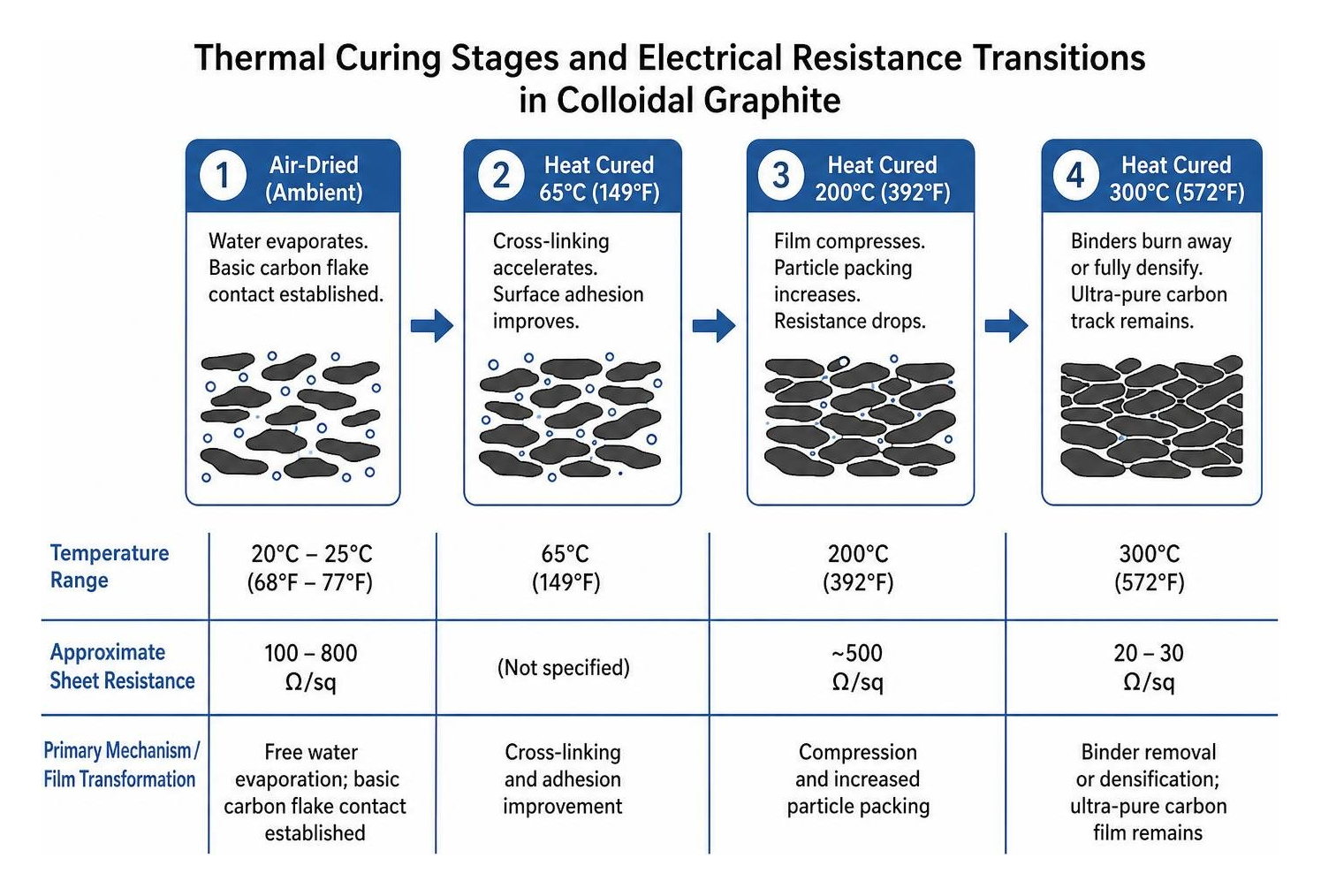
Heating the coated component to 65°C (149°F) accelerates cross-linking and surface adhesion. Raising the cure temperature to 200°C (392°F) compresses the film, dropping surface resistance to roughly 500 ohms/square. When baked at 300°C (572°F), the temporary carrier binders burn away or fully densify, leaving an ultra-pure carbon track with a low sheet resistance of only 20 to 30 ohms per square.
| Curing Condition | Temperature Range | Approximate Sheet Resistance | Primary Mechanism / Film Transformation |
|---|---|---|---|
| Air-Dried (Ambient) | 20°C – 25°C (68°F – 77°F) | 100 – 800 $Omega/text{sq}$ | Free water evaporation; basic carbon flake contact established |
| Low-Temp Pre-Cure | 65°C (149°F) for 2–5 min | 300 – 600 $Omega/text{sq}$ | Accelerated dehydration; improved adhesion to metallic/glass substrates |
| Mid-Temp Stabilization | 200°C (392°F) for 30–60 min | 100 – 500 $Omega/text{sq}$ | Film compaction; elimination of bound moisture; stabilized resistance |
| High-Temp Bake | 300°C (572°F) for 15–30 min | 20 – 30 $Omega/text{sq}$ | Binder burn-off; maximum graphite-to-graphite contact and pure conduction |
Primary Industrial and Manufacturing Applications
Because colloidal graphite delivers reliable dry lubrication and high electrical conductivity simultaneously, its industrial uses span heavy metal fabrication, delicate artisan shaping, and microelectronics. In severe manufacturing environments, dry film lubricant coatings provide clean release without burning, smoking, or gumming up high-speed automation.
For instance, in hot seamless steel tube rolling mills, steel ingot preforms heated between 1200°C and 1300°C are forced over water-cooled steel mandrels operating around 100°C. Spraying an engineered aqueous graphite lubricant onto the 100°C mandrel creates a continuous, 30-micron dry film in under 5 seconds. When the white-hot ingot slams into the mandrel, the graphite film prevents severe metal-to-metal galling, protects internal pipe geometry, and allows seamless pipe extraction without toxic smoke.
Similar high-temperature parting capabilities are essential in hot glassworking, lampworking, and metal casting. When shaping borosilicate or soda-lime glass at molten temperatures, metallic shaping tools treated with aqueous graphite allow hot glass to glide without friction chatter, drag marks, or glass sticking.
In precision engineering and factory assembly, specialized graphite pastes and coatings ensure precision lubrication on tight-tolerance mechanical assemblies, lead screws, conveyor guides, and industrial gaskets requiring clean anti-stick properties.
Applying Colloidal Graphite Coating for Scanning Electron Microscopy
In electron microscopy (SEM) and transmission electron microscopy (TEM), nonconductive specimens—such as biological tissues, polymers, geological ceramics, and powdered catalysts—pose significant imaging challenges. When an ungrounded nonconductive sample is bombarded with a focused, high-energy electron beam, negative charge rapidly accumulates on the specimen surface.
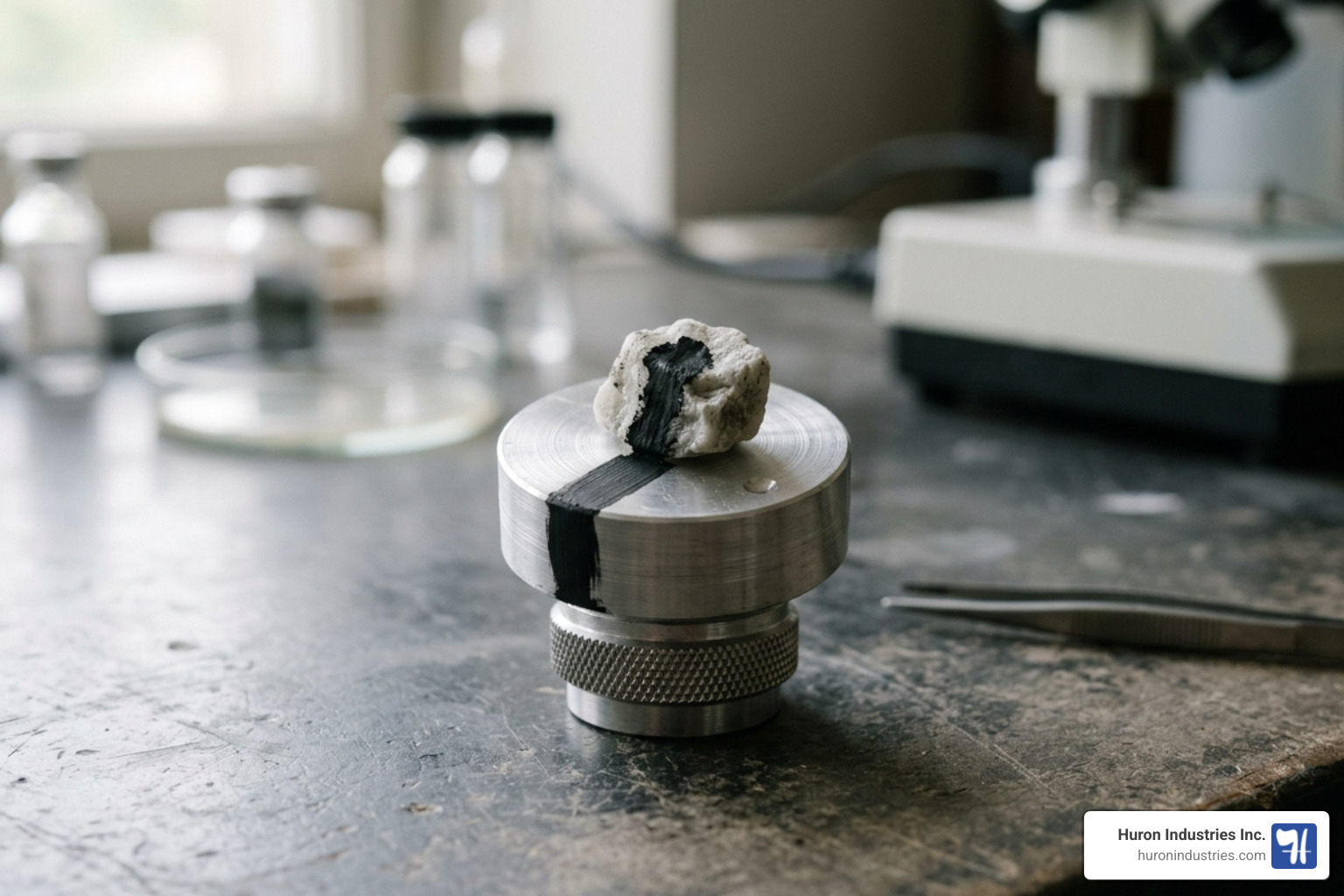
This charge buildup distorts the incoming primary beam, creates intense white visual flare (beam charging artifacts), causes thermal deformation, and can physically repel the electron detector signal.
Applying an ultra-thin colloidal graphite coating to the specimen mount or painting conductive tracks from the sample boundary down to the aluminum microscope stub creates an unbroken ground plane. This ground path allows accumulated beam current to dissipate safely to ground. Graphite offers several clear advantages over gold or platinum sputter-coating in SEM prep:
- Low Atomic Number Background: Carbon has an atomic number of $Z = 6$. Its secondary and backscattered electron signature is exceptionally low, preventing spectral interference during energy-dispersive X-ray spectroscopy (EDS/EDX) analysis of heavier elements.
- Zero Thermal Stress: Water- or alcohol-based colloidal suspensions can be air-dried at ambient room temperature, protecting heat-sensitive organic specimens that cannot endure vacuum plasma sputtering.
- Reversible Non-Destructive Mounting: Graphite coatings can bridge microscopic gaps between specimen granules and mounting pins without engulfing delicate specimen topography, enabling clean image capture without damaging structural features.
Electronics, Cathode Ray Tubes, and Direct Metallization
Historically, one of the most widespread high-technology uses of colloidal graphite was inside cathode ray tubes (CRTs). Technicians coated both the interior and exterior walls of the glass funnel with aqueous graphite.
The inner coating served as the tube's high-voltage second anode (operating between 18 kV and 25 kV), accelerating the electron beam toward the phosphor screen while safely collecting secondary electrons to prevent negative space-charge distortion. Because glass is an electrical dielectric, placing conductive graphite coatings on both the inside and outside of the CRT envelope turned the glass wall into an integrated 500 pF high-voltage filter capacitor, smoothing out voltage ripple from the power supply.
In printed circuit board (PCB) and printed wiring board (PWB) manufacturing, colloidal graphite direct metallization emerged as a dependable, environmentally friendly alternative to hazardous electroless copper plating lines. Drilling micro-vias and through-holes through multi-layer circuit boards exposes non-conductive dielectric resin and fiberglass cross-sections.
By treating drilled hole walls with a positively charged polymer conditioner followed by negatively charged colloidal graphite and an acidic fixer rinse, manufacturers deposit a 0.2 to 0.5-micron conductive graphite carbon layer. This ultra-thin conductive basecoat facilitates rapid, uniform electrolytic copper plating directly onto non-conductive hole walls without formaldehyde, cyanide, or heavy metal chelate waste.
Application Methods, Surface Preparation, and Process Parameters
Achieving consistent results with colloidal graphite films requires strict control over surface preparation, dilution, and deposition techniques. The coating can be applied through air-assisted spraying, brush painting, flow coating, or dip-spin immersion depending on component geometry and throughput needs.
Regardless of the application method, surface hygiene is paramount. Graphitic carbon relies on mechanical interlocking and surface wetting forces to adhere. Any residual hydrocarbon oil, cutting fluid, rust, or loose oxide scale prevents uniform wetting and causes the dried film to flake or blister under load.
Standard surface preparation protocols include:
- Chemical Degreasing: Ultrasonically cleaning metal parts in an acetone or alkaline degreaser bath removes all traces of grease and oil.
- Mechanical Profiling: Light grit-blasting using fine aluminum oxide media (or achieving an ISO 8501-1 SA 2.5 profile on heavy steel) provides a micro-rough anchor pattern.
- Preheating Substrates: Preheating parts to 50°C–60°C (122°F–140°F) prior to liquid application flashes off the carrier quickly and prevents surface sagging or flow lines.
Engineering teams often refer to specialized technical literature, including a comprehensive study on spray process parameters and research on cement admixtures, to optimize formulation viscosity, dispersion flow, and structural bonding across challenging industrial substrates.
Optimizing Spray Flow Rates, Dilution, and Morphology
Recent experimental research into air-assisted spray deposition reveals that spray liquid flow rate and solids dilution directly dictate the microscopic morphology, density, and wear resistance of the cured graphite coating.
When an aqueous graphite dispersion is sprayed at low flow rates (e.g., 15 mL/min), atomized droplets partially dry in flight before reaching the substrate. This produces a loose, porous, hierarchically stacked flake structure with a high surface roughness ($S_a$ between 8 µm and 37 µm).
While porous coatings help establish a sacrificial transfer film quickly on a sliding counterface, they compress and wear faster under sustained heavy loads.
In contrast, spraying at higher flow rates (50 to 60 mL/min) with a matching solids content (10% to 20% by volume) deposits a wetter surface film. Fluid surface tension pulls the suspended graphite platelets flat against the substrate as the water evaporates, producing a dense, highly oriented, parallel laminar film with a smooth surface finish ($S_a < 4 mutext{m}$).
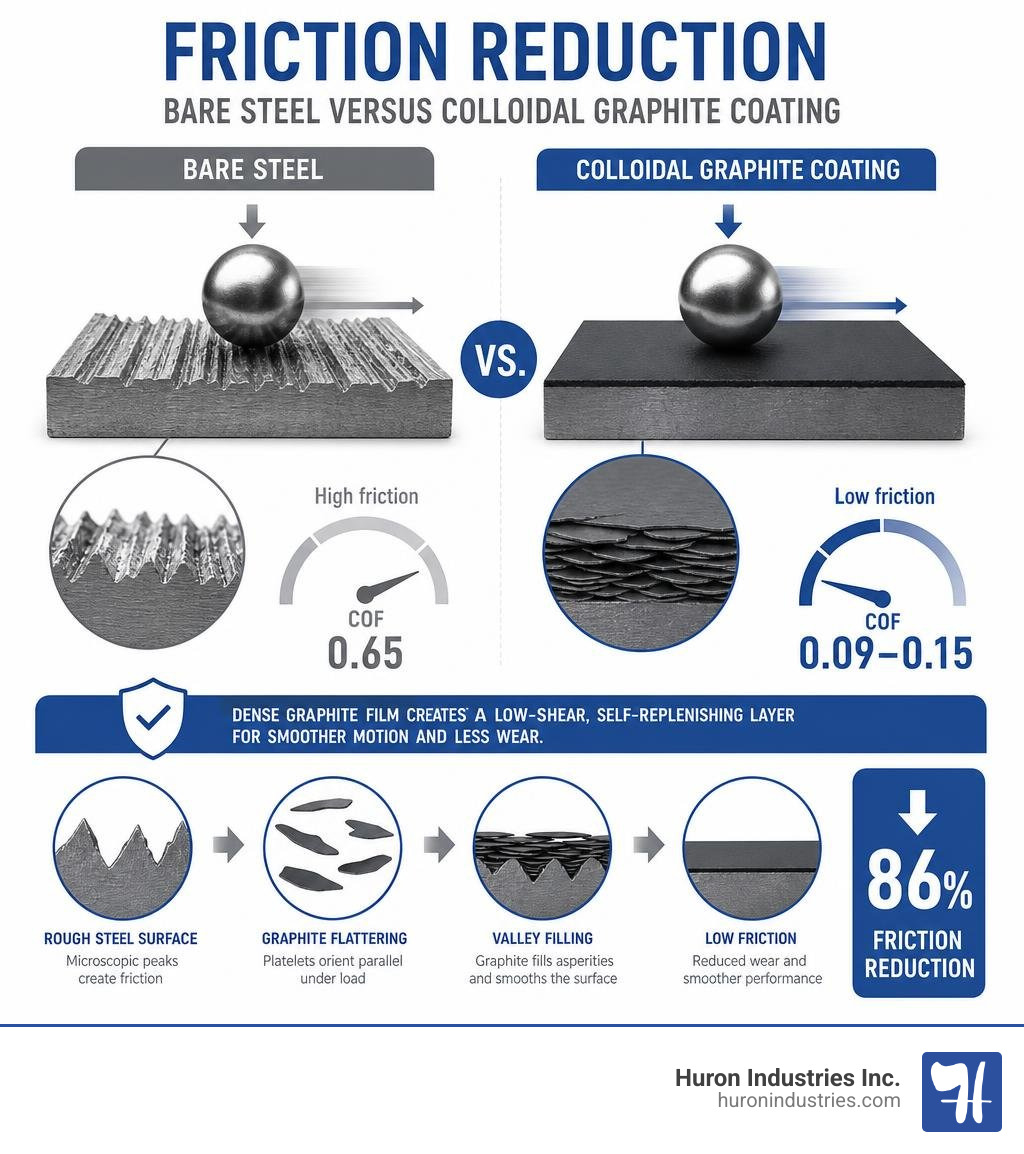
Under tribometer sliding tests against chrome steel counterfaces, these dense spray-coated films reduce the coefficient of friction (COF) from 0.65 on bare unpolished industrial steel down to an impressive 0.09 to 0.15—an 86% friction reduction. During sliding, compressed graphite fills the microscopic valleys of the steel substrate, creating a self-replenishing, low-shear boundary layer.
Care must be taken to balance dilution and flow rate: spraying an excessively diluted graphite mix (such as 5% solids) at high liquid flow rates can cause fluid pooling on the surface. As the liquid pools evaporate, droplet perimeters retract unevenly, leaving pinholes and exposed bare metal gaps.
Substrate Conditioning, Adhesion, and Stability Management
Maintaining the long-term chemical and colloidal stability of graphite dispersions in automated recirculation baths requires careful monitoring. Because water-based suspensions rely on alkaline pH stabilization, atmospheric exposure poses specific chemistry challenges:
- Carbon Dioxide Absorption: Recirculating tanks absorb atmospheric carbon dioxide ($CO2$), which reacts with water to form carbonates. If bath pH drops below 9.0, monovalent bicarbonate ($HCO3^-$) shifts into divalent carbonate ($CO_3^{2-}$). Multivalent anions rapidly compress the electrical double layer around the graphite particles, causing the suspension to flocculate and settle out. Maintaining bath pH between 9.25 and 10.5 preserves monovalent equilibrium and prevents premature bath breakdown.
- Ammonia Vapor Retention: Many industrial water-based dispersions use volatile ammonium hydroxide ($NH_4OH$) as their primary pH buffer. Tanks and drums should remain sealed when idle to prevent ammonia evaporation, which drops pH and triggers particle agglomeration.
- Dissolved Metal Ion Contamination: In direct metallization lines, trace transition metal cations (particularly copper ions dissolved from circuit boards) can destroy suspension stability. Without stabilizing chelating agents, copper concentrations as low as 500–600 ppm can cause bath viscosity to spike from 3 cP to over 20 cP, rendering the liquid unusable.
- Dilution Water Purity: Always dilute graphite concentrates with distilled, demineralized, or deionized (DI) water. Tap water contains high total dissolved solids (TDS), calcium ($Ca^{2+}$), and magnesium ($Mg^{2+}$) ions that destabilize colloidal charges. Always add water slowly to the graphite concentrate under steady stirring—never dump concentrate into static water.
- Storage Temperature Bounds: Water-based colloidal graphite suspensions must never be allowed to freeze. Freezing nucleates ice crystals that permanently force the graphitic carbon out of colloidal suspension, creating non-reconstitutable sludge. Store liquid inventory strictly between 5°C and 40°C (41°F to 104°F) in non-reactive polyethylene, stainless steel, or lined composite drums.
Frequently Asked Questions About Colloidal Graphite Coatings
How does thermal curing affect the electrical conductivity of colloidal graphite?
Thermal curing drastically improves electrical conductivity by removing residual moisture and compacting the microscopic graphite platelets into an unbroken, conductive carbon network. An ambient air-dried graphite film typically yields an electrical resistance of 100 to 800 ohms per square.
Baking the coated part at 200°C (392°F) stabilizes the film and drops resistance to roughly 100 to 500 ohms/square. Curing at 300°C (572°F) burns out organic dispersants and brings the graphite platelets into direct intimate contact, dropping electrical sheet resistance to just 20 to 30 ohms per square.
What causes colloidal graphite dispersions to destabilize or coagulate?
Colloidal graphite destabilizes when its electrostatic repulsion barrier is compromised. The primary causes of coagulation include:
- Acid Exposure: Mixing mineral acids or acidic liquids with alkaline graphite dispersions immediately neutralizes particle surface charges, causing graphite to precipitate into dense sediment.
- Multivalent Ionic Contamination: Introducing hard water minerals ($Ca^{2+}$, $Mg^{2+}$) or dissolved metal ions ($Cu^{2+}$) compresses the Debye length of the electrical double layer.
- Carbon Dioxide Absorption & pH Drop: Allowing bath pH to drop below 9.0 shifts dissolved $CO_2$ into divalent carbonate ions, accelerating particle agglomeration.
- Freezing Conditions: Exposure to sub-zero temperatures crystallizes the water carrier, permanently destroying the colloidal suspension.
- Ammonia Loss: Leaving storage containers unsealed allows volatile ammonia stabilizer gas to vent into the atmosphere.
Why is colloidal graphite preferred over raw graphite powder in precision applications?
Dry, raw graphite powder relies on gravity and weak physical dusting to rest on a surface. It does not possess a chemical or mechanical binding mechanism, meaning it wipes away easily, blows into airborne equipment gaps, clogs fine mechanical clearances, and cannot form a continuous, cohesive electrical path on vertical or inverted geometries.
In contrast, a colloidal graphite coating suspends ultra-fine, micronized carbon particles in a wetting carrier. When applied, the liquid flows evenly across complex micro-textures, penetrates surface asperities, and dries into a tough, uniform, bonded dry film. This delivers dependable boundary lubrication, stable electrical grounding, and zero loose-particle airborne contamination.
Conclusion
Colloidal graphite coatings remain a cornerstone of modern industrial tribology, advanced manufacturing, and analytical microscopy. By taking advantage of graphitic carbon's natural layered crystalline structure, these versatile dispersions deliver high thermal stability, non-migrating dry lubrication, and dependable electrical conductivity without the operational mess or temperature limitations of petroleum lubricants.
Achieving optimal results requires using high-purity, well-stabilized dispersions tailored to your specific application requirements. Huron Industries Inc. manufactures precision-engineered solid lubricants and specialty dispersions, including the military-qualified Neolube product line built to MIL-L-24131C standards for rigorous commercial and naval nuclear reactor applications.
Whether your facility requires certified dry-film anti-seize solutions, SEM sample grounding materials, or high-performance reloading aids such as CaseLube, partnering with a certified colloidal graphite supplier ensures consistent batch purity, tight micron-particle tolerances, and expert technical support for your demanding production processes.